




Apartment Appliance Maintenance Guide for Renters
Use this apartment appliance maintenance guide to spot small problems early, protect your lease, and know when a repair call makes sense in West Hollywood.
A refrigerator that starts running all night, a washer that smells musty, or a dryer that takes two cycles are not small annoyances. In an apartment, they can lead to spoiled food, water damage, higher utility bills, or a problem with the landlord. This apartment appliance maintenance guide covers the simple checks that help renters, owners, and property managers catch trouble early without taking appliances apart.
Most maintenance is basic cleaning and paying attention to changes. If an appliance leaks, trips a breaker, smells like burning, or stops working, stop using it and report the issue. Do not try to force a repair when there is a safety concern.
Apartment Appliance Maintenance Guide: Start With Your Lease
Before you clean a drain or pull out a refrigerator, check what your lease says. Some buildings want maintenance requests submitted through a portal. Others require the tenant to contact the property manager before arranging a repair. Owners and landlords may have their own approved service process.
Take clear photos when you first notice a problem. Include any water on the floor, error code, damaged food, or visible part. Write down when the issue started and whether it happens every time. This gives the repair person and property manager useful information. It also helps show that you reported the problem quickly.
Do not remove panels, disconnect gas lines, or work on electrical parts. A simple cleaning task is one thing. A repair that changes wiring, plumbing, or a gas connection is another.
Refrigerator and Freezer Care
Your refrigerator works harder in a small apartment kitchen because it may sit close to cabinets and walls. It needs room for heat to leave the back or bottom of the unit. Do not pack the top or sides with bags, boxes, or cleaning supplies.
Keep food from blocking the air vents inside. When cold air cannot move, one shelf may freeze while another stays warm. Wipe spills right away, especially around the door seal. Sticky spills can keep the door from closing fully.
Check the door gasket once a month. This is the rubber seal around the door. Close the door on a piece of paper and pull gently. If the paper slides out with almost no resistance in several areas, the gasket may not be sealing well. Also look for cracks, loose sections, or food buildup.
If your unit has a water dispenser or ice maker, replace the water filter on the schedule listed by the manufacturer. A clogged filter can slow water flow and affect ice production. If the refrigerator is warm, making a loud new noise, leaking, or building heavy frost, report it before food is lost. Refrigerator problems can get worse fast, especially during a warm West Hollywood week.
Washer Maintenance That Prevents Odor and Leaks
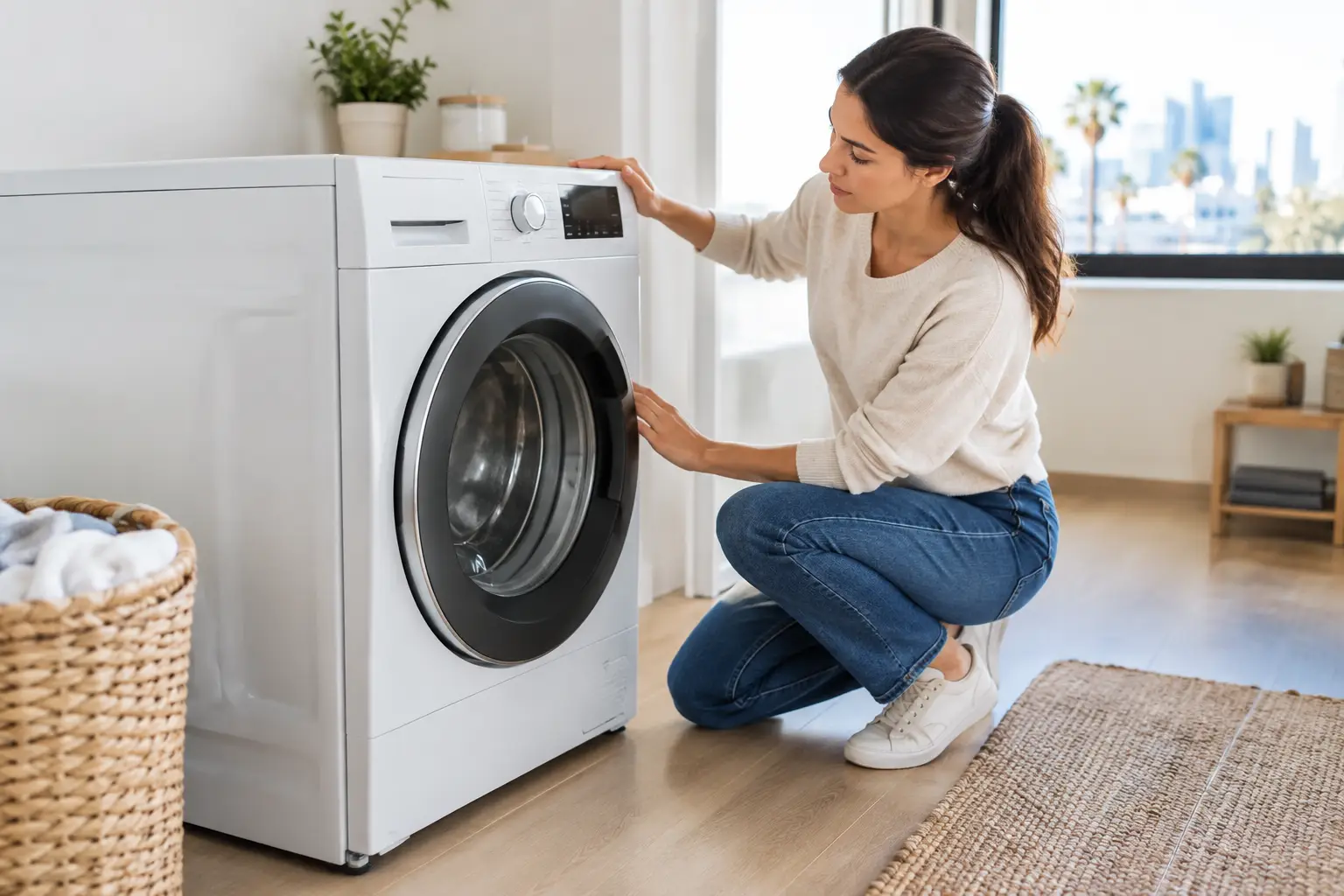
After each wash, leave the washer door or lid open for a while. This lets moisture dry out. Front-load washers need this most, but top-load washers can also develop odor when they stay closed and damp.
Use the amount of detergent shown on the detergent label and washer instructions. More soap does not mean cleaner clothes. Too much detergent leaves residue in the tub, hoses, and dispenser. That residue can cause odor, poor rinsing, and buildup around the door seal.
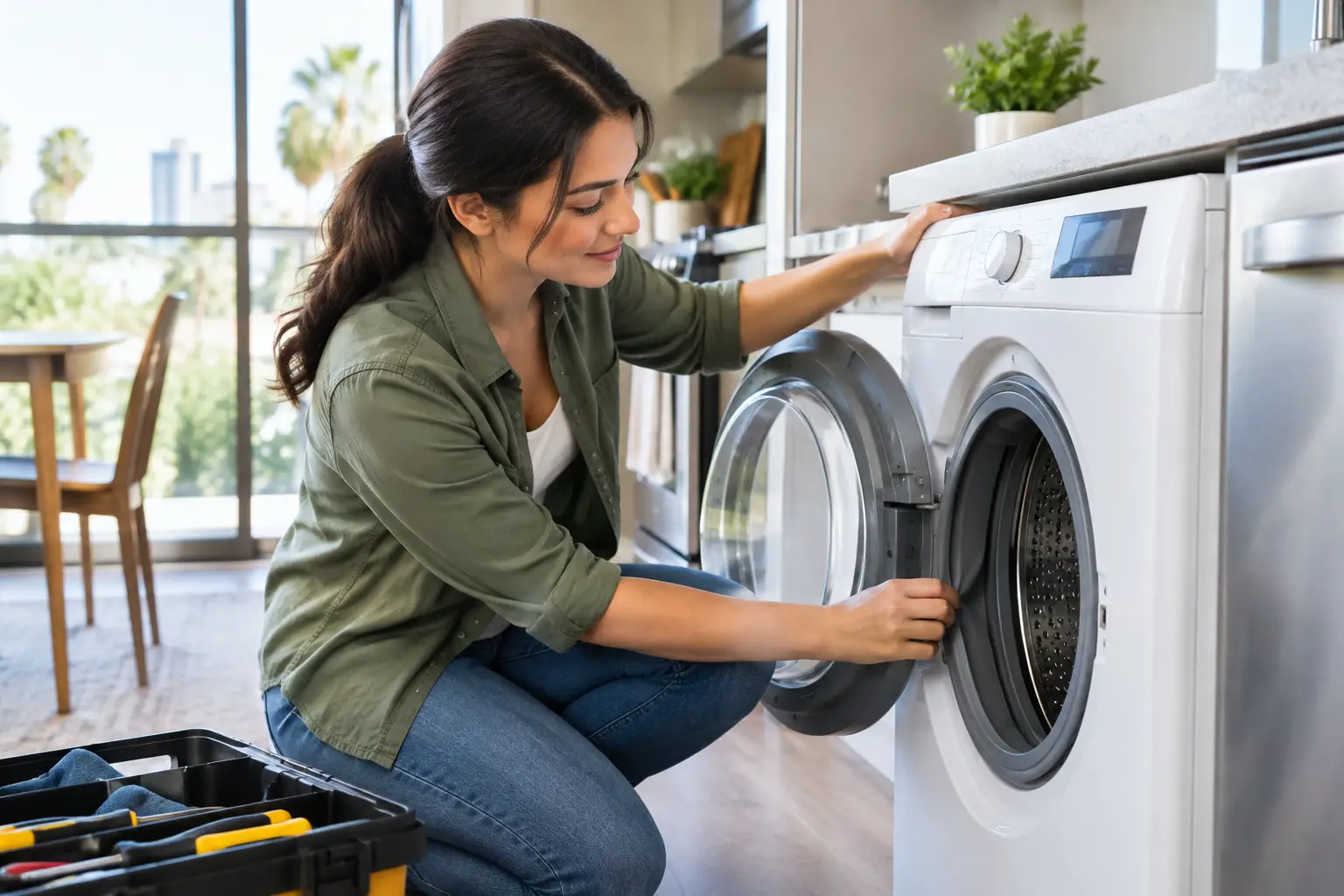
Once a month, wipe the rubber gasket on a front-load washer with a soft cloth. Check the folds for lint, hair, coins, or small items. Clean the detergent drawer if you see dried soap. Run the washer’s cleaning cycle if it has one. If not, follow the manufacturer directions for cleaning the tub.
Look at the water hoses behind the washer when you can safely reach them. Report cracks, bulges, rust around the connections, or moisture on the floor. Never ignore a slow leak. In an upstairs apartment, a small washer leak can damage more than one unit.
A washer that will not drain, shakes hard, or shows an error code needs more than routine care. Avoid repeated restart attempts. They can leave the machine full of water and make the cleanup harder.
Dryer Care Is Mostly About Airflow
Clean the lint screen before every load. Remove lint by hand, then wash the screen with warm water and mild dish soap every few months. Dryer sheets can leave a film that blocks airflow through the screen. Let it dry fully before putting it back.
Do not dry rubber-backed rugs, foam items, or anything marked as not safe for a dryer. Clean lint from the area around the dryer too. Lint behind the machine is easy to miss in tight laundry closets.
A dryer that takes too long, gets very hot, has a burning smell, or stops before the load is dry may have an airflow problem or a failed part. Do not keep running it to finish one more load. Report the issue and stop using the dryer until it is checked.
Keep the Dishwasher Clean Without Overdoing It
Dishwasher filters catch food particles. A dirty filter can leave grit on dishes, cause bad smells, and reduce drainage. If your model has a removable filter, take it out carefully and rinse it under warm water. Use a soft brush if needed. Put it back in the same position so it locks correctly.
Check the spray arms for food pieces or mineral buildup. The small holes need to stay open for water to reach the dishes. Load dishes so tall items do not block the arms from turning.
Use dishwasher detergent made for automatic dishwashers. Hand dish soap creates too many suds and can cause a leak. If water remains in the bottom after a cycle, or water appears under the door, stop using the dishwasher and notify the responsible party. A drain issue can sometimes be simple, but it can also involve a pump, hose, or plumbing connection.
Oven, Range, and Cooktop Checks
Wipe up spills after the surface cools. Burned food under electric burners or on a cooktop can create smoke and make cleaning harder later. On a gas range, keep burner caps seated correctly after cleaning. A cap that sits crooked can cause an uneven flame or prevent the burner from lighting.
Watch for a flame that is mostly yellow, clicking that will not stop, a burner that lights late, or an oven that takes much longer to heat. Do not use foil to line the oven bottom unless the manufacturer specifically allows it. Foil can block heat flow and damage some oven surfaces.
If you smell gas, do not try to relight the burner. Leave the area, avoid switches or flames, and contact the gas utility or building emergency contact. After the immediate safety issue is handled, report the appliance condition for repair.
What Property Managers Should Put on a Routine Schedule
For small apartment buildings, routine checks reduce urgent calls. A simple schedule can cover refrigerator door seals, washer hoses, dryer lint areas, dishwasher filters, and oven burner operation. Keep a record of the unit number, appliance model, issue, and date of service.
Pay attention to repeat complaints from the same unit. A dishwasher leak may be caused by loading, but repeated leaks may point to a worn door seal or loose connection. A dryer complaint may be a lint screen issue, but it may also be a vent problem. The pattern matters.
When to Call for Appliance Repair
Call for help when cleaning and normal use do not solve the problem. Water leaks, electrical smells, breaker trips, no cooling, no heat, error codes that return, and unusual grinding or scraping sounds are all good reasons to stop and schedule service.
Vertex Appliance Repair serves West Hollywood and nearby neighborhoods for in-home refrigerator, washer, dryer, dishwasher, oven, range, cooktop, ice maker, wine cooler, and built-in appliance repairs. The diagnostic fee is $89 and is waived when you approve the repair. Labor and installed parts carry a 90-day warranty.
A clean filter or lint screen can prevent many avoidable problems. But when an appliance changes how it sounds, heats, drains, or cools, reporting it early is usually the easiest way to protect your home and avoid a larger repair later.
Related articles
Frigidaire Washer Stops After 5 Seconds — E5E Is Not the Door Lock
Why Is Your Dishwasher Leaving Dishes Dirty?