Condo Washer Repair for Leaks and Drain Problems
Condo washer repair: practical checks for leaks, no draining, shaking, and cycle failures, plus when to call for an in-home diagnosis in West Hollywood.
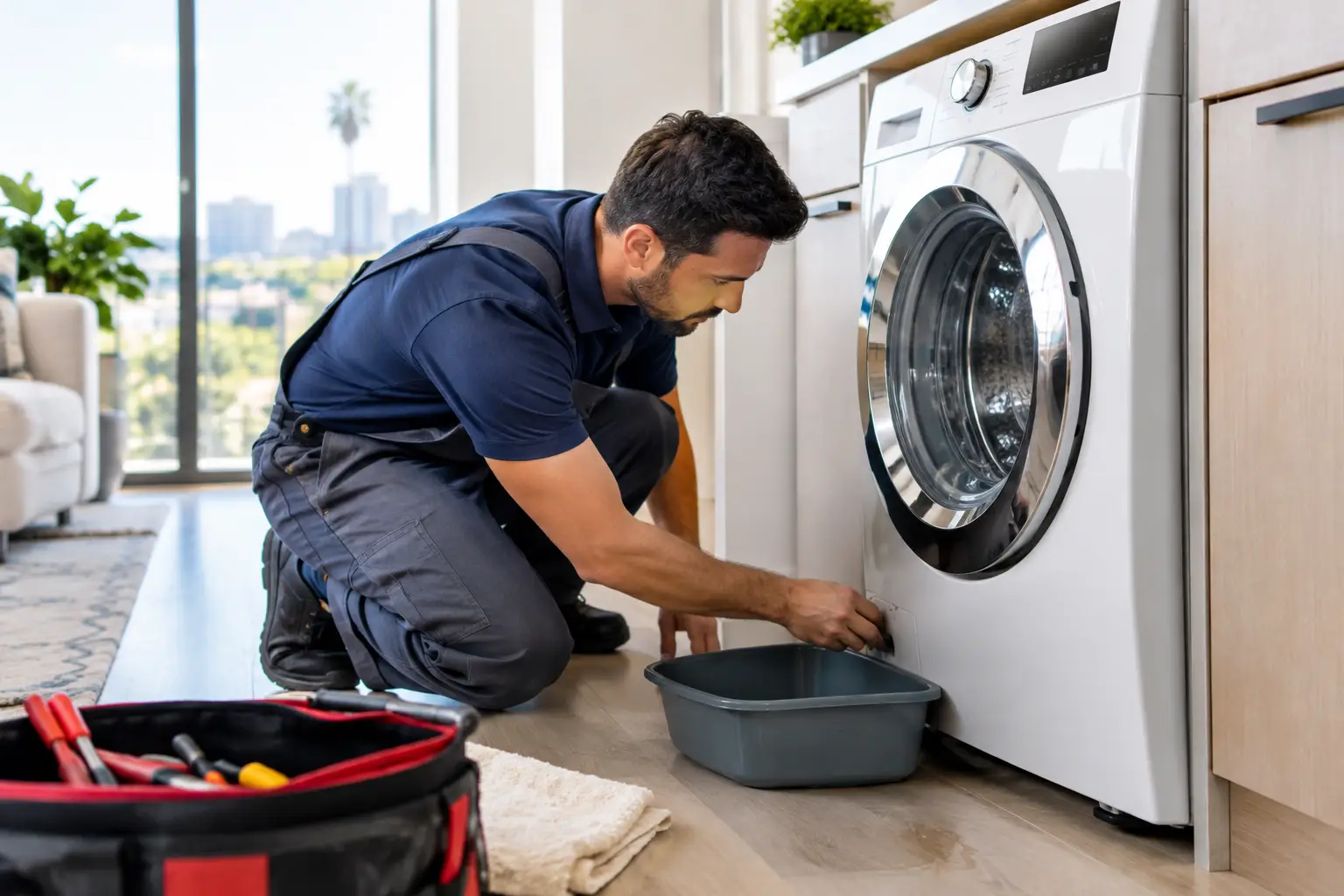
A condo washer repair issue usually comes down to a drainage problem, water supply issue, an out-of-balance load, a worn door or lid component, or an internal electrical or mechanical failure. Start by stopping the cycle if water is leaking, check what you can see safely, and avoid repeatedly restarting a washer that is making loud noises or will not drain. The symptom matters because a washer that leaves water in the tub needs a different diagnosis than one that leaks only during a spin cycle.
In a condo, a washer problem can affect more than laundry. Water can travel beneath flooring or into the unit below, and a machine that bangs during spin can disturb neighbors quickly. Renters should document the symptom and notify the landlord or property manager when the appliance is not theirs. Owners and managers should arrange an inspection before a small leak turns into a building-related issue.
Why is my condo washer not draining?
When a washer finishes with standing water in the drum, many people assume the drain pump has failed. The pump is certainly one possibility, but it is not the only one. A kinked or crushed drain hose, a clogged household drain, a small item caught in the pump area, or a control problem can all prevent normal draining.
A safe first check is to turn the washer off and look at the visible drain hose behind or beside the machine without pulling the appliance away from the wall. If the hose is sharply bent, pinched, or sitting in an obvious position that blocks water flow, do not force it. In tight condo laundry closets, moving the washer can damage flooring, hoses, or wall connections. Also look for water around the base and listen for humming during the drain portion of the cycle. A hum with no water movement can point toward a blockage or pump issue, but it is not a final diagnosis.
Do not keep running a drain-and-spin cycle if the tub remains full. Overflow is possible, and the motor or pump can be stressed when it cannot move water. A technician may check the pump for an obstruction, inspect the drain hose routing, and determine whether the washer is sending proper power to the pump. If the building drain is backing up, the issue may need a plumber rather than a washer repair.
What causes a washer to leak in a condo?
The location and timing of the water are useful clues. A leak at the front of a front-load washer often involves the door gasket, detergent drawer area, or an over-sudsing condition. Water near the back can come from supply hoses, the drain hose, or internal components. A leak that appears only during spinning may involve a tub seal, a loose connection, or water escaping because the load is severely unbalanced.
One common mistaken assumption is that any water on the floor means the washer itself is leaking. In some laundry closets, water may be coming from a backed-up drain standpipe or a nearby connection. Conversely, a minor drip from a supply hose can be easy to miss until the washer fills.
You can safely inspect the floor, the visible hose connections, and the rubber door gasket for a towel, sock, or obvious object preventing a full seal. If you see active water, shut off the washer, avoid standing in water near an electrical outlet, and close the nearby water supply valves only if they are accessible without reaching behind the appliance. Do not remove panels or try to tighten hidden fittings. Call for service promptly if the leak has reached cabinetry, flooring, or another unit.
Using too much detergent can also create a leak-like problem. High-efficiency washers require HE detergent and a smaller amount than many people expect. Excess suds can push water out through the dispenser or door area and may leave the washer struggling to rinse and spin. That said, detergent is not a likely explanation for every leak, particularly when water appears before the wash action begins.
Why does my washer shake or bang on spin?
A washer can shake because a bulky item has collected on one side of the drum, but persistent violent movement can indicate a leveling problem, worn suspension parts, loose counterweights, or a failing bearing. The timing is important. A brief pause and repositioning of the load before spin can be normal. Repeated banging, walking across the floor, or a metal-on-metal sound is not.
Open the door or lid only after the washer has stopped. Redistribute heavy items such as towels, sheets, or a bath mat, then run a single spin cycle once. Avoid washing one heavy item by itself when possible. If the machine still shakes hard with an ordinary balanced load, stop using it until it is inspected. A washer that moves in a condo closet can strain water and drain connections, and repeated impact can cause a leak later.
A technician can check whether the washer is level and assess the condition of suspension rods, shocks, springs, and bearings. Some repairs are straightforward; others depend on the age of the machine, availability of parts, and whether the tub assembly has damage. An inspection is the right time to discuss whether repair makes sense rather than guessing from the noise alone.
Why will my washer not start or finish a cycle?
If the display is on but the cycle will not begin, make sure the door or lid is fully closed and no laundry is caught in the opening. Front-load models use a door-lock system, while top-load models typically use a lid-lock system. A failed lock can keep the machine from filling or spinning because the washer cannot confirm that it is safe to operate.
If the washer stops mid-cycle, note what happened just before it stopped. Did it fill with water? Did it wash but fail to drain? Did it stop when it was time to spin? Those details help narrow the problem to the water inlet system, drain system, motor drive, lock, control board, or another component.
Avoid resetting the breaker over and over or unplugging and restarting the machine repeatedly in hopes that it will clear the fault. One basic reset according to the manufacturer’s instructions may be reasonable, but recurring error codes or a burning smell require service. Unplug the washer if it is safe to reach the plug and there is no water nearby, then leave it off until a professional can inspect it.
What does a technician check during condo washer repair?
A proper diagnosis starts with the exact complaint, visible condition, and the washer’s behavior during the relevant part of a cycle. For a no-drain call, the technician may verify pump operation and inspect the drain path. For a leak, the goal is to identify where water starts rather than simply where it collects. For shaking, the inspection includes the machine’s stance, load behavior, and suspension or bearing condition.
Electrical tests are also part of many repairs. A technician may measure voltage supplied to a component or check continuity, which means testing whether an electrical path is intact. These are professional checks performed with the appliance safely accessed and powered as needed. They should not be attempted by a homeowner around water, exposed wiring, or an appliance that is hard to access in a tight closet.
For residents and property managers in West Hollywood, Vertex Appliance Repair provides in-home washer diagnosis and repair for common issues such as leaks, draining failures, spin problems, and cycle interruptions. The diagnostic fee is $89 and is waived with an approved repair. Installed parts and labor carry a 90-day warranty.
Before scheduling, take a photo of any error code, note the washer brand and model number if it is visible, and describe when the symptom occurs. If water is actively leaking, shut the washer off and protect the surrounding area without trying to dismantle the machine. That small amount of information can make the visit more focused and help get laundry back on track with less disruption to your home or tenants.