Best Dryer Vent Cleaning Methods for Safer Drying
Learn the best dryer vent cleaning methods, safe homeowner checks, warning signs, and when to schedule professional vent service in West Hollywood homes.
A dryer that suddenly needs two or three cycles is often dealing with restricted airflow, and the best dryer vent cleaning methods remove lint from the entire path to the outside, not just the lint screen. Start with the safe checks you can see: clean the lint filter, look at the outside vent hood while the dryer runs, and pay attention to heat, odors, and drying time. If airflow is weak, the vent flap does not open, or the duct run is concealed behind the dryer or in a wall, stop there and arrange professional service.
A blocked vent can raise drying times and put extra stress on the dryer. It is not the only possible reason for poor drying, though. A worn heating element, failed thermostat, weak blower, overloaded drum, or a washer that is not spinning clothes dry enough can create similar complaints. The goal is to clear the airflow safely, then diagnose the dryer if the problem remains.
Why does my dryer take three cycles?
When clothes come out warm but still damp after a normal cycle, restricted venting is high on the list of possibilities. The dryer may be producing heat, but it cannot push humid air outdoors fast enough. Towels and bedding often reveal the problem first because they hold more water and need steady airflow to dry.
The common mistake is assuming the lint screen is the whole job. Cleaning it after every load matters, but lint passes beyond the screen. It can collect in the transition duct behind the dryer, at bends in the duct, at the exterior hood, and along the longer duct route leading outside. Pet hair, dust, and nesting material can also block the exterior termination.
Before blaming the vent, consider the load itself. A packed drum limits tumbling and air movement. One heavy item mixed with lighter clothing can also leave that item damp. If every load takes too long, even when the dryer is not overloaded, airflow and dryer operation both deserve attention.
Best dryer vent cleaning methods depend on the duct
There is no single tool that works safely for every vent. The best method depends on the duct length, the number of turns, whether the duct is accessible, and the condition of the material. A short, straight metal duct may need a straightforward brush-and-vacuum cleaning. A long concealed route in a condo or multi-unit building may require professional equipment and verification of airflow at the exterior hood.
Clean the lint screen correctly
Remove the lint screen and clear lint by hand after each load. Every few months, wash the screen with warm water and mild dish soap, then let it dry completely before reinstalling it. Fabric softener residue and dryer-sheet coating can form a thin film that reduces airflow through the mesh even when the screen looks clean.
A simple check is to run water over the screen. Water should pass through easily. If it pools on top, wash the screen. Do not operate the dryer without the lint screen in place.
Vacuum the lint-screen housing carefully
A narrow vacuum attachment can remove loose lint from the screen opening. Keep the vacuum tool near the top of the housing and use gentle movements. Do not force a long rigid tool downward, because it can snag wiring or damage internal components that are not visible from the opening.
This is useful maintenance, but it does not clean the vent route behind the dryer. If you are still seeing long drying times after cleaning the screen and housing, the restriction may be farther along.
Inspect the outdoor vent hood while the dryer runs
This is one of the most useful homeowner checks. Turn the dryer on with a normal heat setting, then look at the exterior vent hood. The flap should open and you should feel a noticeable flow of warm, moist air. Keep hands clear of any sharp edges and do not remove a cover that requires tools or ladder access.
A flap that barely moves can point to lint buildup, a stuck damper, or a damaged hood. Some vent covers are fitted with screens that catch lint quickly. Dryer exhaust outlets generally need a hood that allows airflow without trapping lint. A professional can assess whether the termination is appropriate and whether the duct itself is obstructed.
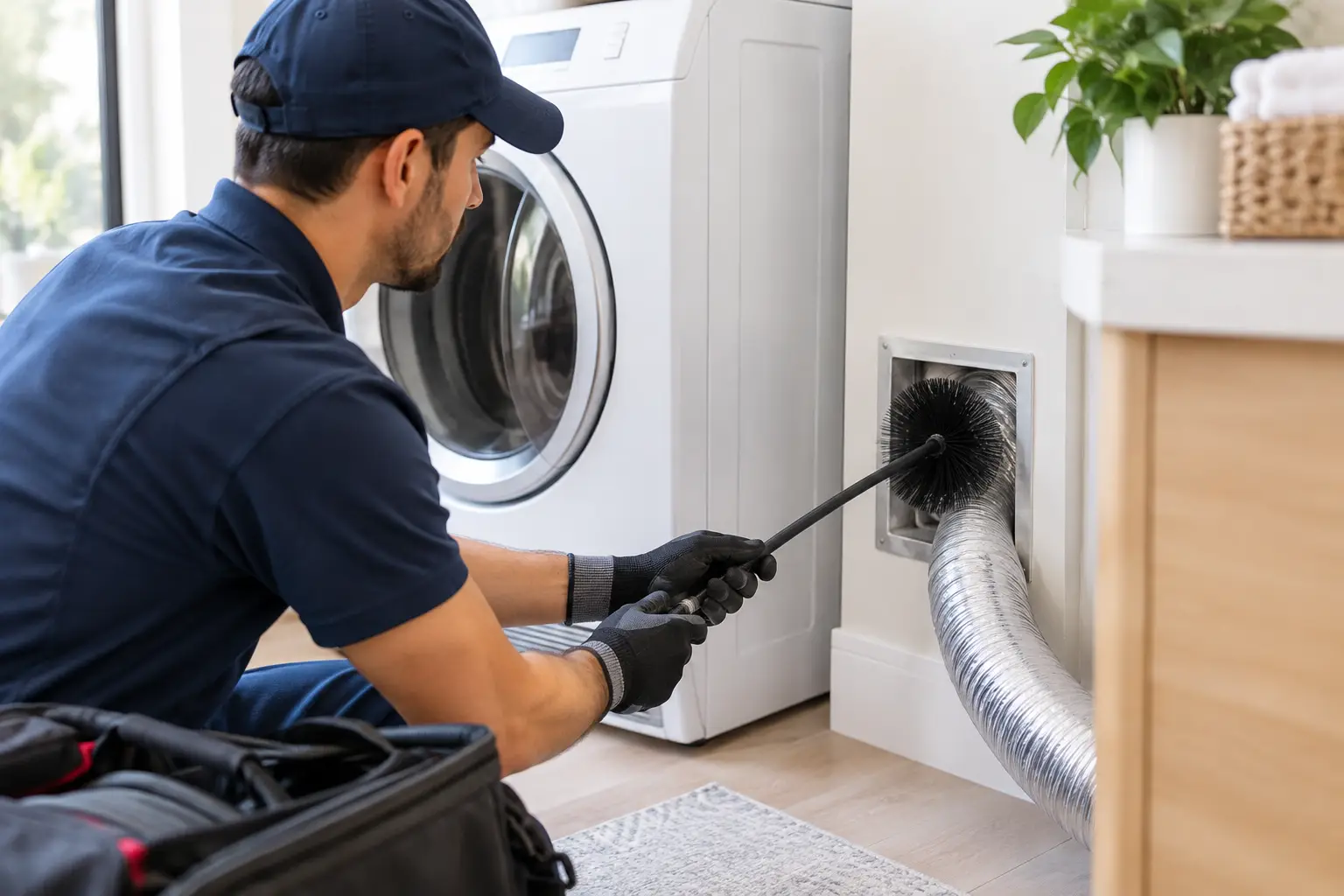
Use a rotating brush only when access is simple
Brush systems can work well on short, smooth metal ducts with a clear path from an accessible connection. They are less predictable in long ducts with tight elbows, damaged joints, flexible foil sections, or unknown routing. Aggressive brushing can push lint deeper, disconnect a weak duct joint, or damage thin flexible material.
Avoid leaf blowers, pressure washers, and improvised tools. They can compact lint, create a mess inside the wall, or separate duct sections where you cannot see the damage. Also avoid using duct tape on dryer vent connections. Proper metal duct and approved metal fastening methods are safer choices, but changes to the vent system are best left to a qualified professional.
Professional cleaning should clear and verify the full route
A proper dryer vent cleaning is more than collecting lint at one opening. The technician should access the duct safely, remove buildup through the full reachable run, inspect visible connections and the exterior termination, and check that air is moving properly once the system is reassembled.
For a gas dryer, do not pull the appliance away from the wall yourself. The gas connector and exhaust duct can be damaged or strained if the machine is moved carelessly. For an electric dryer, the appliance is still heavy, and the electrical cord and vent connection can be affected. If access requires moving the dryer, it is better to have it handled during service.
What warning signs mean you should stop using the dryer?
Stop using the dryer and schedule an inspection if you smell burning, see smoke, notice the laundry room becoming unusually hot, or find the dryer cabinet too hot to touch comfortably. A burning smell can come from lint, overheating components, a slipping belt, or an electrical issue. It should not be treated as a normal part of drying clothes.
Other warning signs include a vent flap that does not open, lint collecting around the exterior outlet, moisture or condensation in the laundry area, and a dryer that shuts off before the load is dry. Some dryers have high-limit safety devices that stop or reduce heat when temperatures rise too far. Repeated overheating can lead to more than a vent-cleaning issue.
If the dryer tumbles but has no heat at all, a blocked vent is not the only likely cause. The heating system, thermal fuse, thermostat, power supply, or gas ignition components may need testing. Those checks involve electrical or gas-related parts and are not safe DIY work.
How often should a dryer vent be cleaned?
Annual cleaning is a reasonable starting point for many households, but the right interval depends on usage and the vent layout. A household that does frequent laundry, has pets, dries bulky linens regularly, or uses a long duct with several bends may need service sooner. Property managers should also consider tenant turnover and whether residents have reported slow drying or heat in the laundry area.
Between professional cleanings, clean the lint screen every load, keep the exterior hood clear, and avoid crushing the duct when the dryer is pushed back. Do not use plastic or thin foil accordion-style venting where safer metal ducting is required. The duct should have room for air to move without sharp kinks.
When is vent cleaning not enough?
If the vent has been cleaned and the dryer still takes too long, the dryer itself may need diagnosis. A technician may check exhaust temperature, airflow, heating operation, drum movement, moisture-sensing performance, and the condition of internal airflow components. These are professional checks because the appliance must be accessed safely and tested under operating conditions.
Vertex Appliance Repair provides dryer vent cleaning in West Hollywood, with service starting from $149, and can also evaluate dryer-related symptoms when cleaning alone does not solve the problem. For homeowners, tenants, landlords, and property managers, the useful next step is to describe exactly what the dryer is doing: whether it heats, how many cycles are needed, whether the outside flap opens, and whether there is any unusual smell or noise.
A clean lint screen and a working exterior flap are good signs, but they do not prove the entire vent is clear. When drying time changes or heat seems abnormal, treating the airflow issue early is usually easier than waiting for laundry to pile up or the dryer to shut down.