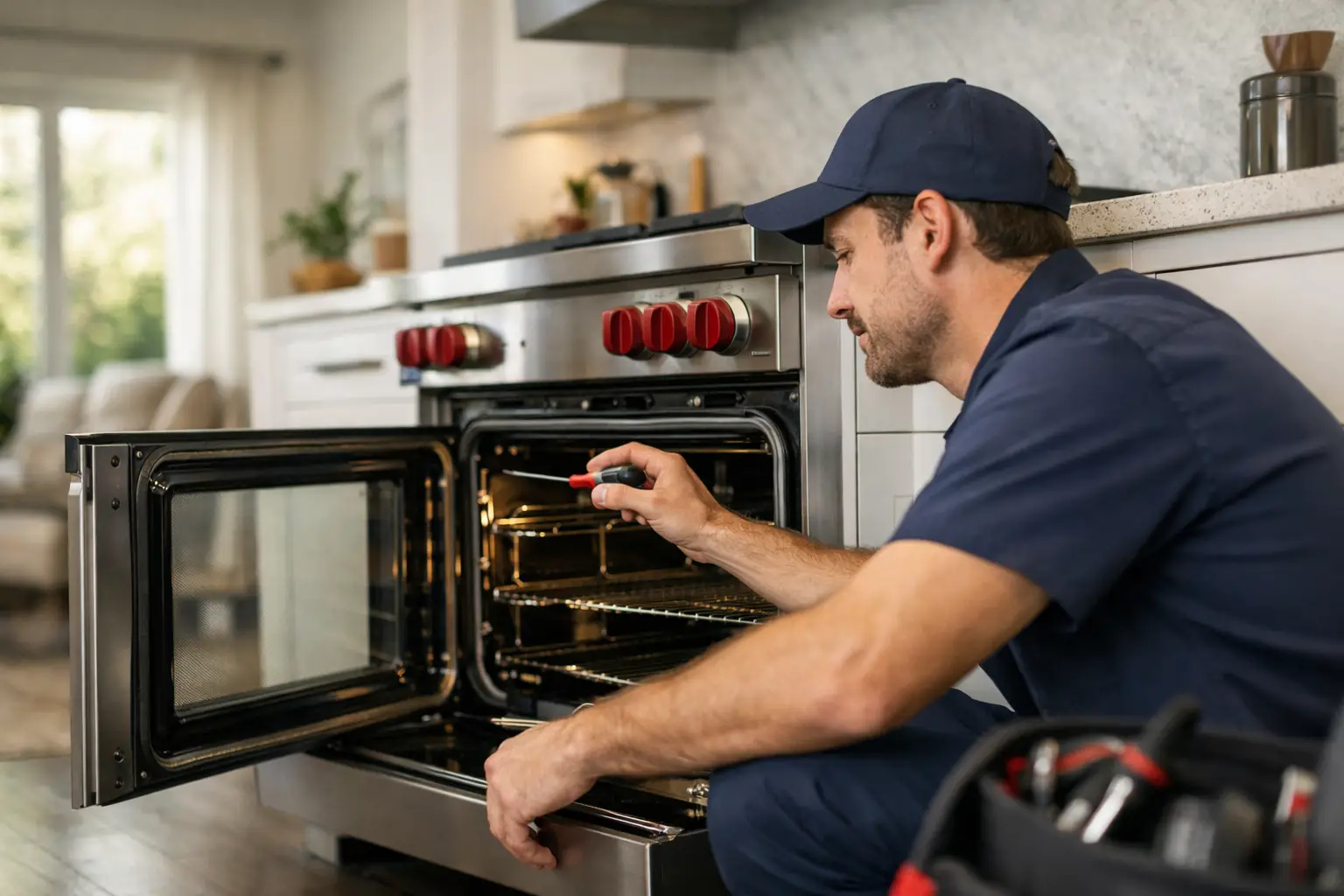





Gas vs Electric Dryer Repair: Key Differences
Gas vs electric dryer repair involves different parts, risks, and costs. Learn common dryer problems and when to call a local technician.
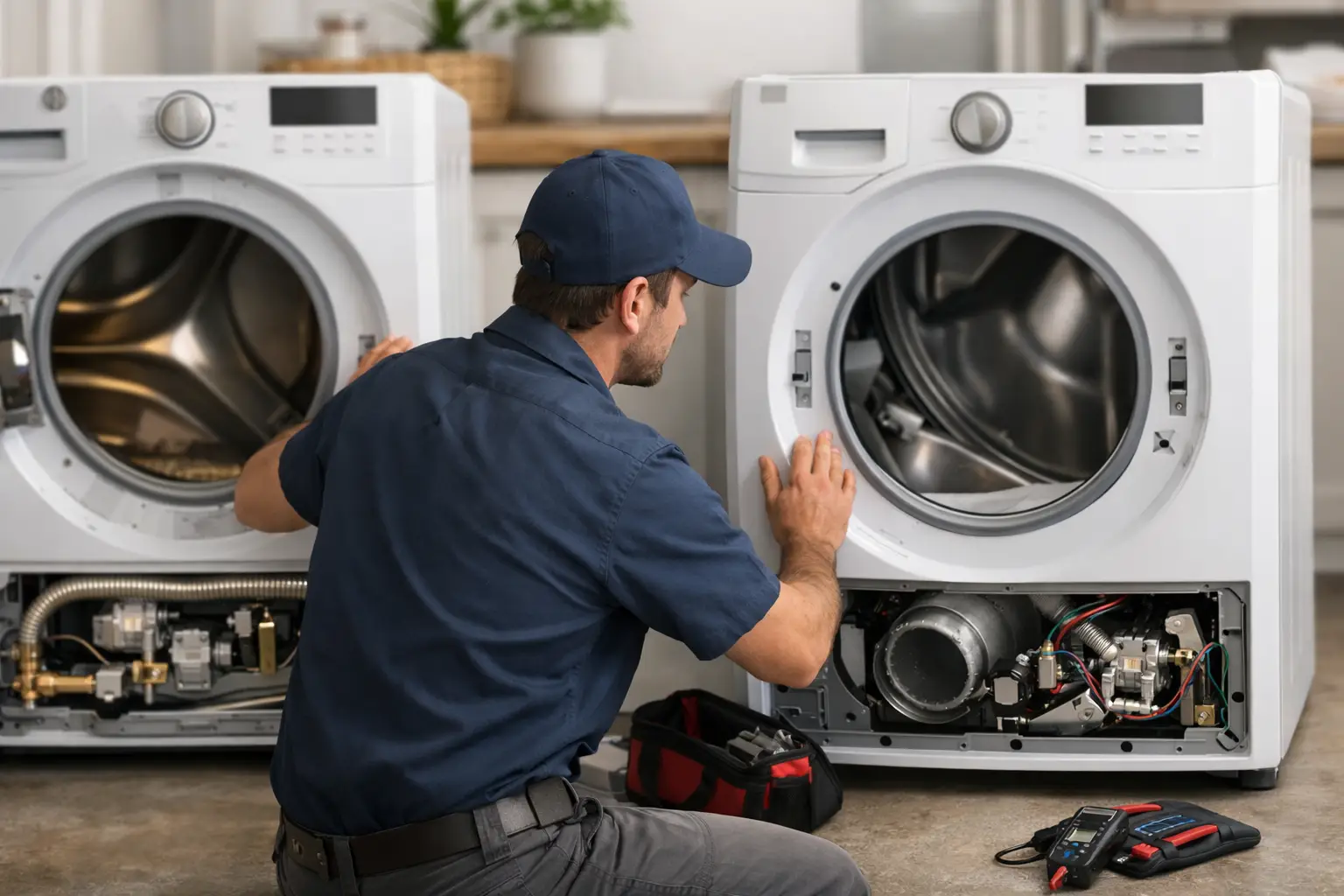
A dryer that runs but leaves clothes damp can look like a simple problem. The repair can be very different depending on whether you have gas or electric heat. Gas vs electric dryer repair starts with identifying the dryer type, then checking the parts that create heat, move air, and keep the machine safe.
Both types can have the same basic symptoms. They may not start, may tumble without heating, may take too long, or may stop in the middle of a cycle. But the cause is not always the same. A gas dryer uses a burner system. An electric dryer uses a heating element and a 240-volt power supply. That difference matters when deciding what you can safely check and when to schedule service.
How to Tell Which Type of Dryer You Have
Look behind the dryer if it is safe to do so. A gas dryer has a flexible gas line connected to it. It usually has a standard-looking 120-volt plug because electricity runs the motor, controls, and igniter. The gas provides the heat.
An electric dryer has a large, heavy-duty power cord that plugs into a 240-volt outlet. It does not have a gas line. Most electric dryer cords have three or four prongs, depending on the outlet and the age of the installation.
Do not pull a stacked dryer, built-in unit, or tightly installed machine forward by yourself. The vent can disconnect, the cord can be damaged, and a gas line can be stressed. This is especially common in condos and rental units with narrow laundry closets.
Gas vs Electric Dryer Repair: What Changes
The drum, belt, rollers, motor, door switch, and lint airflow system are similar on both dryer types. If the dryer squeaks, thumps, will not tumble, or has a broken door latch, the repair process is often much the same.
The heating system is where the work changes. A gas dryer needs gas flow, ignition, flame sensing, and good ventilation. Common gas heating parts include the igniter, gas valve coils, flame sensor, and thermal fuse. A problem with any of these can leave the dryer tumbling with no heat.
An electric dryer uses one or more heating elements. It also needs full power from both sides of the 240-volt circuit. A dryer can still turn the drum when one breaker has tripped or one side of the circuit has failed. This confuses many homeowners. The machine looks like it is working, but it cannot produce heat.
Gas repairs also need extra care because of the fuel line and burner area. Electric repairs need extra care because 240 volts can cause serious injury. Neither type is a good candidate for trial-and-error part replacement.
Common Problems With Gas Dryers
A gas dryer that will not heat may have a failed igniter. The igniter glows to light the gas burner. If it does not glow, the dryer will not make heat. If it glows but the burner does not light, the gas valve coils or flame sensor may be the issue.
Some gas dryers heat for a few minutes and then blow cold air. This can happen when weak gas valve coils fail after warming up. A blocked vent can also make the dryer overheat and shut off the burner for safety.
If you smell gas, stop using the dryer. Do not try to relight it. Do not operate switches nearby. Leave the area if the smell is strong, and contact your gas utility for guidance. A technician should inspect the dryer before it goes back into service.
A gas dryer can also have problems unrelated to gas. A bad belt, worn rollers, clogged vent, faulty control board, or failed thermal fuse can affect either type of dryer.
Common Problems With Electric Dryers
The most common electric dryer heating complaint is simple: the drum turns, but the clothes stay wet. First, check the home electrical panel. Electric dryers usually use a double breaker. It may look partly tripped even when it does not look fully off. Turn it fully off, then back on once.
If the breaker trips again, do not keep resetting it. There may be a wiring problem, a damaged cord, or a failed dryer component. The dryer needs inspection.
If the breaker is on and the dryer still has no heat, the heating element may be open or burned out. The thermal fuse, high-limit thermostat, wiring, or control may also be at fault. These parts work together to control dryer temperature. Replacing only the burned part without finding the reason it failed can lead to another breakdown.
An electric dryer that takes two or three cycles to dry a normal load may still be heating. In many cases, the real problem is poor airflow through the lint screen housing, vent pipe, or outside vent hood.
The Vent Problem Both Dryer Types Share
A blocked vent causes more dryer trouble than most people expect. It makes dry times longer. It can cause hot clothes, a burning smell, automatic shutoff, and repeat failures of heat-related parts. It also raises the risk of lint buildup becoming a fire hazard.
Clean the lint screen before every load. Wash it with warm water and mild dish soap if fabric softener residue has built up on it. A screen can look clean but still block airflow when coated with residue.
Check the outside vent flap while the dryer is running. It should open and release warm air. If it barely moves, air may be restricted. Do not use the dryer with a crushed, loose, or disconnected vent behind it. A disconnected vent can send moisture and lint into the laundry area.
For apartment managers and landlords, vent issues can affect more than one unit. A long shared vent path needs proper inspection and cleaning. Replacing dryer parts will not solve a building vent restriction.
What You Can Check Before Calling for Repair
Start with the easy checks. Make sure the dryer door closes firmly. Confirm the cycle is set to a heated setting, not Air Fluff or No Heat. Clean the lint screen. Check that the outside vent is not blocked by lint or debris.
For an electric dryer, check the breaker once. For a gas dryer, confirm the gas shutoff valve has not been turned off during recent plumbing or remodeling work. The handle should normally be parallel with the gas pipe when open.
Then stop there. Do not remove the front or rear panels while the dryer is connected to power. Do not bypass a thermal fuse or door switch. Do not use a flame to test for a gas issue. These shortcuts can turn a repairable problem into a safety problem.
When Repair Makes Sense
A dryer is often worth repairing when the cabinet, drum, and main structure are in good shape. Belts, rollers, igniters, heating elements, thermostats, switches, and many control-related issues can be repaired with the right diagnosis.
The decision depends on the dryer’s age, condition, part availability, and the total repair cost. It also depends on what caused the failure. A dryer with one bad igniter is different from a dryer with repeated heating failures, heavy rust, damaged wiring, and a poor vent setup.
For rental properties, quick diagnosis helps avoid unnecessary replacement. A tenant may report that a dryer is “broken” when the actual issue is a tripped breaker or blocked vent. On the other hand, a dryer that has a gas smell, electrical burning smell, or repeated breaker trips should be taken out of use until it is checked.
Getting the Right Dryer Diagnosis
A proper dryer visit should check more than the part that first appears bad. The technician should look at heating operation, airflow, electrical supply or gas ignition, safety controls, and the condition of the drum system. This helps prevent a new part from failing because the original cause was missed.
For West Hollywood homes, apartments, and small multi-unit properties, access can make a difference. Share whether the dryer is stacked, in a closet, on an upper floor, or behind a tight laundry enclosure when you schedule. That helps the visit go more smoothly.
Vertex Appliance Repair charges a $69 diagnostic fee, which is waived when you approve the repair. Completed repairs and installed parts include a 90-day warranty. If your dryer is not heating, making noise, or taking too long to dry, stop running extra cycles and have the cause checked before the problem gets bigger.
If your dryer is not heating or takes several cycles to dry a load, we can help. See dryer repair in West Hollywood or call 323-747-7098.
Related articles
Built In Refrigerator Versus Freestanding: Which Fits?
Sub-Zero Error 24 EC — Check the Condenser Before the Defrost Parts