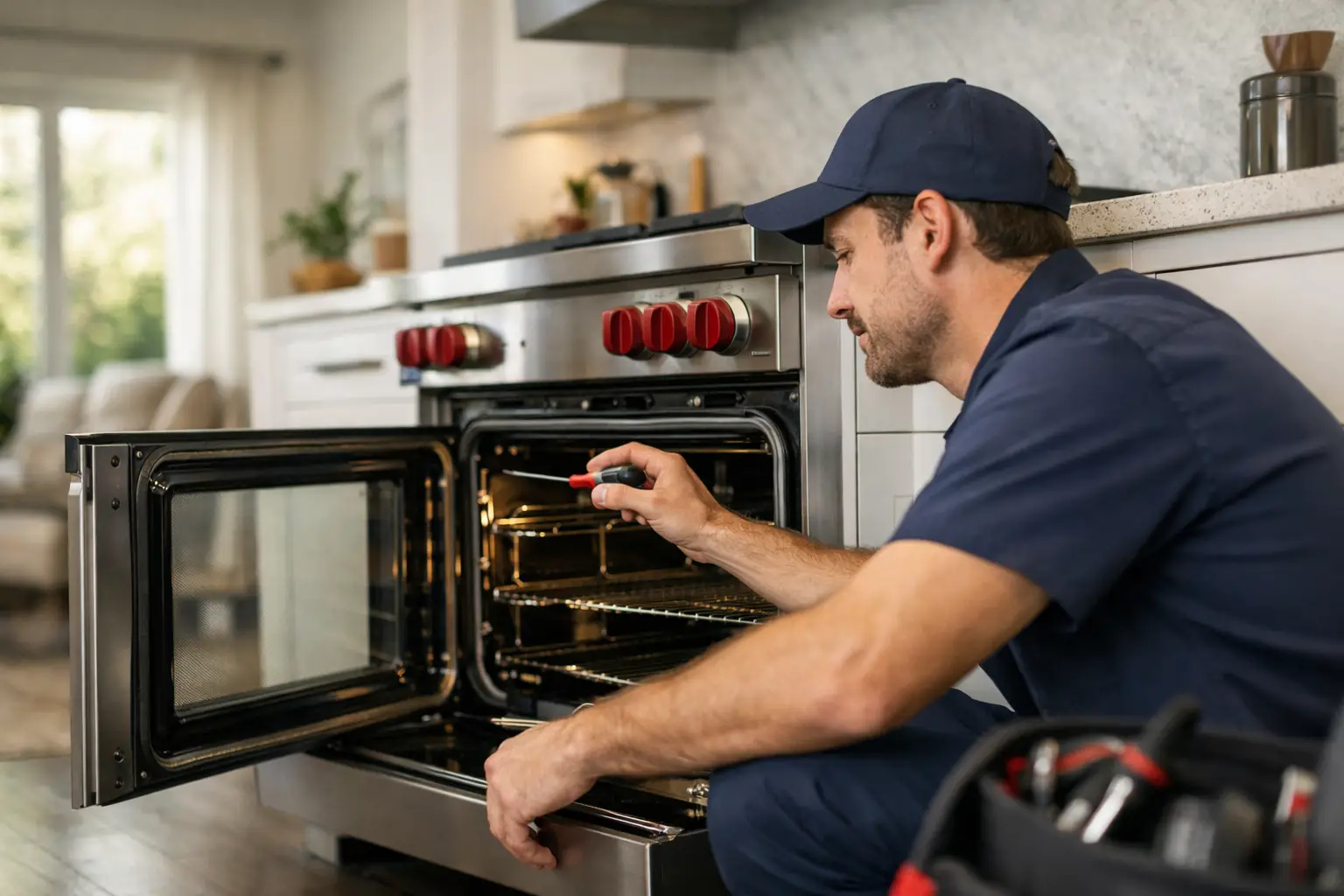





A Practical Guide to Built-In Appliance Repair
This guide to built-in appliance repair explains common faults, safe checks, repair timing, and what to expect from a West Hollywood service visit today.
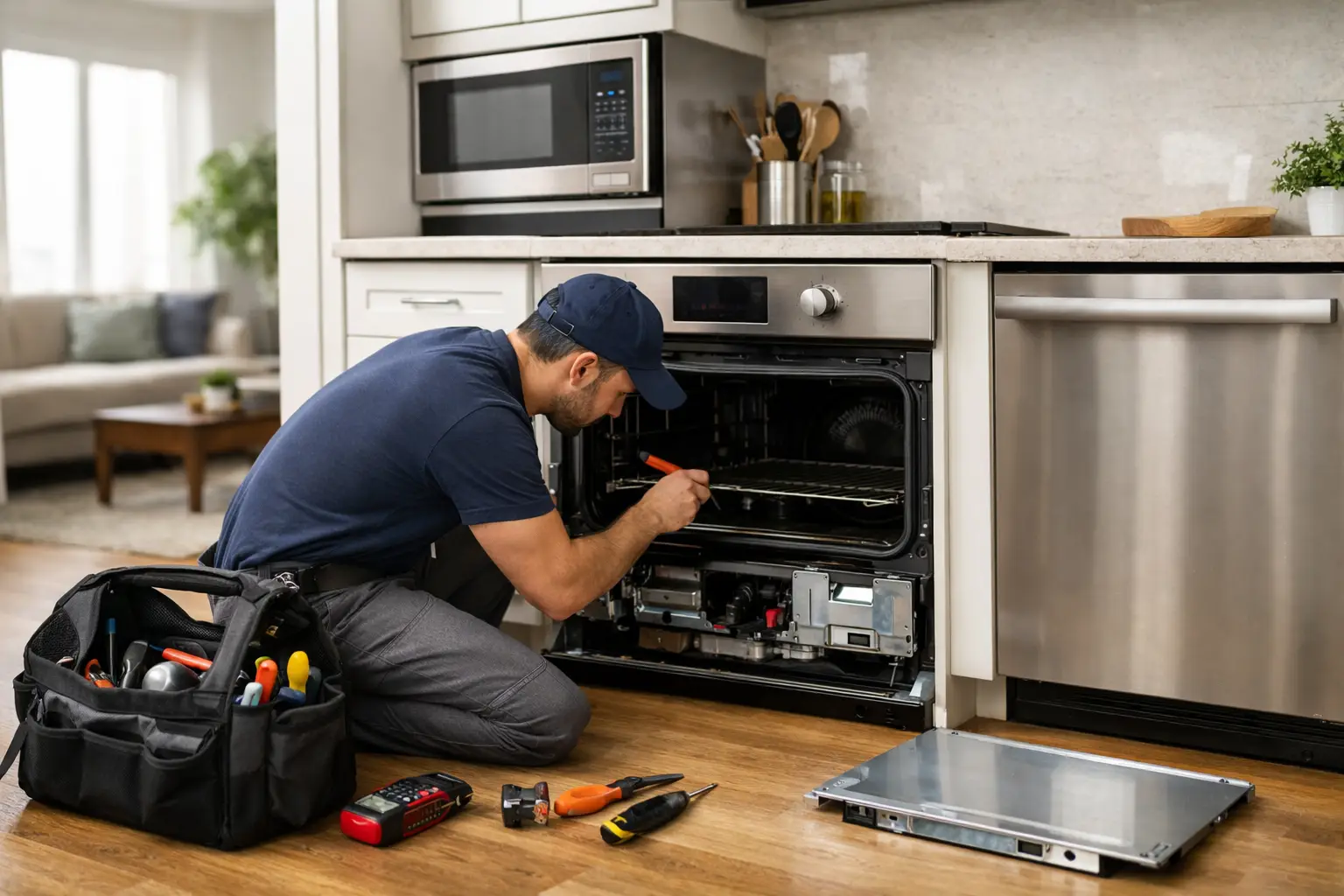
A built-in appliance can be harder to repair than a standard model. It is often installed inside cabinetry, connected to water or gas, or secured with mounting brackets. This guide to built-in appliance repair explains what usually goes wrong, what you can safely check first, and when it is time to schedule an in-home repair visit.
Built-in refrigerators, dishwashers, wall ovens, cooktops, wine coolers, and ice makers are designed to fit closely with the kitchen. That clean look is useful, but it can make access more difficult. Pulling out the appliance the wrong way can damage a floor, cabinet panel, water line, or electrical connection.
What Makes Built-In Appliance Repair Different?
A freestanding appliance usually has open space around it. A built-in unit does not. It may be fastened to cabinets, hidden behind a custom panel, or installed under a stone counter. Before a repair can begin, the technician may need to remove trim, shelving, drawer fronts, or mounting screws.
Access is only one part of the job. Built-in appliances also need correct airflow. A built-in refrigerator, for example, can overheat if its vents are blocked. A dishwasher can leak into the cabinet base if its door seal or water connection fails. A wall oven may need to be removed from its cabinet opening to reach wiring or heating parts.
The repair itself may be simple. Getting to the failed part safely can take more time. That is why the appliance model number, the symptoms, and clear access to the unit all help before the appointment.
Common Problems With Built-In Appliances
Built-In Refrigerator Is Warm or Runs Constantly
If the refrigerator is warm, check that the doors are fully closed and that food is not blocking the air vents inside. Look at the temperature settings too. A refrigerator set too warm can look like a mechanical problem when it is only a settings issue.
If the unit runs all day, has frost on the back wall, makes clicking sounds, or cannot hold a safe food temperature, it needs attention. Possible causes include a failed fan, dirty condenser area, defrost problem, weak compressor start part, or control board issue. A built-in refrigerator should not be pulled out without care. Water tubing and power connections may be tight behind the unit.
Built-In Dishwasher Leaks, Does Not Drain, or Leaves Dishes Dirty
Start by checking the filter at the bottom of the dishwasher. Food debris can slow drainage and reduce wash results. Also check that the spray arms can turn freely and that the detergent dispenser is not blocked by a large dish.
Water on the floor, repeated draining sounds, or a dishwasher that stops mid-cycle needs a repair visit. The cause may be a worn door gasket, drain pump, inlet valve, float switch, or clogged drain path. Do not keep running a dishwasher that leaks. Even a small leak can swell cabinet wood or damage flooring below it.
Wall Oven Does Not Heat Evenly
A wall oven that takes too long to preheat or cooks unevenly may have a failed bake element, broil element, temperature sensor, relay, or control board. If one area of a pan burns while another area stays undercooked, the temperature may be off even if the display looks normal.
You can compare the oven display with an oven thermometer, but do not remove panels or touch wiring. Wall ovens use high voltage. Turn off power at the breaker if you smell burning, see sparks, or notice that the oven will not shut off.
Cooktop Burner Will Not Light or Heat
On a gas cooktop, a burner may click but fail to light because the cap is out of place or the burner ports are dirty. Let the cooktop cool first. Then remove the cap and wipe away grease or food around the burner area. Make sure all parts are dry before trying it again.
If you smell gas, do not keep clicking the igniter. Turn off the burner, ventilate the room, and arrange service. On an electric or induction cooktop, a burner that will not heat may have a failed element, sensor, switch, or control board. Cracked glass is also a repair concern. Do not use a cooktop with damaged glass near the heating area.
Built-In Ice Maker or Wine Cooler Has Temperature Problems
Ice makers can stop producing ice because of a frozen fill tube, water valve problem, sensor fault, or low freezer temperature. Check that the water supply valve is open and that the freezer is cold enough. Do not force ice from a frozen mechanism with a sharp tool.
Wine coolers often have airflow or temperature-control problems. If the unit is warm, loud, or cycling too often, make sure its vents are clear and its door gasket is clean. A cooler packed too tightly can also have poor airflow. If the temperature still will not hold, the fan, thermostat, sensor, or sealed cooling system may need diagnosis.
Safe Checks Before You Call for Repair
A few basic checks can save time, but homeowners should not take apart a built-in appliance. Check the outlet or breaker if the appliance is completely dead. Confirm that doors, drawers, and panels are closing correctly. Clean visible filters and remove obvious food debris. Take note of error codes, noises, leaks, and when the problem started.
For a refrigerator or wine cooler, protect food if the temperature is rising. Move perishable items to another working refrigerator or use a cooler with ice. For a leaking dishwasher or ice maker, turn off the water supply if you can do so safely. For an oven or cooktop with an electrical smell, shut off the breaker.
Avoid pulling a built-in appliance forward by its door, handle, or custom panel. Avoid using extension cords as a permanent fix. Do not reset a tripped breaker repeatedly. If it trips again, leave it off until the appliance can be checked.
When a Repair Visit Is the Better Choice
Call for service when the appliance has a leak, repeated error code, burning smell, gas smell, no cooling, no heat, or an electrical issue. These problems can get worse with continued use. A repair visit is also helpful when a unit must be removed from cabinetry to inspect a hidden part.
For landlords and property managers, a quick diagnosis helps with planning. You need to know whether the appliance can be repaired during one visit, whether a part must be ordered, and whether the tenant needs to stop using the unit. Clear information matters when several units share the same building schedule.
Repair is often a good choice when the appliance is otherwise in good condition and the failed part is available. Replacement may make more sense if there are repeated major failures, expensive sealed-system problems, severe corrosion, or damage to the cabinet opening. The right answer depends on the model, age, part cost, and condition of the appliance.
What to Expect During Built-In Appliance Service
A technician should first confirm the model number and inspect the appliance where it is installed. The diagnosis may include checking power, water supply, drainage, airflow, temperatures, mechanical parts, and error codes. If access is needed behind the appliance, the unit should be moved carefully to protect the kitchen.
At Vertex Appliance Repair, the diagnostic fee is $69 and is waived when you approve the repair. Completed repairs and installed parts include a 90-day warranty. For homes and properties in West Hollywood and nearby neighborhoods, having the model number ready can help the visit go more smoothly.
If a part is needed, the technician should explain what failed, what the part does, and what the next step will be. Some common parts may be available quickly. Other built-in parts, especially custom-panel hardware or model-specific electronic controls, may need to be ordered.
Keep the Installation Area Clear
Built-in appliances need room to breathe and drain properly. Do not block refrigerator vents with boxes, trays, or cabinet liners. Clean dishwasher filters on a regular basis. Wipe cooktop spills before they bake onto burner parts. Check door gaskets for crumbs, grease, and tears.
Most built-in appliance failures are not caused by something a homeowner did wrong. Parts wear out. Water valves stick. Fans fail. Heat and moisture affect electrical components over time. The useful step is to stop using the appliance when there is a safety concern, protect the surrounding cabinets and floor, and get a clear diagnosis before the problem becomes larger.
Related articles
Built In Refrigerator Versus Freestanding: Which Fits?
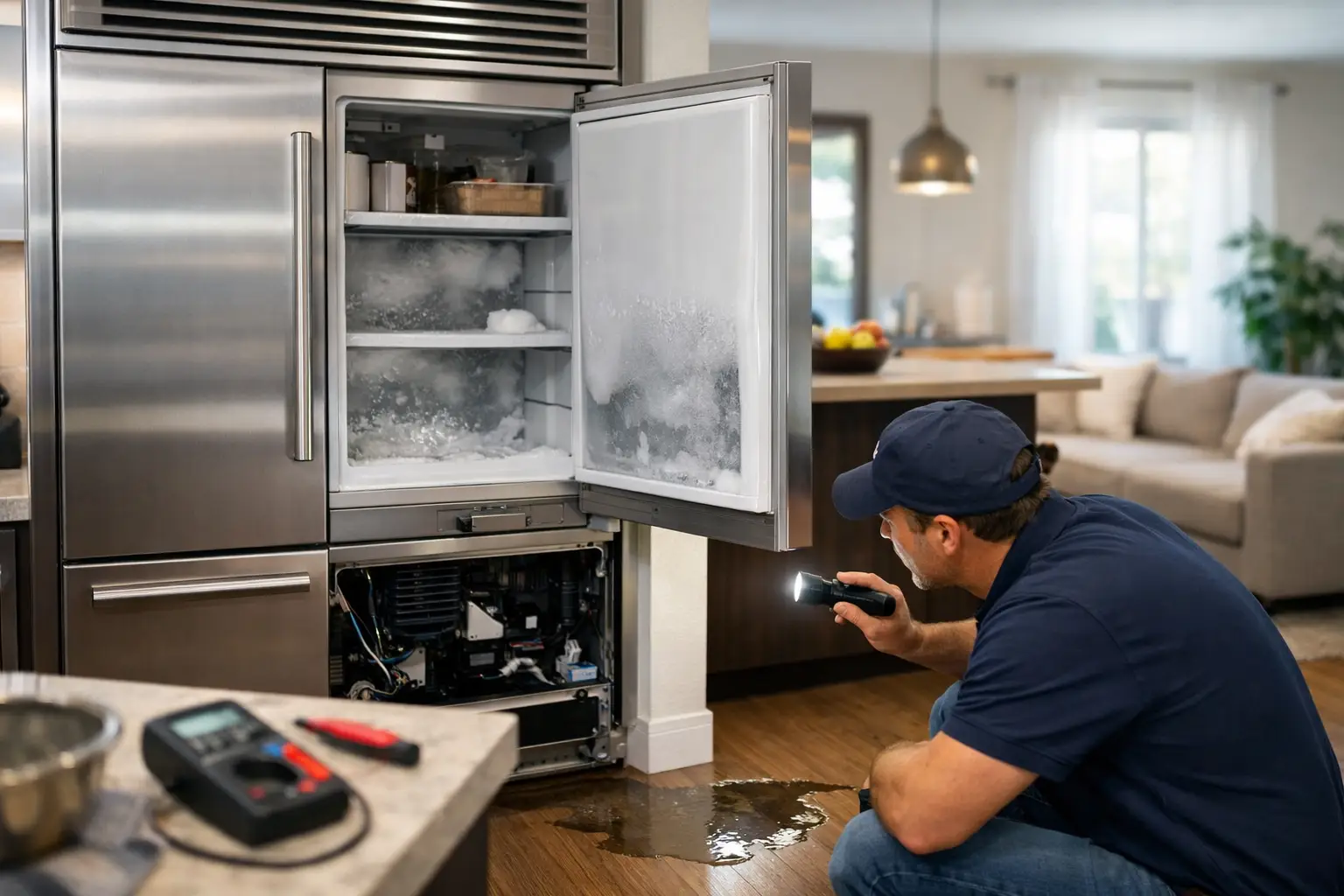
Sub-Zero Error 24 EC — Check the Condenser Before the Defrost Parts