




A Guide to Landlord Appliance Responsibilities
Use this guide to landlord appliance responsibilities to handle repairs, tenant reports, leases, and urgent appliance problems in West Hollywood rentals.
A refrigerator that stops cooling can turn into a tenant emergency in a few hours. A dryer that will not heat may be less urgent, but it can still create a real problem for a family. This guide to landlord appliance responsibilities explains who usually handles the repair, what should be in the lease, and how to avoid long disputes when an appliance fails.
For landlords and property managers, the main goal is simple: keep the rental safe, usable, and clearly documented. Appliances are easier to manage when everyone knows which ones came with the unit, how tenants should report problems, and who can approve a repair.
Start With the Lease and the Move-In List
The first question is not always, “Who caused the problem?” It is, “Was this appliance provided with the rental?” If a refrigerator, range, dishwasher, washer, or dryer was included when the tenant moved in, the landlord will usually be responsible for keeping it in working order. The exact duty can depend on the lease and California rental rules.
A good lease should list each included appliance. Do not use vague wording such as “kitchen appliances included.” Write down the refrigerator, oven, dishwasher, washer, dryer, ice maker, wine cooler, or built-in unit if it is part of the rental.
The move-in inspection matters too. Note the model, visible condition, and any existing problems. Photos help. If a tenant reports that the dishwasher never drained well, a move-in record can show whether the issue was already there.
If an appliance belongs to the tenant, the situation is different. A tenant-owned washer or countertop appliance is normally the tenant’s responsibility unless a building issue caused the damage. For example, a bad outlet or leaking plumbing connection may still need the landlord’s attention.
What Landlords Are Usually Responsible For
When a landlord supplies an appliance, normal failure from age, wear, or an internal part problem is generally the landlord’s repair expense. A tenant does not have to pay because a refrigerator compressor fails or an oven control stops working during normal use.
Common landlord repair situations include a refrigerator that is warm, a freezer that builds heavy frost, a dishwasher that will not drain, or a dryer that runs but does not heat. These failures often come from worn parts, blocked drainage, failed sensors, damaged seals, or electrical issues inside the appliance.
Landlords are also commonly responsible for the conditions around the appliance. That can include a working outlet, a safe gas connection, proper water supply lines, and a usable drain connection. A dishwasher may be mechanically sound but still leak because of a plumbing connection under the sink. The repair may involve more than one person, depending on the cause.
Safety and habitability come first
Some appliance issues should be treated as urgent because they affect food storage or safety. A refrigerator that is not cooling, a gas smell near a range, sparks from an outlet, or water leaking onto the floor should not wait for a routine maintenance visit.
Tell tenants to report these problems right away. They should turn off the appliance if it is safe to do so. If there is a gas smell, they should avoid switches, flames, and other ignition sources, leave the area, and follow the proper emergency steps for the property.
A broken oven is not always a legal emergency, especially if the unit has another safe way to cook. Still, it should be handled quickly. Delays cause frustration and can push tenants to make unsafe temporary choices, such as using appliances in ways they were not designed for.
When a Tenant May Be Responsible
Landlord responsibility does not mean every appliance repair is automatically the landlord’s cost. Tenants can be responsible when damage comes from misuse, neglect, or an unauthorized installation.
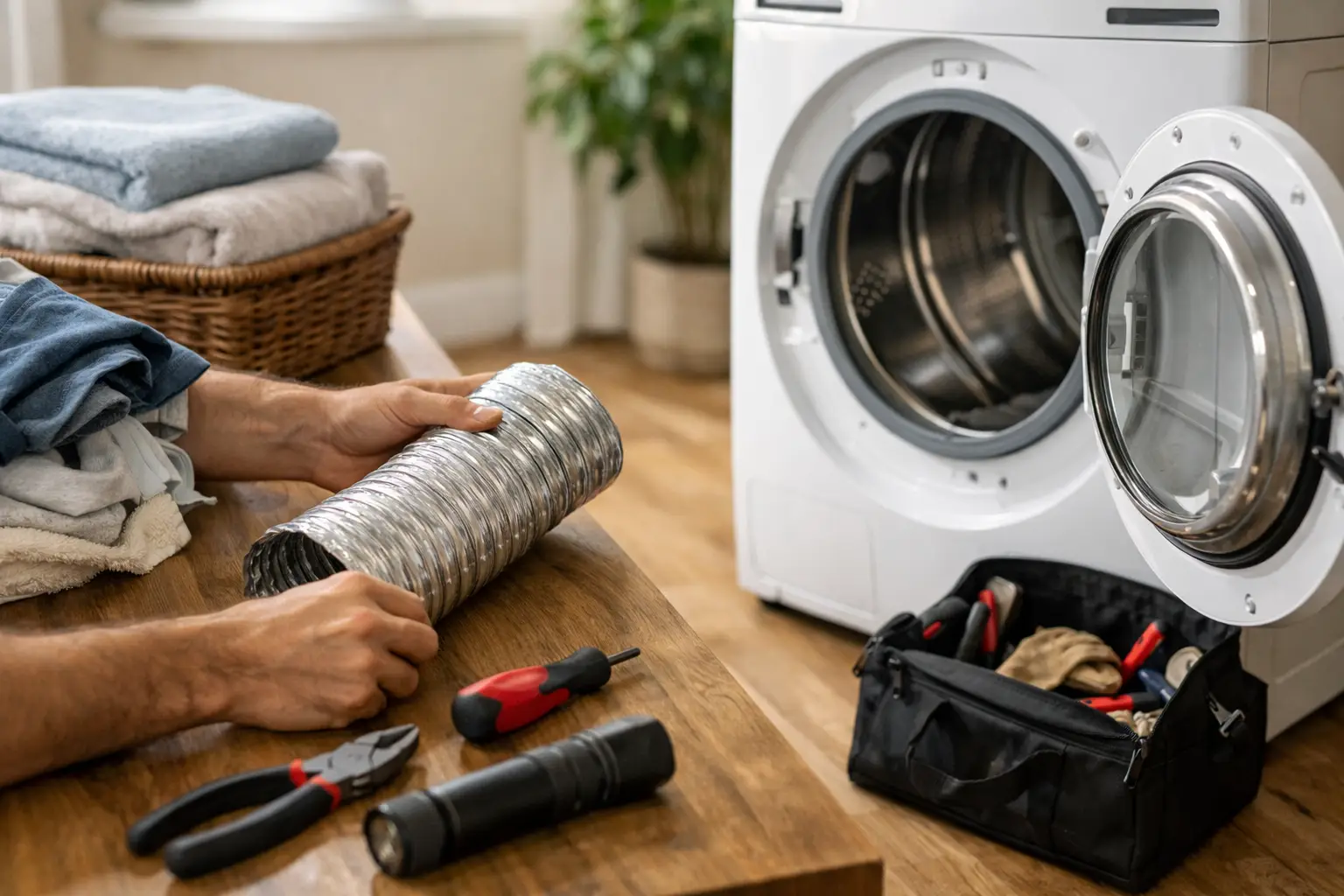
For example, a dryer may stop heating because the vent has not been cleaned and airflow is blocked. A washer may leak after a tenant installs a hose incorrectly. A dishwasher pump can be damaged by broken glass, labels, or hard objects left in the machine. A refrigerator shelf or drawer may break from being overloaded or forced.
These cases need facts, not guesses. Have the appliance checked before charging a tenant. A dryer that does not dry clothes can look like a clogged vent problem, but it can also be a failed heating part, thermostat, or control board. An inspection gives you a better basis for deciding what happened.
Normal use can also look rough in a busy rental. A loose refrigerator handle or worn oven knob is not always tenant damage. Age, weak plastic parts, and prior repairs can all play a part. Fair documentation protects both sides.
A Guide to Landlord Appliance Responsibilities During a Repair
A clear repair process saves time. Ask tenants to report the appliance, the symptom, and when the problem started. “The washer is broken” is a start, but “the washer fills, then stops and flashes an error code” gives a technician more useful information.
Ask for photos or a short video when practical. A photo of standing water in a dishwasher, a refrigerator display error, or an oven burner that will not ignite can help determine how soon the visit is needed. Tenants should not take panels apart or attempt electrical repairs.
Then confirm access. Many repair delays come from missed appointments, pets that are not secured, parked cars blocking access, or no one available to open the unit. In occupied rentals, give the tenant a reasonable appointment window and follow any notice rules that apply before entering.
For apartment managers, it helps to designate one person who can approve the repair. If a technician finds a failed part, waiting several days for approval can leave a tenant without a key appliance. Set a spending limit in advance for common repairs, and require approval only when the repair reaches that limit or replacement may be smarter.
Repair or replace?
There is no single age when an appliance must be replaced. The decision depends on the repair cost, the condition of the unit, part availability, and the chance of another failure soon.
A simple drain pump or door gasket repair may make sense on an appliance that is otherwise in good shape. A major sealed-system refrigerator problem, repeated electronic failures, or a discontinued built-in part may point toward replacement instead.
Do not choose replacement based only on the tenant’s frustration or the appliance’s appearance. On the other hand, do not keep paying for repeat repairs just to avoid a larger decision. Keep service records for each unit. They show patterns and help with budgeting across multiple properties.
Prevent Problems Before They Become Tenant Calls
Most appliances still fail without warning. But routine care lowers the number of avoidable calls. Include simple appliance rules in the welcome packet. Tell tenants to clean dryer lint filters after each use, avoid overloading washers, scrape heavy food from dishes, and report leaks or unusual noises early.
Landlords should arrange periodic checks for shared laundry equipment, older refrigerators, and appliances with known weak points. Check washer hoses for wear, inspect refrigerator door seals, look for dryer vent blockage, and make sure dishwashers are not leaking under cabinets.
Dryer vent maintenance deserves special attention. Lint does not only make drying slow. It can make the dryer run hotter and put extra strain on parts. If a tenant says clothes take two or three cycles to dry, do not assume the dryer itself needs a new heating element. The vent path should be checked too.
For properties in West Hollywood, quick communication matters as much as the repair itself. Tenants often work from home or have tight schedules. Let them know when a technician is expected, whether a part must be ordered, and what they can do in the meantime. A straightforward update prevents many complaints.
Keep Records That Make Sense
Save the tenant’s report, inspection notes, photos, invoices, and any written approval. If you decide the tenant caused damage, explain the finding in plain language and keep the technician’s notes with the file.
Also document what was done. “Repaired dishwasher” does not tell you much six months later. “Replaced drain pump, tested full cycle, no leak found” is useful. It helps the next manager, the owner, and the technician who may return later.
If you use an appliance repair company, ask about the diagnostic charge, labor coverage, installed-part coverage, and whether the technician can provide a written finding. Vertex Appliance Repair, for example, charges an $89 diagnostic fee that is waived when the repair is approved and provides a 90-day warranty on labor and installed parts.
A rental appliance does not need to be new to be dependable. It does need prompt attention, fair decisions, and a repair process that tenants can understand. When the lease, records, and communication are in order, even an inconvenient breakdown is easier to manage.
Related articles
Oven Temperature Troubleshooting at Home
Refrigerator Not Cooling With Frost on the Freezer Wall — Heater or Thermistor?