




A Practical Guide to Wine Cooler Repair at Home
This guide to wine cooler repair explains common faults, safe checks, and when West Hollywood homeowners should call a local technician for service today.
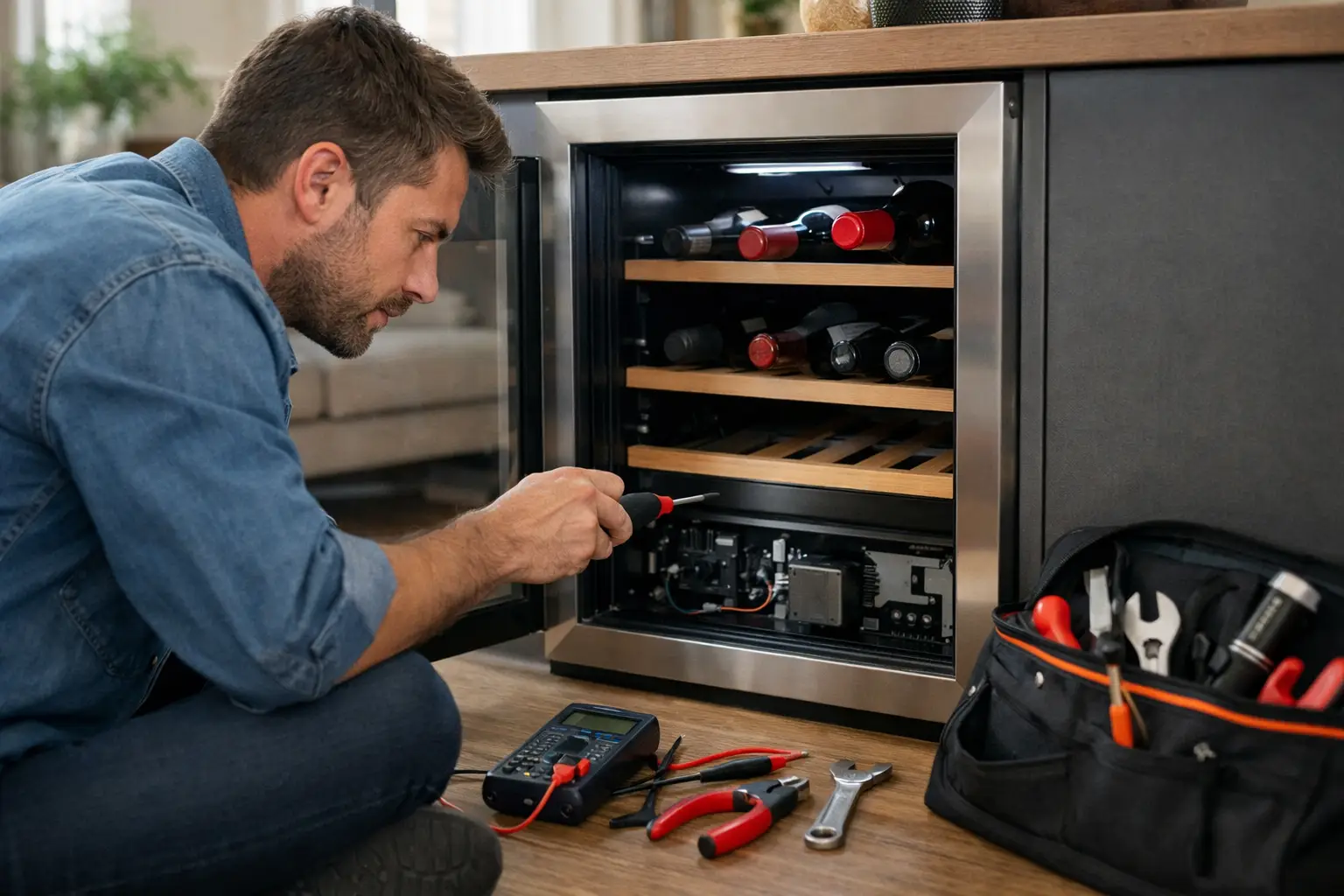
A wine cooler can look normal while your bottles slowly get too warm. You may hear the fan, see the display light up, and still find the cabinet sitting at 65 degrees. This guide to wine cooler repair helps you separate a simple setup issue from a problem that needs service.
Wine coolers are smaller than refrigerators, but they have many of the same parts. They use a compressor or cooling system, fans, sensors, a control board, door seals, and drain paths. Some models also have two temperature zones. A problem in one small part can affect the whole cabinet.
A Guide to Wine Cooler Repair by Symptom
Start with the symptom you can see or hear. Do not remove panels or try to recharge refrigerant yourself. That work needs the right tools and can make a repair more costly if the unit is damaged.
The wine cooler is not cooling
First, check the temperature setting. A cooler set for red wine will run warmer than one set for white wine. Give the unit several hours after changing the setting. Opening the door often will also make the temperature rise.
Next, check the power. Make sure the plug is secure and the outlet works. If the display is dark, test the outlet with another small device. If the outlet has a reset button, press reset once. Do not use an extension cord for a wine cooler.
If the display is on but the cabinet is warm, listen closely. You may hear a small fan or a low hum from the compressor. No sound at all can point to a control, start relay, fan, or power issue. A repeated click every few minutes often means the compressor is trying to start but cannot.
A compressor can also run for a long time without cooling well. This may happen when the condenser is dirty, the fan is not moving air, or the sealed cooling system has a leak. A sealed-system problem is not a homeowner repair. It needs testing before any parts are ordered.
The cooler is too cold or freezing bottles
Frozen wine is not only a temperature problem. It can push a cork out or crack a bottle. If the cabinet is colder than the display says, check whether the setting was changed by accident. Then place a separate refrigerator thermometer inside for a few hours. The display and the actual cabinet temperature do not always match.
If the cooler keeps getting colder, the temperature sensor may be reading incorrectly. The control board may also fail to turn the compressor off at the right time. On some units, a damaged sensor wire causes the same issue. A technician can test the sensor and confirm whether the control is sending the wrong signal.
The wine cooler runs all the time
Constant running does not always mean the compressor is bad. Hot weather, a full cabinet, frequent door openings, and a recent move can make the unit run longer. Still, it should cycle off after it reaches its set temperature.
Check the door seal first. Close the door on a piece of paper. If the paper slides out with little resistance in several spots, the gasket may not be sealing. Wipe the gasket and the door frame with mild soap and water. Food residue, dust, or a bent seal can leave a small air gap.
Also check the space around the cooler. A freestanding wine cooler needs room for heat to leave the cabinet. A built-in model needs its front vent clear. If a freestanding unit is pushed tightly into a cabinet opening, heat can build up around the compressor. The cooler will run longer and may fail early.
There is water inside or under the unit
A small amount of moisture can happen in humid weather, especially if the door is opened often. Water pooling on shelves or under the cooler is different. It may come from a blocked drain, a cracked drain pan, a loose water tray, or heavy condensation from a bad door seal.
Turn the unit off before checking for obvious water around the back or bottom. Do not tip a wine cooler by yourself. If water has reached the outlet, leave it unplugged and have the electrical area checked before using it again.
The fan is loud or the cooler makes new noises
A soft fan sound and a low compressor hum are normal. Rattling, scraping, buzzing, or a loud vibration is not. Bottles touching each other can rattle when the compressor starts. Loose shelves can do the same.
Move bottles so they do not touch. Make sure the cooler sits level on a solid floor. If the noise continues, the fan blade may be hitting ice or a panel. A worn fan motor can also get louder over time. Compressor noise can be more serious, especially when it comes with poor cooling.
Safe Checks Before You Schedule Repair
A few basic checks can save time during the visit. Keep the cooler plugged in while you observe the symptom. Then unplug it before cleaning or moving anything.
Clean visible dust from the front vent, rear grille, or lower intake with a vacuum brush. Do not bend the fins. Make sure the door closes fully and that no bottle is blocking it. Check that the cabinet is not overloaded. Air needs room to move around the bottles.
If the cooler was recently moved, let it stand upright before turning it back on. Moving it on its side can shift compressor oil into the cooling lines. The time needed before restarting depends on the manufacturer, so check the owner’s manual if you have it.
Take a photo of the model number and write down what the unit is doing. Note the set temperature, the actual temperature if you measured it, any error code, and when the problem began. This is especially helpful for landlords and property managers who may not be at the property when service is scheduled.
When a Wine Cooler Needs a Technician
Call for repair if the unit is warm after several hours, trips a breaker, makes repeated clicking sounds, leaks water near electrical parts, shows an error code, or has a burning smell. Unplug the cooler right away if you smell burning plastic or see damaged wiring.
A technician can test the compressor start components, fans, sensors, wiring, and control board. They can also check whether the cooling system has a refrigerant issue. Replacing parts based only on a guess is rarely a good value. A failed fan and a failed compressor can look similar at first, but the repair cost and next steps are very different.
For built-in wine coolers, correct installation matters as much as the failed part. If the cabinet has poor airflow, a new part may work hard and fail again. The repair should include a check of the vent area, door alignment, and the space around the unit.
Repair or Replace: What Makes Sense?
The answer depends on the age of the cooler, its size, the brand, the part needed, and whether it is built into cabinetry. A door gasket, fan motor, sensor, or start component can often be a sensible repair. A major sealed-system failure may be harder to justify on an older, small freestanding unit.
Built-in units are different. Replacing one can involve cabinet sizing, trim, ventilation, and door clearance. Even when the repair cost is higher, repair may still make more sense than changing the whole installation. A clear diagnosis gives you the information to decide.
Vertex Appliance Repair serves West Hollywood and nearby neighborhoods with in-home wine cooler repair. The diagnostic fee is $69 and is waived when you approve the repair. Completed repairs and installed parts include a 90-day warranty.
If your wine cooler is warming up, do not wait until the bottles are already damaged. Keep the door closed, protect the bottles from heat, and get the cause checked before a small cooling problem becomes a larger one.
Related articles
Oven Temperature Troubleshooting at Home
Refrigerator Not Cooling With Frost on the Freezer Wall — Heater or Thermistor?