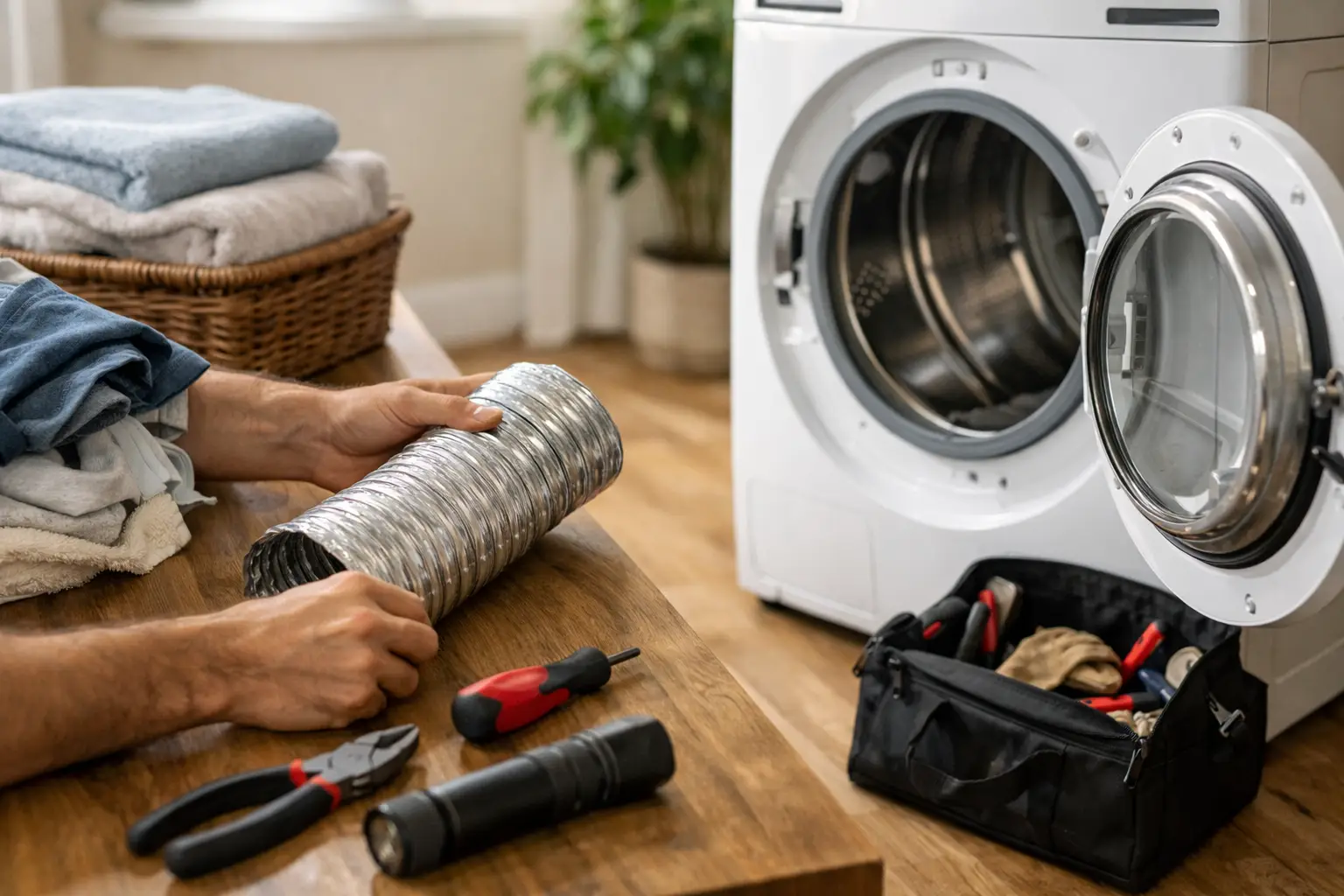





How to Compare Repair Estimates Without Surprises
Learn how to compare repair estimates for appliances, check parts, labor, and warranty terms, and avoid surprise costs before approving work in your home.

A refrigerator stops cooling, a washer will not drain, or an oven will not heat. You may call two repair companies and get two very different prices. Knowing how to compare repair estimates helps you see what you are actually buying, not just which number is lower.
The cheapest estimate can be the right choice. Sometimes it is not. A low price may cover a small repair, while a higher price may include a part, labor, return trip, and warranty. The goal is to compare the same repair scope before you approve work.
Start With the Actual Problem
An estimate only makes sense if both companies are addressing the same failure. Ask what the technician found and what part or condition caused the problem.
For example, a dishwasher that will not drain may have a clogged drain hose, a failed drain pump, or a control problem. These repairs have different costs. If one estimate says “dishwasher repair” and another says “replace drain pump,” they are not equal estimates yet.
Ask for a plain explanation. A good estimate should tell you what is wrong, what needs to be done, and why that repair should solve the symptom. You do not need a long technical report. You do need enough detail to understand the work.
If the technician cannot confirm the cause without taking apart more of the appliance, that should be stated. Some problems are hidden until a panel is removed or a part is tested under load. That is normal. What matters is that you know what is confirmed and what may change.
How to Compare Repair Estimates Line by Line
Put the estimates side by side. Do not compare only the final total. Look at the diagnostic charge, labor, parts, service call, taxes, and any possible return-trip charge.
At Vertex Appliance Repair, the diagnostic fee is $69 and is waived when you approve the repair. If another company charges a separate service fee, include that amount in the total you expect to pay. A repair price that looks lower at first can change after fees are added.
Also check whether the quote is a firm repair price or an estimate that may change. A firm price usually means the technician has identified the problem and knows the part needed. An estimate may be a starting price, especially when the appliance must be opened further or a part price is not confirmed.
Ask these questions before approving the work: Is labor included? Is the part included? Are taxes included? Does the price include a return visit if the part must be ordered? Will there be another diagnostic fee if more testing is needed?
Those questions are not difficult. They prevent misunderstandings later.
Check the Part Details
The part is often the biggest difference between two estimates. One company may quote an original equipment part. Another may use an aftermarket part, which is a replacement made by another manufacturer. Either can be reasonable, depending on the appliance and the part.
Ask for the part name or number when possible. For a refrigerator, that may be an evaporator fan motor, water inlet valve, or defrost thermostat. For a dryer, it may be a heating element, belt, or thermal fuse. You do not need to research every number. You just want to know that both estimates cover the same item.
A used part may cost less, but it has a trade-off. It may have less life left, and warranty coverage may be limited. A rebuilt control board can also be a practical option for some appliances, but ask about its warranty and availability.
If a part is backordered, ask how long the appliance may be out of service. For a refrigerator, delay matters more than it might for a wine cooler or a secondary oven. For a rental unit, a delayed washer or dryer repair can quickly become a tenant issue.
Look at Labor, Not Just the Hourly Rate
Some repairs take 20 minutes. Others take much longer because the appliance is built in, stacked, or difficult to access. A wall oven may need to be removed from its cabinet. A washer in a tight closet may need to be pulled out and reconnected. A built-in refrigerator can require careful handling to avoid damage to flooring or cabinetry.
A higher labor charge is not always a red flag. It may reflect the time and care needed for the job. What you want to avoid is vague wording such as “labor extra” with no explanation of what could be added.
Ask whether the labor price covers the complete repair. If a part must be ordered, confirm whether the return visit is included. This is especially useful for landlords and property managers coordinating access with tenants.
Compare Warranty Terms in Writing
A repair warranty matters because parts can fail and some appliance problems are difficult to diagnose on the first visit. Read what the warranty covers, how long it lasts, and whether it applies to both labor and installed parts.
Vertex Appliance Repair provides a 90-day warranty on completed repairs and installed parts. Other companies may offer different terms. A longer warranty can be helpful, but read the limits. It may only cover the part, not the labor to install it again. It may also not cover a separate failure in the same appliance.
For example, if a refrigerator fan motor is replaced and the refrigerator later develops a sealed-system problem, that is not necessarily a failure of the fan motor repair. The warranty should cover the completed work, not every future issue the appliance may have.
Keep your invoice. It should show the date, appliance model, work performed, and parts installed. This is useful for homeowners and also for managers who need a clear maintenance record.
Watch for Estimates That Are Too Vague
A short estimate is not automatically bad. But it should not leave you guessing. Be careful when a quote has no part description, no labor details, no warranty terms, or a very broad price range without a reason.
You should also be cautious if a company gives a firm repair price over the phone without inspecting the appliance. A technician may be able to give a general range based on the symptom. But a no-cool refrigerator can have several causes. So can a dryer that will not heat.
The other concern is a quote that pushes a major repair before basic checks are done. A washer that will not start may have a damaged lid lock, a power issue, or a control problem. Replacing the most expensive part first is not good diagnosis.
A clear technician will explain what was tested. For example: the drain pump has power but will not run, the heating element has failed continuity testing, or the compressor is running but the refrigerator is not producing enough cooling. Simple facts make an estimate easier to trust.
Decide Whether Repair Is Worth It
Comparing estimates also means comparing repair against replacement. This depends on the appliance age, condition, repair cost, and how well it has been working before this failure.
If your washer has been reliable and needs a straightforward pump replacement, repair often makes sense. If it has several problems, rust, loud bearings, and an expensive control issue, replacement may be the better use of money.
Do not decide based only on age. A well-kept appliance can be worth repairing, while a newer unit with repeated failures may not be. Built-in appliances also change the decision. Replacing a built-in oven, cooktop, or refrigerator can involve cabinet work, delivery delays, and installation costs beyond the appliance price.
For a tenant or property manager, consider downtime too. A repair that costs a little more but can be completed quickly may be preferable to waiting weeks for a replacement appliance and installation.
Get the Details Before You Approve
Before you authorize a repair, make sure you know the full expected total, the repair being performed, the part being installed, and the warranty. Ask when the work can be completed and whether you need to be home for a return visit.
If you are comparing estimates in West Hollywood, it also helps to choose a company that can communicate clearly with you, your tenant, or your building manager. Fast answers are useful, but clear pricing is what lets you approve work with confidence.
A good estimate should not make you feel pressured. It should give you enough information to make a practical choice, get the appliance working again, and move on with your day.
Related articles

Oven Temperature Troubleshooting at Home
Refrigerator Not Cooling With Frost on the Freezer Wall — Heater or Thermistor?