How to Remove Freezer Frost Without Damage
Learn how to remove freezer frost safely, protect frozen food, and spot signs that recurring ice buildup needs a professional freezer repair service.
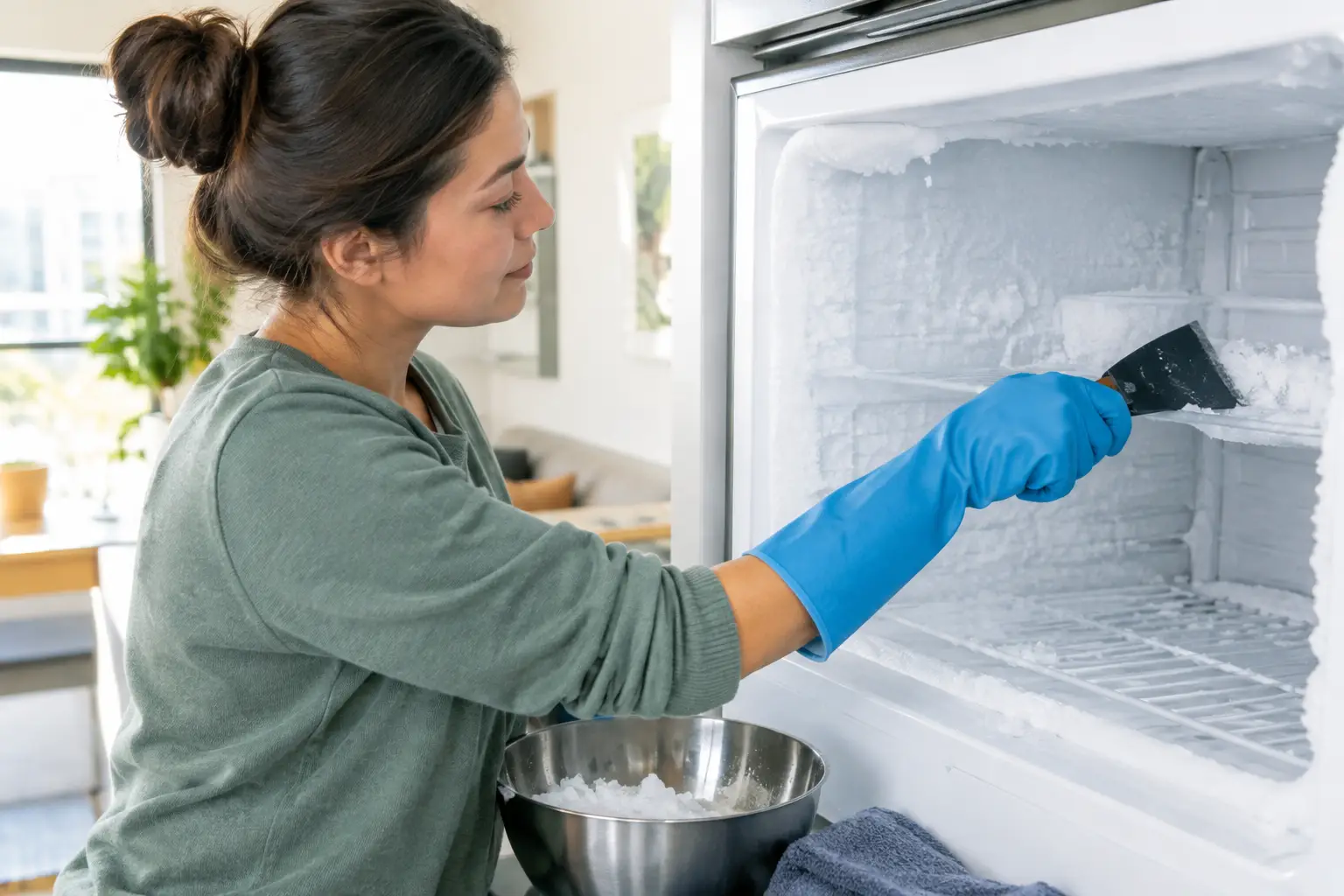
A thick layer of ice makes a freezer harder to use, reduces storage space, and can interfere with cooling. The safest way to remove freezer frost is to move food to coolers, turn the appliance off or unplug it, let the ice melt naturally, and dry the compartment before restarting it. If the frost comes back quickly, the issue may be a door seal, airflow problem, or a failed automatic defrost part rather than a cleaning problem.
Why is frost building up in my freezer?
Frost forms when warm, humid air gets into the freezer and freezes on cold surfaces. Opening the door often can add some frost over time, especially during warm weather or when the door is held open while groceries are being put away. That alone does not necessarily mean something is broken.
The common assumption is that any frost means the freezer needs to be defrosted more often. Sometimes that is true for a manual-defrost unit. But on a frost-free refrigerator or freezer, heavy recurring ice usually points to another cause. A torn or dirty door gasket can allow outside air in. Food packages can prevent the door from closing fully. A freezer set colder than necessary can make moisture freeze faster, and blocked interior vents can disrupt normal airflow.
Frost location offers a useful clue. Light frost near the door opening may come from warm air entering around the gasket. Frost covering food packages often happens when food is not tightly wrapped or containers have been left open. A solid sheet of snow-like ice on the rear interior panel can indicate that the automatic defrost system is not clearing the evaporator coils behind that panel.
How to remove freezer frost safely
Start by checking the owner’s manual if you have it, since a few models have specific defrost instructions. Do not chip at ice with a knife, screwdriver, ice pick, or metal spatula. The freezer liner can crack, and puncturing tubing behind it can cause a costly sealed-system problem.
First, move frozen food into insulated coolers with ice packs or bagged ice. Keep food together so it stays cold longer, and minimize the time that cooler lids are open. If food has thawed completely and become warm, follow food-safety guidance rather than automatically refreezing it. Food that still has ice crystals or has remained refrigerator-cold may be usable, depending on the item and how long it has been warming.
Turn the temperature control off and unplug the appliance if the manufacturer’s instructions allow it. Leave the freezer door open and place towels around the base of the appliance to catch melting water. In a condo or rental with wood flooring, use a shallow baking sheet or other low-sided pan under the towels where possible, and check it regularly. Meltwater can travel farther than expected.
To speed things up safely, place one or two bowls of hot tap water inside the empty freezer and close the door for several minutes. The warm moisture loosens the frost without putting direct heat on plastic panels. Replace the water once it cools. A plastic scraper can be used only after ice has softened and is releasing easily.
Avoid using a hair dryer, heat gun, portable heater, or boiling water directly on freezer walls. Water and electrical appliances are not a good combination, and concentrated heat can warp plastic liners or damage nearby components. Do not pour water into vents, light housings, or the bottom drain area.
When all visible ice is gone, wipe the compartment dry with clean towels. Check that the drain opening, if visible, is not covered in ice or debris, but do not force anything into it. Restart the appliance, set the freezer to 0 degrees F, and allow it to cool before returning food. A full freezer may take several hours to stabilize, so avoid repeatedly opening the door to check it.
Why does freezer frost keep returning after defrosting?
If frost returns gradually over several months, start with the door. Clean the gasket and the surface it seals against using a soft cloth with mild soapy water, then dry both surfaces. Crumbs, sticky residue, and a package caught in the door can be enough to create a small air leak.
A simple homeowner check is the paper test. Close the door on a strip of paper at several points around the gasket. You should feel steady resistance when pulling the paper out. If it slides out with almost no resistance in one area, inspect for a folded, cracked, or loose gasket. This test does not prove the gasket is the only problem, but it can show where warm air may be entering.
Also make sure containers and bags are not blocking the door from closing or covering interior air vents. Leave some space near vents so cold air can circulate. Avoid setting the freezer below 0 degrees F unless the manufacturer recommends a different setting. Turning the control colder does not solve a defrost failure. It can increase frost and make the compartment less efficient.
For a frost-free model, ice that returns within days or a couple of weeks after a complete thaw is more concerning. The freezer may have a problem with the defrost heater, defrost thermostat or sensor, electronic control, evaporator fan, or a clogged defrost drain. These parts work together: the heater periodically melts frost off the hidden evaporator coils, the sensor controls the defrost cycle, and the drain carries the water away. A failure in one area can leave the coils encased in ice and eventually restrict cooling.
When should I stop defrosting and call for freezer repair?
Call for service if the freezer is getting warmer, food is softening, the rear panel quickly frosts over again, or the unit runs almost constantly. Also get help if you see water leaking from the refrigerator section, hear an evaporator fan scraping ice, or notice that the refrigerator side is warm while the freezer has heavy frost. Continuing to thaw and restart the appliance may restore cooling temporarily, but it will not correct a failed defrost component or damaged door seal.
There is no safe homeowner test for most internal defrost parts without opening panels and working near electrical connections. A technician can inspect frost patterns, check door sealing and airflow, and test the heater, sensor, fan, and controls with the appropriate meter readings. That helps avoid replacing parts based on guesswork.
For homeowners, tenants, landlords, and property managers in West Hollywood, Vertex Appliance Repair can diagnose recurring freezer frost and explain the repair options before work begins. The $89 diagnosis is waived with an approved repair, and installed parts and labor are covered for 90 days.
After a proper defrost, keep an eye on the freezer for the next week. A clean, dry compartment that stays near 0 degrees F is a good sign. Frost that quickly returns is the freezer’s way of telling you that it needs more than another round of scraping.