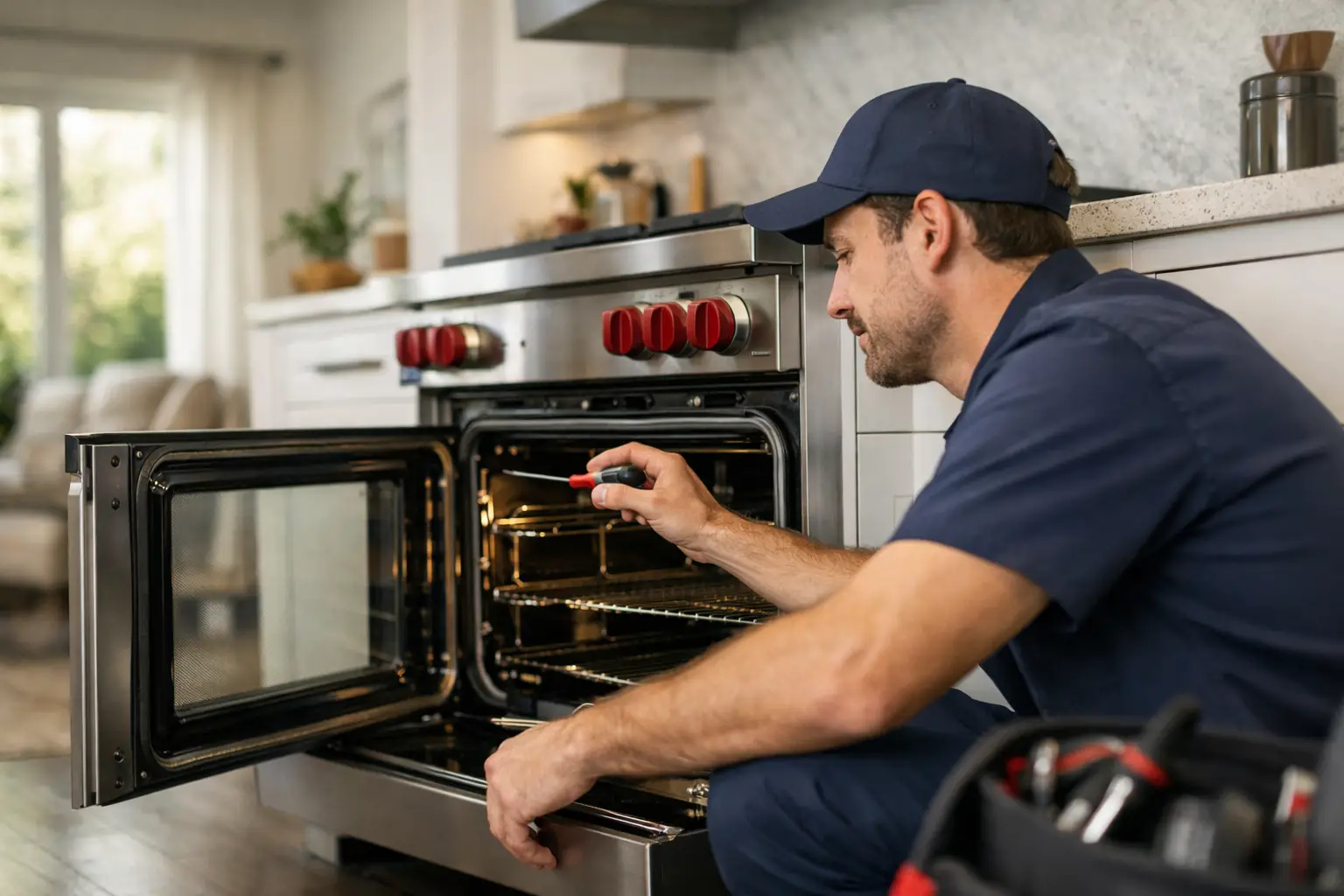





Oven Repair or Replacement: Which Is Better?
Unsure about oven repair or replacement? Learn what a technician checks, which faults are worth fixing, and when a new oven is the safer choice at home.
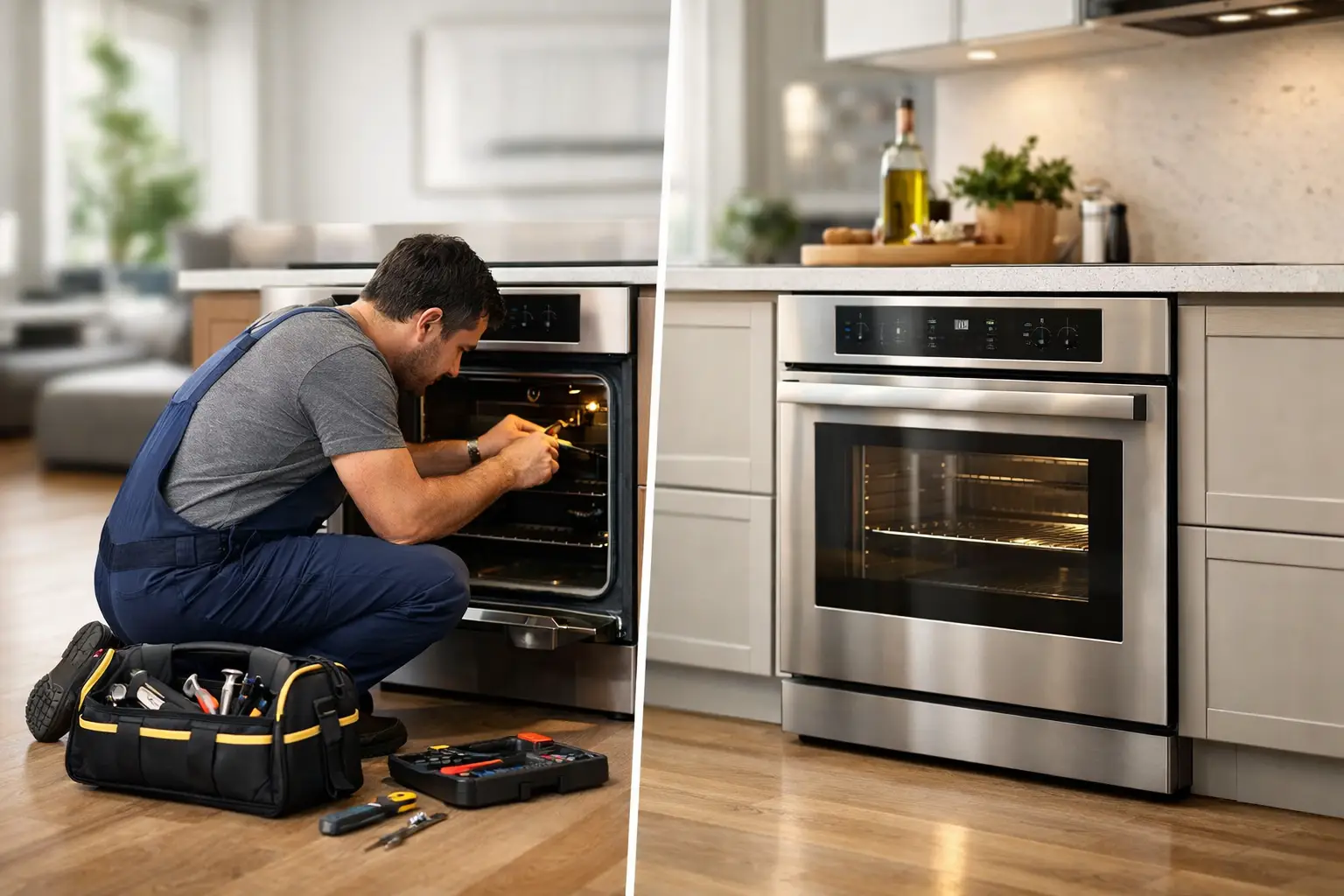
A dead oven can stop dinner plans, tenant turnover, or a busy week of cooking fast. The question is usually oven repair or replacement, but the answer is not based on age alone. A good decision starts with the symptom, the condition of the appliance, and the cost of the actual repair.
Some oven problems have a simple, worthwhile fix. Others point to several worn parts or an appliance that is no longer safe to use. Here is how to look at the choice before spending money.
Start With the Problem, Not the Oven’s Age
Many homeowners assume an older oven should be replaced. Sometimes that is true. But a 10-year-old oven with one bad heating element may still have years of useful life left. On the other hand, a newer oven with major electrical damage, repeated control failures, or an unavailable part may not be a good repair candidate.
The main question is this: is there one clear failure, or are several problems building up at the same time?
A single failed bake element, igniter, temperature sensor, door hinge, or knob is often repairable. These parts wear out through normal use. A technician can test the failed part and check the rest of the oven before recommending work.
Replacement becomes more likely when the oven has ongoing problems. For example, it may heat unevenly, shut off during use, show error codes, have a damaged control board, and have a loose or broken door. Repairing one item may not solve the whole issue.
Signs Your Oven May Be Worth Repairing
An oven repair is often the better choice when the appliance has been dependable until now. It is also a practical option when the repair is focused and the needed part is available.
The Oven Does Not Heat
An electric oven that will not heat may have a burned-out bake or broil element. You may see a visible split or burn mark on the element. Do not touch it or keep trying to run the oven. A damaged element can spark or trip the breaker.
A gas oven that does not heat often has a weak or failed igniter. The igniter may glow but not get hot enough to open the gas valve. This is a common repair. If you smell gas, turn the oven off, avoid switches or flames, ventilate the area if safe, and contact the gas utility or emergency service as needed.
The Temperature Is Wrong
If food takes much longer than normal, or burns even at a low setting, the problem may be a temperature sensor, heating element, relay, or control issue. An oven thermometer can show that the temperature is off, but it cannot tell you why.
Small temperature swings can be normal. Large swings, repeated underheating, or a display that does not match the actual temperature needs attention. A technician can test the oven while it is running and find out whether the problem is a sensor or a part that controls power.
The Door Does Not Close Properly
A loose oven door can let heat escape. That makes cooking uneven and forces the oven to work harder. Worn hinges, a damaged gasket, or broken door parts can often be repaired if the rest of the unit is in good condition.
Do not use an oven with a cracked door glass panel or a door that falls open. Those issues can create a burn risk and may cause further damage.
One Feature Has Stopped Working
A failed interior light, broken timer, damaged knob, or one nonworking burner on a range does not always justify replacing the appliance. The full condition of the unit matters more than one small fault.
For landlords and property managers, a targeted repair can also reduce downtime between tenants. It may be the right move when the oven matches other appliances in the unit and still works well overall.
When Oven Replacement Makes More Sense
Replacement is not always about getting a newer look. It can be the safer and more cost-effective option when the repair is large or uncertain.
A replacement may make sense if the oven has severe rust, a damaged cavity, recurring electrical problems, or evidence of overheating around wiring or controls. It may also be the better path when an important part has been discontinued. Some older models can be repaired only with used or hard-to-find parts. That can mean delays and no clear long-term answer.
Repeated repairs are another warning sign. If the oven has needed several service calls in a short period, take a step back before approving another major repair. The new repair may fix the current problem, but other aging parts can still fail soon after.
Consider replacement when the cost of repair is a large portion of the cost of a comparable new oven. There is no single percentage that works for every home. A built-in wall oven, a high-end range, and a basic freestanding unit have very different replacement costs. Installation, cabinet fit, electrical changes, gas connections, and delivery can all affect the real price of replacement.
That is why a repair estimate should be compared with the full installed cost of a new appliance, not just the price shown on a sales tag.
What a Technician Checks Before Recommending Repair
A proper diagnosis should not be a guess based on one symptom. The oven may be dead because of a failed part, but it can also have a wiring issue, a tripped safety device, or a control problem.
During an in-home visit, the technician checks how the oven responds to each setting. They inspect heating parts, sensors, switches, wiring connections, door operation, and the control system when needed. On a gas model, they also check ignition and flame operation.
This testing matters because two problems can look the same from the outside. For example, an oven that does not bake may have a bad element, but it could also have a control board that is not sending power to that element. Replacing the wrong part wastes time and money.
At Vertex Appliance Repair, the diagnostic fee is $69 and is waived when you approve the repair. Completed repairs and installed parts include a 90-day warranty. That gives West Hollywood homeowners, renters, and property managers a clear way to decide after the fault has been identified.
Checks You Can Make Safely Before Calling
There are a few basic checks that can help, but do not take panels apart or handle wiring. Ovens use high voltage, and gas models add another safety concern.
First, make sure the appliance has power. Check whether the display is on and whether the breaker has tripped. If the breaker trips again after you reset it, leave it off. A repeated trip can mean an electrical fault.
Next, look for an error code on the display. Write it down or take a photo. Notice whether the problem happens in bake, broil, self-clean, or every mode. Also note any clicking, sparking, burning smell, smoke, or unusual noise.
If the oven has a self-cleaning cycle, avoid using it when the appliance is already acting up. The high heat can put extra stress on electronic controls and door parts. It can turn a small issue into a larger one.
Choosing Between Oven Repair or Replacement
The best choice depends on the exact failure and what condition the rest of the appliance is in. A focused repair is usually sensible when the oven has one failed part, heats safely, and has otherwise been reliable. Replacement is more reasonable when there are repeated failures, major safety concerns, serious damage, or unavailable parts.
Do not keep using an oven that sparks, smells like burning wires, leaks gas, trips the breaker, or has damaged door glass. Turn it off and arrange service. For less urgent issues, a diagnosis gives you the facts needed to make a calm decision instead of replacing an appliance that may only need one repair.
Related articles
Built In Refrigerator Versus Freestanding: Which Fits?
Sub-Zero Error 24 EC — Check the Condenser Before the Defrost Parts