




Oven Temperature Troubleshooting at Home
Oven temperature troubleshooting can find uneven baking, slow heating, and wrong readings. Learn safe checks and when to call for oven repair help.
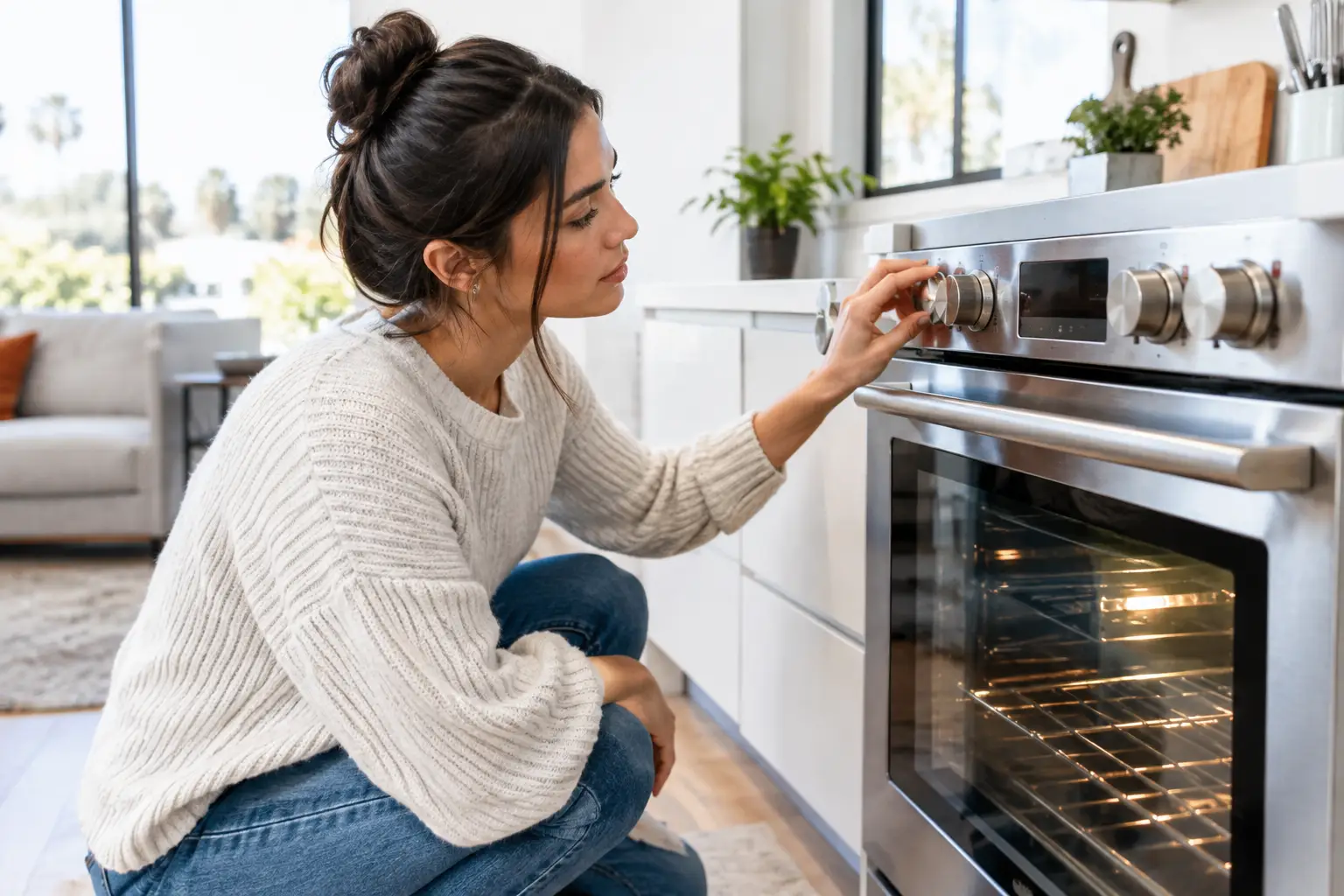
A cake that browns on one side, a pizza that stays pale, or cookies that burn before the timer ends usually point to a heat problem. Oven temperature troubleshooting starts with the food, but the cause may be a simple setting, a worn door gasket, or a part inside the oven that is no longer controlling heat correctly.
Do not assume the oven is bad after one meal. Recipe temperatures, dark bakeware, and a crowded oven can change results. But when the same problem happens with different foods, it is time to check the oven more closely.
Start oven temperature troubleshooting with the basics
First, confirm the cooking mode. Bake uses the lower heating system most of the time. Broil uses the upper element or burner. Convection uses a fan to move hot air. A recipe written for regular bake may cook too fast in convection mode unless you lower the setting as directed by the recipe.
Let the oven preheat fully. Many ovens beep before the cavity has settled at the selected temperature. After the signal, give it another 10 to 15 minutes before putting food inside. This matters most for bread, roasting, and baking.
Check the oven rack position too. Food close to the top will brown faster. Food on a lower rack may need more time. If pans are touching each other or blocking airflow, heat will not move evenly around them.
A dirty oven can also create trouble. Heavy grease on the bottom, foil covering vents, or a pan left on the oven floor can affect airflow and heat. Remove loose foil and unused cookware before testing the oven again.
Use an oven thermometer the right way
An oven thermometer can be helpful, but it does not always give a perfect answer. Oven heat naturally cycles above and below the set temperature. The control turns heat on, turns it off, then turns it on again to hold an average temperature.
Place the thermometer in the center of the middle rack. Set the oven to 350 degrees and let it run for at least 20 to 30 minutes after preheating. Look at the temperature several times during that period. Do not judge the oven from one reading taken right after the door opens.
A small difference is normal. If the oven averages close to the selected setting and food cooks normally, there may be no repair needed. If it stays far below or above the setting, or swings wildly, the oven needs more attention.
Some built-in oven displays allow temperature calibration. This is a small adjustment that tells the control to run a little warmer or cooler. Check the owner manual for the correct steps. Calibration can help when the oven is consistently off by a modest amount. It will not fix a failed sensor, heating element, burner, or control board.
Signs that point to a specific problem
The way an oven fails often gives a technician useful clues. Write down what you see before scheduling service. It can shorten the diagnosis.
The oven takes too long to heat
A slow preheat often means one heat source is not working. On an electric oven, the bake element on the bottom or the broil element on top may be weak or burned out. Both elements may be used during preheat, even when you selected Bake.
Look through the oven window if possible. A working electric element may glow red during a heating cycle. Do not touch it or try to test it while power is on. A blistered, cracked, or visibly burned element is a clear reason to stop using the oven until it is checked.
On a gas oven, slow heating can come from an igniter that is too weak to open the gas valve reliably. You may hear the igniter click or see it glow, yet the burner may not light correctly. If you smell gas, turn the oven off, do not use switches or flames nearby, and follow your gas provider’s safety instructions.
The oven runs too hot or burns food
When an oven overheats, the temperature sensor is a common cause. The sensor is the thin metal probe inside the oven cavity, usually near the back wall. It tells the control how hot the oven is. If it gives the wrong reading, the oven may keep heating longer than it should.
A damaged sensor, a loose connection, or a failing electronic control can all create the same symptom. The sensor should not touch the oven wall or be covered with grease. Do not bend it. If it looks loose or damaged, arrange service rather than trying to force it back into place.
An oven that keeps heating after you turn it off needs prompt attention. Turn off power at the breaker for an electric model if it is safe to do so. Do not keep using the appliance. A stuck relay on the control board can leave an element powered when it should be off.
The oven has hot spots or cooks unevenly
Uneven baking is not always a temperature setting issue. A torn door gasket can let heat escape. Look for flat spots, cracks, or sections that pull away from the door. The door should close firmly without needing to be pushed or held shut.
A convection fan that does not run can also leave one side of the oven cooler. On a convection setting, you may hear a fan running after preheat. Some models cycle the fan, so it may not run every second. A loud scraping sound, no fan movement, or food that repeatedly cooks unevenly can point to a fan motor or fan blade problem.
For gas ovens, burner holes blocked by spills can make the flame uneven. Do not poke burner openings with sharp tools. This can damage the burner. Cleaning and repair should be done carefully, with the gas supply handled safely.
Checks homeowners should not skip
Make sure the oven clock is set and no delayed-start or timed-cook feature is active. Some controls will appear to work but will not heat as expected when a timer setting is on.
For an electric range, check the breaker panel if the oven is completely dead or heats very slowly. Electric ovens commonly use a double breaker. One side can trip while the display still lights up. Reset a tripped breaker once. If it trips again, leave it off and schedule repair.
Avoid running a self-clean cycle when the oven already has heating or control problems. Self-cleaning creates very high heat. It can make a weak part fail completely, especially on an older oven. If the door locks and the oven shows an error code, take a photo of the code before turning power off.
Do not remove panels, disconnect wires, or test live electrical parts. Ovens use high voltage, and gas models add fuel and ignition risks. A visual check, a thermometer test, and a review of settings are enough for most homeowners.
When to schedule oven repair
Schedule service when the oven is consistently more than a small amount off temperature, takes much longer than usual to preheat, shows an error code, trips a breaker, or heats after being switched off. You should also call for help if you smell gas, see a damaged element, or notice the door will not close properly.
For renters, report the problem to the landlord or property manager before arranging work, unless your lease says otherwise. Property managers can help by sharing the model number, unit number, and a clear description of what the oven is doing. That helps avoid delays when a part is needed.
Vertex Appliance Repair handles in-home oven and stove repair in West Hollywood and nearby neighborhoods. The diagnostic fee is $89 and is waived when you approve the repair. Installed parts and labor are covered by a 90-day warranty.
A reliable oven should let you cook without guessing whether 350 degrees really means 350. If your test shows a repeated problem, stop changing recipes to work around it. Have the heating system checked before a minor temperature issue turns into a failed dinner, a tenant complaint, or a full oven shutdown.
Related articles
Refrigerator Not Cooling With Frost on the Freezer Wall — Heater or Thermistor?
Dryer Making a Loud Scraping Noise — Worn Bearing or Something Rubbing?