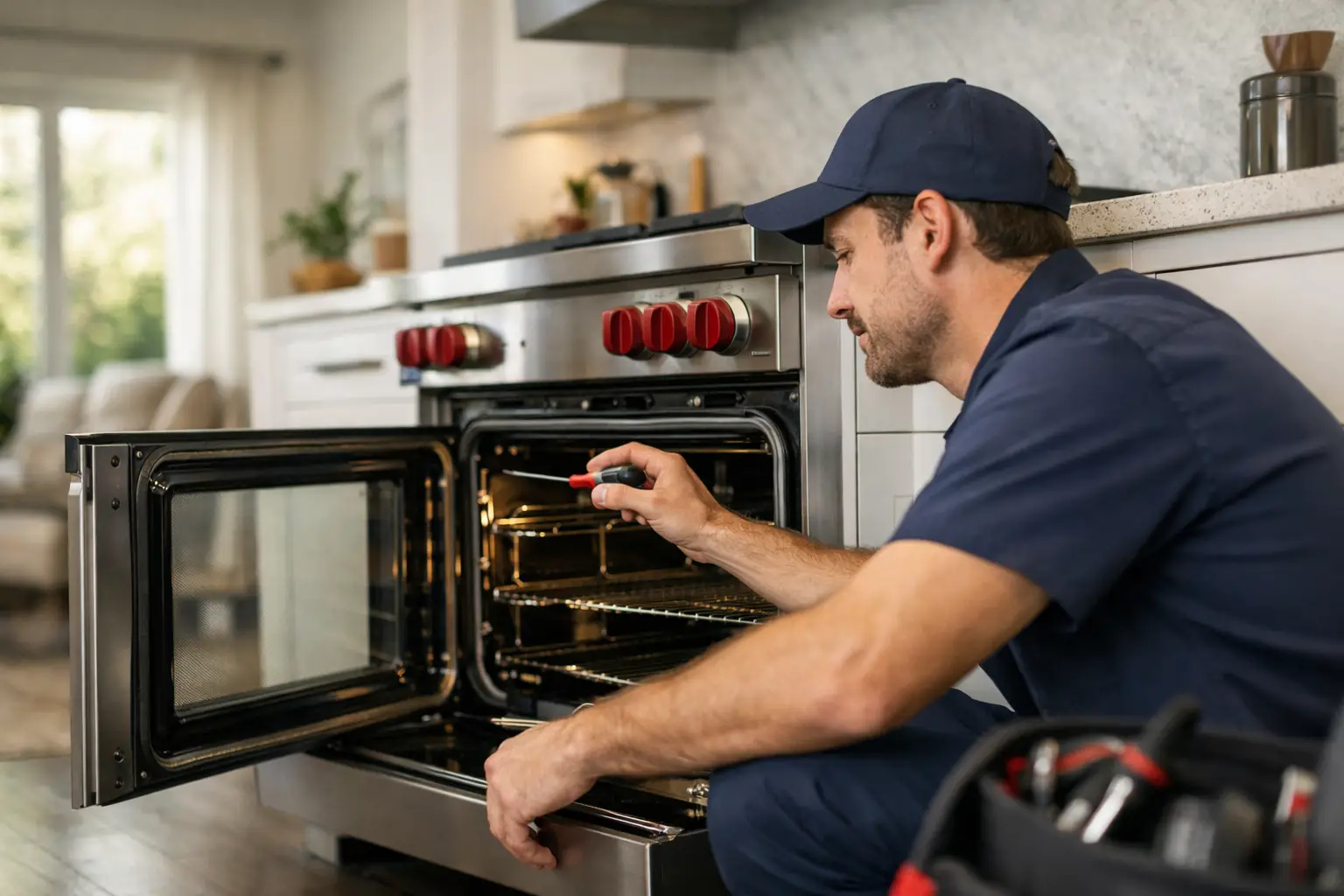





Range Burner Ignition Repair for Gas Stoves
Need range burner ignition repair? Learn what causes clicking, sparks, and burners that will not light, plus checks and when to call a West Hollywood tech.
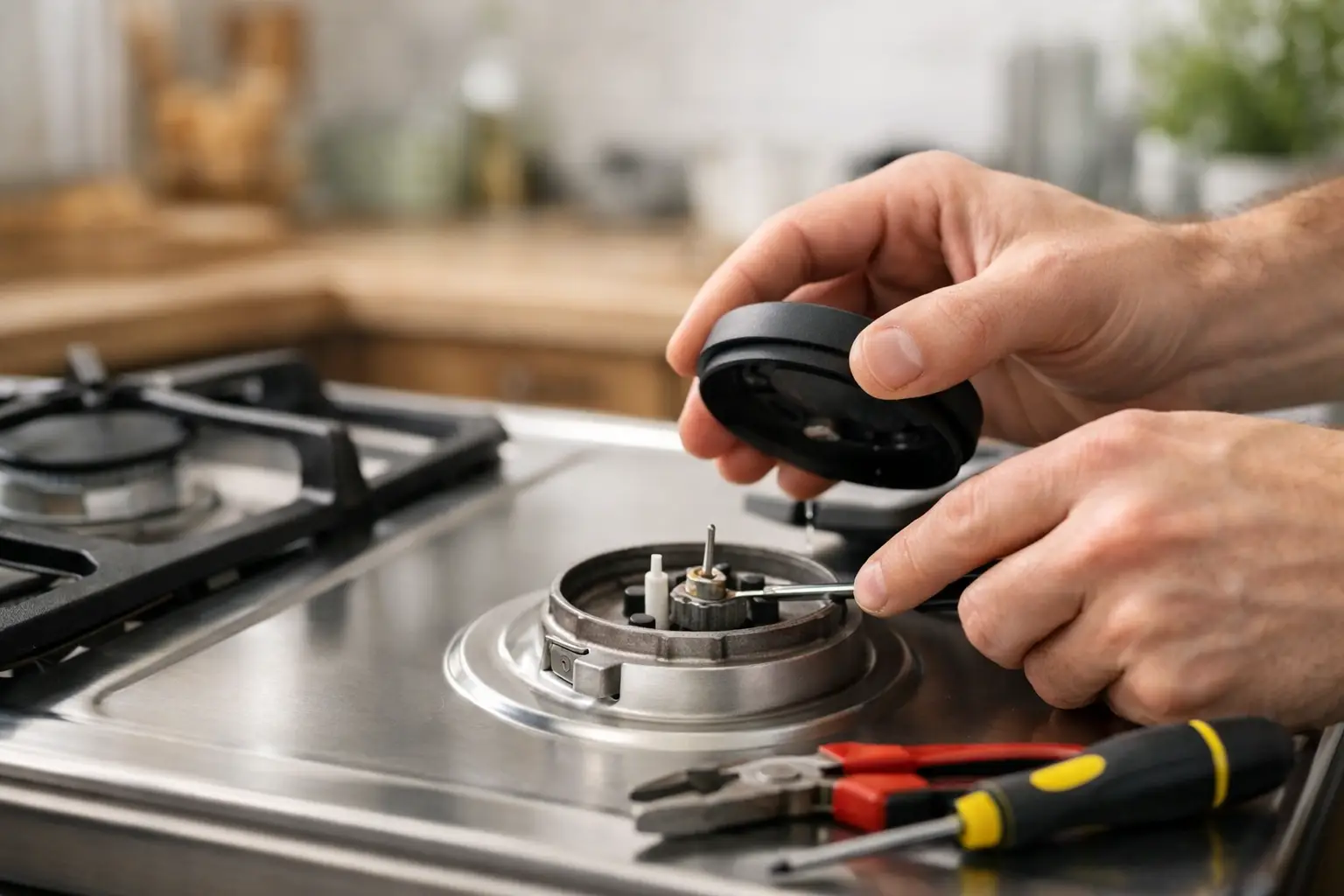
A burner that will not light can stop dinner fast. Range burner ignition repair often starts with a simple cause, such as a wet burner cap or food under the igniter. It can also point to a worn igniter, a bad spark module, or a gas supply problem. The key is knowing what is safe to check and when to stop.
If you smell gas, do not try to relight the burner. Turn all controls off. Do not use switches, lighters, or open flames nearby. Leave the area and contact your gas utility or emergency service from a safe location.
What a Gas Range Ignition System Does
Most gas ranges use an electric spark to light the gas at each burner. When you turn a knob to the light position, you should hear a fast clicking sound. A small electrode beside the burner creates a blue-white spark. Gas flows from the burner ports and catches the spark.
The system needs a few parts to work at the same time. The control knob must send the right signal. The spark module must create electricity. The igniter must spark in the right spot. The burner cap must sit correctly. Gas must reach the burner.
A failure in any one of these areas can leave you with a burner that clicks but does not light, a burner that lights only with a match, or a range that clicks all the time.
Common Signs You Need Range Burner Ignition Repair
A single burner that does not light is usually a local burner problem. The cap may be out of place. The igniter may be dirty or cracked. The small gas openings around the burner head may also be blocked by grease or boiled-over food.
If all burners fail to spark, the cause is more likely electrical. The range may not have power, even if it uses gas for cooking. Check that the power cord is connected and that the circuit breaker has not tripped. The spark module or wiring may also have failed.
Constant clicking is another common call. This often happens after a pot boils over. Water or cleaner gets around an igniter or control switch. The range may click for a few hours while it dries. If it continues clicking after the surface is dry, a switch, igniter, or wire may need repair.
Sometimes the burner sparks but the flame starts slowly. You may see several sparks before it lights. This can happen when the burner ports are clogged or the cap is not seated flat. A weak spark can cause the same symptom.
A burner that lights with a match but not with its normal igniter is not something to ignore. It may still be safe to use for a short time if there is no gas smell and the flame burns normally, but the ignition problem should be fixed. Using matches around a gas range adds risk and is not a good long-term plan for a rental unit or busy home.
Safe Checks You Can Try First
Let the cooktop cool completely before touching the burners. Remove the grate and lift off the burner cap. Many caps look similar, but they have a correct position. Put the cap back so it sits level and does not rock. If it is off-center, the gas may not reach the spark correctly.
Wipe the burner cap, burner head, and igniter area with a dry cloth. Do not soak the igniter. It is the small ceramic-covered piece next to the burner. Moisture on this part can send the spark to the metal cooktop instead of the burner.
Look closely at the burner holes. If you see food or grease, clean the area gently with a soft brush or wooden toothpick. Do not force metal tools into the openings. That can damage the burner or change the size of the gas ports.
After cleaning, allow the parts to dry fully. Reassemble the burner and test it. Turn the knob to the light setting for a few seconds. You should hear clicking and see a steady spark near the burner edge.
If the range has recently been cleaned, give it extra drying time. Heavy cleaner spray can leave moisture below the knob area and around the ignition switches. Avoid spraying cleaner directly around the igniters in the future. Spray it onto a cloth instead.
When the Problem Is Not a Simple Cleaning Issue
A cracked ceramic igniter needs replacement. The crack can be very small, but it lets the electrical spark travel in the wrong direction. You may hear clicking without seeing a spark at the burner. You may also see a spark jumping to the metal surface below it.
The ignition switch can also fail. This switch sits behind the control knob. On many ranges, each knob has its own switch. One bad switch can cause constant clicking or prevent one burner from sparking. Reaching it usually requires removing parts of the cooktop or control panel.
The spark module is another possible cause. It sends power to the igniters. When it fails, several burners may stop sparking at once. Wiring problems can look similar. A wire can burn, loosen, or become damaged by heat or moisture.
Gas flow problems need attention too. If there is no clicking and no gas smell, the issue may be electrical. If you hear clicking but do not smell a small amount of gas near the burner after a few seconds, gas may not be reaching that burner. Do not take apart gas valves or supply lines yourself. That work requires proper testing for leaks and correct reassembly.
Why Burner Flames Matter After Ignition
Getting the burner to light is only part of the job. Look at the flame after it starts. A normal flame is mostly blue and even around the burner. A few small yellow tips can happen, especially at first, but a tall yellow flame, heavy soot, or uneven flame pattern needs service.
An uneven flame may mean blocked ports, a damaged burner head, or a cap that is not positioned correctly. A burner that goes out when you lower the setting may have a low-flame adjustment issue or a valve problem. These symptoms can affect cooking and should not be treated as normal.
For landlords and property managers, a burner that only works sometimes can create repeat maintenance calls. It is usually better to repair the cause instead of telling a tenant to use a different burner. A complete check can find moisture damage, worn ignition parts, and flame issues in one visit.
What to Expect From a Service Visit
A technician will first test the burner operation and inspect the igniters, caps, switches, and wiring. The range may need to be pulled forward or opened to test the spark module and connections. The exact repair depends on the make, model, and which burners are affected.
Some repairs are quick, such as replacing an igniter or correcting a burner assembly problem. Other repairs require a part order, especially when a specific spark module or control switch is needed. A good diagnosis helps avoid replacing parts that are not causing the problem.
Vertex Appliance Repair handles in-home range burner ignition repair in West Hollywood and nearby neighborhoods. The diagnostic fee is $69 and is waived when you approve the repair. Completed repairs and installed parts include a 90-day warranty.
Before scheduling, have the range brand and model number ready if you can find it. The model label is often inside the oven door frame, on a drawer frame, or on the back of the range. This helps identify likely parts and keeps the visit moving.
A burner that clicks, fails to light, or lights with an uneven flame is worth fixing before it becomes a bigger interruption. Keep the surface dry, make sure the caps sit flat, and stop using the range if you smell gas or see signs of unsafe operation.
Related articles
Built In Refrigerator Versus Freestanding: Which Fits?
Sub-Zero Error 24 EC — Check the Condenser Before the Defrost Parts