




Repair or Replace Dishwasher? How to Decide
Not sure whether to repair or replace dishwasher problems? Learn what age, cost, leaks, poor cleaning, and parts availability mean before you decide at home.
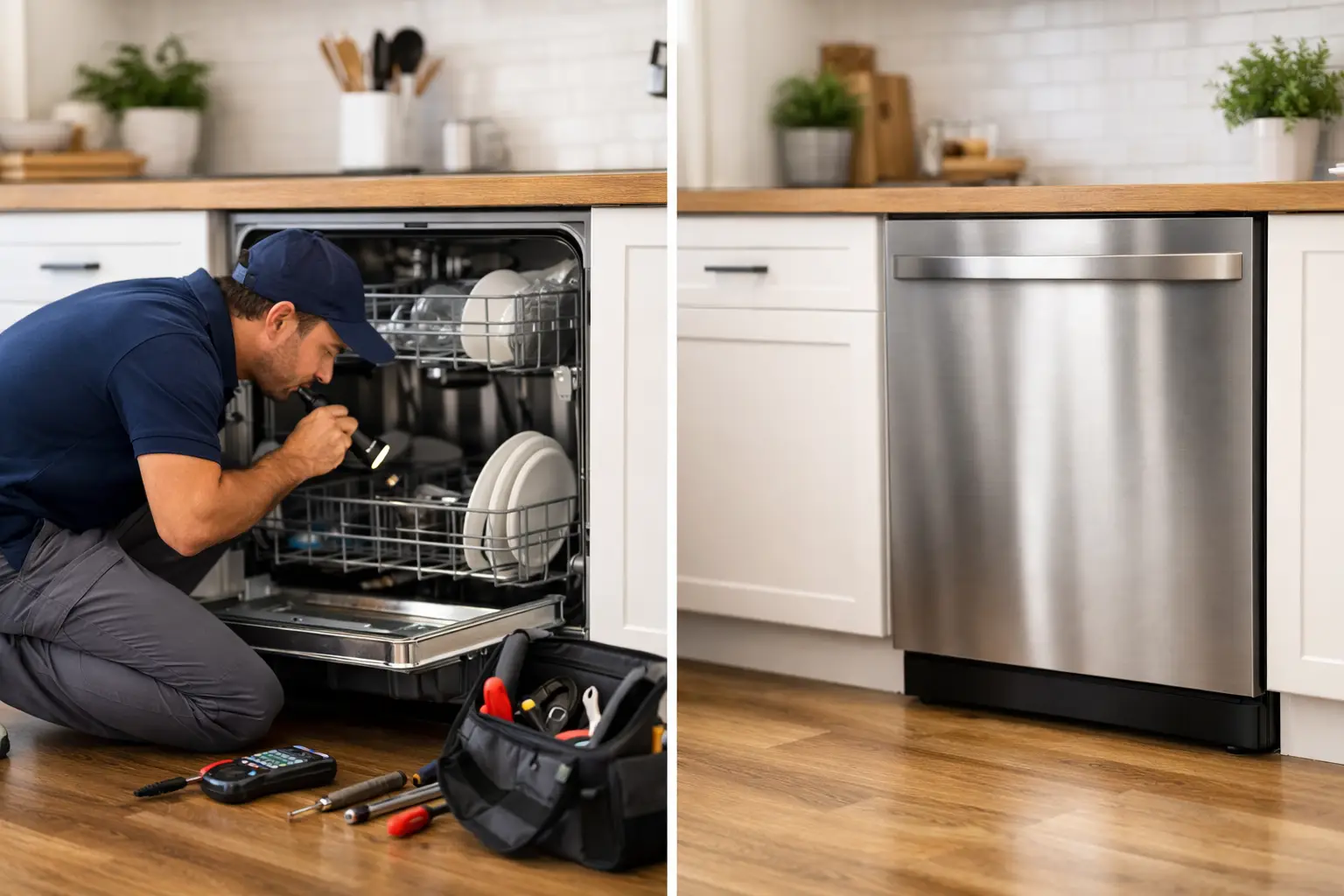
A dishwasher that leaves dishes dirty or stops mid-cycle can throw off the whole kitchen. The first question is usually whether to repair or replace dishwasher equipment. The right answer depends on the problem, the age of the machine, and what the repair will actually cost.
A bad dishwasher does not always mean you need a new one. Many common problems come from a worn part, a blockage, or a simple water supply issue. On the other hand, a major leak or failed control board on an older unit may not be worth putting more money into.
Start With the Age of the Dishwasher
Most dishwashers can last around 10 to 12 years with normal use. Some last longer when they are maintained well. Age alone does not decide the issue, but it gives you a useful starting point.
If the dishwasher is under five years old, repair is usually the better choice unless it has serious damage. A newer machine may need a drain pump, inlet valve, door latch, or heating part. These are common repairs. Replacing the whole appliance for one failed part often does not make sense.
When a dishwasher is eight to 10 years old, look more closely at the repair cost and its overall condition. If it has had several repairs recently, a replacement may save trouble later. If this is the first issue and the rest of the machine is in good shape, repair may still be reasonable.
For a dishwasher over 12 years old, replacement becomes more likely when the repair is expensive. Parts can also become hard to find for older models. A technician can check the model number and tell you whether the needed part is still available.
Repair or Replace Dishwasher Problems Based on Cost
The cost of a repair matters, but the lowest price is not always the best choice. A small repair on an old dishwasher may get it running, but another part could fail soon after. A larger repair on a newer built-in unit can be a good investment because replacement may also involve delivery, installation, and changes to cabinetry or plumbing.
A simple rule can help. If the repair costs close to half the price of a comparable replacement dishwasher, and your machine is already near the end of its expected life, replacement is often the safer choice. If the repair is much less than that and the dishwasher is otherwise reliable, repair is usually worth considering.
Ask for a clear diagnosis before deciding. The symptom is not always the failed part. For example, water at the bottom of the tub could be a blocked filter, a clogged drain hose, a failed drain pump, or a kitchen sink drain issue. Replacing a dishwasher before finding the cause can be an unnecessary expense.
Problems That Are Often Worth Repairing
Many dishwasher failures are repairable without replacing the full appliance. Poor cleaning can come from clogged spray arms, a dirty filter, low water temperature, or a weak circulation pump. Dishes that stay wet may point to a heating problem, a rinse aid issue, or a vent problem in the door.
A dishwasher that will not start may have a faulty door latch, control lock setting, blown fuse, power issue, or failed control component. A unit that will not fill can have a closed water valve, bent supply line, or bad inlet valve.
These problems are often worth fixing when the dishwasher is not too old:
- A door that will not latch or close properly
- Water left in the bottom after a cycle
- A dishwasher that does not fill with water
- Poor washing or drying performance
- A worn rack, broken wheel, or damaged dispenser
- A small leak from a hose, clamp, gasket, or door seal
Do not keep running the dishwasher if it is leaking onto the floor. Even a slow leak can damage flooring, cabinets, and the unit below in a condo or apartment. Turn off the dishwasher and water supply if you can safely reach the valve. Then have the leak checked.
Problems That May Point Toward Replacement
Some issues cost more because they involve major parts or because the machine has damage in more than one area. A cracked tub is a serious example. The tub is the main body that holds water. Repairing or replacing it is often not practical.
Heavy rust inside the tub, repeated leaks from different places, or a failing motor on a very old dishwasher can also make replacement the better path. The same is true when the control board has failed and the correct replacement part is no longer available.
Look at the full condition of the appliance. A dishwasher that has a noisy motor, damaged racks, a weak door spring, and poor cleaning may be telling you it is near the end of its service life. One repair may fix one problem, but it will not reset the age of the other parts.
For landlords and property managers, repeat service calls matter too. A replacement can be easier to plan than several visits, tenant scheduling, and continued downtime. Still, do not replace a unit only because it has one problem. A proper diagnosis can prevent an unnecessary changeout.
A Few Safe Checks Before You Call
There are a few things you can inspect without taking the dishwasher apart. First, make sure the dishwasher has power. Check whether the display is on and whether a breaker has tripped. If it is plugged into an outlet under the sink, make sure the plug is secure.
Next, check the filter at the bottom of the dishwasher. Food debris can block water flow and draining. Remove it only as directed in your owner’s manual. Rinse it under the sink and clean away loose debris. Do not force or pry plastic parts.
If water remains in the tub, check the sink drain too. On some kitchen setups, the dishwasher drain connects through the garbage disposal. A blocked disposal or sink drain can keep dishwasher water from draining correctly.
Also check for an error code on the display. Write down the full code before turning power off. The code gives the technician a useful clue, but it does not always confirm the failed part.
Avoid using chemical drain cleaners in the dishwasher. They can damage seals, hoses, and internal parts. Do not remove wiring panels or work around electrical connections if you are not trained to do so.
Consider Installation and Kitchen Fit
Replacing a dishwasher sounds simple until the old unit comes out. Built-in dishwashers need the right width, height, depth, electrical connection, water line, and drain setup. A new unit may not fit correctly under a counter that has shifted or been remodeled.
In older buildings around West Hollywood, it is also common to find plumbing or electrical setups that need attention before a replacement can be installed. Measure carefully and check the installation requirements before ordering a new appliance. If you rent, speak with the landlord or property manager before approving a replacement.
Noise level and water use can be good reasons to upgrade, especially if the dishwasher still works but performs poorly. But those benefits should be balanced against the cost of the new appliance and installation. If your current unit needs one reasonable repair, fixing it may be the more practical move.
Get a Diagnosis Before Making the Call
The best decision comes after someone checks the actual failure. A technician can inspect the dishwasher, test key parts, look for leaks, and explain whether the repair is likely to last. That gives you real information instead of guessing based on one symptom.
Vertex Appliance Repair provides in-home dishwasher diagnosis in West Hollywood and nearby neighborhoods. The diagnostic fee is $69 and is waived if you approve the repair. Completed repairs and installed parts include a 90-day warranty.
Before the visit, have the model number ready if possible. It is usually found on the inside edge of the dishwasher door. Also note when the problem started, whether it happens every cycle, and whether there are any leaks, noises, or error codes. Those details help get to the cause faster.
A dishwasher does not have to be perfect to be worth repairing. It needs to be safe, dependable, and sensible for your budget. If you are unsure, a clear diagnosis is usually the best next step before spending money on a replacement.
Related articles

Oven Temperature Troubleshooting at Home
Refrigerator Not Cooling With Frost on the Freezer Wall — Heater or Thermistor?