




Top Causes Refrigerator Leaks and What to Check
Learn the top causes refrigerator leaks, what you can safely check, and when a small puddle means you need prompt refrigerator repair at home in West Hollywood.
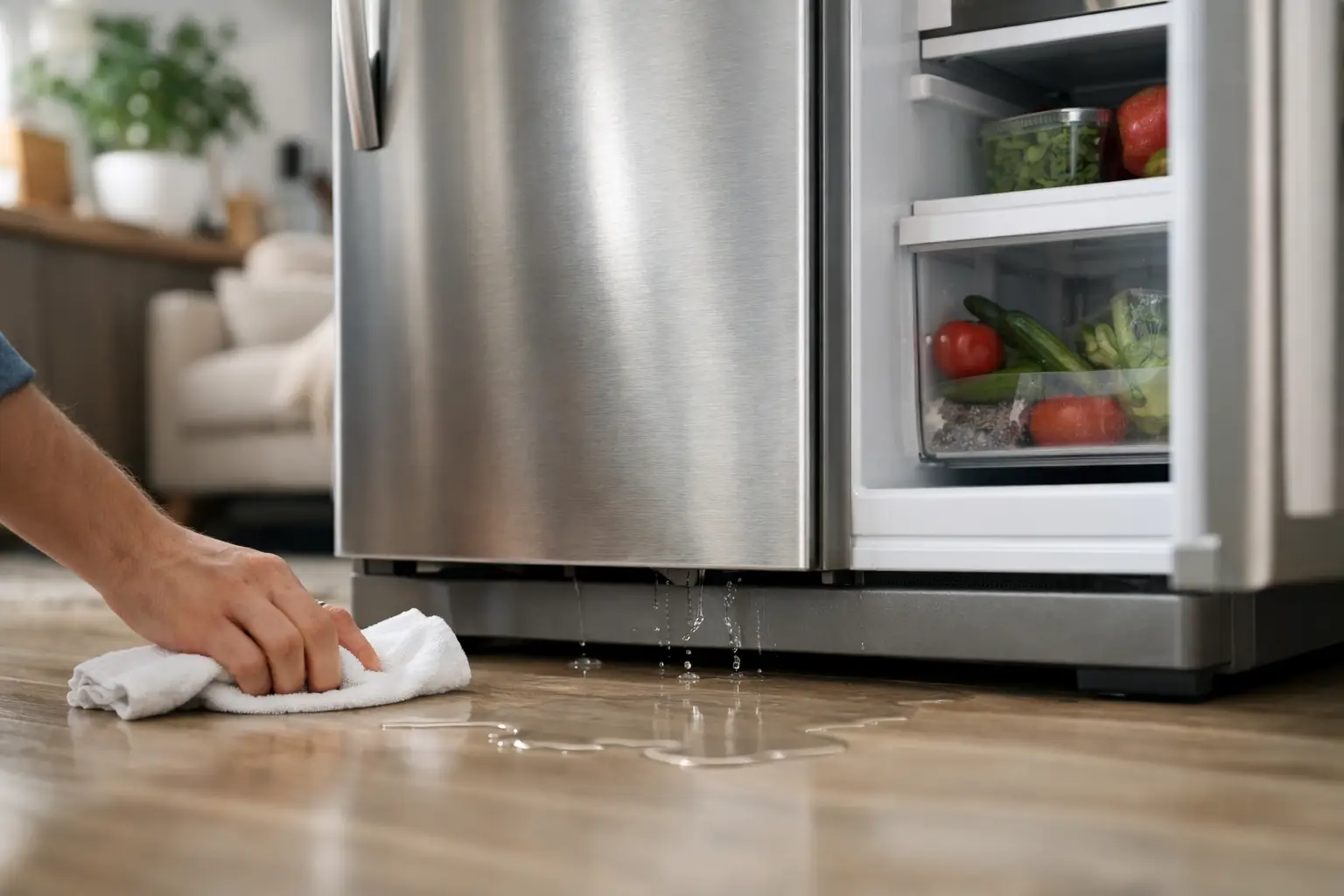
A puddle under a refrigerator is easy to ignore for a day or two. Then it can damage flooring, seep into a cabinet, or create a slip risk. The top causes refrigerator leaks are usually not a cracked refrigerator cabinet. More often, the problem is a blocked drain, a loose water line, or excess moisture around the door.
The location of the water gives a useful clue. Water at the front often points to a door or defrost issue. Water behind the unit can point to the ice maker or water supply. If you are renting, notify the property manager early and take a photo of the leak before moving the refrigerator.
Top Causes Refrigerator Leaks at Home
A blocked defrost drain
This is one of the most common refrigerator leaks. During normal cooling, frost can form on the evaporator coil inside the freezer. The refrigerator defrosts that frost from time to time. The meltwater should run through a small drain hole and tube into a pan underneath the unit.
When the drain hole or tube gets blocked by ice, food bits, or debris, water cannot move down to the pan. It may collect under the freezer drawer, drip into the fresh food section, or run onto the kitchen floor.
You may be able to see a sheet of ice on the freezer floor. Unplug the refrigerator before checking it. Remove food and bins only if you can do so safely. Do not chip at ice with a knife or sharp tool. That can puncture a liner or hidden cooling part. A repair technician can clear the drain and check why it froze or clogged in the first place.
A leaking ice maker or water supply line
Refrigerators with ice makers or water dispensers have a water line behind the unit. The fitting can loosen. The plastic tube can split. The shutoff valve in the wall can also drip, even when the refrigerator itself is working normally.
Pull the refrigerator forward carefully if you have room and a second person to help. Look for moisture at the water connection, along the supply line, and on the floor behind the unit. If water is actively dripping, turn off the refrigerator water valve if you can identify it. Put towels down and avoid pulling on the line.
A slow water-line leak may only show up when the ice maker fills. You might see a small wet spot every few hours, not a constant puddle. This is a good reason to inspect the area behind the refrigerator after using ice or dispensing water.
A cracked or overflowing drain pan
Most refrigerators have a drain pan near the compressor. Water from the defrost system enters this pan and normally evaporates from the warmth of the unit. The pan may crack with age, shift out of place, or overflow if the refrigerator has another drainage problem.
The pan is often hard to reach and can be attached to the refrigerator base. Do not force it out. If the pan is full, the real issue may be a blocked defrost drain or a cooling problem that is creating too much frost. A technician should inspect both the pan and the drain path.
Door gaskets that do not seal
The door gasket is the flexible rubber seal around the refrigerator and freezer doors. If it is torn, dirty, flattened, or not making full contact, warm room air enters the compartment. That extra humidity turns into frost and water.
Signs include condensation around the door frame, frost near food packages, or a door that opens too easily. Clean the gasket with warm water and mild dish soap, then dry it. Check for a box, drawer, or shelf that is keeping the door from closing.
A simple paper test can help. Close the door on a piece of paper. If the paper slides out with almost no resistance in several places, the seal may not be doing its job. A bad gasket does not always cause a floor leak right away, but it can lead to a blocked defrost drain and larger problems over time.
The refrigerator is not level
A refrigerator needs a slight backward tilt so the doors close and water drains correctly. If the front sits too low, doors may not seal well. On some models, water can also collect where it should not.
Check whether both doors close on their own when you let go. If they swing open or sit unevenly, leveling may be part of the problem. Use the adjustable front feet only if you are comfortable doing so. Small changes matter. Do not tip the refrigerator far back or put your hands under a unit that is not supported.
A damaged water filter or filter housing
If the refrigerator has a water filter, inspect the filter area for drips. A filter that is not fully seated, the wrong type, or installed with a damaged O-ring can leak inside the refrigerator compartment. Water may pool under the crisper drawers or drip from the filter housing.
Remove and reinstall the filter according to the instructions for your model. If the leak started right after a filter change, this is especially likely. Do not keep forcing a filter that will not lock into place. The housing can crack, and replacing it is more involved than changing a filter.
Condensation from high humidity or frequent door use
In a busy household, doors may open often. In a warm kitchen, that can create more condensation than the refrigerator can handle. This is more noticeable when people are cooking, entertaining, or loading groceries.
Humidity alone should not cause a large puddle. But it can expose a weak door gasket, poor temperature setting, or blocked drain. Keep food and containers away from air vents. Make sure both doors close fully. If you see repeated water inside the refrigerator, do not assume it is only weather-related.
What to Do When You Find Water Under the Refrigerator
First, protect the floor. Dry the water and place towels around the base. If water is near an outlet, power cord, or exposed wiring, do not stand in water while handling the plug. Turn off power at the breaker if there is any doubt.
Next, check whether the water is coming from inside the refrigerator or from behind it. Look under the crisper drawers for standing water. Then inspect the ice maker line and wall valve from a safe distance. Avoid moving a built-in refrigerator or a tightly fitted unit without help. Flooring and water lines are easy to damage.
Throw away food only if it has not stayed cold. A leak does not always mean the refrigerator has stopped cooling. Still, check the temperature. The refrigerator section should feel consistently cold, and the freezer should keep food frozen solid. If cooling is weak, there may be a larger issue than a simple water leak.
When a Refrigerator Leak Needs Repair
Call for repair if the leak returns after cleanup, the freezer floor keeps icing over, or you find water near the electrical connection. You should also schedule service when the water line is split, the filter housing is cracked, or the refrigerator is not cooling correctly.
For homeowners and property managers in West Hollywood, quick attention can prevent damage to wood flooring, baseboards, and lower cabinets. A technician can trace the water source, clear the drain system, inspect the ice maker line, and test the door seal. At Vertex Appliance Repair, the diagnostic fee is $89 and is waived when you approve the repair. Labor and installed parts carry a 90-day warranty.
A refrigerator leak rarely fixes itself. Dry the area, keep an eye on where the water returns, and address the cause before a small puddle becomes a damaged kitchen floor.
Related articles
Oven Temperature Troubleshooting at Home
Refrigerator Not Cooling With Frost on the Freezer Wall — Heater or Thermistor?