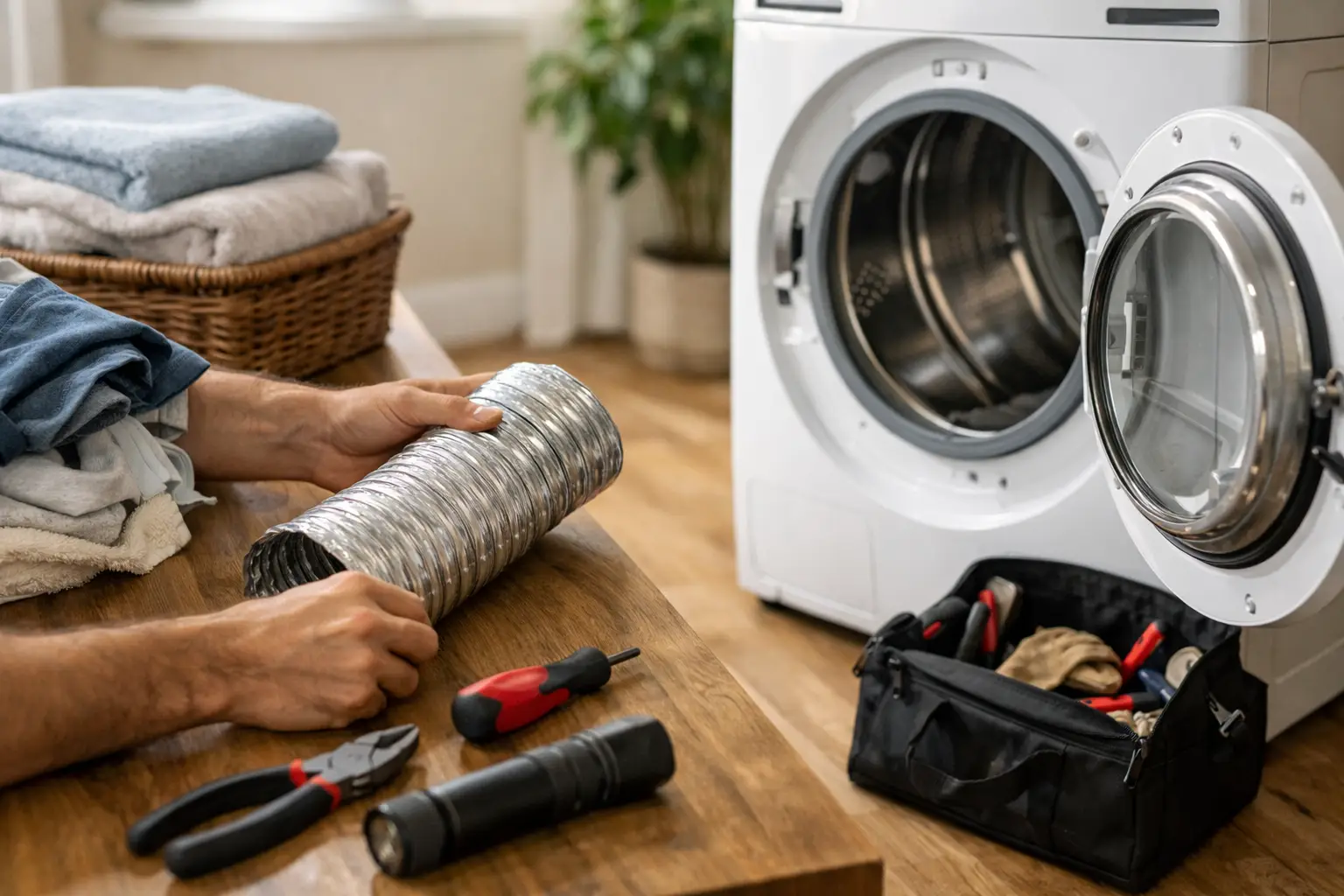





9 Top Signs Dryer Vent Issues Are Getting Worse
Learn the top signs dryer vent issues are getting worse, what you can safely check, and when to call for dryer repair in West Hollywood.
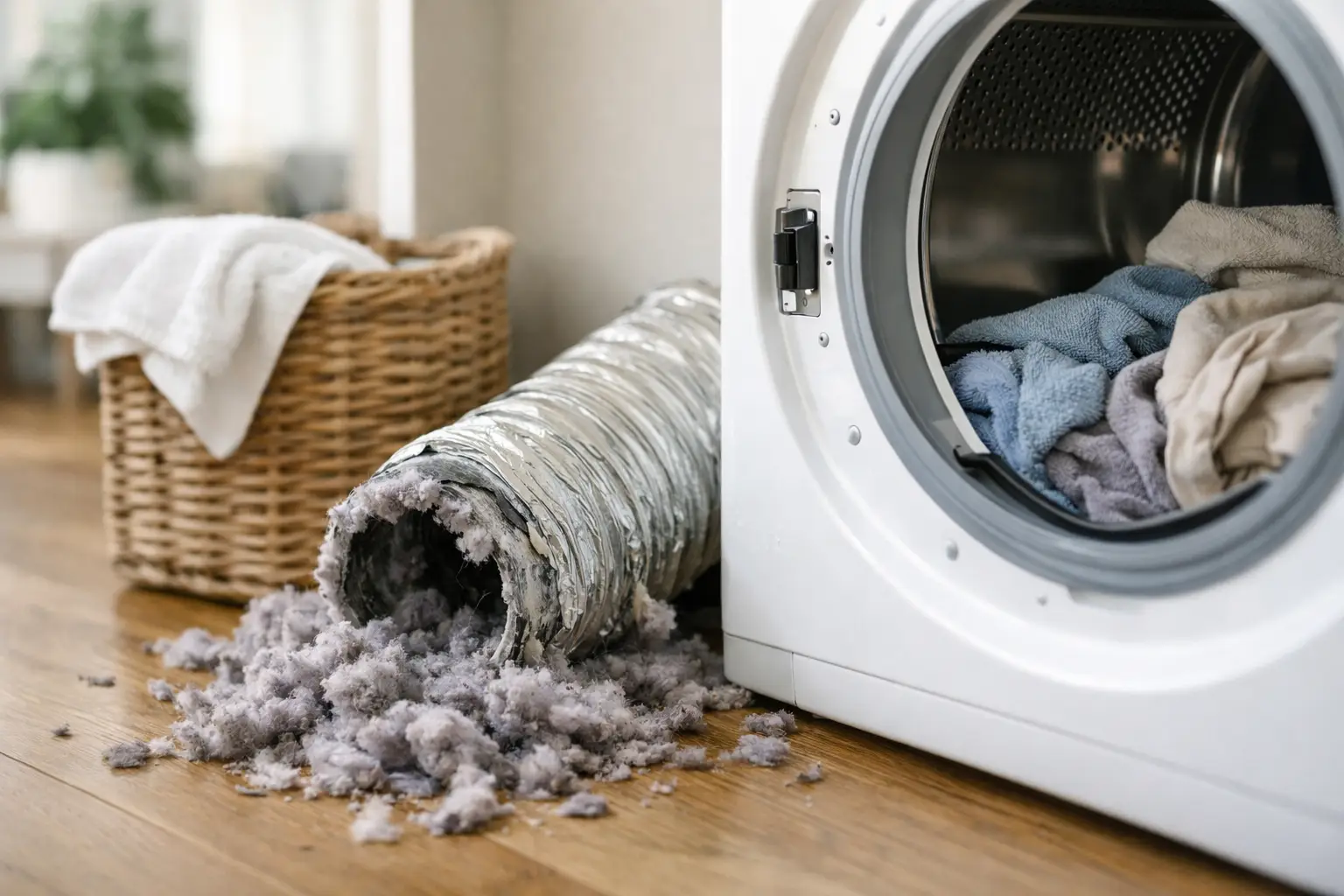
You usually notice dryer vent trouble in small ways first. A normal load takes two cycles. The laundry room feels hot. Clothes come out warm but still damp. Those are often the top signs dryer vent issues are starting, and they should not be ignored. A clogged or damaged vent can make the dryer work harder, wear out parts faster, and raise the fire risk.
Dryer vent problems are easy to miss because the dryer still runs. It spins. It heats. It sounds normal. But air may not be leaving the machine the way it should. Your dryer needs strong airflow to move heat and moisture out of the drum. If that airflow gets blocked, the machine starts acting differently.
Why dryer vent problems show up as dryer problems
Many people think the dryer itself is failing when the real issue is the vent line. That happens a lot. The heating element may be fine. The motor may be fine. But if hot, wet air cannot escape, the load will dry slowly and the inside of the dryer will run hotter than it should.
This matters because vent issues can look like several different repairs at once. A dryer may shut off early, overheat, leave clothes damp, or give off a hot smell. In some cases, lint builds up inside the machine too, not just in the vent. That can affect sensors, thermostats, and other parts.
Top signs dryer vent issues are affecting your home
Clothes take too long to dry
This is the most common sign. If a load that used to dry in one cycle now needs two or three, poor airflow is high on the list of possible causes. The dryer is making heat, but the moisture stays trapped.
Heavy items like towels and jeans may seem like the only problem at first. Then regular clothes start coming out damp too. If the change happened over time, that often points to lint buildup in the vent.
The dryer feels very hot on the outside
A dryer should feel warm during use. It should not feel unusually hot on the top, sides, or door. Too much outside heat often means the machine is struggling to push air through the vent.
That extra heat puts stress on internal parts. It can also make the laundry area uncomfortable. In a small condo, apartment, or laundry closet, the heat can build up fast.
The laundry room gets humid
Your dryer removes moisture from clothes and sends it outside. If the vent is clogged, loose, crushed, or disconnected, some of that moisture may stay indoors. You may notice the room feels damp or muggy during a cycle.
Sometimes windows nearby get a little foggy. Sometimes the room just feels warmer and heavier than usual. This is a sign worth checking sooner rather than later.
You smell something hot or slightly burnt
A hot smell is never something to brush off. It does not always mean flames or a major failure, but it can mean lint is heating up where it should not. Lint is very flammable. That is why vent problems need attention.
If the smell shows up only when the dryer runs, stop using the machine until the vent and dryer are checked. This is especially important if the smell is getting stronger.
The lint screen seems cleaner than usual
This one surprises people. If the lint screen suddenly collects less lint than normal, it does not always mean the dryer is running better. It can mean lint is getting trapped deeper in the machine or vent line instead of reaching the screen.
That is not a rule in every case, but it is one clue. If less lint on the screen comes with longer dry times or extra heat, a vent restriction is very possible.
The outside vent flap barely opens
If your dryer vents to the outside, check the vent hood while the machine is running. The flap should open and air should blow out with some force. If the flap barely moves, airflow may be weak.
Sometimes the flap gets stuck from lint, dirt, or an old vent hood. Sometimes the problem is deeper in the duct. Birds and pests can also block exterior vents.
The dryer shuts off before the load is dry
Some dryers have safety parts that cut heat or stop the machine if temperatures get too high. That can happen when the vent is blocked. The dryer overheats, the safety control reacts, and the cycle ends with wet clothes still inside.
People often think the dryer is dying when this happens. It might be. But it might also be doing exactly what it is supposed to do to prevent damage.
There is lint around the dryer or vent connection
A little lint near the lint screen area can be normal. More than that is not. If you see lint around the back of the dryer, near the vent hose, or on the floor often, air may be leaking from a loose or damaged connection.
That leak reduces vent performance. It also sends lint into the room and sometimes into the wall area, depending on the setup.
Your utility bill starts creeping up
A dryer with vent trouble usually runs longer. Longer cycles use more electricity or gas. The increase may be small at first, but it adds up.
This sign is less obvious than damp clothes or heat. Still, if the dryer has become less efficient for no clear reason, the vent system should be checked.
What causes dryer vent problems
Lint buildup is the big one. Even if you clean the lint screen every time, some lint still gets past it. Over time, that lint collects in the vent line.
But buildup is not the only cause. A crushed flexible hose behind the dryer can slow airflow right away. So can a vent that is too long, has too many turns, or was installed with the wrong material. In older homes and some multi-unit buildings, the vent path can be harder to inspect and maintain.
Outside conditions matter too. A vent hood can get blocked by debris. In some cases, the damper flap stops opening well. In others, animals get into the vent opening.
What you can safely check yourself
Start simple. Clean the lint screen fully. If you use dryer sheets, wash the screen with a little soap and water once in a while. A screen can look clean but still have residue that slows airflow.
Next, look behind the dryer if you can do it safely. If the vent hose is crushed or bent hard, that can be part of the problem. Check the outside vent hood too. See if the flap opens during a cycle and whether lint is packed around it.
Do not take apart the dryer unless you know what you are doing. Do not keep running a dryer that smells burnt or gets very hot. A basic check is fine. A deeper repair or internal cleaning is better left to a professional.
When the issue is not only the vent
Sometimes vent trouble has already led to dryer part failure. A thermostat can weaken. A fuse can blow. Sensors can stop reading correctly. Rollers and belts can wear faster when the machine runs hotter and longer than it should.
That is why it depends on how long the problem has been going on. If you caught it early, a vent cleaning or vent correction may solve it. If the dryer has been overheating for months, it may need both vent service and appliance repair.
When to call for service
Call if the dryer needs multiple cycles, gives off a hot smell, shuts off early, or feels too hot to touch comfortably. Call if you have checked the lint screen and outside vent hood and the problem is still there. And call sooner if you manage a rental or multi-unit property, because one dryer problem can quickly become a tenant complaint and a safety issue.
In West Hollywood, we see this a lot in tight laundry spaces where dryers are pushed too close to the wall. That can pinch the vent and cause trouble without anyone noticing.
If you need help, Vertex Appliance Repair handles in-home dryer repair and can check whether the problem is the vent, the dryer, or both. The diagnostic fee is $69, and it is waived if you approve the repair. Completed repairs and installed parts include a 90-day warranty. You can call 323-747-7098.
A dryer should not need extra effort just to finish a normal load. If something feels off, trust that early sign. Catching a vent problem early is usually easier, safer, and less expensive than waiting for the dryer to stop working completely.
If your dryer is not heating or takes several cycles to dry a load, we can help. See dryer repair in West Hollywood or call 323-747-7098.
Related articles

Oven Temperature Troubleshooting at Home
Refrigerator Not Cooling With Frost on the Freezer Wall — Heater or Thermistor?