




Washer Draining Problem Guide for Homeowners
Use this washer draining problem guide to find common drain faults, try safe checks, and decide when to book local washer repair in West Hollywood today.
A washer that will not drain can stop a full laundry day fast. This washer draining problem guide helps you narrow down the problem without taking risks or taking apart parts that should be handled by a repair technician. A load sitting in dirty water is frustrating, but the cause is often in the drain path, not the whole machine.
First, do not keep starting the washer over and over. Repeated attempts can leave more water in the drum, cause overflow, or put extra strain on the drain pump. If water is leaking, turn off the washer, unplug it, and close the water supply valves behind the machine if you can reach them safely.
Start with the symptom
The way your washer fails to drain gives useful clues. If you hear a steady humming sound but no water leaves the drum, the drain pump may be blocked or damaged. If the washer is completely quiet when it should drain, the issue may be with the lid lock, wiring, control, or pump itself.
A washer that drains slowly is different from one that does not drain at all. Slow draining often points to a partly blocked hose or a plumbing drain that is backing up. If water comes out onto the floor during draining, look closely at the drain hose and the standpipe, which is the vertical pipe where the washer hose empties.
If the machine finishes washing but will not spin, it may be protecting itself because it senses water still inside. Many washers will not go into a fast spin until the water level drops.
Safe checks before calling for washer repair
You do not need to remove panels to make a few basic checks. Have towels or a shallow pan ready. There may be water in the hose or inside the washer.
Check the drain hose
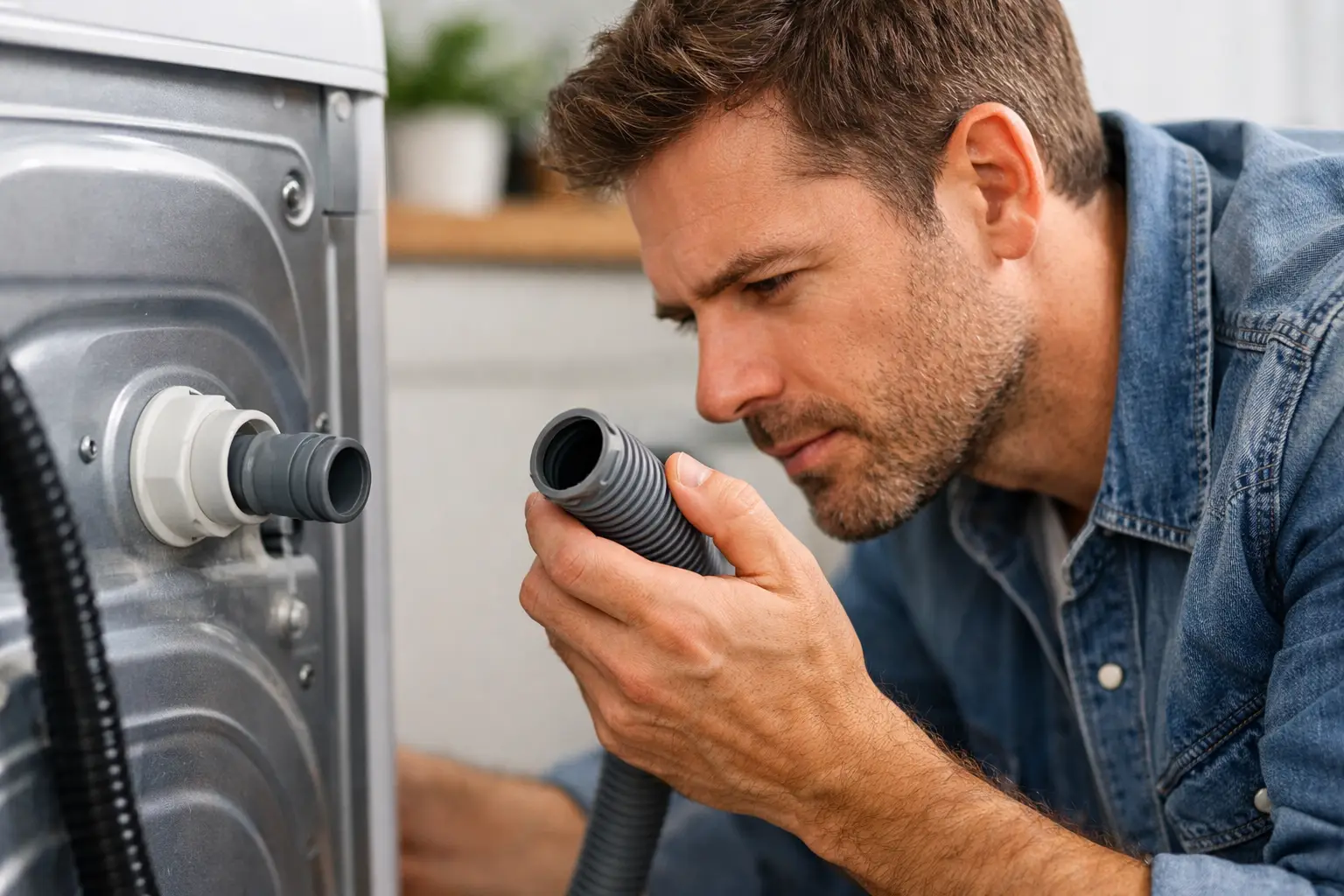
Pull the washer forward only if it can be moved without pulling on the water lines or power cord. Look for a drain hose that is pinched, crushed behind the washer, or bent sharply. A tight bend can stop water flow.
Also check that the hose is sitting in the standpipe correctly. It should not be pushed too far down into the pipe. If the hose is sealed tightly inside the pipe, the washer may have trouble draining because air cannot move through the line. The hose should also be high enough to prevent water from flowing out by itself during the wash cycle.
If you see a split hose, loose clamp, or water leaking at the back of the washer, stop using the machine. A leaking hose is usually a simple repair, but continuing to run the washer can damage flooring, walls, or a downstairs unit.
Look at the household drain
Sometimes the washer is working, but the plumbing drain cannot accept the water fast enough. Watch what happens at the standpipe during drain. If water rises out of the pipe, bubbles heavily, or spills onto the floor, the problem may be a clogged plumbing line.
Do not pour chemical drain cleaner into the washer or standpipe while the washer is connected. These chemicals can splash back and make repair work unsafe. A plumber may be the right call if the standpipe is overflowing, especially if other nearby drains are slow too.
Check the load and the door or lid
A heavy blanket, bath mat, or a load that is packed on one side can leave the washer out of balance. Some machines pause or stop before spin when this happens. Open the door only after the cycle has stopped and the lock releases. Rearrange the load, remove a few items if it is overfull, and try a drain and spin cycle once.
On a top-load washer, make sure the lid closes fully. On a front-load washer, check for clothing caught in the door seal. A damaged lid lock or door lock can keep the washer from continuing to drain and spin. This is not usually a safe do-it-yourself part replacement because the lock, wiring, and cabinet access vary by model.
Common causes of a washer draining problem
The drain pump is one of the most common causes. It is a small motor that pushes wash water through the hose. Coins, hair pins, screws, small socks, and fabric pieces can get into the pump. When that happens, you may hear a hum, grinding, rattling, or a weak draining sound.
Some front-load washers have a small pump filter behind a lower access door. If your owner’s manual clearly shows that your model has one, you may be able to clean it. Unplug the washer first. Put down towels and expect water to come out when the filter is opened. If the filter will not turn easily, do not force it. A broken filter cap or damaged seal can create a bigger leak.
Not every washer has a homeowner-accessible filter. Many top-load models do not. Do not assume there is one and start removing the back or bottom panels.
A damaged drain pump can also fail without a blockage. Pump impellers, which are the small blades inside the pump, can wear out or break. The pump motor can also lose power. In those cases, cleaning the hose will not solve the issue. The pump needs to be tested and may need replacement.
A failed lid lock, door lock, water-level sensor, or control board can cause similar symptoms. These parts tell the washer when it is safe to drain or spin. This is why a washer that simply “will not drain” needs a proper diagnosis. Replacing parts based only on a guess can cost more and still leave the machine full of water.
What not to do with a washer full of water
Do not tip the washer over to empty it. It is heavy, unstable, and can cause water damage. Do not pull the drain hose out and lay it on the floor unless you have a safe way to catch a large amount of water. A full washer can release several gallons quickly.
Avoid running repeated spin cycles when the machine is humming, grinding, or showing a drain-related error code. If an object is jammed in the pump, repeated use may damage the motor further.
Do not open electrical panels or reach underneath the washer while it is plugged in. Water and electrical parts do not belong in the same do-it-yourself repair. Renters should also avoid altering hoses or plumbing connections without their landlord or property manager’s approval.
When to schedule service
Call for washer repair if the drain hose looks normal but the machine still holds water, makes a humming or grinding noise, stops before spin, or shows the same error again after one reset attempt. Service is also a good idea when you find water under the machine, smell a hot or burning odor, or cannot access the pump filter safely.
For landlords and property managers, a washer that drains slowly is worth handling early. A small blockage can turn into a leak, a tenant complaint, or water damage in a multi-unit building. It is often easier to schedule a diagnosis before the machine stops completely.
In West Hollywood and nearby neighborhoods, Vertex Appliance Repair can inspect the drain system, pump, hose, locks, and related washer parts in the home. The diagnostic fee is $69 and is waived when the repair is approved. Completed repairs and installed parts include a 90-day warranty.
Before the visit, leave the washer off and avoid adding more water to the drum. If possible, take a photo of any error code and note when the problem started. Those small details can help the technician get to the real cause faster and help get laundry back to normal with less disruption.
Related articles
Built In Refrigerator Versus Freestanding: Which Fits?
Sub-Zero Error 24 EC — Check the Condenser Before the Defrost Parts