




What Causes Dishwasher Leaking Water? 8 Common Causes
Learn what causes dishwasher leaking water, which checks are safe, and when a West Hollywood repair visit can prevent floor and cabinet damage today.
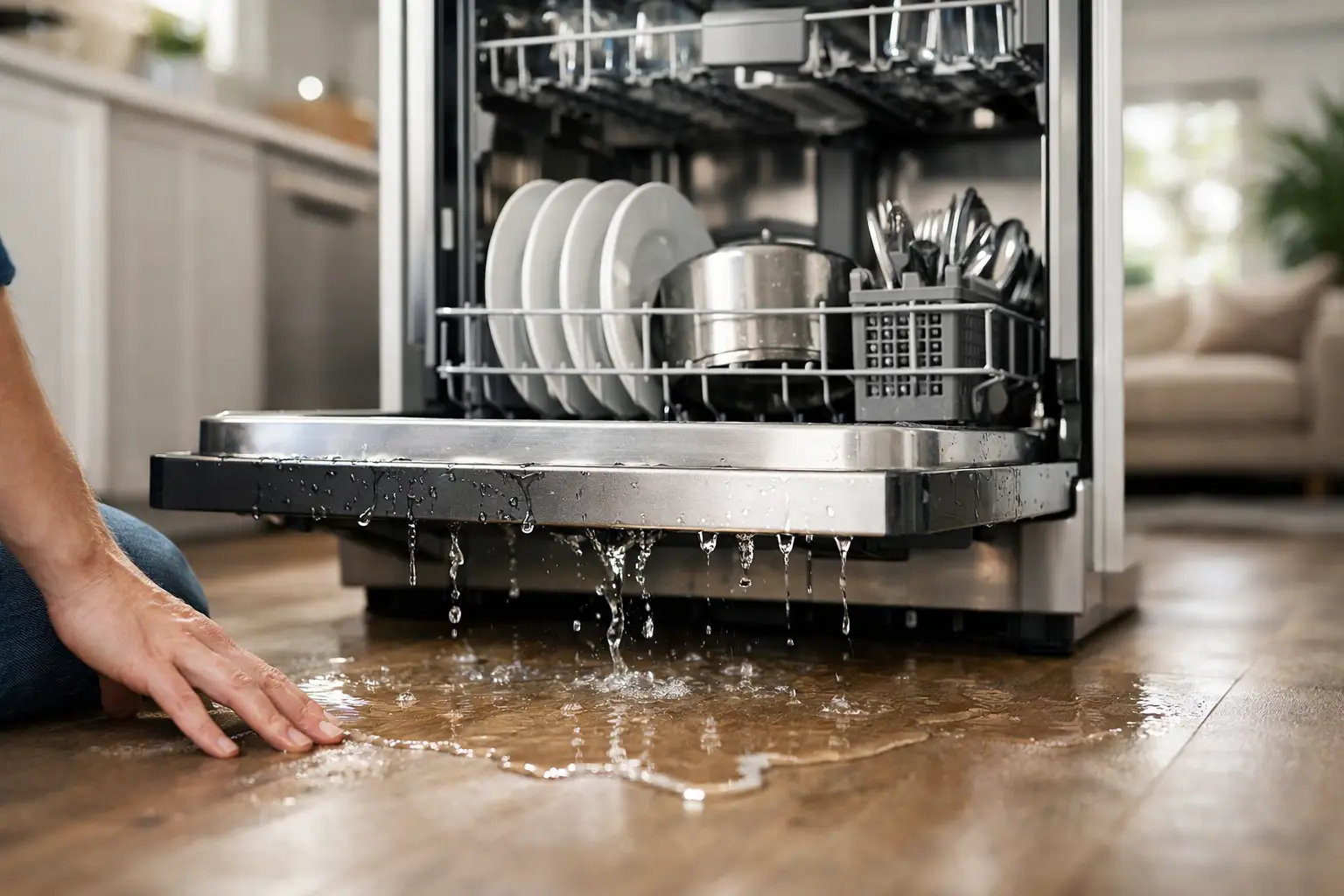
A puddle under the dishwasher is not always a major failure. Sometimes it is a loose cap or too much soap. Other times, water is coming from a cracked part hidden below the machine. If you are asking what causes dishwasher leaking water, the location of the water gives the best first clue.
Dry the floor first. Then avoid running another cycle until you know where the leak started. Water can damage wood floors, cabinets, and the unit below an upstairs condo or apartment.
What Causes Dishwasher Leaking Water From the Door?
Water at the front of the dishwasher often points to a door seal problem, loading issue, or a problem that makes water spray in the wrong direction.
Worn or dirty door gasket
The door gasket is the soft rubber seal around the dishwasher opening. It keeps wash water inside while the machine runs. Food bits, grease, or detergent buildup can stop the door from sealing fully. A gasket can also become hard, torn, flat, or loose as it ages.
Look along the full edge of the seal with the door open. Wipe it with a damp cloth and check for splits or areas that have pulled away from the channel. Do not use sharp tools around the gasket. If it is torn or misshaped, it usually needs replacement.
Door not closing or latching correctly
A bent door, loose hinge, damaged latch, or misaligned rack can keep the door from closing evenly. This may create a small gap at one lower corner. The leak may only show up during the wash portion of a cycle, when water pressure is higher.
Check that no plate, utensil, or rack is sticking out and touching the door. If the door feels loose, drops quickly when opened, or does not latch firmly, leave the repair to a technician. Hinge and latch repairs can require removing the door panel.
Too much detergent or the wrong soap
Using regular dish soap in a dishwasher creates a large amount of foam. The foam can push out around the door and look like a serious leak. Too much dishwasher detergent can also cause excess suds, especially with soft water.
If you see lots of bubbles on the floor or inside the tub, stop the cycle. Remove as much foam as you can with towels. Run a short rinse cycle without detergent only after the foam is gone. If water still leaks after that, there may be another issue.
A spray arm that is blocked or cracked
The spray arm spins and sends water across the dishes. A tall pan, cutting board, or utensil can block it. A cracked spray arm can also shoot water toward the door instead of down into the tub.
Make sure both racks slide in all the way. Turn the spray arm by hand and make sure it can move freely. If you see a crack or split in the arm, do not keep using the dishwasher until it is replaced.
Leaks Under the Dishwasher Have Different Causes
Water that appears from under the center or sides of the dishwasher is often from a hose, pump, valve, or tub problem. The source may be hard to see because the leak starts behind the lower access panel.
Loose or damaged water supply line
The supply line brings clean water into the dishwasher. Its connection can loosen over time, or an older line can corrode or split. This type of leak may happen while the dishwasher is filling, even before the spray arms start.
If you can safely access the shutoff valve under the kitchen sink, turn it off when the dishwasher is not in use. Do not force a stuck valve. A steady drip from the supply connection needs attention because it can leak even when the dishwasher is off.
Bad inlet valve
The inlet valve controls how much water enters the dishwasher. If it does not close fully, the dishwasher may overfill. If the valve body or connection leaks, water can collect below the unit during the fill cycle.
Overfilling is not always caused by the valve. Some models use a float or water-level sensor to stop filling. A stuck float can send the same signal. This is not a good do-it-yourself repair because the dishwasher must be pulled out and tested for the real cause.
Pump seal or pump housing leak
The circulation pump moves water through the spray arms. The drain pump removes dirty water. Both are located near the bottom of the dishwasher. Their seals can wear out, and plastic pump housings can crack.
A pump leak often starts after the dishwasher has been running for several minutes. You may see water near the middle of the floor rather than directly at the door. The dishwasher may still wash dishes normally at first, which is why many people do not notice the problem until cabinet or floor damage begins.
Split drain hose or loose hose clamp
The drain hose carries water from the dishwasher to the sink drain or garbage disposal. A loose clamp, split hose, or bad connection can leak when the dishwasher drains. You may notice the leak near the end of the cycle.
Look under the sink for moisture around the drain hose connection. If the hose is wet, dry it and check it again after a cycle. Do not run the dishwasher if the hose is cracked or the connection will not stay secure.
A Leak Can Come From the Kitchen Sink Area
Not every puddle beside a dishwasher comes from the dishwasher itself. The sink drain, garbage disposal connection, faucet supply line, or countertop seam can drip into the same area.
Run the kitchen faucet and fill the sink with a small amount of water. Then drain it while watching the cabinet below. If water appears without the dishwasher running, the dishwasher may not be the source. This simple check can save time and help narrow down the repair.
Check When the Leak Happens
The timing matters. It helps identify which system is involved.
If water appears at the beginning of the cycle, look at the supply line, inlet valve, or fill system. Water during washing can point to the door gasket, spray arm, or pump. A leak near the end of the cycle often points to the drain hose or drain connection.
You can place dry paper towels along the front and sides of the dishwasher before a short cycle. Check them at different points, but do not remove panels or reach behind the dishwasher while it is running. If you see active leaking, stop the cycle and shut off the water supply if you can do so safely.
When You Should Stop Using the Dishwasher
Some leaks are small, but none should be ignored. Stop using the dishwasher right away if water reaches an electrical outlet, the dishwasher power cord, wood flooring, or the cabinet base. Also stop if you smell burning, see water coming from below the unit, or find repeated puddles after cleaning the door seal.
Renters should notify the landlord or property manager as soon as the leak is found. In a multi-unit building, a small dishwasher leak can affect the cabinet, wall, or ceiling in another unit.
For a leak that needs a repair, a dishwasher repair visit can identify whether the problem is a seal, hose, pump, inlet valve, or another part below the tub. Vertex Appliance Repair serves West Hollywood and nearby neighborhoods. The diagnostic fee is $89 and is waived when the repair is approved. Installed parts and labor include a 90-day warranty.
A dishwasher should leave the floor dry after every cycle. If it does not, place towels around the area, stop using it, and have the source checked before a small drip becomes cabinet or floor damage.
Related articles

Built In Refrigerator Versus Freestanding: Which Fits?
Sub-Zero Error 24 EC — Check the Condenser Before the Defrost Parts