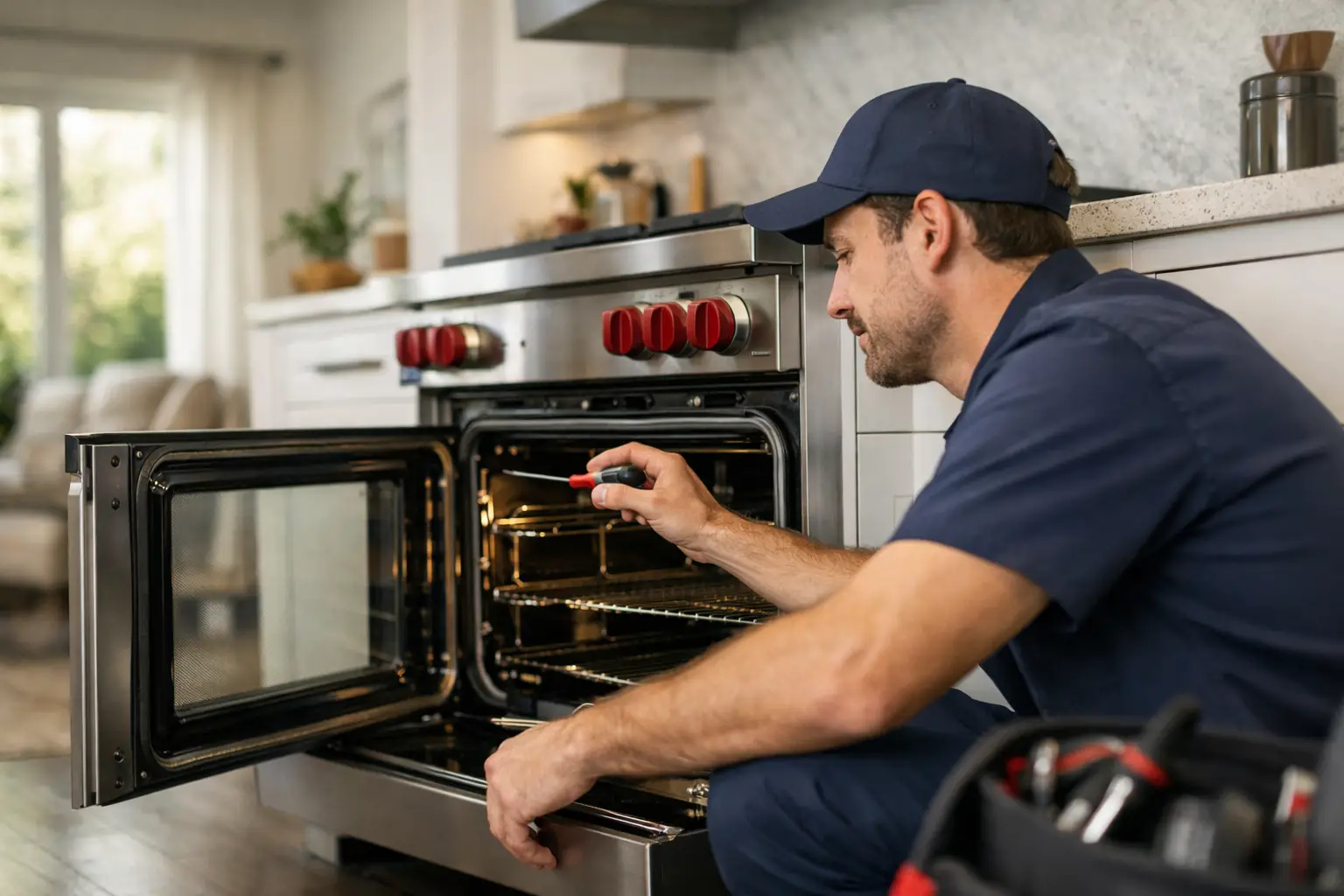





Why Is Ice Maker Leaking? Find the Cause
Why is ice maker leaking? Learn common causes, safe checks, and when a refrigerator repair visit can stop water damage in your kitchen at home today.
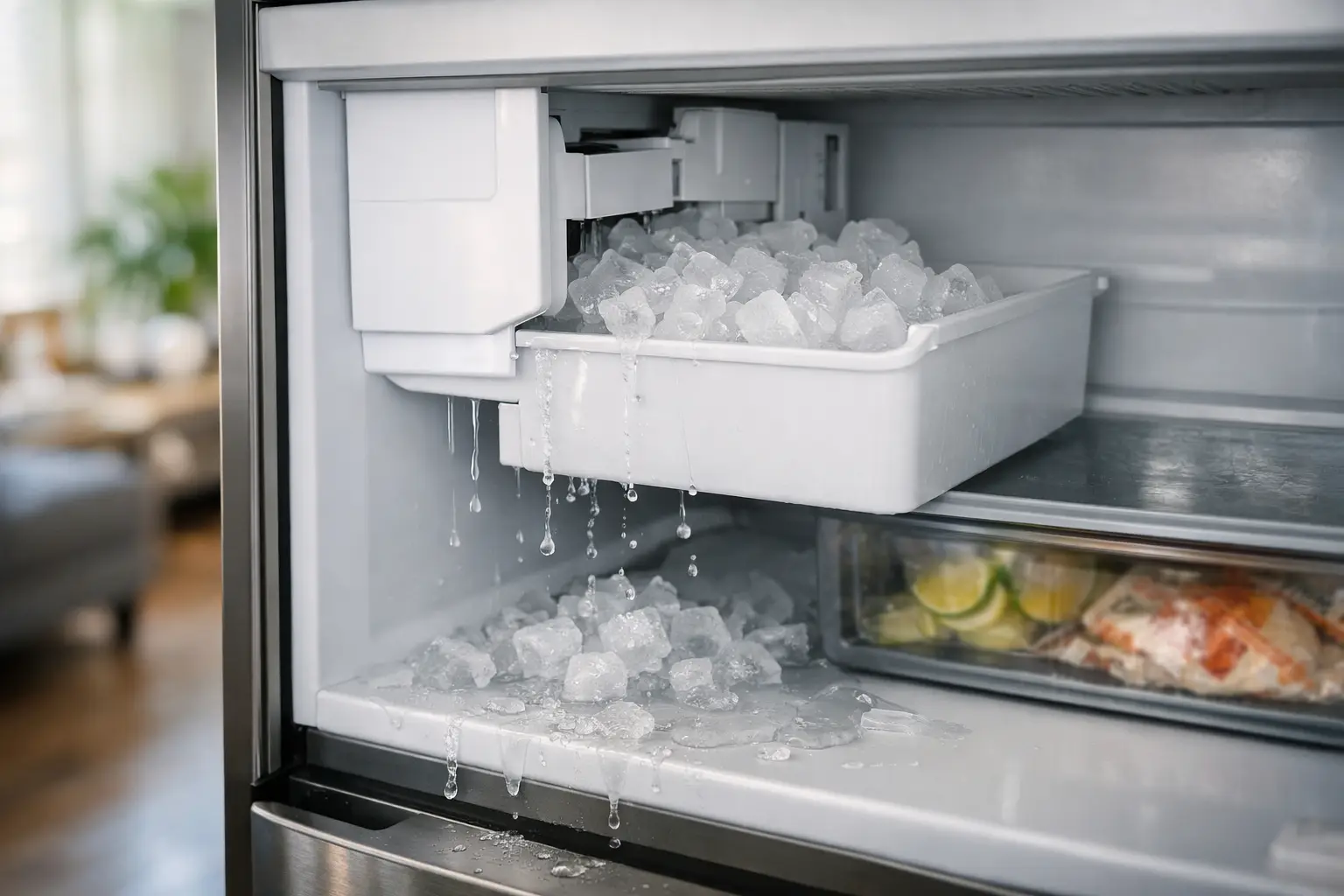
A puddle under the refrigerator can start small, then spread across the kitchen floor overnight. If you are asking, “why is ice maker leaking?” the leak may not be coming from the ice maker itself. Water can travel down the back of the refrigerator, under the freezer drawer, or through the dispenser area before you see it.
The first priority is protecting your floor and cabinets. Dry the water, place towels around the base of the refrigerator, and avoid leaving a steady leak unattended. If water is actively dripping, turn off the refrigerator’s water supply valve if you can reach it safely.
Why Is an Ice Maker Leaking?
An ice maker needs a small water line, an inlet valve, a fill tube, and a mold that freezes the water into cubes. A leak can happen when any of those parts cracks, shifts, freezes, or receives too much water.
Sometimes the cause is simple, such as a loose water line connection after the refrigerator was moved. Other times, a worn inlet valve is allowing water to keep flowing after the ice maker has filled. The location of the water usually gives a good clue.
Water inside the freezer often points to a frozen or misplaced fill tube. Water behind the refrigerator may come from the supply line or inlet valve. Water on the floor in front of the refrigerator can be from an overflowing ice maker, a leaking dispenser line, or water that has traveled from the back.
Common Causes of an Ice Maker Leak
The water line connection is loose or damaged
The refrigerator water line connects to the home water supply and then to the inlet valve at the back of the unit. A loose fitting can drip slowly. A plastic line can also crack, especially if it was bent, pinched, or pushed against a wall.
Pulling a refrigerator out for cleaning or flooring work can cause this problem. Check for dampness behind the unit and look for drops around the water line connections. Do not overtighten plastic fittings. They can crack and make the leak worse.
The inlet valve is leaking
The inlet valve controls water going to the ice maker and water dispenser. It opens for a short time when the ice maker calls for water. If the valve does not close fully, it can send too much water into the ice maker mold.
You may notice oversized cubes, a sheet of ice in the ice bin, or water freezing beneath the ice maker. In some cases, the valve leaks externally from its body or fitting at the back of the refrigerator. This part usually needs replacement rather than adjustment.
The fill tube is frozen
The fill tube is the small tube that sends water into the ice maker. When it freezes, water may spray out, miss the mold, or back up and run down the freezer wall.
A frozen fill tube is often a sign of another issue. The inlet valve may be seeping water when it should be closed. Freezer temperatures that are too cold can also contribute. Thawing the tube may stop the water for a short time, but the underlying cause should still be checked if it freezes again.
The ice maker is overfilling
An ice maker that receives too much water will overflow before the water freezes. You may see ice cubes joined together, ice hanging from the mold, or a solid block in the bin. On some older ice makers, the fill level can be adjusted. On many newer units, the amount of water is controlled electronically and is not a homeowner adjustment.
Do not turn random screws or force the ice maker arm. A wrong adjustment can cause poor ice production or more overflow. A technician can test whether the ice maker is sending the wrong signal or whether the inlet valve is staying open too long.
The ice maker mold or housing is cracked
Plastic parts can become brittle over time. A crack in the mold or ice maker housing may leak only during the fill cycle. It can be hard to spot because the water quickly turns to ice.
Look for ice buildup directly below the ice maker, stains on the freezer liner, or a thin trail of frozen water. If the housing is cracked, replacing the ice maker assembly is often the practical repair.
The refrigerator is not level
A refrigerator that leans too far forward can affect how water flows in the ice maker area. It can also keep doors from sealing correctly. Poor door sealing allows warm air inside, which creates frost and ice buildup around the ice maker.
Most refrigerators should sit level from side to side and lean slightly toward the back. This helps the doors close on their own. Leveling is not always the cause of a leak, but it is worth checking if the refrigerator was recently moved.
Safe Checks You Can Make First
Before checking anything, unplug the refrigerator if you need to move it or if water is near an outlet. Turn off the water supply if there is an active leak. Do not use a hair dryer near standing water or exposed wiring.
Start by emptying the ice bin. Look for a block of ice, water under the bin, or cubes frozen together. Then inspect the freezer area around the ice maker. Frost on the fill tube, ice on the back wall, or water marks under the unit are useful details to share during a repair visit.
Next, look behind the refrigerator with a flashlight. Check the floor, water line, and valve area for fresh drips. A dry paper towel pressed around a connection can reveal a slow leak. If the water appears only when the ice maker fills, leave the ice maker turned off until the problem is repaired.
If your refrigerator has a water dispenser, check whether the dispenser also drips. A dispenser drip does not always mean the same part is failing, but both systems often use the same inlet valve and water supply.
When to Stop Using the Ice Maker
Turn the ice maker off if water is overflowing into the freezer, dripping onto the floor, or freezing into a large mass. You can usually still use the refrigerator for food storage while the ice maker is off. Keep an eye on the water line and floor until the cause is confirmed.
Call for repair sooner if water is reaching wood flooring, cabinets, a wall, or a lower apartment unit. A small refrigerator leak can cause more damage than the appliance repair itself. Property managers should also document the leak and keep the affected tenant from using the ice maker until it is checked.
A leak that happens only once after a power outage or a recently replaced filter may not be a failed ice maker. Still, it should not be ignored if it returns. Repeated ice buildup is usually a sign that a part is not working correctly.
What a Refrigerator Repair Visit Can Identify
A proper diagnosis checks more than the visible puddle. The technician can inspect the supply line, inlet valve, fill tube, ice maker mold, freezer temperature, door seal, and the refrigerator’s level. This helps avoid replacing an ice maker when the actual problem is a leaking valve or frozen fill tube.
For homeowners and property managers in West Hollywood, Vertex Appliance Repair can inspect the refrigerator in your home and explain what is leaking before work begins. The diagnostic fee is $69 and is waived if you approve the repair. Completed repairs and installed parts include a 90-day warranty.
If you need to schedule a refrigerator or ice maker repair, call 323-747-7098. Until the leak is resolved, keep the ice maker off, dry the area often, and do not let a small puddle become damage to your kitchen.
Related articles
Built In Refrigerator Versus Freestanding: Which Fits?
Sub-Zero Error 24 EC — Check the Condenser Before the Defrost Parts