




Why Is My Fridge Warm? Common Causes
Why is my fridge warm? Learn the most common causes, what you can safely check, and when to call for refrigerator repair in West Hollywood.
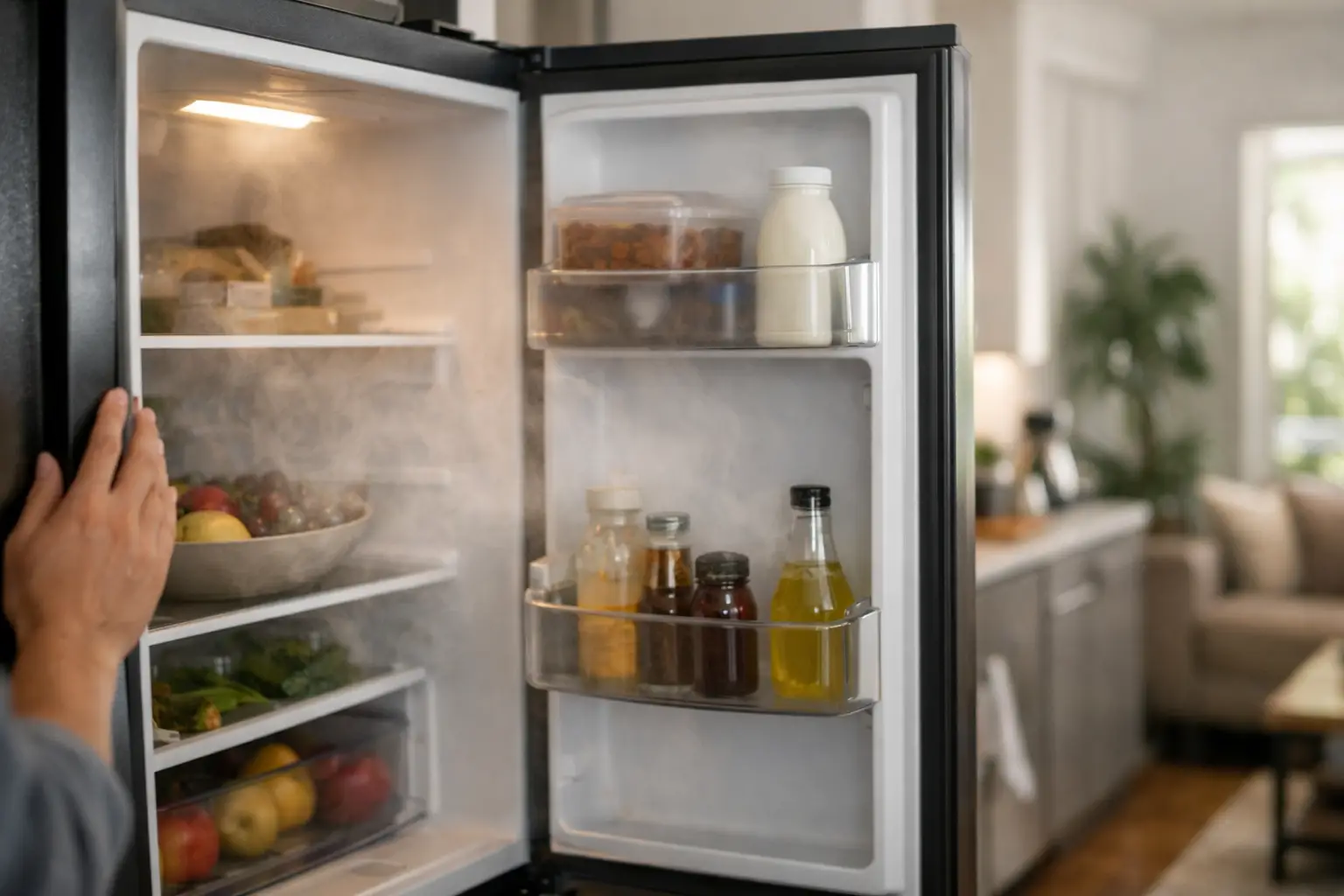
You open the fridge for milk, and the air inside feels wrong right away. Not hot, but not cold enough. If you are asking, why is my fridge warm, the main thing to know is this: a refrigerator can still have lights, still make noise, and still stop cooling the way it should.
That usually means one part is struggling, airflow is blocked, or the unit cannot get rid of heat. Some causes are simple. Some need a repair. The sooner you check it, the better chance you have of saving food and avoiding a bigger problem.
Why is my fridge warm but the freezer seems fine?
This is one of the most common calls. The freezer may still feel cold, but the fresh food section is warm or only a little cool. In many refrigerators, the freezer makes the cold air first. A fan or air vent then moves that cold air into the fridge section.
If that airflow gets blocked, the freezer can seem normal while the fridge warms up. A bad evaporator fan motor is a common cause. That fan sits in the freezer area and pushes cold air through the system. If it stops, the refrigerator side usually suffers first.
A stuck damper can also cause this problem. The damper is a door that opens and closes to let cold air move from the freezer to the fridge. If it stays closed, the freezer may keep working, but the fridge gets warm.
Heavy frost buildup can do the same thing. When frost covers the cooling coils behind the freezer panel, air cannot move the right way. That points to a defrost problem, not just a simple airflow issue.
Start with the easy checks
Before assuming you need a part, check the simple things first. They cause more warm fridge calls than many people expect.
Make sure the temperature settings were not changed by accident. It happens often in busy kitchens, rentals, and shared spaces. If the control was moved warmer, the fridge may slowly lose cooling over several hours.
Check the doors. If a door does not close all the way, warm room air keeps getting in. Look for a food container, shelf, or bag that is blocking the door. Also check the door gasket, which is the rubber seal around the edge. If it is torn, loose, or dirty, the seal may fail.
Do not pack food too tightly around the vents. Refrigerators need space for air to move. If cold air cannot circulate, some areas get warm even when the machine is running.
Then look at the condenser area. On many units, dust and pet hair collect on the condenser coils. These coils release heat from the refrigerator. If they are clogged, the unit has to work harder and may not cool well. A dirty condenser is a very common reason a fridge runs warm.
When a warm fridge means poor airflow
Airflow problems are common because refrigerators depend on moving air, not just making cold air. If the fan is weak, blocked, or silent, temperatures rise fast in the fresh food section.
Listen for the evaporator fan when you open the freezer and then press the door switch. On many models, the fan should run when the switch is pressed. If you hear no fan sound, or hear grinding or chirping, the fan motor may be failing.
Ice buildup can block the fan blades too. In that case, you may hear the fan hitting ice. Some people describe it as a ticking or scraping sound. If that is happening, unplugging the unit may stop the noise for a while, but the real problem still needs to be found.
The return vents matter too. Cold air has to move in a loop. If shelves, bags, or large containers block those vents, the refrigerator may cool unevenly. The back of the fridge can freeze food while the front feels warm.
Why is my fridge warm after a power outage or move?
A short power outage can confuse the controls on some models. A longer outage can also leave the fridge full of warm food, and it takes time to recover. If cooling does not return after several hours, there may be a separate issue, such as a failed start relay or compressor problem.
After a move, refrigerators often have trouble for more basic reasons. They may be pushed too close to the wall, which traps heat. They may also need time to settle before being plugged in, especially if they were tilted during transport. If the doors were removed and reinstalled, poor alignment can also cause a weak seal.
If your fridge became warm right after moving into a condo or rental in West Hollywood, check the outlet too. A loose plug, weak outlet, or tripped breaker can cause partial power problems that look like cooling failure.
The defrost system may be failing
Many homeowners do not think about defrost parts until the refrigerator stops cooling. But a defrost problem is one of the most common hidden causes.
Inside the freezer, the cooling coils get cold enough to collect frost. The defrost system melts that frost on a schedule so air can keep moving. If the defrost heater, defrost sensor, or control board fails, frost keeps building up. Then airflow gets blocked, and the fridge warms up.
This is why some refrigerators cool fine for a few days, then slowly get warmer. The machine is making cold air, but the frost buildup traps it where it cannot help.
A temporary unplug-and-thaw can sometimes bring cooling back for a short time. But if the defrost system is bad, the warm fridge problem comes back. That is why this issue needs diagnosis, not just a reset.
Compressor and start problems
If the refrigerator is warm everywhere, not just in one section, the problem may be more serious. The compressor is the part that circulates refrigerant through the system. If it does not start or does not run properly, cooling drops fast.
Sometimes the issue is not the compressor itself. A failed start relay can stop the compressor from turning on. You may hear a click every few minutes, then silence. That clicking can mean the refrigerator is trying to start the compressor and failing.
A bad condenser fan motor can also cause warm temperatures. That fan helps remove heat from the system. If it stops, the compressor can overheat and shut down. On some units, you may notice the machine feels very hot near the back or underneath.
These are not good parts to guess on. Refrigerator sealed system and electrical issues need proper testing. Replacing the wrong part wastes time, and meanwhile your food keeps warming up.
When the control board or thermostat is the issue
Modern refrigerators use sensors and control boards to manage cooling cycles. Older units may use a simpler cold control thermostat. When these parts fail, the symptoms can be confusing.
The fridge may seem randomly warm. It may cool at night and warm up during the day. It may stop running, then start again after you tap the control area or unplug it. These are signs the problem may be in the controls, not just the cooling hardware.
This is one of those situations where it depends on the model. A side-by-side, French door, top freezer, and built-in refrigerator can show the same warm fridge symptom for different reasons.
What you can safely do before calling for service
You can do a few safe checks without taking anything apart. Confirm the controls are set correctly. Make sure the door closes fully. Clean the door gasket. Move food away from interior vents. Vacuum dust from the condenser area if it is easy to reach.
Then give the refrigerator a little time. If you just loaded it with warm groceries, or left the door open during cleaning, recovery may take a few hours.
If milk feels warm, food is spoiling, the freezer is frosting over, or you hear clicking, buzzing, scraping, or no fan sound at all, it is time to stop guessing. Those symptoms usually point to a part failure.
When to call for refrigerator repair
Call for service if the fridge stays warm after basic checks, especially if the freezer is working but the refrigerator section is not. Call sooner if you see heavy frost, water leaks, burning smells, repeated clicking, or a hot compressor area.
For renters, landlords, and property managers, speed matters even more. A warm refrigerator can turn into food loss, tenant complaints, and water damage if ice buildup starts melting in the wrong place.
At Vertex Appliance Repair, we see this problem often in homes, apartments, and multi-unit properties. The diagnostic fee is $69, and it is waived if you approve the repair. Completed repairs and installed parts include a 90-day warranty. If you need help in West Hollywood or nearby areas like Beverly Hills, Hollywood, Fairfax District, Melrose Area, Beverly Grove, Miracle Mile, Hancock Park, Mid-Wilshire, or Hollywood Hills West, call 323-747-7098.
A warm fridge is one of those problems that rarely fixes itself. If the temperature feels off, trust that early warning and deal with it before your groceries pay the price.
Related articles
Built In Refrigerator Versus Freestanding: Which Fits?
Sub-Zero Error 24 EC — Check the Condenser Before the Defrost Parts