




Built In Refrigerator Versus Freestanding: Which Fits?
Compare built in refrigerator versus freestanding models by fit, cost, airflow, repairs, and service access before planning your West Hollywood kitchen.
A built in refrigerator versus freestanding choice usually comes down to cabinet space, budget, and how much you want the refrigerator to look like part of the kitchen. The less obvious factor is future repair access, because a tight custom opening can turn a normal repair into a longer job.
A refrigerator is not just a box that keeps food cold. It needs room to release heat, open its doors fully, and come out far enough for service when a fan motor, start relay, water valve, or compressor-related part fails. That matters in condos, rentals, and remodeled homes around West Hollywood, where kitchen space is often planned down to the inch.
What is the real difference between built in and freestanding refrigerators?
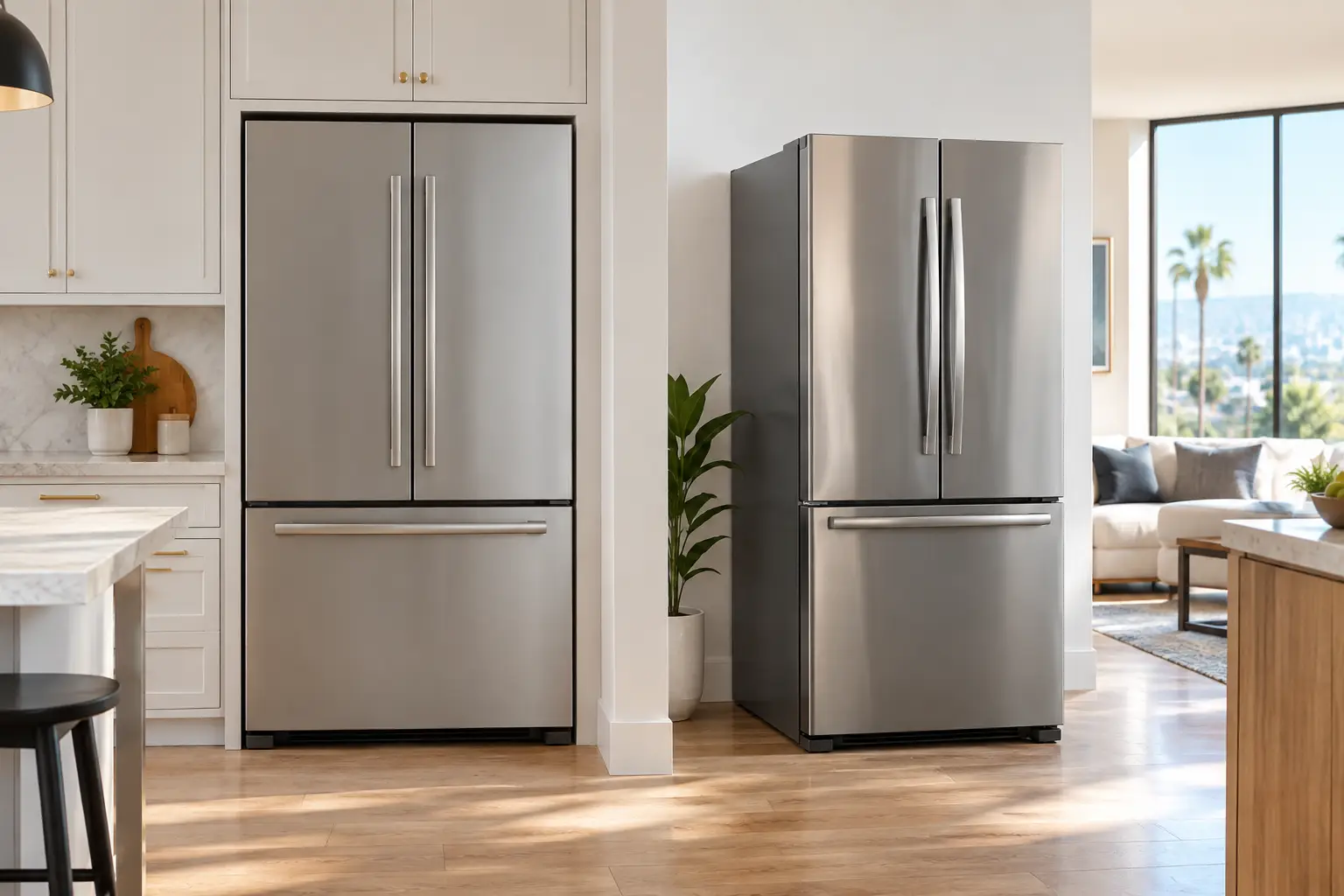
A freestanding refrigerator stands on its own and is usually surrounded by a small amount of open space. It commonly sticks out beyond the cabinets by several inches. Most models are about 33 to 36 inches wide and around 68 to 70 inches tall, although sizes vary.
A built-in refrigerator is designed to sit nearly flush with cabinetry. Many are 24 inches deep at the cabinet face, with doors that extend slightly forward. They are often taller than freestanding units and may use custom door panels to match the kitchen. Some column refrigerators and freezers are also built-in units.
The appearance is the main reason people choose built-in. The refrigerator does not break up the cabinet line. In a high-end kitchen, that can make a major visual difference.
The trade-off is cost and access. Built-in units usually cost more to buy, and their parts can cost more when something fails. A technician may also need to remove trim panels, toe kicks, or nearby cabinet pieces before reaching the condenser area or electrical connections.
Which refrigerator is easier to repair?
In most cases, a freestanding refrigerator is easier and less costly to access for repair. It can usually be rolled forward after unplugging it and turning off the water supply. That gives access to the rear cover, condenser fan motor, compressor compartment, water line, and drain tube.
Built-in refrigerators can be repaired, but the work starts with access. Some units roll out on leveling legs. Others are held in place by brackets, trim, or custom panels. If the refrigerator has been installed too tightly, the technician may not be able to pull it forward without first adjusting cabinets or removing surrounding finish pieces.
That does not mean built-in refrigerators are unreliable. Many run well for years. But when they develop a cooling problem, the repair should be handled before the unit gets warm enough to spoil food. A weak condenser fan, dirty condenser coils, failed evaporator fan, or bad start relay can all cause rising temperatures.
For a cooling issue, refrigerator repair in West Hollywood can help identify whether the problem is a serviceable part, a blocked airflow path, or a more serious sealed-system issue.
Is a built-in refrigerator always the better choice for a remodel?
No. People often assume a built-in refrigerator is automatically the better choice because it looks custom. That assumption is reasonable. It gives the kitchen a clean, finished appearance and can fit well with panel-ready dishwashers and cabinetry.
But it is often incorrect when the kitchen does not have enough depth, ventilation space, or a proper service path. A built-in refrigerator needs the correct opening dimensions. It also needs the manufacturer-required airflow around the top, bottom, or back. If that space is blocked, heat can build up around the condenser section.
What it actually comes down to is whether the kitchen was designed for a built-in unit from the start. Trying to force one into a space meant for a freestanding refrigerator can create problems with door swing, cabinet damage, poor ventilation, and repair access.
A counter-depth freestanding refrigerator is often the better middle option. It sits closer to the cabinet face than a standard-depth unit, costs less than many built-ins, and is usually easier to move for service. It will not look exactly like a panel-ready built-in model, but it can work well in many West Hollywood apartments and homes.
Can I check the refrigerator space myself in five minutes?
Yes. Open both refrigerator doors fully and pull out the crisper drawers. Watch for doors hitting a wall, island, cabinet handle, or nearby appliance. Then look above the refrigerator and along both sides for a visible gap.
Next, pull the toe kick grille off by hand if your model has one at the bottom front. Use a flashlight to look for heavy dust on the condenser coils or blocked airflow. Do not poke the coils with sharp tools. Dust on the coils can make the compressor run hotter and longer, especially in a tightly enclosed kitchen.
If the refrigerator is freestanding, check whether it can move forward a few inches without pulling on the water line. If it cannot, do not force it. A kinked water line can stop the ice maker or water dispenser from working and may leak later.
What repair problems show up more often with each style?
Both styles can have the same basic failures. The evaporator fan may stop, causing the freezer to stay cold while the refrigerator section warms up. The defrost heater or defrost thermostat can fail and allow frost to cover the evaporator coils. The ice maker may stop because of a failed inlet valve, frozen fill tube, or broken ice maker assembly.
Freestanding units are more likely to have damage from being pushed too close to the wall or moved without care. The power cord, water line, and drain pan can be affected. They can also collect more dust behind the unit if nobody pulls them out for cleaning.
Built-in units more often have access-related issues. A failed condenser fan or control board might be a normal repair, but getting to the part can take longer. Some models use multiple fans, electronic control boards, and separate refrigerator and freezer cooling zones. The diagnosis needs to be specific before parts are ordered.
If you hear repeated clicking from the lower rear area and the refrigerator is getting warmer, the start relay or compressor circuit may be involved. If the compressor is running but the cabinet is not cooling, the cause could be airflow, frost buildup, or a sealed-system problem. Those symptoms should not be guessed at based on sound alone.
How should landlords and property managers make the choice?
For a rental property, the best refrigerator is usually one that fits correctly, has available parts, and can be serviced without removing cabinets. A freestanding model is often the practical choice. It is simpler to replace later if needed, and tenants can usually use it without special care beyond keeping vents clear.
A built-in refrigerator can make sense in a higher-end unit where the kitchen design supports it. Just keep the model number, installation guide, and panel information on file. When a tenant reports warm food, water under the refrigerator, or a failed ice maker, that information saves time during diagnosis.
For either style, leave the required clearances, do not cover vents, and address new cooling symptoms early. A refrigerator that runs all day, has warm fresh-food shelves, or forms thick frost is giving you a warning before it becomes a bigger interruption.
Related articles
Sub-Zero Error 24 EC — Check the Condenser Before the Defrost Parts
Oven Only Works on High Temperature — It’s the Thermostat