Ice Maker Repair: Why Your Refrigerator Stopped
Need ice maker repair? Learn safe checks for a refrigerator that will not make ice, freezes cubes together, or leaks, and know when to schedule service.
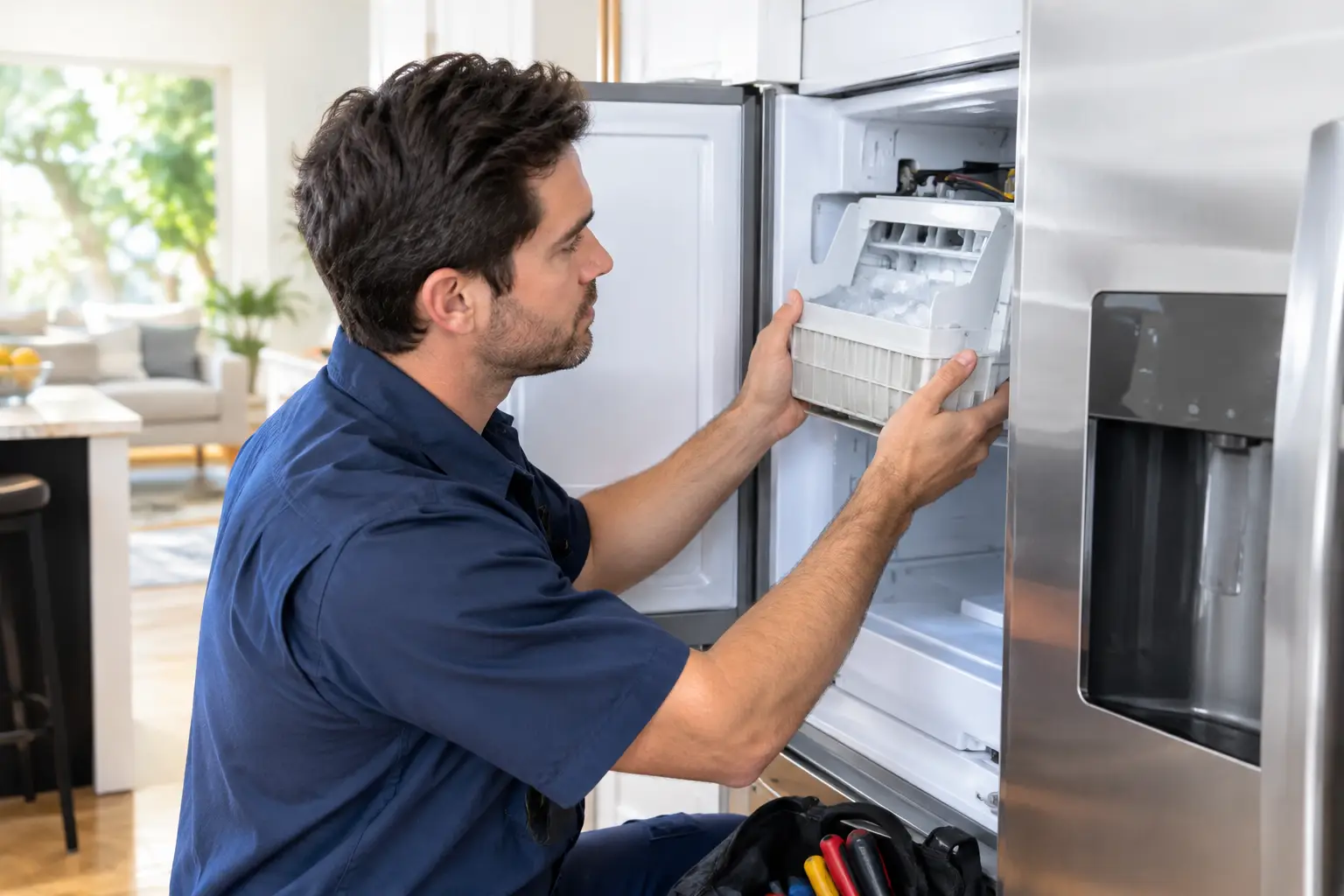
If your refrigerator has stopped making ice, ice maker repair may be needed, but the problem is not always the ice maker itself. A paused ice setting, an empty water supply, a freezer that is too warm, or a clogged filter can all stop production. Start with the safe checks below. If the unit still will not cycle, leaks, or makes very little ice after a day, a technician can test the water and electrical components without guessing.
Why is my ice maker not making ice?
Most automatic ice makers need three things to work: a freezer cold enough to freeze water, a steady water supply, and a signal telling the ice maker to begin a harvest cycle. When one of those is missing, the bin stays empty.
First, make sure the ice maker is turned on. Depending on the refrigerator, this may be a wire shutoff arm, a small switch, or a setting on the control panel. The shutoff arm should be down or in the ON position. Also check that the ice bin is seated correctly and not packed with a mound of ice holding the arm up.
Next, look at the freezer temperature setting. Most refrigerators need the freezer near 0°F for normal ice production. A freezer can feel cold while still running too warm to make ice reliably. If frozen food is soft, covered in frost, or thawing at the edges, the issue may be with the refrigerator’s cooling system rather than the ice maker.
A common assumption is that no ice automatically means a failed ice maker. Sometimes that is the cause, but a refrigerator with a weak water flow, a bad inlet valve, a frozen fill tube, or a temperature problem can create the same symptom. That is why a proper diagnosis checks the full path from the household water connection to the ice mold.
What safe checks can I do before scheduling ice maker repair?
You can do a few checks without pulling out the refrigerator, removing panels, or handling wiring. Confirm the refrigerator has power and is cooling normally. Then try the dispenser, if your model has one. If the dispenser also has little or no water flow, the issue may involve the water filter, supply line, or water inlet valve.
If the filter is due for replacement, follow the refrigerator manufacturer’s instructions and use the correct replacement filter. A restricted filter can reduce water flow enough to affect the ice maker. On some models, a newly installed filter also needs to be fully seated before water will flow correctly.
Open the freezer and inspect the ice mold or tray. An empty, dry mold suggests water is not reaching it. A mold full of frozen cubes that never drop points more toward a harvest or control issue. A solid block of ice at the back of the ice maker may indicate a frozen fill tube or water overfilling the mold.
Do not use a hair dryer, sharp tool, or boiling water to clear ice from the fill tube. Excess heat can warp plastic parts, and sharp tools can puncture components. Do not force a manual cycle if the manufacturer’s instructions do not specifically allow it. If you see a leak, turn off the ice maker and avoid using the dispenser until the source is checked.
Why does my ice maker make small, hollow, or stuck-together cubes?
Small or hollow cubes usually mean the ice mold is not filling with enough water. A clogged filter is one possibility, but not the only one. Low household water pressure, a partly closed supply valve, a pinched line, or a weak water inlet valve can also reduce the fill.
Cubes that freeze together in the bin are different. This often happens when ice sits for a long time, especially in a home that has been vacant or a rental unit between tenants. Temperature swings and warm air entering through a door left slightly open can cause surface melting and refreezing. If the cubes look frosty, the freezer door gasket, frequent door openings, or freezer temperature may deserve attention.
Cloudy ice is usually not a repair issue. Minerals and tiny air bubbles in the water can make cubes look white or cloudy. However, a chemical taste, unusual odor, or visible debris is a reason to stop using the ice and check the filter and water source.
Why is water leaking from the ice maker?
A leak inside the freezer may come from an ice maker that is overfilling, a cracked ice mold, or a fill tube that is not directing water into the mold. Water can freeze into a sheet beneath the ice bin, spill onto shelves, or eventually run out of the freezer compartment.
Leaks at the rear of the refrigerator or on the floor may involve the water supply connection, tubing, or inlet valve. Since the refrigerator has electrical components nearby, it is best not to move a heavy built-in or freestanding unit to investigate. If water is reaching the floor, turn off the refrigerator’s ice maker and shut off the accessible water supply valve if you can do so safely. Dry up standing water and arrange service.
For refrigerator and ice maker problems in West Hollywood and nearby neighborhoods, Vertex Appliance Repair can inspect the ice maker, water valve, fill tube, temperature conditions, and related refrigerator controls in your home. The diagnostic fee is $89 and is waived with an approved repair. Installed parts and labor are covered by a 90-day warranty.
What does a technician check during ice maker repair?
A useful repair visit should identify why the ice maker stopped before a part is recommended. The technician may check freezer temperature, water flow, the condition of the filter and fill tube, and whether the ice maker is receiving the correct signal to cycle.
On models with a mechanical ice maker, the harvest motor and shutoff arm operation may be tested. On electronically controlled models, the technician may inspect sensors, door-switch signals, wiring connections, and the refrigerator control board. The water inlet valve can be tested to determine whether it opens properly during the fill portion of the cycle.
These are professional checks because they can involve live electrical circuits, water lines, and disassembly of freezer components. Replacing an ice maker without confirming the cause can be an expensive wrong turn. For example, a new ice maker will not solve a freezer that is too warm or a valve that is not sending water.
When should I call for refrigerator ice maker service?
Schedule service if the refrigerator is cooling but the ice maker remains empty after you have confirmed it is on and the freezer is cold enough. Service also makes sense when the ice maker repeatedly freezes up, overfills, leaks, makes a grinding or clicking sound, or produces cubes only intermittently.
For tenants and property managers, a slow ice maker may be manageable for a short time, but a leak should not wait. Water can freeze into concealed areas of the freezer or damage flooring if it escapes. Homeowners with a refrigerator that is also warming up should move perishable food as needed and address the cooling issue promptly.
The right next step is a clear diagnosis and a price before repair work begins. That gives you a realistic choice between repairing the failed component and planning for the appliance’s next step, without replacing parts based on a guess.