Sealed System Versus Compressor Repair Explained
Sealed system versus compressor repair: learn what each refrigerator repair means, common failure signs, and when a professional diagnosis makes sense.
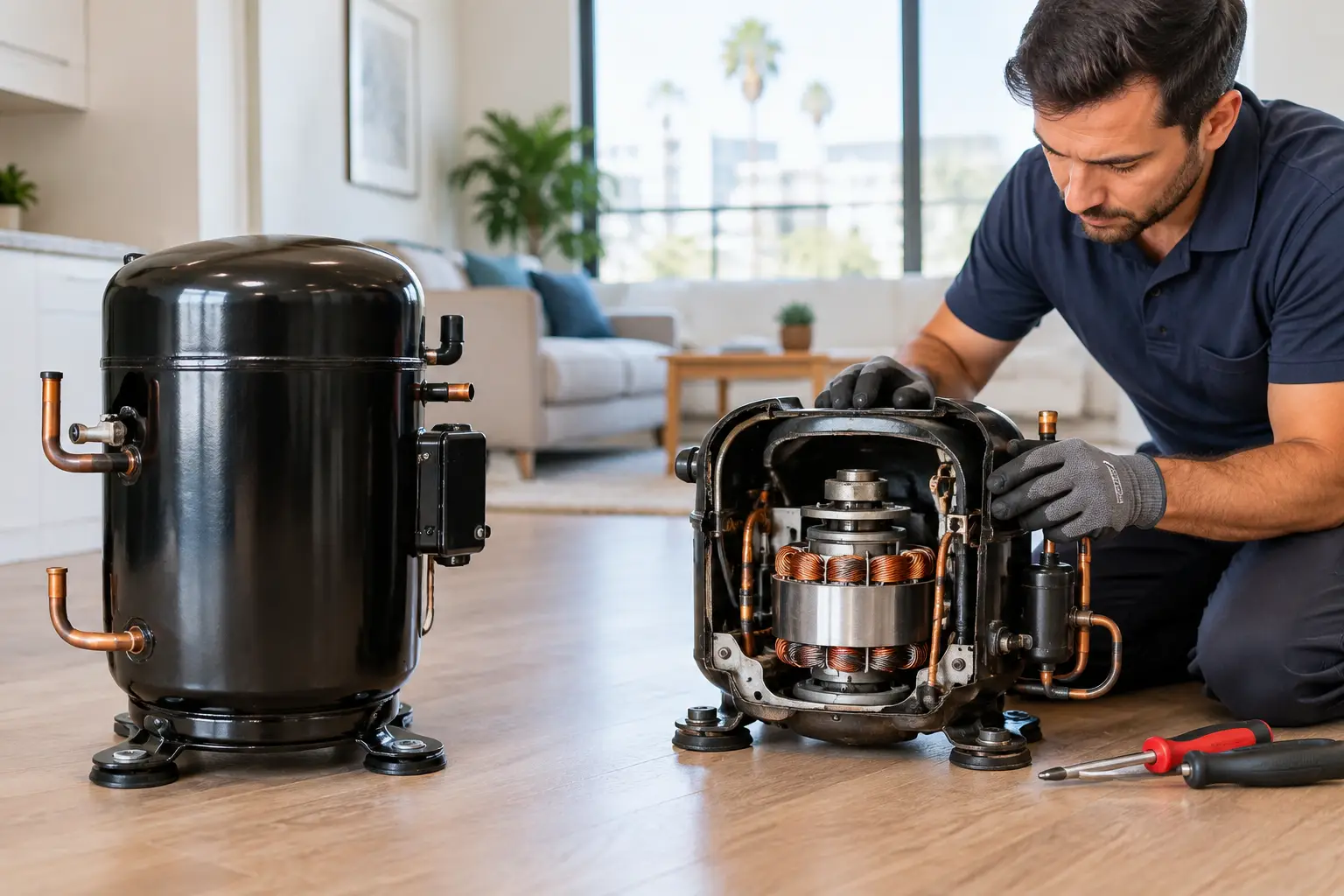
A sealed system versus compressor repair is not always an either-or decision. The compressor is one part of the refrigerator’s sealed cooling system, so a compressor that will not run may be the problem, but a refrigerant leak, restricted line, failed fan, dirty condenser, or electrical control issue can create similar symptoms. If your refrigerator is warming up or the freezer is softening, protect the food first and arrange a diagnosis rather than assuming the compressor has failed.
What does a refrigerator sealed system include?
The sealed system is the closed loop that moves heat out of the refrigerator cabinet. It includes the compressor, condenser, evaporator, refrigerant lines, filter drier, and refrigerant. The compressor pumps refrigerant through the system. The condenser releases heat, while the evaporator inside the freezer or refrigerator section absorbs heat and makes the cabinet cold.
Because these parts are connected and contain refrigerant under pressure, they are not DIY repair items. A sealed-system repair may involve locating and repairing a leak, replacing an evaporator or condenser, installing a new filter drier, evacuating moisture and air from the lines, and charging the system with the correct refrigerant by weight. The exact repair depends on what testing finds.
A compressor repair usually means compressor replacement. Compressors are sealed units, so an internal mechanical or electrical failure is not repaired piece by piece in the home. The old compressor is removed and a compatible replacement is installed along with other required sealed-system work.
When is it a compressor problem versus a sealed-system problem?
A refrigerator that is warm is not automatically a failed compressor. This is one of the most common assumptions we hear, especially when the appliance makes a clicking sound or the rear area feels hot.
A compressor may be suspected when it tries to start, clicks off, and repeats the cycle; when it runs but is unusually loud; or when professional electrical testing shows an internal winding or start failure. A bad inverter board or start device can sometimes prevent a good compressor from starting, which is why replacing the compressor before testing the electrical side can be an expensive mistake.
A sealed-system issue is more likely when the compressor runs for long periods but cooling is weak, or when there is an uneven frost pattern on the evaporator. For example, a technician may find frost only on one small section of the evaporator instead of a light, even coating across the coil. That pattern can point to low refrigerant from a leak or to a restriction in the refrigerant path.
A leak does not always leave an obvious puddle or smell. Refrigerant is generally colorless and may escape slowly at a corroded connection, an evaporator, or a line hidden in the cabinet. Finding the leak matters. Simply adding refrigerant without correcting the source may restore cooling temporarily, but it does not solve the underlying problem.
Why is a proper diagnosis worth it?
The same symptom can come from a much simpler repair. Before condemning a compressor or sealed system, a technician should check whether the condenser fan is operating, whether the evaporator fan is moving cold air, whether the compressor is receiving the correct command, and whether the condenser is heavily blocked with dust or pet hair.
A failed evaporator fan can leave the freezer cold while the refrigerator section gets warm. A defrost problem can cover the evaporator in thick frost and stop air circulation. A damaged door gasket can let warm kitchen air in. On some models, a sensor, control board, damper, or inverter can affect cooling without any sealed-system failure.
Professional sealed-system diagnosis also involves measurements that are not useful for a homeowner to guess at. Depending on the refrigerator design, a technician may evaluate compressor operation, electrical readings, temperature behavior, frost pattern, and refrigerant-system pressures. Those checks help distinguish a no-start condition from a refrigerant circulation problem.
What can you safely check before scheduling service?
Start with food safety. If perishable food has been above safe temperatures for too long, do not rely on the refrigerator feeling “a little cool.” Use a thermometer if you have one. The refrigerator section should generally be at or below 40 degrees Fahrenheit, and the freezer should hold 0 degrees Fahrenheit for proper food storage.
You can also confirm that the controls were not accidentally changed and that the doors are closing fully. Look for boxes, drawers, or containers preventing a door from sealing. Make sure interior air vents are not packed tightly with food, since blocked vents can keep cold air from reaching part of the cabinet.
If the refrigerator is accessible without moving it, listen for a fan and note whether the compressor area is completely silent, humming steadily, or clicking every few minutes. Write down when the cooling issue started, whether both sections are affected, and whether there is heavy frost on the freezer’s back interior panel. Those details can make the appointment more efficient.
Do not remove rear panels, puncture frost, attempt to recharge refrigerant, or pull a built-in refrigerator out of its space. There are electrical hazards, sharp edges, and refrigerant-system risks. If you smell burning insulation, see smoke, or hear repeated loud electrical popping, unplug the refrigerator if it is safe to reach the plug and call for service.
How do repair decisions usually work?
Once the problem is identified, the decision is based on the failed part, the appliance’s age and condition, the repair cost, and the model’s parts availability. A compressor replacement can be worthwhile when the refrigerator is otherwise in good condition and the replacement is appropriate for the model. It becomes a more careful decision when the appliance has multiple issues, severe cabinet damage, discontinued parts, or a long history of cooling problems.
Sealed-system repairs also vary widely. Replacing a compressor because it has failed is different from tracing an inaccessible leak inside a cabinet wall. Some leaks or restrictions are repairable with accessible parts. Others may not be practical because the affected line cannot be reliably reached or replaced.
Manufacturer parts coverage may affect the decision, but coverage terms differ by brand and model. Even when a compressor part has separate coverage, labor, refrigerant work, travel, and related sealed-system parts may not be included. Check your model’s documentation rather than assuming a long compressor warranty covers the complete repair.
What should you expect from a refrigerator diagnosis?
For a refrigerator that is not cooling correctly, the useful outcome is a clear explanation of what failed, what evidence supports that finding, and what repair options are realistic. At Vertex Appliance Repair, the in-home diagnosis is $89 and is waived with an approved repair. If a repair is performed, installed parts and labor carry a 90-day warranty.
For renters, it can help to document the temperatures and contact the landlord or property manager promptly, especially if food storage is affected. For landlords and property managers, getting a specific diagnosis before authorizing major work helps avoid approving a compressor replacement when the actual issue is a fan, control, or defrost component.
If your refrigerator is running but not keeping food cold, keep the doors closed as much as possible, move perishables to a safe cold location if needed, and have the cooling system checked before a small problem becomes a complete loss of refrigeration.