




Why Is Ice Maker Jammed? Common Causes and Fixes
Why is ice maker jammed? Learn what blocks ice flow, what you can safely check, and when a refrigerator repair visit makes sense at home.
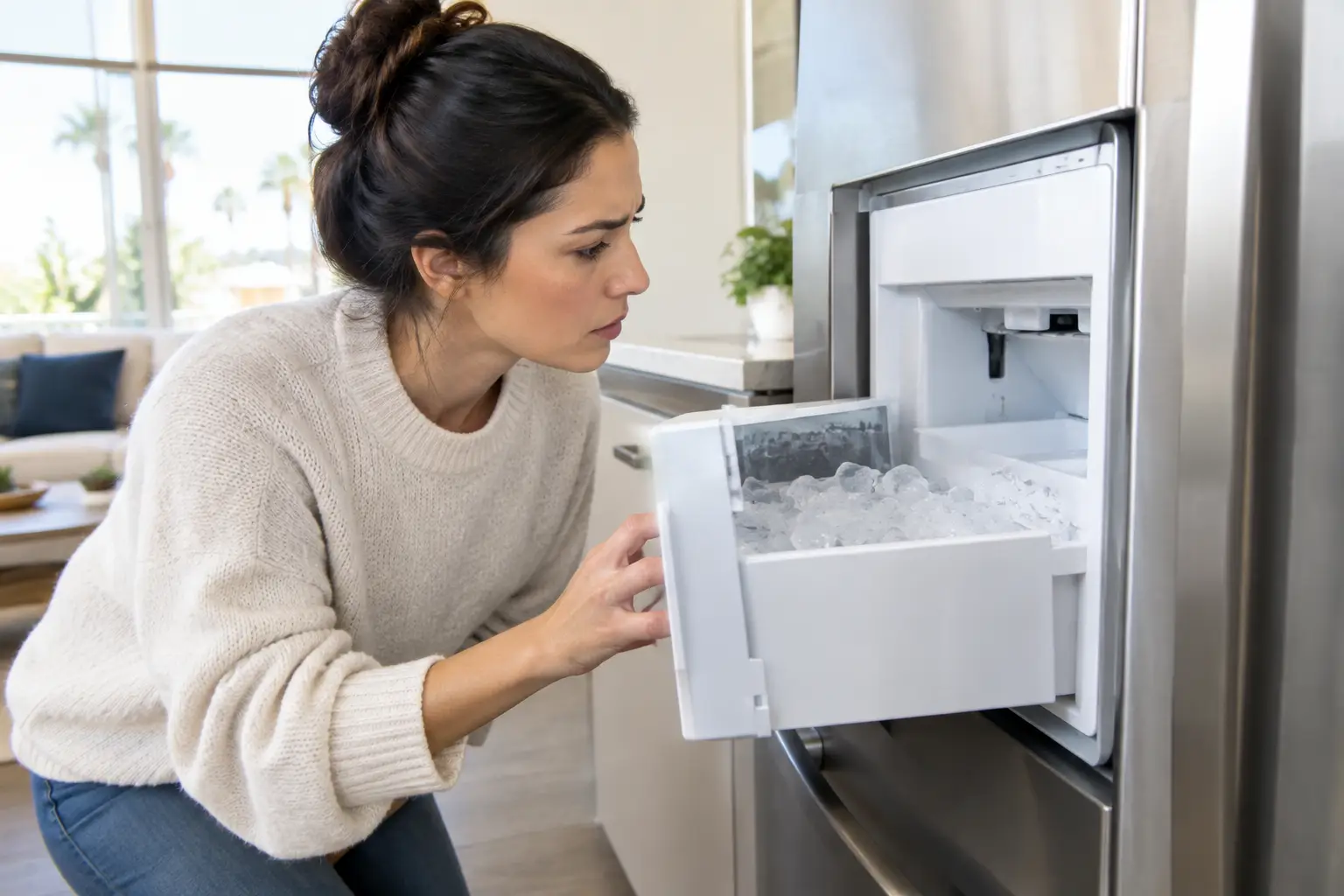
A full ice bin can turn into a problem fast when the dispenser stops working. If you are asking, why is ice maker jammed, the cause may be as simple as a clump of melted ice. It can also be a worn part inside the freezer door or ice maker. The first step is to find out whether the ice is stuck in the bin, the dispenser chute, or the ice maker itself.
Why Is an Ice Maker Jammed?
Most ice maker jams happen because ice cubes melt a little, then freeze together again. This often happens when the freezer door is left open, the door seal leaks, or warm kitchen air gets into the freezer. The cubes become one hard block instead of separate pieces that can move through the bin.
A jam can also happen when the ice bin is too full. Cubes can pile up around the auger, which is the turning arm inside the bin that pushes ice toward the dispenser. If the auger cannot turn, the dispenser may hum, click, or make no sound at all.
Sometimes the problem is not the ice bin. Ice may be stuck in the door chute. The flap at the bottom of the chute may not close fully. Warm air enters through that small opening and freezes the remaining ice into a solid plug.
If your refrigerator is making ice but will not dispense it, start with the bin and chute. If it is not making ice at all, the cause may be the water supply, freezer temperature, ice maker switch, or a failed ice maker part.
Start With These Safe Checks
Do not force the dispenser lever or put tools into the chute while the refrigerator is powered on. Ice dispensers use small motors and moving parts. Forcing a jam can strip a gear, crack the bin, or damage the dispenser motor.
First, remove the ice bin if your model allows it. Many bins lift up and pull straight out. If it will not move, do not yank it. Ice may have frozen the bin to the shelf or back wall. Leave the freezer door open for a few minutes, then try again gently.
Look inside the bin. Loose, separate cubes usually mean the bin is not the main issue. A large frozen mass points to melted and refrozen ice. Empty the old ice into a sink, let it melt, and dry the bin before putting it back.
Next, check the dispenser chute in the freezer door. If you can see ice packed inside, let it thaw naturally with the door open for a short time. Place towels below the door area to catch water. Do not use a knife, screwdriver, or hair dryer. Sharp tools can damage the chute, and heat can warp plastic parts or damage door wiring.
After the bin is back in place, try dispensing cubed ice first. Crushed ice puts more load on the system. If cubed ice works but crushed ice does not, the crusher blades or solenoid inside the bin may be sticking.
Common Causes of a Jammed Ice Dispenser
Ice cubes have fused together
This is the most common cause. It is especially common when ice is not used often. A freezer can still be cold enough to preserve food while having small temperature changes that affect ice. Opening the door many times, loading warm groceries, or a weak door gasket can be enough to cause clumping.
Use or replace old ice regularly. If the ice has been sitting for weeks, dumping the bin and starting fresh is often the best fix.
The ice bin is overfilled or out of position
An overfilled bin can prevent the auger from turning. The same thing can happen if the bin is not seated correctly. Remove some ice, check that nothing is underneath the bin, and slide it back into its tracks firmly.
If the bin keeps coming loose or feels tilted, a broken guide or support may be the problem. That needs repair before the dispenser can work correctly again.
Ice is stuck in the chute
A blocked chute often causes ice to spill out later or drop onto the floor after you stop using the dispenser. You may also hear the motor running while no ice comes out.
The chute flap should close right after dispensing. If it stays open, clean away any ice around it. If the flap is bent, loose, or will not close, it may need a new spring, solenoid, or flap assembly.
The auger motor is not turning
If the bin is clear and the ice is loose, listen when you press the dispenser paddle. A quiet hum can mean the auger motor is trying to work but cannot move. No sound may point to a switch, wiring, control board, or motor issue.
This is not a good part to guess at. The motor is usually behind the freezer wall or inside the door area. A technician can test whether the motor is getting power before replacing parts.
Freezer temperature is too warm
Ice makers work best when the freezer is close to 0°F. If the freezer is too warm, cubes can come out soft or partly melted. Those cubes stick together easily. You may also notice frost, soft frozen food, or longer ice-making times.
A warm freezer can be caused by a door seal issue, dirty condenser coils, an airflow problem, a fan problem, or a refrigerator cooling issue. The jam is then a symptom, not the main repair.
A broken ice maker is dropping odd-shaped cubes
Ice cubes that are too small, hollow, or uneven may not move properly through the bin. Low water flow can cause this. A partly closed water valve, a kinked water line, or an old water filter may reduce the amount of water entering the ice maker.
Do not ignore repeated small or hollow cubes. They can mean the ice maker is not filling correctly, and the condition can lead to more jams later.
When to Call for Refrigerator Repair
Call for service if the bin is clear but the dispenser still will not work. It is also time for a repair visit when the freezer is warming up, the chute flap will not close, the ice maker has stopped producing ice, or you hear grinding and repeated clicking.
For renters, it helps to take a photo of the ice buildup and note whether the refrigerator is cooling normally. Landlords and property managers can also save time by checking whether the problem is limited to one unit or follows a recent power outage or water shutoff.
A technician can check the auger motor, dispenser switch, door wiring, ice maker fill system, temperature, and freezer airflow. That matters because several different failed parts can look like the same simple ice jam.
Vertex Appliance Repair serves West Hollywood and nearby neighborhoods with in-home refrigerator and ice maker service. The diagnostic fee is $89 and is waived when you approve the repair. Repairs include a 90-day warranty on labor and installed parts.
How to Prevent Another Ice Maker Jam
Keep the freezer door closed as much as possible and make sure the door seal is clean and flat against the cabinet. Do not pack food tightly around freezer vents. Cold air needs room to move around the ice maker and bin.
Use the ice often, especially if you do not have a large household. Emptying old ice every few weeks helps prevent clumps. If you are leaving home for an extended time, it may make sense to empty the ice bin first.
Also check the water filter schedule for your refrigerator model. A filter that is overdue can reduce water flow. It will not cause every jam, but it can lead to poor cube shape and weak ice production.
A jammed ice maker is often a small problem at first. If clearing old ice fixes it once, keep an eye on it. If it keeps happening, the refrigerator may be telling you that a door seal, dispenser part, water supply issue, or cooling problem needs attention before the next jam becomes a bigger interruption.
Related articles
Sub-Zero Error 24 EC — Check the Condenser Before the Defrost Parts
Oven Only Works on High Temperature — It’s the Thermostat