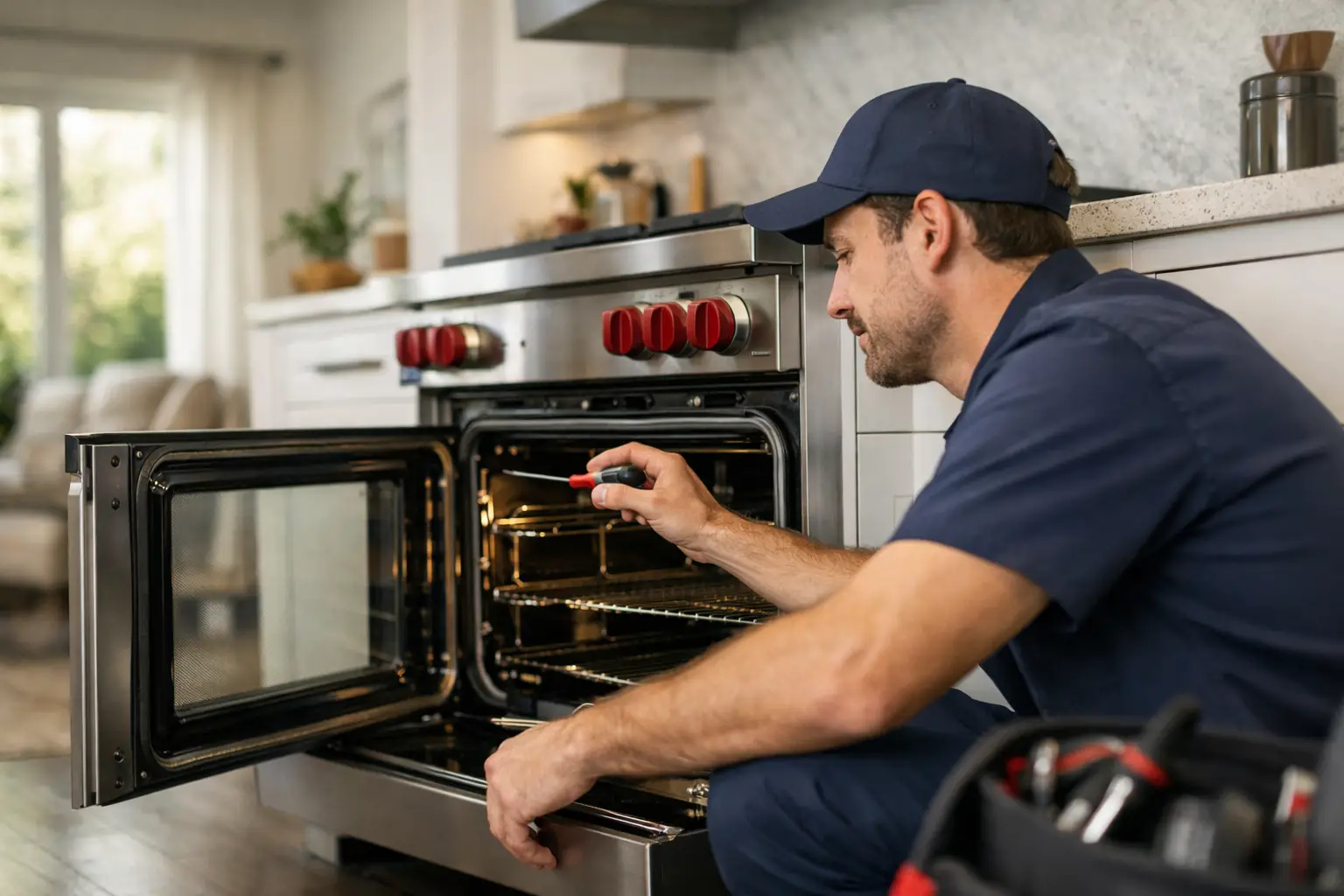





Stove Repair West Hollywood: What to Check
Need stove repair West Hollywood homeowners can trust? Learn common stove problems, what you can check first, and when to book in-home service.
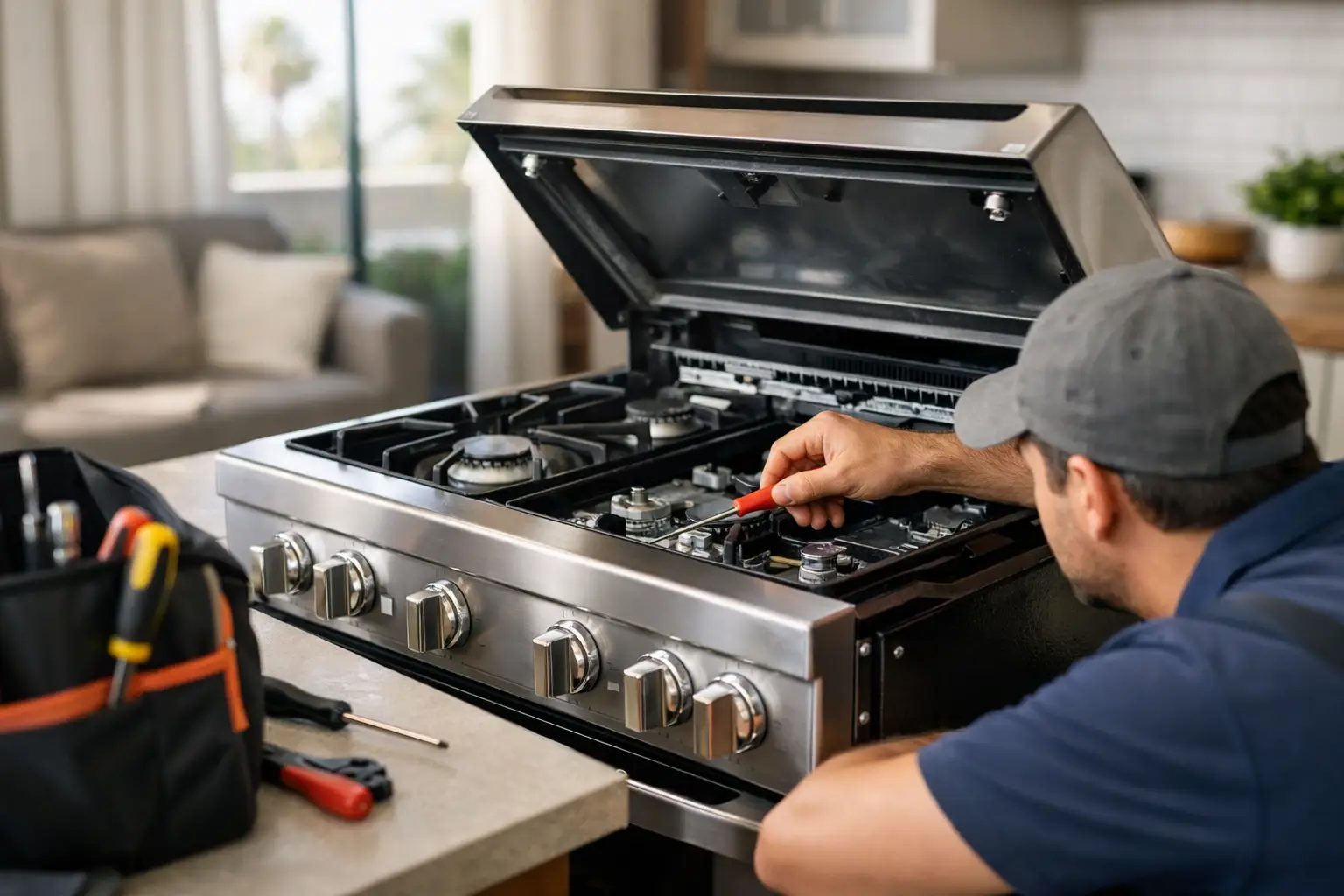
Dinner usually goes wrong at the worst time. A burner will not heat. The flame clicks but does not light. The whole stove works yesterday, then one side stops today. That is when stove repair West Hollywood homeowners need stops being a search term and turns into a real problem in the kitchen.
A stove issue can be simple, or it can point to a failing part. The hard part is that many symptoms look the same at first. A weak burner, a burner that will not turn off, or a gas smell can come from different causes. Some are safe to check at home. Some need a technician right away.
Common stove problems in West Hollywood homes
In-home stove problems usually fall into a few groups. Gas stoves often have ignition trouble, uneven flame, or burners that click over and over. Electric stoves often have burners that stay cold, heat too much, or cycle on and off in a strange way.
In older apartments and houses around West Hollywood, wear and tear is a big reason. Burners get food spill buildup. Igniters get weak. Switches wear out. Receptacles on electric coil models can burn and stop making good contact. On glass cooktops, the radiant element under the surface can fail even when the top still looks fine.
Sometimes the problem is not the burner itself. It can be the infinite switch, which is the part behind the knob that controls heat. On gas models, it can be the spark module, ignition switch, or clogged burner head. On either type, wiring damage can also cause a burner to stop working.
What you can check before booking stove repair in West Hollywood
There are a few safe checks a homeowner or renter can make before calling.
If you have a gas stove and the burner clicks but does not light, first make sure the burner cap is sitting the right way. If it is off center, the flame may not catch. Also look for food or grease blocking the small gas ports. If you clean the burner after it cools, use gentle cleaning only. Do not force sharp tools into the openings.
If the burner lights but the flame is weak or uneven, make sure the burner parts are dry. After cleaning, trapped moisture can stop normal ignition for a while. If the flame is still low after drying, the burner may be clogged or the gas flow may have a problem.
If you have an electric stove and one burner will not heat, try another burner in the same spot only if your model uses removable coil elements. If the second burner works, the first element is likely bad. If neither works in that spot, the issue may be the receptacle or switch. On a smooth top electric stove, there is less a homeowner can safely test without taking the unit apart.
Also check the basic things. Make sure the appliance has power. If part of the stove is dead, a tripped breaker can sometimes be the reason. If the oven works but the cooktop does not, or the other way around, that still does not rule out an electrical problem inside the unit.
If you smell gas, do not keep testing burners. Turn the control off. Vent the area. If the smell stays, stop using the stove and get it checked.
Signs the problem is more than a quick fix
Some stove issues look small but usually need a real repair.
A burner that keeps sparking after it lights often means moisture, a dirty igniter area, or a failing ignition switch. If it happens once after cleaning, it may dry out and stop. If it keeps happening, the switch or spark system may be failing.
A burner that gets too hot and will not go low is often a bad switch on an electric model. That is not something to ignore. Heat control problems can damage cookware and create a safety risk.
A burner that will not turn off is more serious. On electric units, that can point to a stuck switch. The stove should not be used until it is repaired.
If only one burner on a gas stove will not light but all others work, the issue may be local to that burner. If several burners fail at once, the cause may be shared parts in the ignition system. That changes the repair.
This is why diagnosis matters. The symptom you see is only part of the story.
Gas vs electric stove repair West Hollywood calls
Gas and electric stove problems are not handled the same way.
Gas models usually fail at the igniter, burner base, spark switch, or spark module. Grease and food spills also matter more because they can block ignition or affect flame shape. Many gas burner problems start small. A delayed ignition, clicking sound, or uneven flame is easy to live with for a few days. But those are the calls that tend to get worse if ignored.
Electric models usually fail at the surface element, control switch, terminal block, or internal wiring. These failures can be less visible. The burner may look normal but not heat. Or it may overheat because the switch no longer cycles the element the right way.
The repair path depends on the model and the symptom. That is why an in-home visit is the practical first step. A technician can test the failed part instead of guessing and replacing the wrong one.
What happens during an in-home stove service visit
When we handle a stove call in West Hollywood, the visit starts with symptom checking. We ask what the burner is doing, when it started, and whether the problem happens all the time or only sometimes. That helps narrow things down before any parts are touched.
Then the stove is inspected in the home. For gas units, that may include checking ignition, burner condition, and flame behavior. For electric units, that may include testing the burner, switch, and connections. If the issue is clear and the customer approves the repair, the diagnostic fee is waived.
Some repairs are straightforward. A bad surface element, worn igniter, or damaged burner part is often a direct fix. Other repairs depend on parts availability. If a switch or module is needed, the model number matters, and some parts need to be ordered.
The goal is not to push a repair that does not make sense. On an older stove, it depends on part cost, condition, and whether more than one part is failing. A good service visit should give you a clear answer, not vague guesses.
Why local service matters for stove problems
Kitchen appliance issues are disruptive in a way that is hard to ignore. You notice them every day. For homeowners, that means meal planning gets thrown off. For renters and landlords, it becomes a scheduling problem fast.
A local residential service company understands that the job is not just the part failure. It is access, timing, and getting the unit checked in the home without dragging the process out. In West Hollywood, many buildings have tight kitchens, shared parking, older hookups, and busy schedules. That makes clear communication just as important as the repair itself.
Vertex Appliance Repair works on residential stoves, ranges, and cooktops in West Hollywood and nearby neighborhoods within about a 5-mile area, including Beverly Hills, Hollywood, Fairfax, Melrose, Miracle Mile, Beverly Grove, La Brea, and Hancock Park. Service is by in-home appointment, booked by phone at 323-747-7098.
When to call instead of trying one more thing
If the stove has a gas smell, repeated ignition failure, a burner that will not shut off, sparking that does not stop, or heat that is clearly out of control, it is time to stop troubleshooting. If the unit trips the breaker, shows signs of burning, or only works off and on, that also needs service.
If the problem is mild, like one burner lighting slowly after a spill, a simple cleaning and drying may fix it. But if the issue comes back, that is your answer. The stove is telling you a part is wearing out.
For most people, the real value of a repair visit is not the screwdriver work. It is getting the right diagnosis the first time. The diagnostic fee is $69, and it is waived if you approve the repair. Labor and installed parts are covered by a 90-day warranty.
A stove does not have to fail completely to deserve attention. If cooking has become unpredictable, that is already a problem worth fixing before the next rushed weeknight makes it worse.
Related articles
Built In Refrigerator Versus Freestanding: Which Fits?
Sub-Zero Error 24 EC — Check the Condenser Before the Defrost Parts