




Dryer Drum Repair Beverly Hills Homeowners Need
Need dryer drum repair Beverly Hills service? Learn drum trouble signs, safe checks, and when an in-home repair is the sensible next step for your dryer.
A dryer can still make heat while the drum is failing. That is why dryer drum repair Beverly Hills homeowners need often starts with a strange sound, clothes that stay in one spot, or a drum that will not turn at all. Continuing to run the dryer can turn a small worn part into a larger repair. It can also damage clothing or create excess heat inside the machine.
The drum is the large metal cylinder that holds your laundry. It needs several parts to move smoothly. Depending on the dryer model, those parts may include a drive belt, drum rollers, a tension pulley, a rear bearing, or front support glides. A problem with any one of them can make the dryer noisy, rough, or unable to tumble.
Signs Your Dryer Drum Needs Attention
A thumping sound is one of the most common signs. It may happen once during every turn of the drum. Sometimes the sound comes from a flat spot on a drum roller. It can also come from an item caught inside the drum seal, such as a bra wire, coin, screw, or zipper piece.
A squeal, chirp, or high-pitched rubbing sound is different. This often points to a worn roller, a dry pulley, or a bearing that is starting to fail. The sound may be quiet at first and get louder after the dryer warms up.
Scraping or metal-on-metal noise needs attention sooner. The drum may be rubbing against the front panel or rear bulkhead. Worn glides or a failing rear support can allow the drum to sit too low. You may also see dark marks on clothes, tears in delicate items, or fabric caught near the drum edge.
If the dryer runs but the drum does not move, stop the cycle. A broken belt is a possible cause. On some models, the motor will still run and you may hear the blower moving air. Since clothes are not tumbling, they will not dry correctly. Running the dryer in this condition may cause overheating.
A drum that feels loose, wobbles, or is hard to turn by hand when the dryer is off can also signal a support problem. Do not force it. The drum is heavy, and forcing it can bend a panel or damage another part.
Safe Checks Before You Schedule Dryer Drum Repair Beverly Hills
There are a few simple checks that can help explain the problem. They are not a replacement for a repair visit. Always unplug the dryer before looking inside it. For a gas dryer, do not disconnect gas connections or remove panels if you are not comfortable doing so.
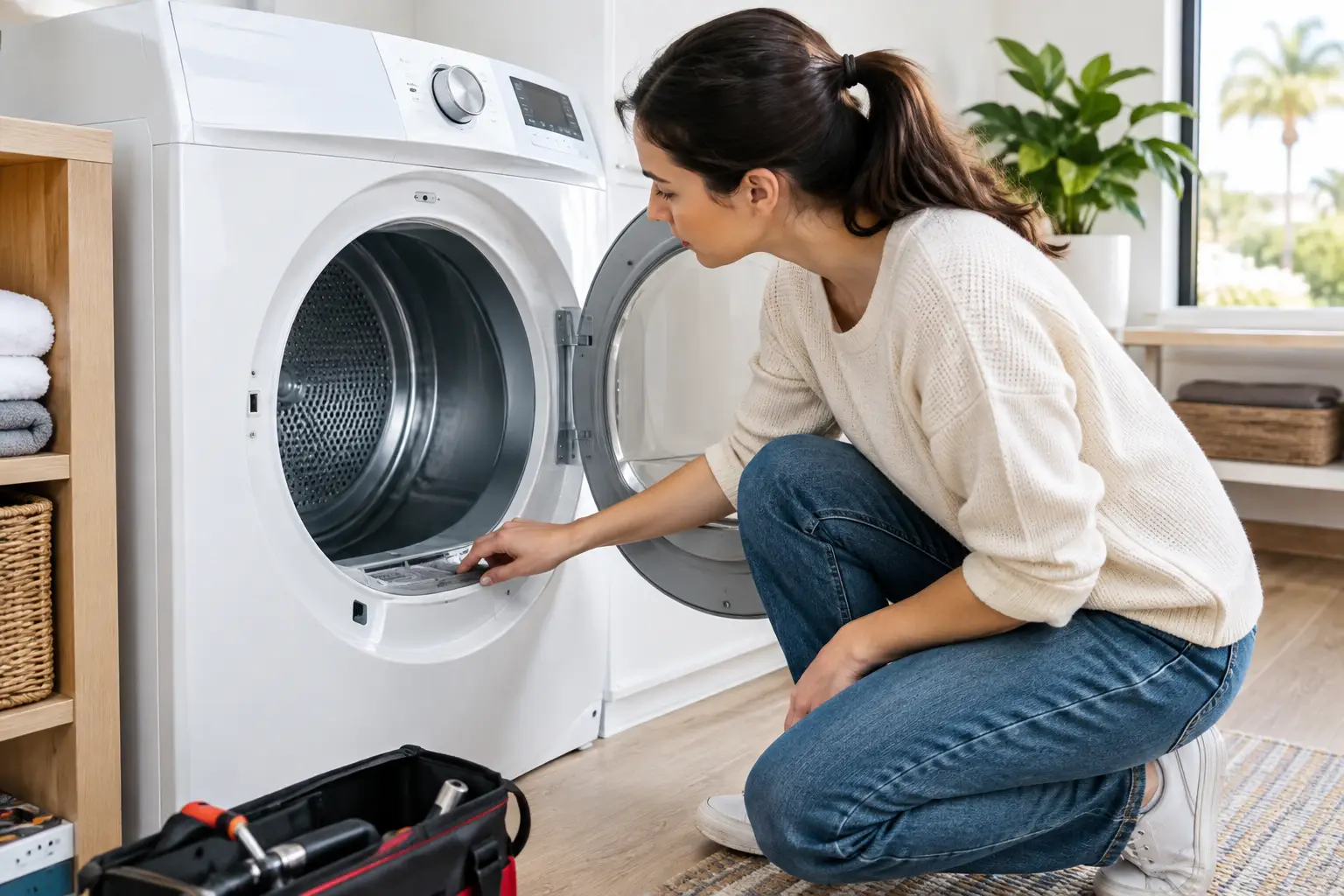
First, empty the drum and check the door opening. Look for coins, buttons, hair clips, or other small objects caught in the felt seal around the drum. Remove only items you can reach easily. Do not pull hard on the seal. If it is torn, loose, or missing sections, it should be replaced.
Next, turn the empty drum by hand. It should move with steady resistance. Listen for scraping, clicking, or a rough grinding feel. A little resistance is normal because the belt and motor are connected. Strong resistance, a wobble, or a loud scrape is not normal.
Check the lint screen and the area around it. A blocked lint screen does not usually cause a drum failure by itself, but poor airflow makes the dryer work hotter and longer. That extra heat can shorten the life of belts, rollers, and glides. Clean the screen after every load and make sure the vent path is not crushed behind the dryer.
Also think about when the noise began. Did it start after washing bulky bedding, shoes, or a heavy bath mat? An overloaded dryer can put extra strain on drum supports. One heavy load may reveal a part that was already worn. It does not always mean the load caused the failure.
What Usually Causes a Dryer Drum Problem
Dryer drum parts wear gradually. Rollers have small wheels that support the drum as it turns. When a roller wears out, it may thump, squeak, or seize. Most dryers have more than one roller. Replacing only the noisy one can be tempting, but a technician may recommend replacing the matching support parts if they show similar wear. This can prevent another service call soon after the first repair.
The drive belt wraps around the drum and transfers power from the motor. It can stretch, crack, fray, or break. A worn belt may make a slapping sound before it fails. If the belt breaks, the drum normally stops turning. The cause may be simple belt wear, but the tension pulley and rollers should also be checked. A new belt can fail early if another part is binding.
The tension pulley keeps the belt tight. When its wheel or bearing wears out, it can squeal or grind. On some dryers, the sound is most noticeable at the start of a cycle. A failing pulley can also damage the belt.
Front glides or slides support the front edge of the drum on certain models. They are small parts, but they carry a lot of the drum’s weight. When they wear down, the drum can rub against metal. This may leave gray or black marks on clothes. It may also create a scraping noise that gets worse with heavier loads.
Some dryers use a rear bearing or ball-and-socket support. When that bearing wears, the drum can sag or make a steady squeak. The repair can involve several related parts. The right repair depends on the dryer design and the condition found after the machine is opened.
Why the Repair Needs a Full Inspection
A drum noise does not always come from the drum itself. A loose blower wheel, worn motor bearing, damaged felt seal, or foreign object can make a similar sound. That is why replacing one part based only on a noise can lead to the wrong repair.
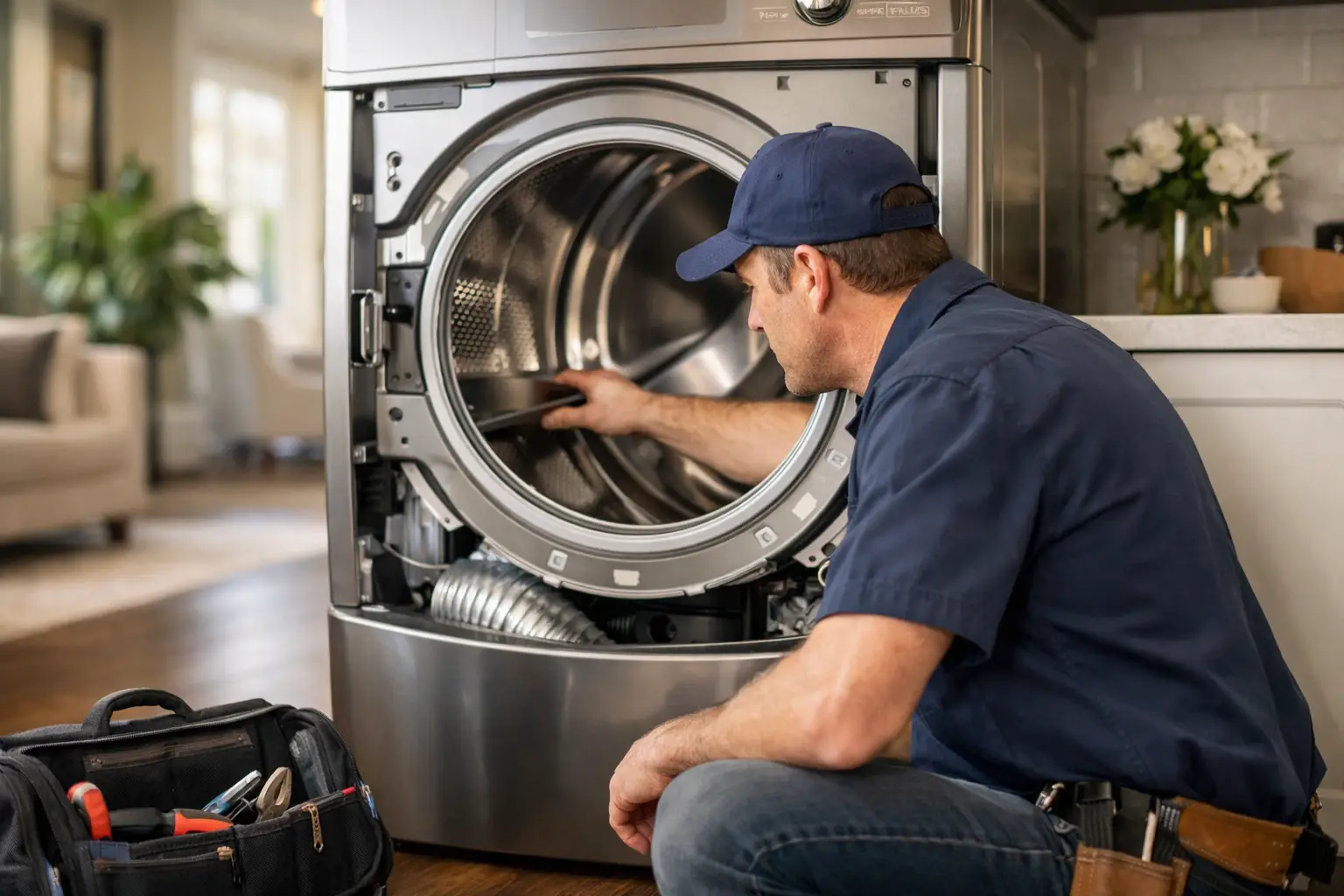
During an in-home visit, the dryer should be checked for drum movement, belt condition, roller wear, pulley operation, seals, airflow, and heat function. The technician can also look for signs that the drum has damaged the front panel or bulkhead. This helps identify the actual source of the problem before parts are ordered or installed.
For apartment managers and landlords, this matters even more. A dryer that keeps running with a worn support part may become a tenant complaint, a laundry delay, and a larger maintenance issue. Repairing the cause early is usually easier than waiting for a complete belt break or drum damage.
Repair or Replace: What Makes Sense?
A drum repair is often worth doing when the dryer heats normally, the cabinet is in good shape, and the issue is limited to wear parts such as rollers, a belt, pulley, or glides. These parts are meant to wear over time. Replacing them can return the dryer to normal operation.
Replacement may make more sense when there are several major failures at once. Examples include a damaged drum, severe rust, a failing motor, major control problems, or unavailable parts. The dryer age also matters, but age alone does not decide it. A well-kept older dryer with a simple roller problem may be a better repair candidate than a newer unit with expensive electronic failures.
Ask for a clear explanation of what failed, what parts are needed, and whether related worn parts should be replaced at the same time. This gives you a better picture of the repair cost and expected result.
In-Home Dryer Help Near Beverly Hills
If your dryer is thumping, scraping, squealing, or no longer turning, it is best to stop using it until the cause is checked. Vertex Appliance Repair serves Beverly Hills and nearby West Hollywood neighborhoods with in-home dryer service. The diagnostic fee is $89 and is waived when you approve the repair. Labor and installed parts are covered by a 90-day warranty.
Have the dryer brand and model number ready when you call. The model tag is often inside the door opening, on the door frame, or on the back panel. Sharing the sound you hear and whether the drum still turns can also help with scheduling and parts planning.
A noisy dryer rarely fixes itself. Turning it off early, keeping the vent clear, and having the drum support system checked can help protect the machine, your clothing, and your routine.