How to Fix Dryer Overheating Safely at Home
Learn how to fix dryer overheating: check airflow, clean lint, and spot failed parts before heat damages clothes or creates a fire risk at home today.
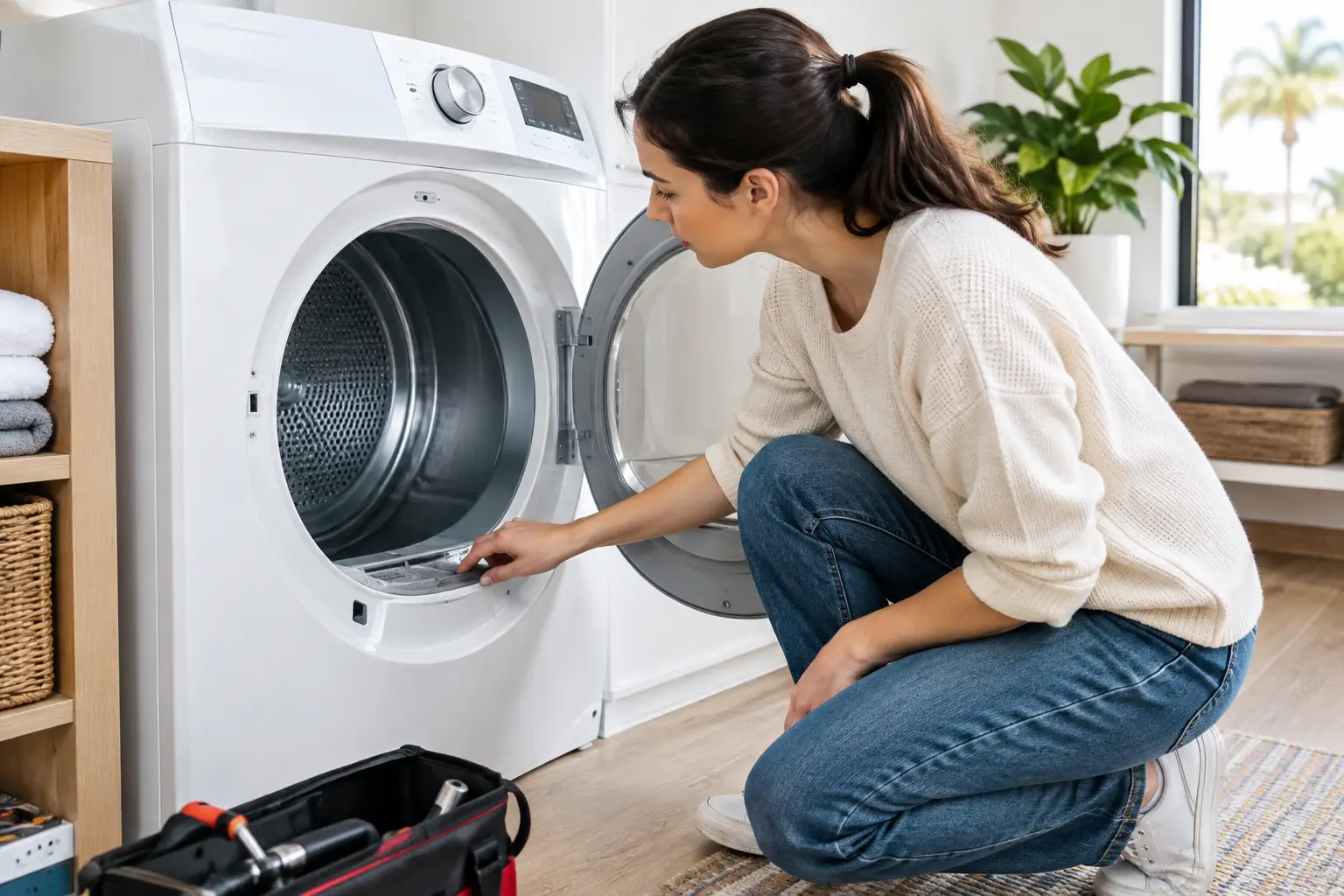
Most dryer overheating comes from blocked airflow, usually a clogged lint screen, vent hose, wall duct, or outside vent hood. If you are trying to figure out how to fix dryer overheating, start there before assuming the dryer needs a major part.
A dryer that runs too hot can shrink clothes, leave a hot or burning smell, and wear out heating parts. Stop using it if the cabinet is very hot to touch, the laundry smells scorched, or the dryer shuts off before the load is dry. Unplug an electric dryer before checking anything. For a gas dryer, also turn off the gas supply if you need to move the machine.
Why is my dryer getting too hot?
Your dryer moves air across a heating element or gas burner, through the drum, and out through the vent. When that air cannot leave, heat stays inside the machine. The high-limit thermostat may shut the heat off for a while, but repeated overheating can damage that thermostat, the thermal fuse, wiring, and clothes.
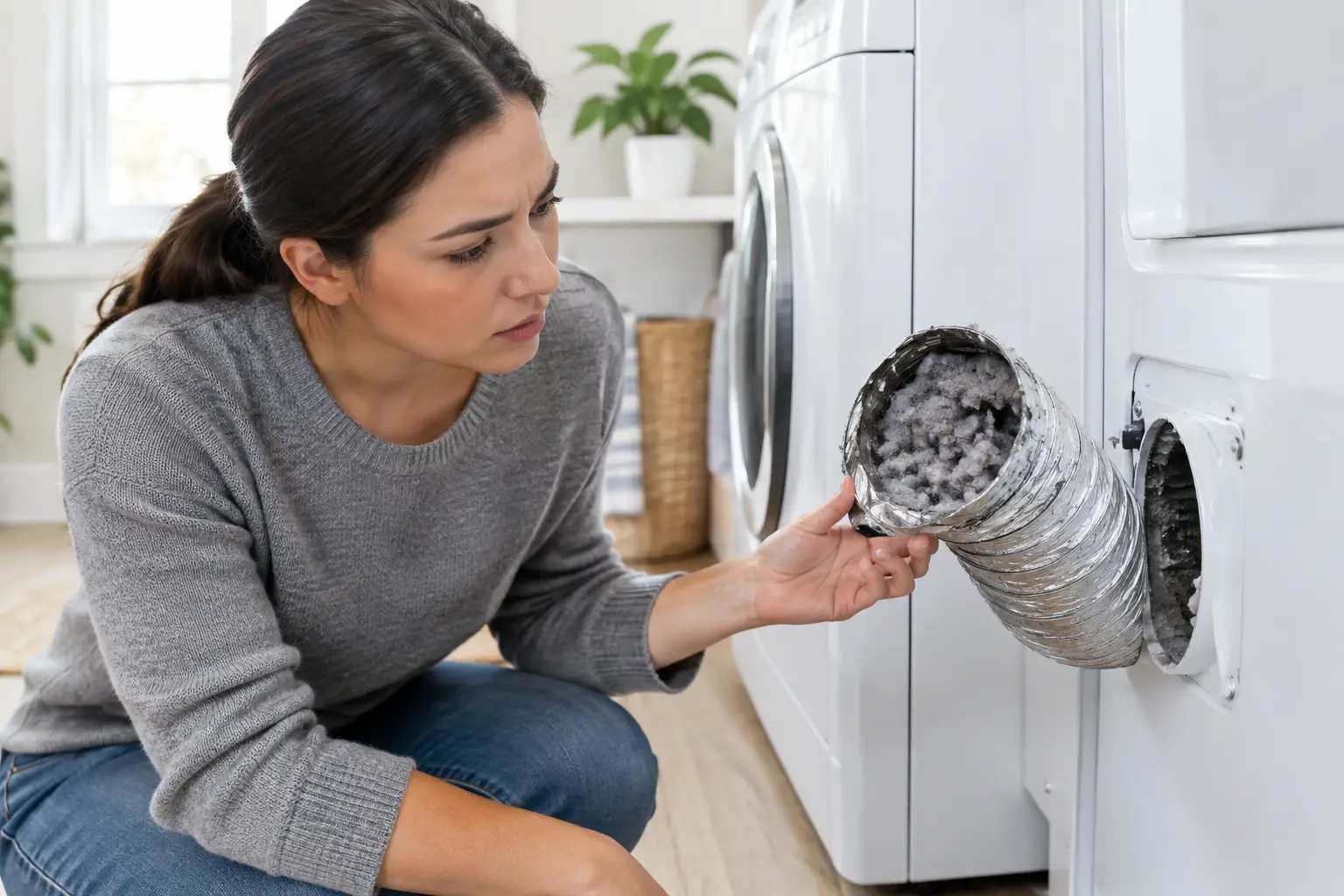
A crushed flex hose behind the dryer is common in tight West Hollywood laundry closets. Long vent runs in condos and multi-unit buildings also collect lint where you cannot see it. The dryer may still tumble normally, but it will run hotter and take longer to dry.
A clogged lint screen can cause the same problem. Fabric softener sheets sometimes leave a clear film on the screen. It looks clean, but water may sit on top of it instead of passing through. That film restricts airflow.
What can I check in five minutes?
Remove the lint screen and wash it under warm water with dish soap and a soft brush. Rinse it, then hold it flat under a light stream of water. The water should pass through quickly. If it pools on the screen, keep cleaning until it flows through.
Next, pull the dryer forward carefully and look at the vent hose. It should not be crushed, sharply bent, torn, or packed with lint at either connection. Go outside while the dryer is running on an air-only or no-heat cycle and check the vent hood. The flap should open fully and you should feel a steady flow of air.
Weak airflow points to a vent problem, not necessarily a failed dryer part. Do not run the dryer with the vent disconnected into the room. It sends lint and moisture indoors, and it is especially unsafe with a gas dryer.
Is the lint screen really the problem?
What people usually assume
People often assume a dryer that overheats has a bad heating element or a failing thermostat. That is a reasonable guess because the dryer is clearly making too much heat.
Why that assumption is reasonable
Heating elements can short to the metal housing and stay on too long. A stuck gas valve coil can also affect burner operation. High-limit thermostats and cycling thermostats do fail, especially after years of heat stress.
Why it is often incorrect
In many calls, the heater is doing what it was designed to do. It turns on, but the hot air has nowhere to go. Replacing a thermostat without fixing the blocked vent can lead to the same overheating problem soon after the repair.
What it actually is
The actual cause is often lint inside the wall duct, a blocked exterior hood, or a vent hose crushed behind the machine. Dryer vent cleaning is the right next step when airflow is weak, loads need two or three cycles, or the laundry room feels unusually warm. The dryer itself may be fine.
Why does my dryer take two or three cycles to dry?
Slow drying and overheating usually happen together. The dryer heats the clothes, but moisture cannot leave fast enough because the exhaust path is restricted. The result is hot damp laundry, long cycles, and extra wear on the appliance.
For an electric dryer, a technician may check whether the heating element is grounded to its housing. A grounded element can heat even when the control is not calling for heat. For a gas dryer, the igniter current draw and burner cycling can help show whether the igniter, flame sensor, gas valve coils, or thermostat is acting abnormally.
Heat-pump dryers have another possible issue. Their condenser coils and filters can collect lint. The machine may not feel as hot as a standard dryer, but it can still overheat internally or dry very slowly when airflow through the condenser is blocked.
Can I replace a thermal fuse myself?
The thermal fuse is a safety part that opens when the dryer gets too hot. Once it blows, many dryers will not start at all, while others may tumble without heat. It is not a part to replace blindly.
A blown thermal fuse usually means the dryer overheated for a reason. The vent may be blocked, the blower wheel may be loose or clogged, or a thermostat may have failed. If you replace the fuse without finding the cause, the replacement can blow again.
The door switch, sometimes called a door lock switch on some models, can also stop a dryer from starting. That is a separate symptom from overheating. A failed start relay may cause clicking, no start, or intermittent operation. These parts should be tested with the dryer unplugged, using the correct wiring diagram for that model.
When should I stop using an overheating dryer?
Stop using the dryer and arrange service if you smell burning rubber or wiring, see smoke, hear scraping, or find that the dryer stays hot after the cycle ends. Also stop if the breaker trips, the dryer shuts off mid-cycle, or the outside vent has little to no airflow.
For landlords and property managers, do not treat repeated slow-drying complaints as a tenant-use issue. A shared or long duct can affect multiple units, and continued use can damage dryers one after another. Checking the vent path early can prevent repeat calls and lost laundry access.
If airflow is clear but the dryer still overheats, the machine needs internal testing. A technician can check the cycling thermostat, high-limit thermostat, thermal fuse, heating element, blower wheel, control board, and gas burner parts without guessing. Vertex Appliance Repair serves West Hollywood and nearby neighborhoods, with an $89 diagnostic fee that is waived when the repair is approved. Installed parts and labor carry a 90-day warranty.
Do not keep running a hot dryer just to finish one more load. Let it cool, clear the simple airflow issues you can see, and have the dryer checked if the problem returns.