Why Washer Leaks and What to Check First
Why washer leaks is usually tied to a hose, door seal, drain, or pump. Learn what to check safely and when to call for washer repair in West Hollywood.
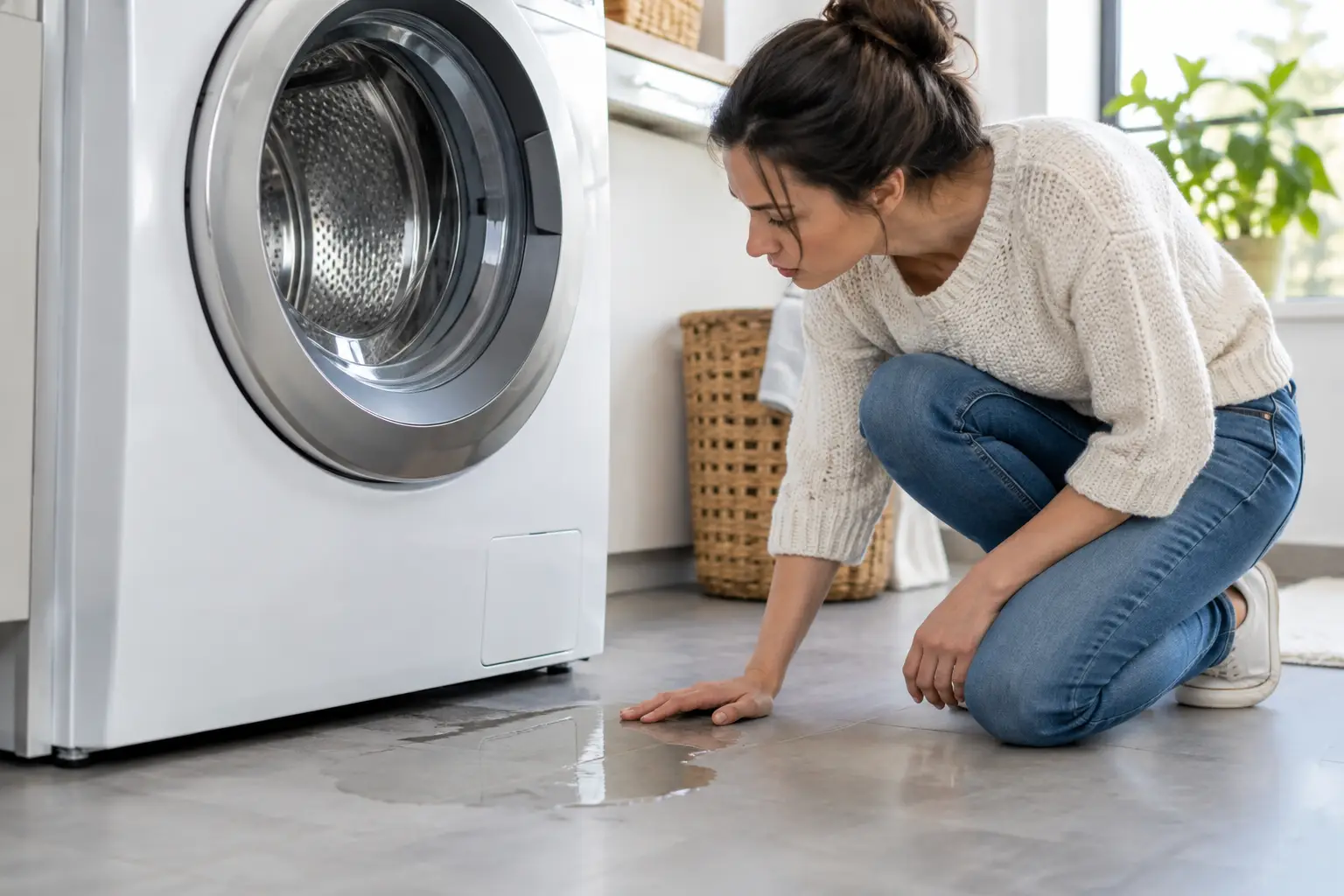
A washer usually leaks because a water hose, door seal, drain hose, pump, or detergent dispenser has a problem. Where the water appears matters more than how much water you see, and it is the fastest way to narrow down why washer leaks.
Do not keep running a leaking washer to see if it gets better. A small drip can soak flooring, damage a downstairs ceiling in a condo, or create mold behind the machine. Turn off the water valves if water is still flowing, unplug the washer, and dry the floor before checking anything.
Why does my washer leak from the back?
A leak at the back is often related to the hot or cold supply hoses. These are the two hoses that bring water from the wall valves to the washer. A loose connection, worn rubber washer inside the hose fitting, cracked hose, or corrosion at the valve can let water out during the fill cycle.
Look at the hoses while the machine is filling, not after the load is done. A slow leak can run down the hose and collect under the washer, which makes the source hard to spot. If the connection is wet, turn off the valve and do not overtighten it with a tool. Plastic inlet valve threads can crack.
The drain hose is another common back-of-machine leak. It can come loose from the standpipe, split near the end, or push water out because the household drain is backing up. If water appears only when the washer drains or spins, the drain hose or drain pipe is more likely than the water supply hoses.
A drain hose also needs an air gap. If it is sealed tightly into the wall pipe with tape or rags, the washer may drain poorly or water may come back out of the pipe. For tenants and condo owners, a backing-up standpipe may be a building plumbing issue rather than a washer repair.
Why is there water under my washer when the pump looks fine?
What people usually assume is that water under the washer means the drain pump has failed. That assumption is reasonable because the pump sits low in the cabinet, near where the puddle forms, and a damaged pump can leak badly during drain and spin.
It is often incorrect because water travels. A small leak from the inlet valve at the top rear, a dispenser overflow at the front, or a torn door gasket can run down inside the cabinet and come out near the pump. By the time you see the puddle, the pump may be completely dry.
What it actually is in many front-load washers is a problem at the detergent dispenser or the door boot seal. The dispenser can overflow when too much detergent is used, when powdered detergent clumps in the drawer, or when a small water channel is blocked. The door boot is the large rubber gasket around the opening. It can tear, fold inward, or hold a small object such as a pin, screw, or pet hair buildup that prevents a proper seal.
A technician normally removes the top panel or front panel and checks for water trails. Dried mineral marks, soap residue, and rust around a part often show where the leak started. Replacing a pump without finding that trail can mean paying for the wrong repair.
Why does my front-load washer leak from the door?
If water comes from the front during a wash cycle, inspect the door glass and rubber boot first. Wipe both surfaces clean with a soft cloth. A sock, hair clip, coin, or piece of fabric caught between the glass and gasket can make a small opening that leaks only when the drum has water in it.
Check the bottom folds of the gasket with a flashlight. Front-load washers have drain holes in the lower part of the boot. If those holes are blocked with lint or residue, water can sit in the gasket and spill out when the door opens. Do not poke deep into the holes with a sharp object. You can tear the rubber or push debris farther in.
A door lock switch can also contribute, though it is not usually the direct source of water. If the door does not pull in and lock correctly, the gasket may not seal as it should. You may notice a loose-feeling door, a lock error, or a cycle that stops before spinning. That needs a proper inspection because the lock, strike, hinge, and gasket all have to line up.
Why does my top-load washer leak only during the wash cycle?
A top-load washer that leaks while filling or agitating may be overfilling. The water inlet valve can stick open, or the pressure system may fail to tell the control that the tub is full. The pressure switch uses air pressure through a small hose to measure water level. If that hose is loose, split, or blocked, the washer can keep filling longer than it should.
Overloading can also push water over the tub rim during agitation. This is more common with bulky comforters, bath mats, or a load packed tightly to the top. The machine may look fine on a normal load but leak when heavy items shift and force water to one side.
Too much detergent causes a different type of overflow. High-efficiency washers need low-sudsing HE detergent. Extra soap makes foam rise into areas where water should not be, including the dispenser and vent system. If the leak is soapy and happens near the start of the cycle, reduce the detergent amount before assuming a part has failed.
What can I check in five minutes before calling for repair?
With the washer off, pull it forward enough to see the floor behind it. Put a few dry paper towels under the hot and cold hose connections, under the drain hose area, and along the front edge of the machine. Then run a short fill cycle while watching from a safe distance.
Stop the cycle as soon as you see water. Wet paper towels at the rear point to a supply hose, inlet valve, drain hose, or standpipe issue. Wet towels at the front point to the door gasket, dispenser, or an overflow. If nothing leaks during filling, let the washer drain and spin while you watch the rear drain connection.
Do not remove cabinet panels, disconnect internal hoses, or tip the washer by yourself. A washer is heavy, and hidden water near electrical parts creates risk. Taking two or three clear photos of the leak area and noting when it happens will help speed up the diagnosis.
When is a washer leak a repair call?
Call for service if water comes from inside the cabinet, the washer leaks on every load, the tub overfills, or the drain pump area is wet. A damaged pump housing, pump hose, tub-to-pump hose, inlet valve, or tub seal needs more than an outside check. A tub seal leak can show up as water underneath the center of the washer and may be worse during spin.
For washer repair in West Hollywood, Vertex Appliance Repair can inspect the leak source and explain the repair before work begins. The diagnostic fee is $89 and is waived when you approve the repair. Installed parts and labor are covered by a 90-day warranty.
If you manage a rental or multi-unit property, avoid sending a tenant back to the machine after a leak without checking the floor and nearby wall first. Water can move farther than expected, especially on upper floors. Shut off the valves, leave the washer unplugged, and arrange service once the area is dry enough to inspect safely.
A washer leak is usually fixable, but the right repair starts with finding the first drop of water, not the final puddle on the floor.