Dryer Vent Cleaning Case Study: Slow Drying
This dryer vent cleaning case study shows why a dryer takes three cycles when the heater works, and how a blocked vent is found safely inside the home.
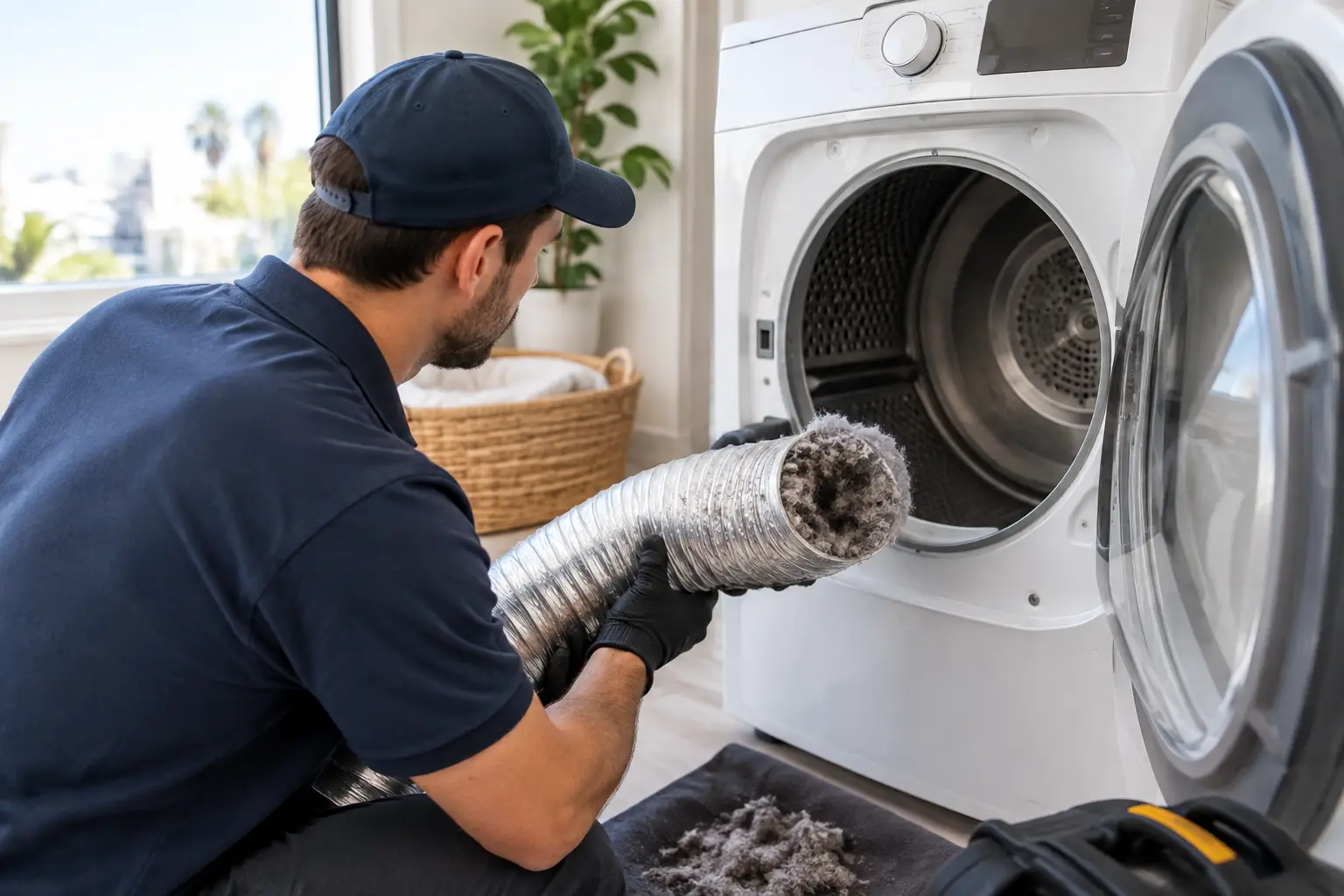
A blocked or restricted exhaust vent is often the reason a dryer takes two or three cycles to dry one load. This dryer vent cleaning case study follows a common West Hollywood call where the dryer heated normally, but wet clothes stayed wet because air could not leave the machine fast enough.
The unit was in a condo laundry closet. The tenant had noticed longer dry times for about two weeks. Towels were the worst. The dryer ran for over an hour, the cabinet felt very warm, and there was a hot, damp smell in the closet after each load.
That combination matters. A dryer needs heat, airflow, and tumbling action. If any one of those is missing, drying slows down. In this case, the drum turned and the heater came on. Airflow was the problem.
Why does my dryer take three cycles to dry clothes?
The first clue was the dryer temperature. The machine was producing heat, so a failed heating element was less likely. The lint screen had been cleaned after each load, but that only protects the first part of the airflow path. Lint can still collect in the duct behind the dryer, at bends in the vent line, and at the exterior vent hood.
The dryer vent in this case ran from the closet through a wall and out to the side of the building. That type of route can collect lint at turns. It can also hold moisture. Lint sticks to damp vent walls and builds up into a dense layer. A short vent can clog. A longer vent with several bends usually needs attention sooner.
When exhaust cannot leave, hot air stays around the drum. Clothes remain humid instead of drying. The dryer may also cycle the heat on and off more often because the temperature rises too fast inside the cabinet.
What do people usually assume is wrong with a slow dryer?
People usually assume the dryer heater has failed. That is a reasonable guess because cold clothes after a cycle can point to a bad heating element, gas valve coils, igniter, or thermal fuse.
But that assumption is often incorrect when the dryer still feels hot. A heating problem usually gives you little or no heat. A vent problem gives you heat, long cycles, very hot clothes, and moisture left in the load.
In this case, the actual issue was a heavy lint restriction in the vent line, plus lint caught at the outside vent hood. The heater was doing its job. The dryer could not move enough air through the system.
A clogged vent can also cause safety parts to open. Many dryers have a thermal fuse that cuts power after an overheating condition. Some models may stop heating but still tumble. Others may fail to start if another safety circuit is affected. Replacing a thermal fuse without fixing the airflow problem can lead to the same failure again.
What can I check in five minutes before calling?
Run the dryer with a small load, then go outside and check the exterior vent hood while the machine is running. You should feel a steady, warm flow of air. The flap should open fully.
If the airflow is weak, the flap barely moves, or you see lint packed around the hood, stop using the dryer until the vent is checked. Do not reach far into the duct or take apart a wall connection if you are not comfortable moving the machine. A crushed flex hose behind the dryer can create the same symptoms as a clogged wall vent.
Also pull out the lint screen and wash it with warm water and a little dish soap. Dryer sheets can leave a clear coating on the screen. Water should pass through the mesh easily. If it beads up or sits on top, clean and dry the screen before putting it back.
How was the vent restriction found?
The dryer was pulled forward enough to inspect the transition duct, which is the short connection between the dryer and the wall. It was not crushed, but lint had gathered near the wall connection. The duct was then cleaned through the full accessible route, including the outside hood.
The exterior flap had a thick mat of lint behind it. That was the final restriction. After cleaning, the flap opened properly and the airflow was much stronger.
The dryer was then run again. Exhaust air moved outside instead of backing up into the laundry closet. A normal load should not require repeated high-heat cycles when the washer has spun the clothes well.
Dryer vent cleaning starts from $149 at Vertex Appliance Repair. If the dryer still has weak heat or will not start after airflow is restored, the next step is to test the dryer itself. That may include checking the heating element or gas ignition system, the thermal fuse, the door switch, and the start relay. The door switch is the small safety switch that tells the dryer the door is closed. The start relay sends power to the motor when you press Start.
When is it a dryer repair problem instead of a vent problem?
It depends on the symptom. A dryer that tumbles but blows cold air may have an internal heating fault. An electric dryer may have a failed heating element or a tripped breaker on one side of the 240-volt circuit. A gas dryer may have a weak igniter, failed gas valve coils, or a flame sensor issue.
A dryer that does nothing when Start is pressed may have a bad door switch, broken belt switch, start relay, or thermal fuse. A dryer that runs but makes a scraping or thumping sound may have worn drum rollers, a damaged idler pulley, or a cracked blower wheel.
Those problems need a different repair than vent cleaning. The useful part is separating them before replacing parts. If airflow is restricted, a new heating element will not make the dryer dry better. If the vent is clear but the dryer has no heat, cleaning the vent alone will not solve the problem.
For a slow-drying dryer, it makes sense to start with the exhaust path. Our local dryer vent cleaning service in West Hollywood is intended for lint buildup, weak outside airflow, and long drying cycles. If testing shows an appliance fault as well, dryer repair can be discussed before work begins.
How can landlords and property managers prevent repeat calls?
In rental units, slow drying often gets reported as a dryer failure even when the machine is working. Asking the tenant two questions can save time: Does the dryer feel hot, and does the outside vent flap open during a cycle? Those answers help point toward either an airflow problem or an internal dryer problem.
Vent cleaning timing depends on how often the dryer is used, the length of the duct, and the number of bends. A household with frequent laundry use may need service sooner than a lightly used unit. Property managers should also check that maintenance staff do not push a dryer back against the wall hard enough to crush the transition duct.
Long dry times are not something to work around by running extra cycles. They raise utility use, add wear to clothes, and can overheat the dryer. If towels suddenly need two or three cycles, check the outside airflow first. That simple check often points to the real problem before a small restriction becomes a complete blockage.