Refrigerator Leaking Water Guide for Homeowners
Use this refrigerator leaking water guide to check drains, ice makers, and water lines, protect your floor, and know when to schedule a repair today.
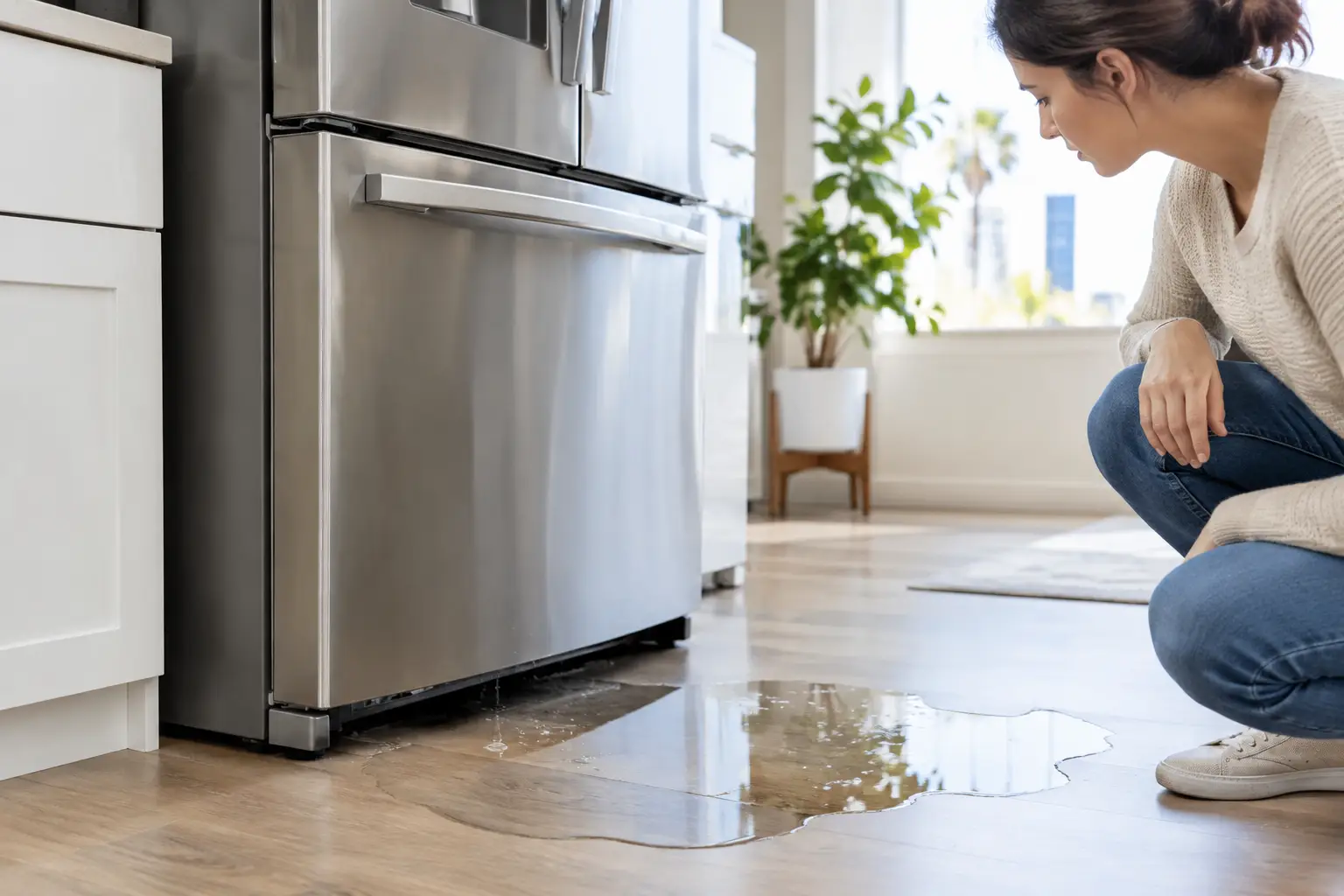
A refrigerator leak is most often caused by a blocked defrost drain, a loose water line, or a problem in the ice maker area. The location of the water matters: puddles under the front, water inside the fresh food section, and moisture near the back point to different parts.
This refrigerator leaking water guide can help you narrow down the source before water damages flooring, cabinets, or a downstairs ceiling. First, move food if needed and dry the floor. Do not keep using a refrigerator with water near an electrical outlet, a damaged power cord, or a large active leak.
Why is water pooling under my refrigerator?
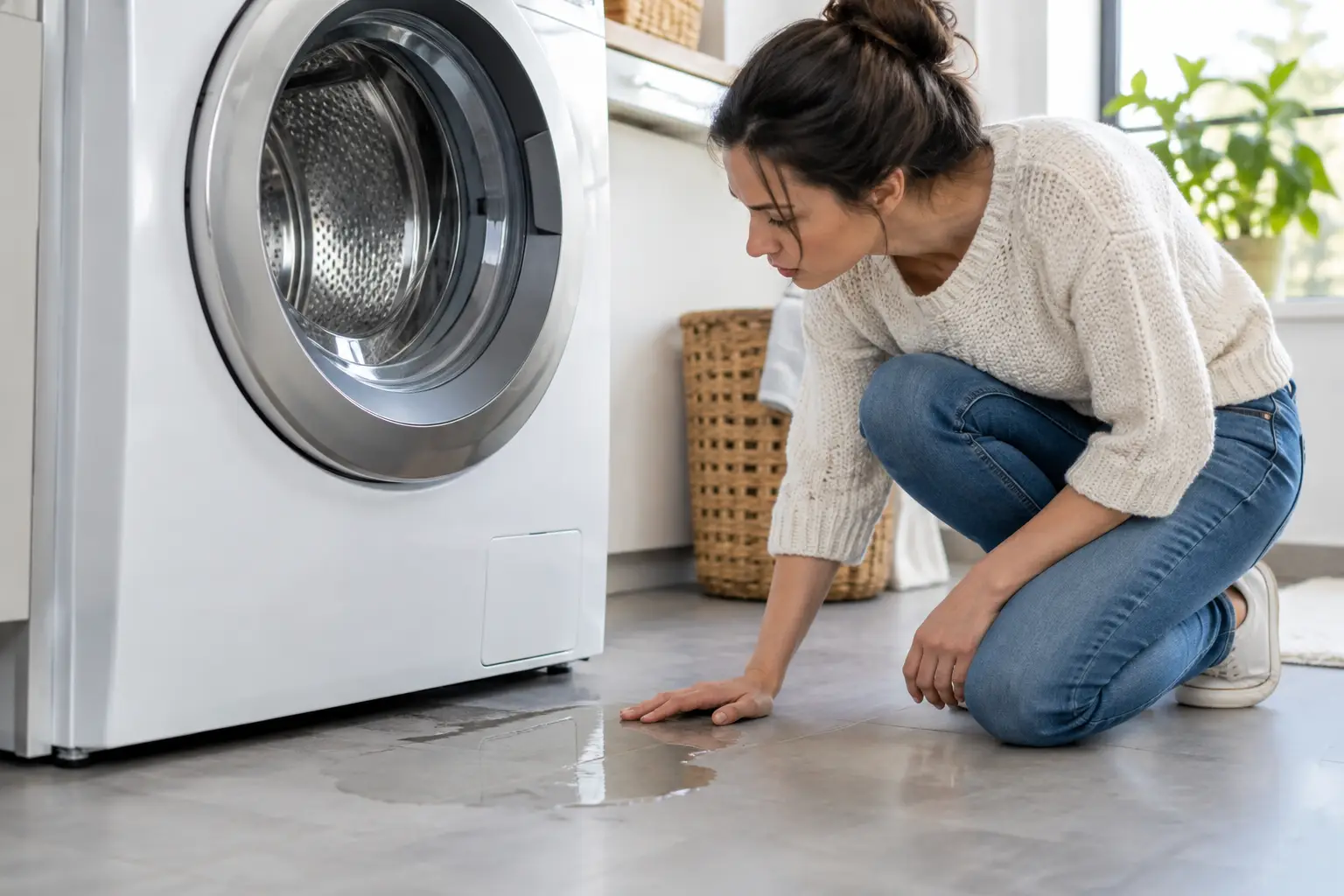
A puddle under the front of the refrigerator often comes from the defrost system. During normal operation, frost melts off the evaporator coil in the freezer. That water should run through a small drain hole, down a tube, and into a pan near the compressor. Heat from the compressor and condenser area usually evaporates it.
If the drain hole or drain tube freezes or clogs with food debris, the meltwater has nowhere to go. It can back up into the freezer, run under the crisper drawers, and eventually spill onto the kitchen floor. You may also see a sheet of ice on the freezer floor. This is a strong sign of a blocked defrost drain.
A cracked drain pan can also cause water below the appliance, but it is less common. The pan is usually behind the lower rear access panel. It may be hard to inspect safely because of hot components and tight space. A refrigerator that is not level can add to the problem. It does not usually create water by itself, but it can make overflow run toward the front instead of staying in the pan.
Can I check the defrost drain in five minutes?
Yes. Open the freezer and look at the floor below the rear panel. If you see ice or standing water, remove loose food and place towels around the area. Do not chip at the ice with a knife, screwdriver, or sharp tool. It is easy to puncture the liner or damage the evaporator coil.
Next, pull out the fresh food drawers and look for water under them. Water in both places usually supports a blocked drain diagnosis. This check takes five minutes and gives a repair technician useful information. If the drain is frozen solid, the refrigerator may need controlled thawing and the drain tube may need to be cleared from both ends.
Why is my refrigerator leaking water from the back?
Water at the back of a refrigerator with a water dispenser or ice maker often comes from the supply line. Look for wet spots around the small water line where it connects to the wall valve and where it enters the refrigerator cabinet. A line can loosen after the refrigerator is pulled out for cleaning, flooring work, or a move.
The plastic tubing can crack with age. The compression fitting at the valve can also drip slowly. A slow leak may leave a white mineral mark, a damp wall, or warped baseboard before it makes a noticeable puddle. If you find an active drip, turn off the water valve feeding the refrigerator. Then avoid using the dispenser and ice maker until the source is found.
The water filter housing is another possible source. A filter that is not fully seated, has the wrong cap style, or has a damaged O-ring can leak inside the refrigerator. Check around the filter compartment for water. If the leak started right after a filter change, remove the filter and inspect it for a torn seal or incorrect fit.
Is the ice maker really causing the leak?
What people usually assume
Many people assume the ice maker is broken when they see water under the refrigerator. That is reasonable. The ice maker uses water, and leaks often appear after the unit fills or after someone notices a wet ice bin.
Why that assumption is often incorrect
The ice maker itself is not always the leaking part. A blocked defrost drain can send water to the same area. So can a cracked water inlet tube, a loose fitting behind the refrigerator, or condensation from a door that is not sealing. Replacing an ice maker without tracing the water path can waste money and leave the original leak in place.
What it actually may be
A common hidden cause is the fill tube above the ice maker. This tube brings water from the inlet valve into the ice maker mold. If it freezes, the water may spray, overflow, or make oversized ice cubes. The inlet valve can also fail to close fully. In that case, it may drip water into the ice maker even when it is not calling for a fill.
Look for a solid block of ice around the fill tube, ice cubes fused together, or a frozen ice bin. Those signs point more toward an ice maker fill problem than a defrost drain. A technician can test the water inlet valve and inspect the fill tube. The valve is an electrical part and should not be diagnosed by guessing or replacing parts at random.
Why is there water inside the refrigerator but not on the floor?
Water under the crisper drawers can come from the defrost drain, but door seal problems are also possible. Warm kitchen air enters through a torn, dirty, or poorly closing gasket. It turns to moisture inside the refrigerator. In West Hollywood apartments and condos, this often shows up when a refrigerator door is blocked by a drawer, a large container, or food packed too close to the door.
Run your hand around the closed door gasket. Look for gaps, tears, and sections that are pulled away from the frame. Clean sticky residue with warm water and a soft cloth. If the gasket is damaged, it may need replacement. Also check whether the refrigerator is sitting level enough for the door to close on its own from a few inches away.
A refrigerator that runs constantly can create extra frost and extra defrost water. Dirty condenser coils, a weak condenser fan, or a temperature control problem can contribute. The coils are usually underneath or behind the appliance. Dust buildup does not always cause a floor leak, but it can make an existing defrost issue worse by increasing run time.
When should I stop troubleshooting and call for refrigerator repair?
Call for service if the leak returns after you dry the area, if you see ice building up in the freezer, or if the water line is dripping. It is also time for a repair visit if the refrigerator is warm, the ice maker overfills, the dispenser stops working, or the floor has started to swell.
For tenants, take photos of the water and tell the landlord or property manager where it appears. For landlords and property managers, a small refrigerator leak is worth handling quickly. Water can move under vinyl flooring and into lower cabinets long before the visible puddle looks serious.
Vertex Appliance Repair handles refrigerator and ice maker problems in West Hollywood and nearby neighborhoods. The diagnostic fee is $89 and is waived when you approve the repair. Installed parts and labor carry a 90-day warranty.
Keep towels under the affected area, leave space behind the refrigerator if you need to watch for a drip, and turn off the water supply when a water line is involved. That simple step can prevent a small refrigerator leak from becoming floor or cabinet damage.