Oven Self Cleaning Failure Guide for Homeowners
Use this oven self cleaning failure guide to check door locks, heat faults, error codes, and when to schedule safe oven repair in West Hollywood today.
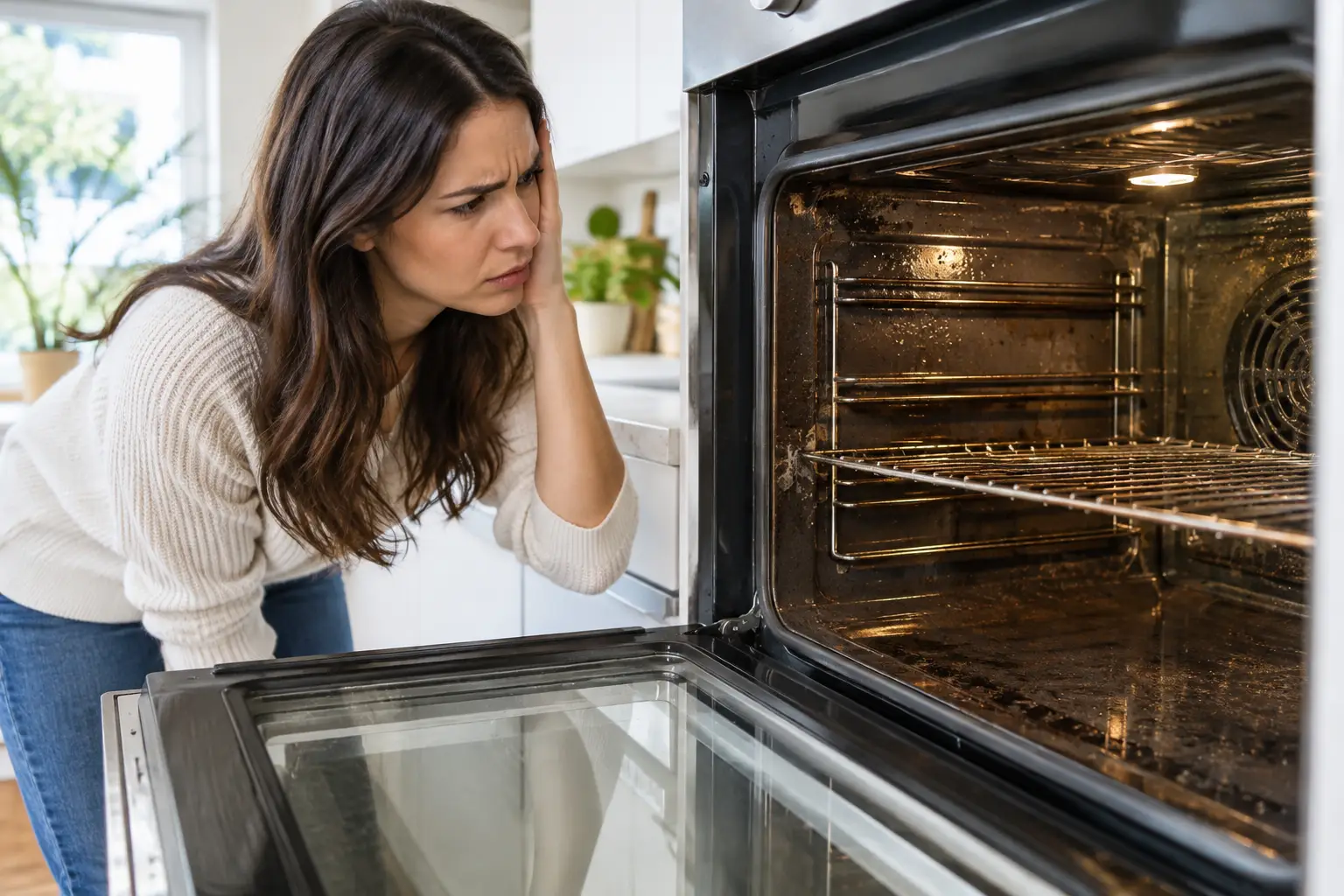
A self-clean cycle that will not start or finish is most often caused by a failed door lock assembly or an oven that cannot reach or sense the required high temperature. Less often, the electronic control board has failed or a wiring connection has overheated during a past cleaning cycle.
This oven self cleaning failure guide explains what the problem usually means, what you can safely check, and when to stop trying resets. Self-clean uses much more heat than normal baking. That heat can expose a weak lock motor, temperature sensor, fuse, relay, or control board.
Why won’t my oven start the self-clean cycle?
Most ovens must confirm that the door is fully shut and locked before self-clean will begin. The lock assembly has a small motor, latch, switch, and sometimes a position sensor. If the oven cannot read the locked position, it may beep, show an error code, or simply return to the clock screen.
A worn door lock switch is a common cause. You may hear the latch try to move, then stop. On some models, the latch moves normally but the switch inside does not report that it is locked. The oven control then cancels the cycle for safety.
A bad temperature sensor can also stop self-clean before it starts. The sensor is the thin metal probe inside the oven cavity. The control uses it to monitor heat. If it reads an impossible temperature, the control may block the cycle or show an F-code error.
The oven must also have normal power. Electric ranges usually need both sides of the 240-volt supply for high-heat functions. A tripped breaker or weak connection can leave the clock and oven light working while self-clean will not run correctly.
What can I check in five minutes before calling?
Turn the oven off and let it cool completely. Open the door, remove the racks, and look at the door latch area along the top or front edge of the oven opening. Remove any baked-on food, foil, or small object that could keep the latch from moving freely.
Then close the door firmly and start self-clean once. Listen for the latch. It should begin moving within a short time. Do not force the latch by hand. If it clicks repeatedly, hums without moving, or stops halfway, turn the cycle off. That points to a lock assembly problem, not a dirty oven.
Also check your electrical panel for a partially tripped double-pole breaker. Push the oven breaker fully to OFF, then back to ON. Only do this if the oven is cool and there is no burning smell, smoke, or damaged wiring. If the breaker trips again, leave it off and arrange service.
Why is my oven door locked after self-cleaning?
The door stays locked until the oven cools to a safe temperature. This can take an hour or longer after the display says the cycle has ended. Do not pull on the handle or try to pry the latch open. You can bend the latch, damage the door, or break the glass.
If the oven is completely cold but the door remains locked, the lock motor may be stuck or the control may not recognize that the cavity has cooled. A failed temperature sensor can cause this. So can a control board relay that stays energized when it should turn off.
Unplug the range or switch off the breaker for five minutes, then restore power. This may reset a confused control board. If the lock does not release after the reset, do not keep cycling power or force the door. A technician may need to access the latch from inside the unit and test the lock circuit.
Is the heating element the reason self-clean failed?
What people usually assume
Many people assume a self-cleaning failure means the bake or broil element burned out. That assumption is reasonable because self-clean uses extreme heat, and a damaged element can fail during or after the cycle.
Why that assumption is often incorrect
Self-clean can fail before the oven ever sends full power to the heating elements. The control first checks the door lock and temperature readings. If either check fails, the cycle stops even when both elements are still good.
What it often actually is
The more likely issue is the door lock assembly, oven temperature sensor, thermal fuse, or electronic control board. A thermal fuse is a small safety part that opens if an area behind the oven gets too hot. When it opens, some ovens lose heating, display functions, or self-clean operation.
On models with a control board relay, the relay contacts can burn from repeated high-heat cycles. The relay may fail open, so the oven never heats for self-clean. It may also stick closed, which is more serious because the oven can overheat. That is a repair that should not wait.
Why did my oven stop working after a self-clean cycle?
A self-clean cycle can reveal a part that was already weak. The cycle creates very high cabinet temperatures. Parts behind the control panel, including wiring connectors and board relays, receive more heat than they do during normal baking.
Common symptoms include a blank display, no heat in bake or broil, an oven that heats too slowly, or a door that will not unlock. An error code can help, but it does not always name the failed part. For example, an overheating code may come from a bad sensor, damaged sensor wiring, a control board fault, or a relay that is stuck on.
Gas ovens have a different set of checks. The bake igniter must draw enough electrical current to open the gas safety valve. An igniter may glow orange but still be too weak to light the burner. Self-clean problems on a gas range can still involve the door lock, sensor, fuse, or control board, so a glowing igniter does not rule out those faults.
When should I stop troubleshooting the self-clean problem?
Stop and turn off power if you smell burning plastic, see smoke, notice a hot control panel, or find that the oven keeps heating after the cycle ends. Those signs can point to a stuck relay, damaged wiring, or a control failure.
You should also schedule service if the door is locked while the oven is cold, the breaker trips, an error code returns after one reset, or the oven does not heat normally after self-clean. For renters and property managers, it is better to document the error code and symptoms than to keep starting the cycle. Repeated attempts can make a lock or board issue worse.
Vertex Appliance Repair handles oven and stove repair in West Hollywood and nearby neighborhoods. The diagnostic fee is $89 and is waived when you approve the repair. Installed parts and labor are covered for 90 days.
If your oven is still baking safely, use it gently and avoid another self-clean cycle until the fault is identified. A manual clean with an oven-safe cleaner is usually the lower-risk choice when a lock, sensor, or control problem is already showing signs of failure.