Property Manager Dryer Maintenance Guide
Use this property manager dryer maintenance guide to reduce slow drying, tenant complaints, lint risks, and avoidable repair calls in West Hollywood homes.
Most dryer problems in rentals start with blocked airflow or poor lint removal. The next common cause is a worn heating, safety, or starting part that fails under normal use.
This property manager dryer maintenance guide is built for the calls that disrupt a tenant’s week: clothes still damp after two cycles, a dryer that gets hot but will not run, or a machine that stops halfway through a load. In a West Hollywood building, the fastest way to control repair costs is to separate simple airflow checks from faults that need a technician.
Why does my tenant’s dryer take two or three cycles?
A dryer that takes too long is usually moving too little air. The heating element may be working fine, but hot, wet air is trapped in the drum because the lint screen, vent hose, wall duct, or outside vent flap is blocked.
Ask the tenant whether the dryer feels very hot while the clothes stay damp. That symptom points toward a vent restriction. A normal cycle should leave clothes warm and dry. If the drum is hot but towels are still wet, the dryer cannot get rid of moisture.
Lint buildup is not only a drying problem. It can make the dryer overheat and open the thermal fuse. On some models, the machine will still tumble but will not heat. On others, it will not start at all. A thermal fuse is a one-time safety part. Resetting the dryer will not fix it.
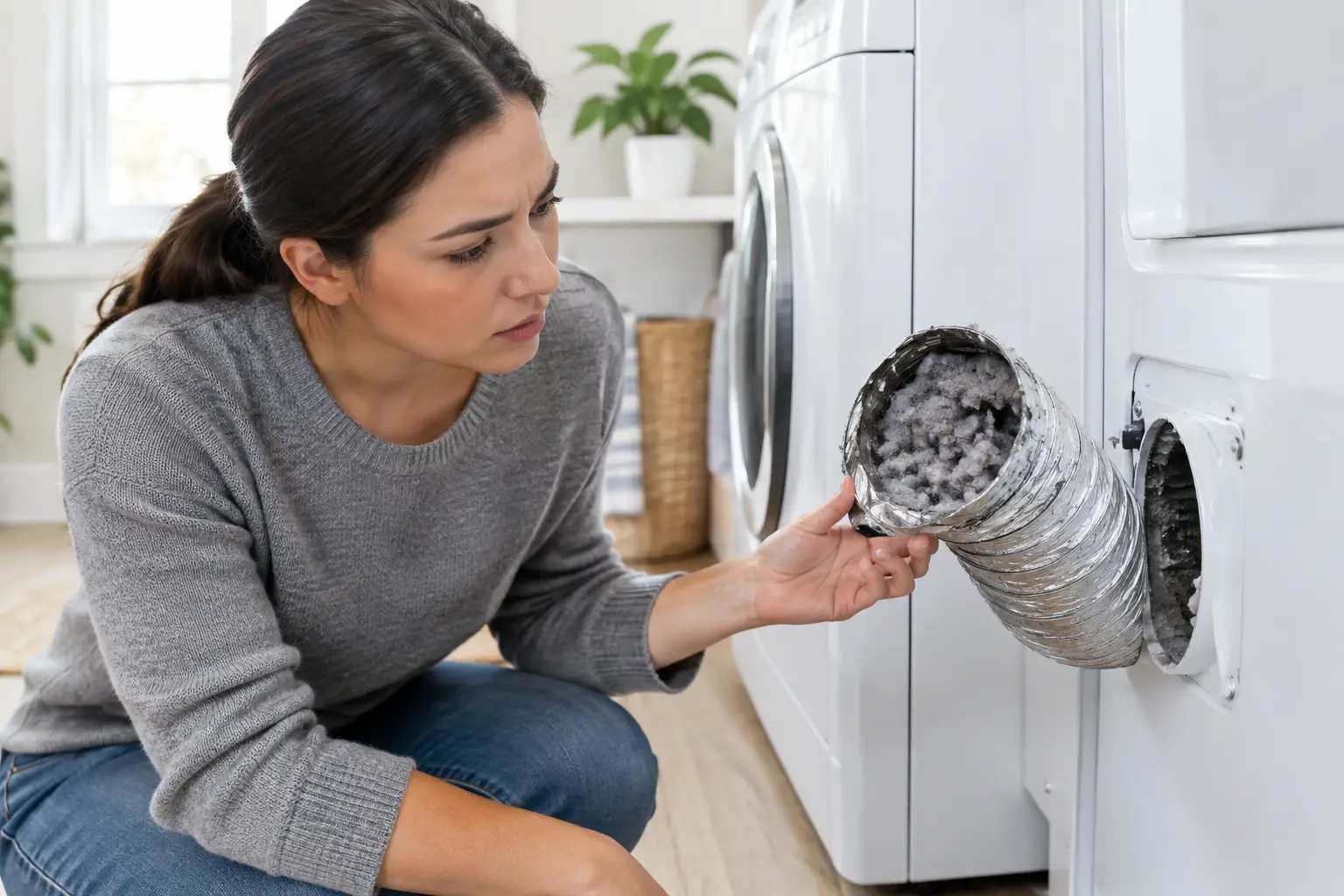
A crushed foil or plastic vent hose behind the machine is common in tight laundry closets. Use a rigid or semi-rigid metal duct where the setup allows it. Flexible plastic duct can trap lint and should not be used for a dryer vent.
What can a manager check in five minutes?
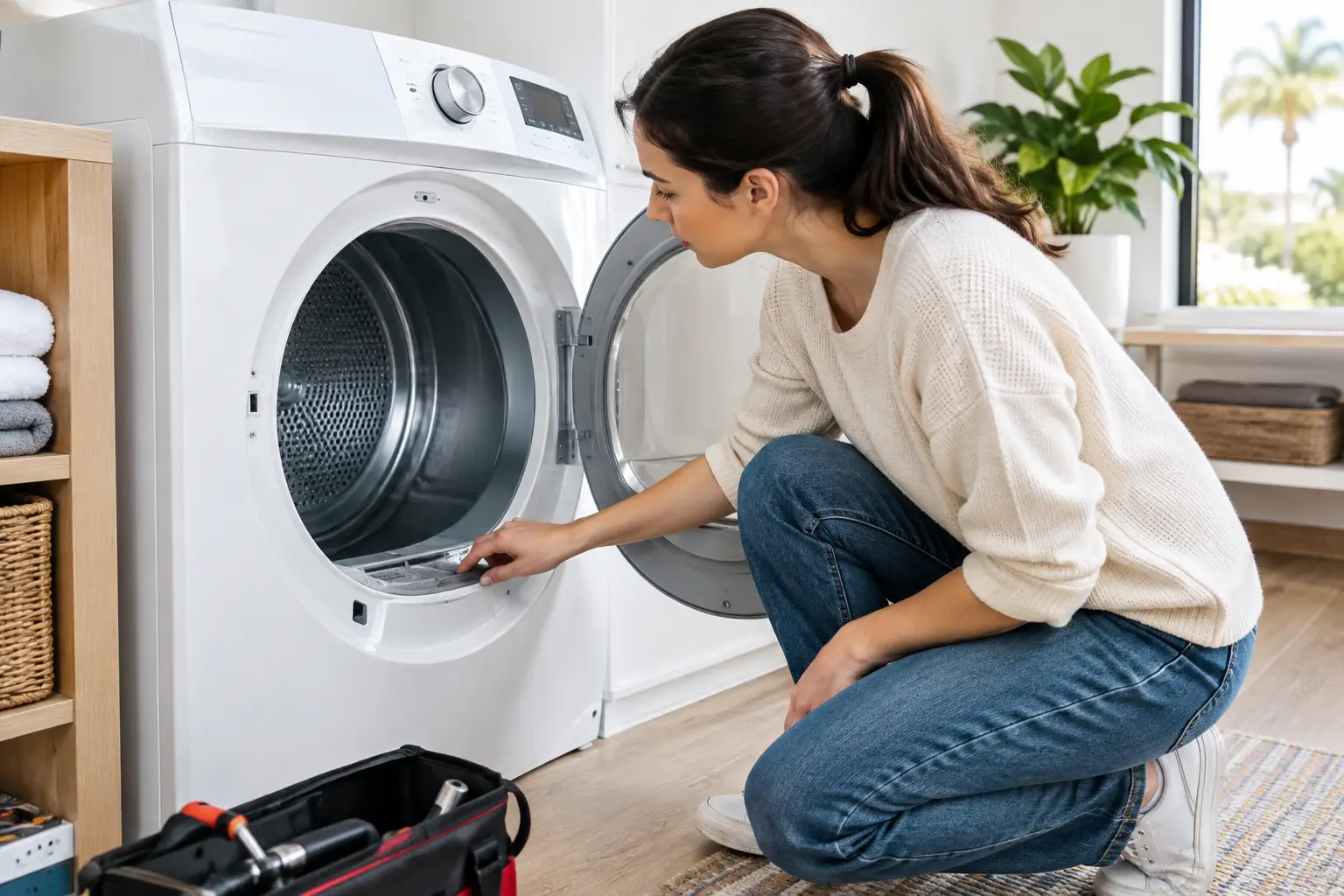
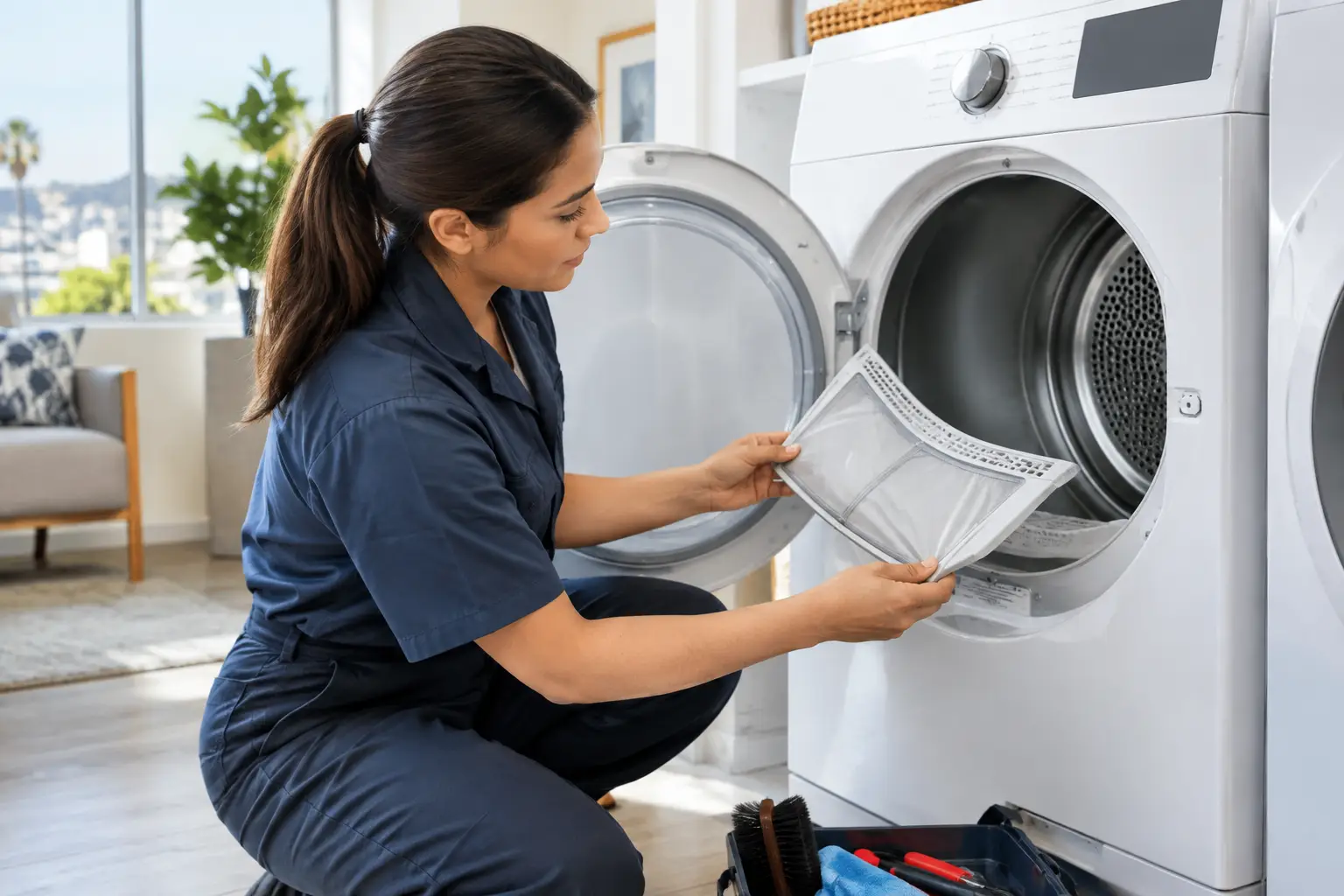
Pull out the lint screen, remove the visible lint, and rinse the screen under running water. If water sits on top instead of passing through, the screen has a coating from dryer sheets or fabric softener. Wash it with warm water, a small amount of dish soap, and a soft brush. Let it dry fully before putting it back.
Then run the dryer on air-only or no-heat for five minutes and check the air coming from the outside vent. It should feel like a steady stream, not a weak puff. Weak airflow means the duct needs attention, even if the lint screen looks clean.
Do not push a wire tool deep into the vent from indoors. It can damage a flap, disconnect a joint, or pack lint farther into the line. If airflow is weak, schedule dryer vent cleaning instead of asking a tenant to take apart the duct.
Is the lint screen always the real problem?
What people usually assume is that slow drying means the lint screen is full. That is a reasonable assumption because every tenant can see the lint, and cleaning the screen is part of normal use.
It is often incorrect because the screen may be clean while the wall duct is packed with lint several feet away. Long vent runs, multiple turns, roof exits, and shared laundry layouts can all reduce airflow. The outside flap may also be stuck shut by lint or paint.
What it actually is, in many cases, is a restricted exhaust path behind the dryer or inside the wall. The dryer runs longer, heats up more, and may eventually blow the thermal fuse. The right fix is to clean the full vent path and inspect the connection behind the machine, not just empty the lint screen again.
For recurring slow-drying complaints, dryer vent cleaning in West Hollywood can remove the lint from the route the tenant cannot reach. This is especially useful before turning over a unit or after a tenant reports multiple long cycles.
Why does the dryer run but stay cold?
If the drum turns but there is no heat, start with airflow only after checking the machine type. An electric dryer uses a heating element, high-limit thermostat, thermal fuse, and wiring connections. A gas dryer uses an igniter, flame sensor, gas valve coils, and burner assembly.
A failed heating element can break inside and stop producing heat. A blown thermal fuse can also stop the heat circuit. On a gas dryer, the igniter may glow and then go out without lighting the burner. Weak gas valve coils are one possible cause.
A technician can measure continuity through the thermal fuse and heating element. On gas models, testing igniter current draw can help show whether the igniter is pulling enough current to open the gas valve. These checks require access to live electrical and gas components, so they are not a tenant task.
Do not keep running a cold dryer for hours. It will not dry the clothes, and it adds wear to the motor, belt, and drum rollers.
Why will the dryer not start at all?
First, make sure the door closes firmly and the cycle selector is set correctly. If the dryer has a digital panel, ask whether it shows an error code or whether the controls light up. A completely dead panel can be a power issue, a tripped breaker, a failed terminal block, or a control problem.
If the panel lights up but nothing happens when Start is pressed, the door switch is a common suspect. The dryer will not run if it cannot confirm the door is closed. A worn door lock switch may work only when the tenant pushes hard on the door, which is a useful clue.
Other possible faults include a failed start relay, broken drive belt, worn motor switch, or a thermal fuse that has opened. Some dryers make a humming sound but do not turn. That can point to a jammed drum, seized roller, weak motor, or broken belt.
Tenants should not bypass a door switch or hold it closed with tape. That safety switch is there to stop the drum when the door opens.
How often should a rental dryer be maintained?
Have tenants clean the lint screen before every load. For a unit with frequent use, check the screen and the area around the dryer during routine property visits. Dust and lint often collect under the machine and around the rear vent connection.
The vent cleaning schedule depends on how often the dryer runs and how long the duct is. A small condo with a short exterior run may need less frequent service than a multi-tenant property with long ducting and heavy laundry use. Act sooner when drying time increases, the laundry room feels unusually hot, or the outside flap barely opens.
Also listen for thumping, scraping, or squealing. A thump can come from a worn drum roller or an object caught in the drum seal. A squeal may come from the idler pulley, belt, or roller shaft. These sounds are not always urgent, but waiting can turn a small parts repair into a larger repair.
When should a property manager call for dryer repair?
Call when the dryer trips the breaker, smells like burning, stops mid-cycle, will not heat, or needs repeated cycles after the vent has been checked. A burning smell can be lint near a hot component, a slipping belt, a failing motor, or damaged wiring. Stop using the dryer until it is inspected.
For landlords and property managers in West Hollywood, Vertex Appliance Repair charges an $89 diagnostic fee that is waived when the repair is approved. Installed parts and labor are covered for 90 days. Clear notes from the tenant help: whether the drum turns, whether the dryer gets hot, how many cycles it takes, and whether airflow is weak outside.
A dryer is easier to manage when slow drying is treated as an airflow warning, not just a tenant complaint. A quick screen check and a timely vent inspection can prevent a no-heat call during the next busy turnover.