Why Oven Heats Unevenly and What to Check
Why oven heats unevenly: learn the common causes, a five-minute rack check, and when a faulty bake element or sensor needs repair in West Hollywood today.
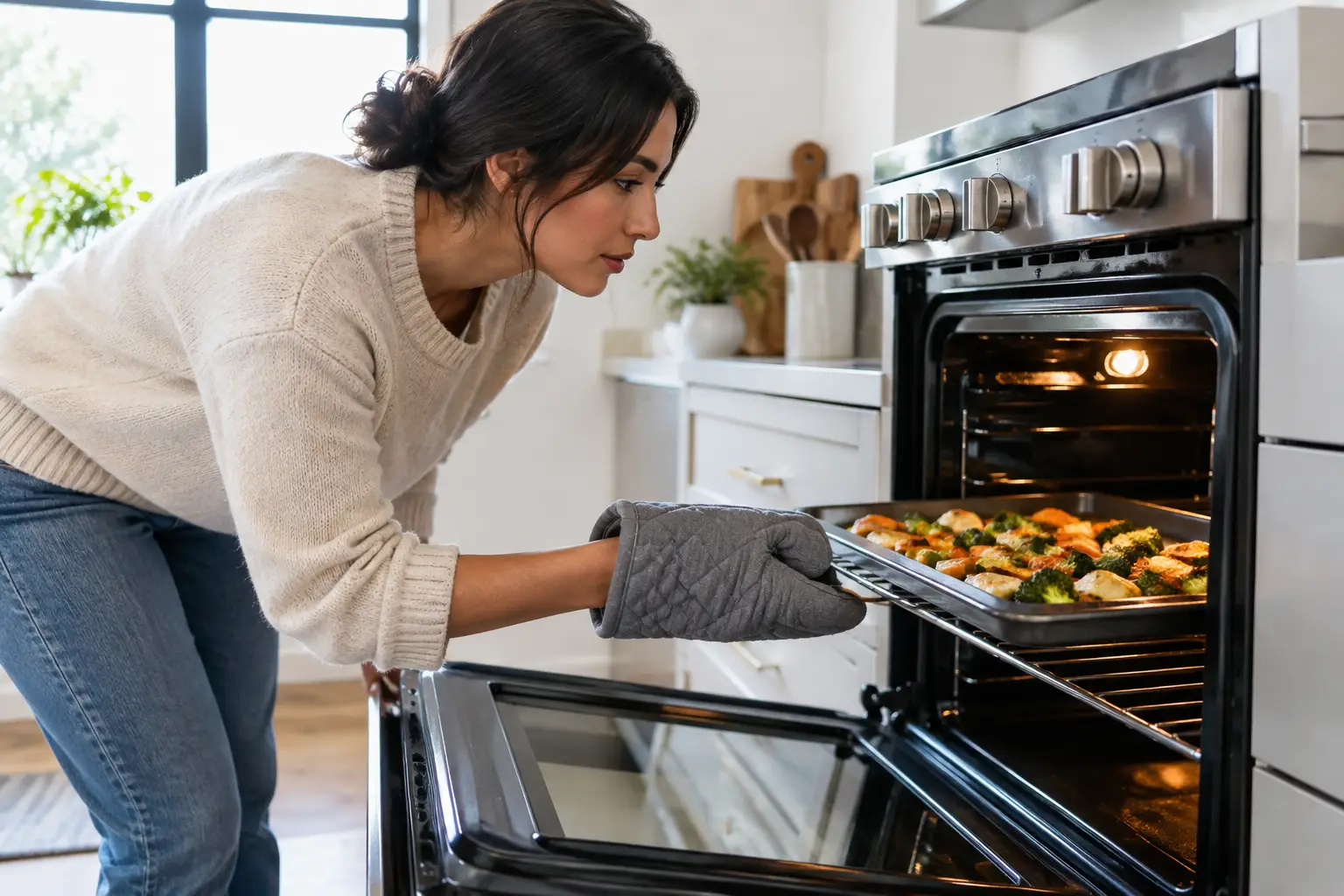
An oven usually heats unevenly because a heating element, temperature sensor, igniter, or convection fan is not doing its job. It can also happen when the oven temperature is correct in one area but not another.
If cookies brown on one side, casseroles stay cold in the middle, or the back of the oven burns food, the problem is not always the recipe or the pan. Uneven heat can make daily cooking frustrating, especially when an oven is shared by tenants or used often in a busy household.
Why does my oven cook one side faster than the other?
The most common cause in an electric oven is a weak bake element. This is the lower heating element that provides most of the heat in regular bake mode. It may still glow red and heat the oven, but it may not heat evenly across its full length. A weak section can leave one side of the oven cooler.
The broil element at the top can also cause trouble. Some ovens use both elements during preheat or temperature recovery. If the broil element is open, damaged, or has a bad connection, the oven may take too long to heat and struggle after you open the door.
In a gas oven, the igniter is a common cause. The igniter has to draw enough electrical current to open the gas valve. An aging igniter may glow orange but draw too little current. The burner may light late, light only sometimes, or produce a low flame. That leads to slow preheating and uneven baking.
A technician can test the element for continuity and inspect its terminals for heat damage. On a gas model, we check igniter current draw and burner flame pattern. These checks help separate a failed part from a wiring issue or control board problem.
Is the temperature sensor making my oven heat unevenly?
It can be. The oven temperature sensor is the thin metal probe inside the oven cavity, usually near the back wall. It tells the control board when to turn the heat on and off. If it reads the temperature incorrectly, the oven may cycle too early or run too hot.
A bad sensor does not always cause the same result on every cycle. One meal may come out undercooked, while the next one burns around the edges. That is because the sensor can drift as it heats up.
The sensor should not touch the oven wall or a rack. If it is bent, loose, or covered with heavy grease, it can give unreliable readings. A technician can measure its resistance at room temperature and compare it with the manufacturer’s expected value. If the sensor checks out, the electronic oven control may be reading it incorrectly.
What people usually assume: “My oven just needs calibration”
Why that assumption is reasonable
Many ovens have a temperature adjustment setting. If food takes longer than expected, it makes sense to think the oven is simply 25 degrees off. A basic calibration adjustment can help when the oven is consistently a little too hot or too cool.
Why it is often incorrect
Calibration does not fix a heating element with a weak spot, a gas igniter that is slow to open the valve, or a convection fan that stops during cooking. It also will not repair a loose wire at an element terminal. Adjusting the temperature setting can hide the real problem for a short time and make other cooking results worse.
What it actually is
When the oven has hot and cold zones, the issue is often heat movement or heat production, not the number on the display. A failing convection fan, damaged door gasket, weak bake element, or restricted gas burner can create uneven heat even when the average cavity temperature seems close to correct.
For example, an oven thermometer placed in the center may show 350 degrees, while the front left corner stays far cooler. That is not a simple calibration issue. It needs a closer inspection of the parts that create and circulate heat.
Can I check anything myself in five minutes?
Yes. With the oven completely cool, remove the racks and look closely at the bake and broil elements. Check for blisters, cracks, burned spots, sagging, or a section that looks rougher than the rest. Do not touch the elements if the oven was recently used.
Then slide each rack back in and make sure it sits level in the side supports. A bent rack or a rack placed too close to the top element can cause food to brown unevenly. Also remove foil from the oven floor or lower rack. Foil can block airflow and reflect heat toward one area. It is a small thing, but it causes real baking problems.
If you have a convection oven, check that no large pan is pressed against the back wall. The fan cover needs open space to move hot air around the cavity.
Do not remove panels, test live wires, or try to adjust a gas valve. Those steps can create a shock, burn, or gas safety risk.
Why does convection bake still leave hot spots?
A convection oven uses a fan to move heated air. When it works correctly, it usually gives more even browning and faster cooking. But the fan motor can become noisy, slow down, or stop after the oven gets hot. In some models, the fan blade can also loosen on the motor shaft.
You may hear the fan at the beginning of the cycle and assume it is fine. The better clue is how it behaves during a full bake cycle. If the fan stops, pulses, or makes a scraping sound, heat will collect near the back or top of the oven.
The convection element, located around the fan on many models, can fail too. When that element is weak, the fan moves air but does not have enough heat to distribute. This often shows up as pale food in the center and darker food near the sides.
Could the oven door be part of the problem?
Yes, especially if food near the front of the oven cooks slowly. A torn, flattened, or loose door gasket lets heat escape. The oven works harder to recover, and the front area may stay cooler than the back.
Check whether the door closes evenly and whether the gasket is hanging loose. Also look for a loose hinge or door that drops slightly when opened. A door issue will not usually create one isolated cold spot, but it can add to an existing heating problem.
When should I schedule an oven repair?
Schedule service if the oven trips the breaker, smells like burning wiring, takes much longer to preheat, shows an error code, or has a visible damaged element. Gas oven owners should also schedule service if the burner lights late, makes a popping sound, or you smell gas. If you smell gas, turn the oven off, avoid switches or flames, leave the area, and contact the gas utility if the smell is strong or persistent.
For homeowners, landlords, and property managers in West Hollywood, an accurate diagnosis can avoid replacing parts that are not causing the problem. Vertex Appliance Repair charges an $89 diagnostic fee, and that fee is waived when you approve the repair. Installed parts and labor are covered for 90 days.
A little uneven browning from pan placement is normal. Food that repeatedly burns on one side or stays raw in the same spot is a repair issue worth checking before it turns into a failed oven during dinner or a tenant turnover.