





10 Best Refrigerator Repair Tips That Help
Use these best refrigerator repair tips to spot common fridge problems, prevent food loss, and know when to call for service in West Hollywood.

A refrigerator problem usually starts small. The milk is not cold enough. The freezer gets icy. You hear a new sound at night. If you wait too long, a small issue can turn into spoiled food, water on the floor, or a full breakdown. These best refrigerator repair tips can help you catch the problem early and know what you can safely check at home.
Best refrigerator repair tips for common fridge problems
The first thing to know is simple. A fridge can look dead when the problem is basic. It might be a power issue, blocked airflow, dirty coils, or a door that is not sealing right. Other times, the real problem is a failed part, and that is when a repair visit makes more sense.
1. Check power before anything else
Start with the outlet. Make sure the plug is fully in. If the fridge light is off, test the outlet with another small device. Also check the breaker. In some homes, a half-tripped breaker can cause confusion because it does not always look fully off.
If the fridge has power but does not run, listen for the compressor. That is the motor that helps cool the unit. A soft hum is normal. Repeated clicking is not. Clicking can point to a start relay problem, a compressor issue, or an electrical fault.
2. Do not trust the control setting alone
Many people turn the dial colder and expect a fast fix. That does not always help. If air is not moving right, or a part has failed, a colder setting will not solve it.
A good target is around 37 to 40 degrees in the fresh food section and 0 degrees in the freezer. If food feels warm, use a simple thermometer instead of guessing. A display can be wrong if a sensor is failing.
3. Make sure air can move inside the fridge
Cold air needs space to circulate. When shelves are packed too tight, the fridge may cool unevenly. You might find frozen food in one corner and warm food in another.
Leave some room around vents. Do not push large containers against the back wall. This is a simple check, but it fixes more cooling complaints than people expect, especially in busy family kitchens and rental units.
4. Clean the condenser coils
This is one of the best refrigerator repair tips because it helps both performance and part life. Condenser coils release heat. If they are packed with dust, pet hair, or grease, the fridge runs longer and works harder.
On some models, the coils are underneath. On others, they are behind the unit. Unplug the refrigerator first. Then clean gently with a coil brush or vacuum. If the coils have not been cleaned in a long time, the fridge may need several hours to show improvement.
If the unit is built in or hard to move, do not force it. Floor damage and water line damage are common when people pull too hard.
Best refrigerator repair tips for leaks, frost, and noise
Not every problem is about weak cooling. Water, frost, and sound changes matter too. They often point to a specific issue.
5. Check the door gasket
The gasket is the soft seal around the door. If it is torn, loose, or dirty, warm air gets in. That can cause frost in the freezer, moisture in the refrigerator, and longer run times.
Wipe the gasket with mild soap and warm water. Look for gaps. A simple paper test can help. Close the door on a sheet of paper. If it slides out too easily in several spots, the seal may be weak.
A bad gasket does not always mean a full breakdown today. But it does raise energy use and can lead to cooling complaints over time.
6. Look at the drain if water is pooling
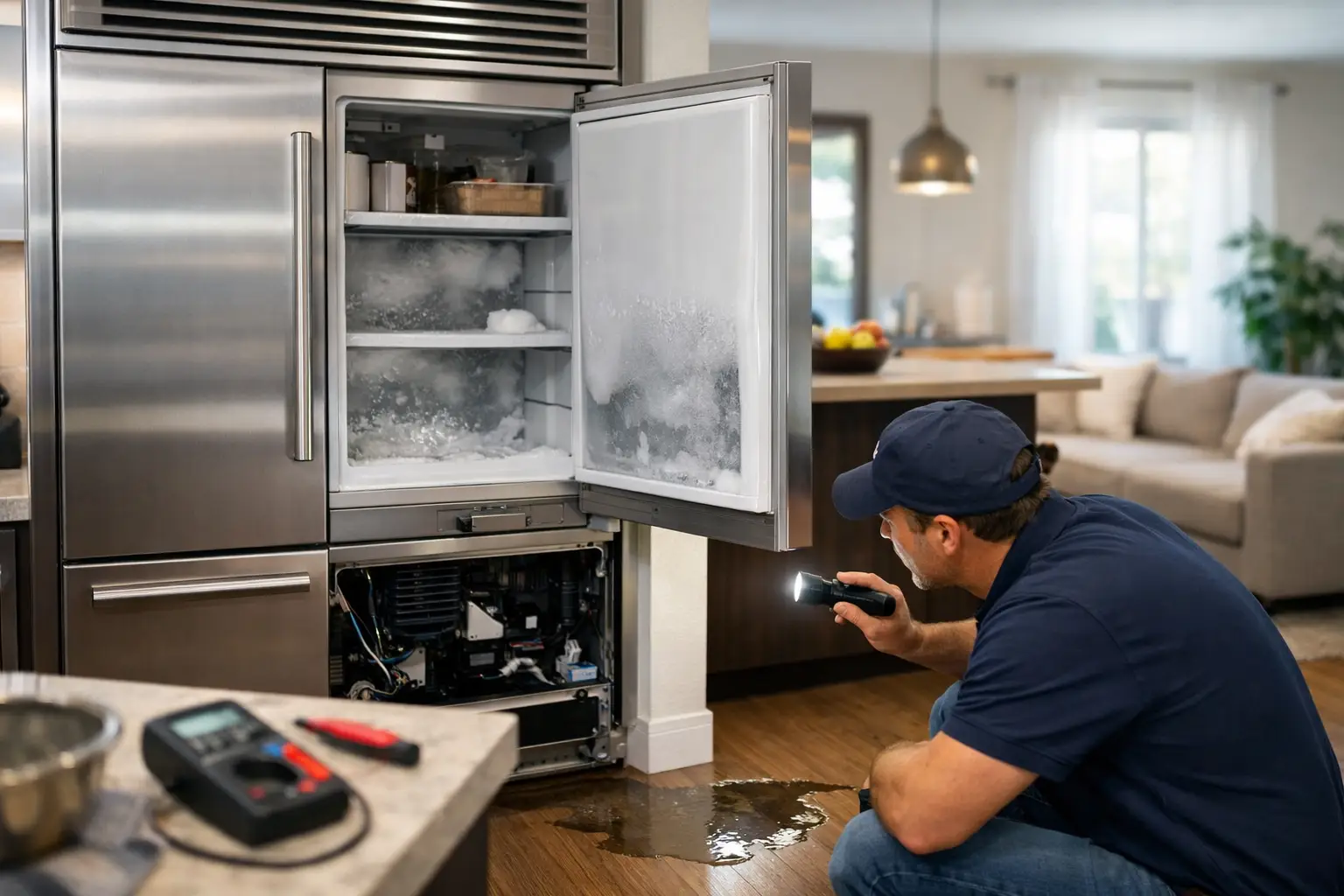
Water under the crisper drawers often points to a clogged defrost drain. That drain carries melted frost away during the defrost cycle. If it clogs, water backs up inside.
Some homeowners can clear a light clog with warm water. But access depends on the model. If ice has built up deep in the drain area, forcing it can crack plastic parts. If you are not sure where the drain is, it is better to stop there.
Water on the floor near the back of the fridge can also come from a water line, drain pan problem, or bad leveling. It depends on the design.
7. Frost is a sign, not the whole problem
A little frost can happen if the freezer door was left open. Heavy frost is different. It may mean warm air is leaking in, or the defrost system is not working.
The defrost system includes a heater, a thermostat or sensor, and a control. If one part fails, frost can build over the evaporator coil. Then airflow drops, and the refrigerator side often gets warm first.
This is one of those cases where the symptom is easy to see, but the repair is not always simple. Unplugging the unit for a full defrost may give short-term relief, but if a part has failed, the frost will come back.
8. Pay attention to new sounds
Fridges make normal sounds. Humming, light buzzing, and occasional popping can be fine. What matters is a change.
A loud fan noise can mean ice is hitting the evaporator fan. A clicking noise can point to a relay or compressor issue. A rattling sound may be as simple as the drain pan or a line touching the wall.
If the noise started with weak cooling, do not ignore it. Sound plus temperature trouble usually means more than a harmless vibration.
What you can do safely and what should wait for a technician
A good rule is this. Cleaning, checking settings, and looking for obvious blockages are usually safe. Electrical testing, sealed system work, and part replacement are not good DIY jobs for most people.
Safe checks for homeowners and tenants
You can safely confirm power, inspect the door seal, clean reachable coils, reduce overpacking, and make sure the doors close fully. Also check if a bin, shelf, or food item is stopping the door from sealing.
In apartments and condos, I also tell people to look at the floor under the front feet. If the unit leans too far forward, the door may not swing shut the right way. A slight backward tilt helps many models close better.
When to stop and call for service
If the compressor is hot and clicking, if the freezer is frosting heavily, if the refrigerator is warm but the freezer seems partly cold, or if water keeps returning after a basic cleanup, it is time for service.
The same goes for burning smells, repeated breaker trips, and built-in units with poor ventilation. Those jobs can get worse fast if the wrong part is forced or guessed at.
For homeowners and property managers in West Hollywood, speed matters because food loss and tenant complaints add up quickly. A clear diagnosis saves time. It also prevents replacing the wrong part.
A few repair tips that save money later
Do not ignore small temperature swings. A fridge that is only slightly warm today may fail fully on a hot weekend. Keep the area around the unit ventilated, especially for built-in refrigerators and tight kitchen layouts.
If your model has a water filter, replace it on schedule. A clogged filter can affect ice maker performance and water flow. It will not usually make the whole fridge warm, but it can create extra service calls because people think the main unit is failing.
Also, do not chip away ice with a sharp tool. That is a common mistake. One slip can damage a liner, fan cover, or coil. A quick fix can become a much bigger repair.
Why diagnosis matters more than guessing
A refrigerator has a lot of parts that create the same symptom. “Not cooling” can mean dirty coils, a fan motor, a defrost issue, a sensor, a control board, or a compressor problem. That is why guessing gets expensive.
The best refrigerator repair tips are not just about what to clean or inspect. They are also about knowing when the problem is beyond basic checks. If a repair is approved, Vertex Appliance Repair charges a $69 diagnostic fee and waives it toward the repair. Completed repairs and installed parts also carry a 90-day warranty.
That kind of clear service matters when you are dealing with a full fridge, a busy rental, or a tenant waiting on a fix.
A refrigerator does not need much attention when it is working right. But when it starts acting different, small clues tell the story. If you catch those clues early, you often save food, time, and a more expensive repair later.
Related articles

Built In Refrigerator Versus Freestanding: Which Fits?
Sub-Zero Error 24 EC — Check the Condenser Before the Defrost Parts