




Why Is My Washer Shaking So Much?
Why is my washer shaking so much? Learn the common causes, what you can safely check at home, and when it is time to call for washer repair.
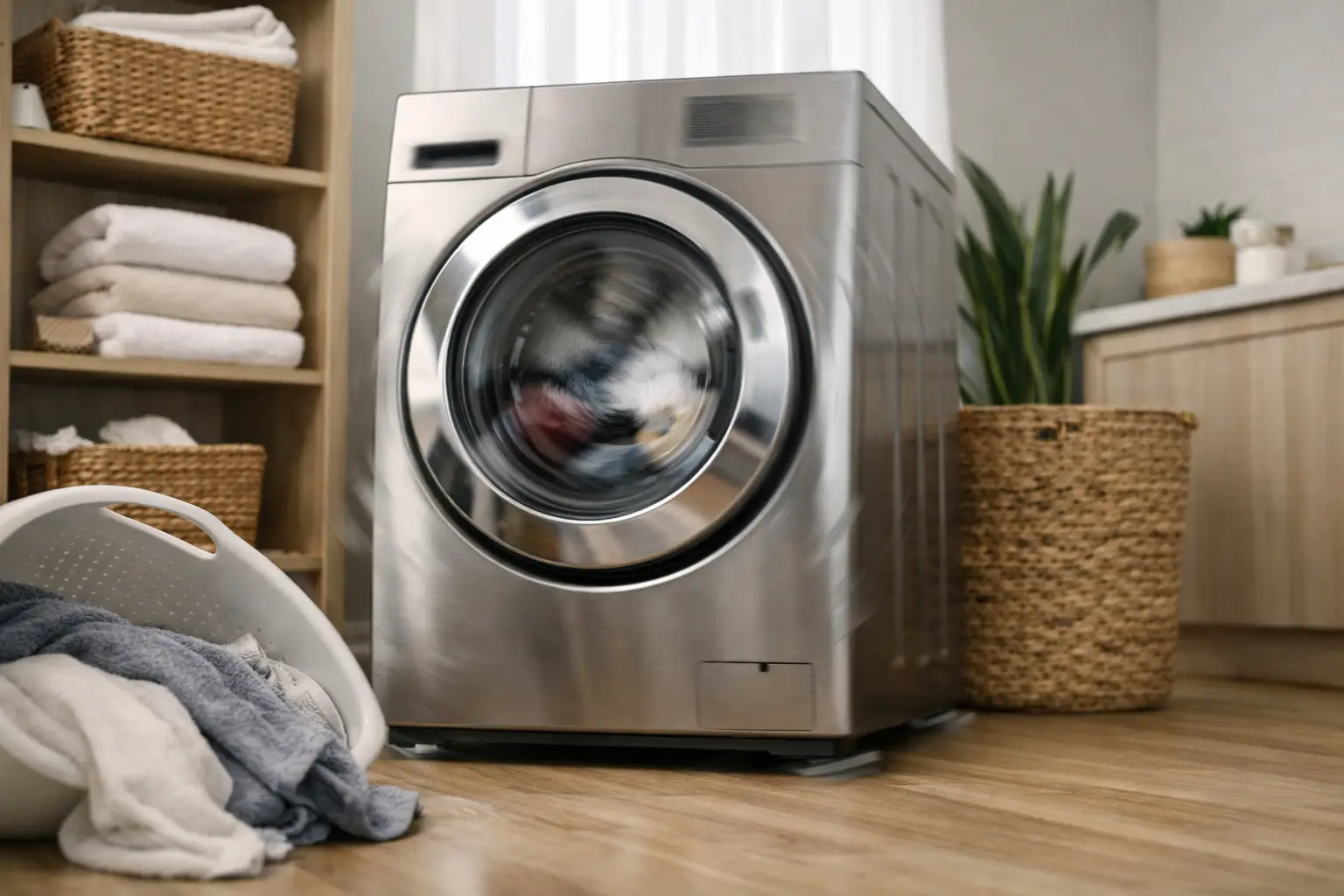
A washer that starts banging against the walls or walking across the floor gets your attention fast. If you are asking, why is my washer shaking, the good news is that some causes are simple. The bad news is that ongoing shaking can damage the washer, the floor, and nearby plumbing if you let it keep happening.
Most washers do vibrate a little during spin. That part is normal. What is not normal is loud thumping, hard side-to-side movement, or a machine that feels unstable every time it runs.
Why is my washer shaking during the spin cycle?
The spin cycle is where problems show up most. The drum is turning fast. If the load is off balance or a part underneath is worn out, the machine starts to shake much more than it should.
Sometimes the cause is outside the washer. Sometimes it is a failed part inside. That is why it helps to look at the easy things first.
An unbalanced load is the most common reason
This is the first thing we check in the home. Heavy items can bunch up on one side of the drum. Bath mats, blankets, hoodies, and jeans are common troublemakers. When all the weight sits on one side, the drum cannot spin evenly.
You may notice the washer tries to spin, stops, then tries again. Or it gets louder as the cycle goes on. If that happens, pause the cycle and spread the items out more evenly. In some cases, taking one heavy item out fixes it.
A very small load can also cause shaking. One pillow or one pair of shoes in the washer is often not enough to balance the drum.
The washer may not be level
A washer needs all four feet to sit firmly on the floor. If one foot is slightly up, the machine rocks. That rocking gets worse during spin.
This happens a lot after a washer has been moved for cleaning, flooring work, or another repair. Even being off by a little can make a big difference.
Try pushing gently on the top corners of the washer. If it rocks, the feet need adjustment. Some floors also have a slight slope. In older buildings and some apartment units, the floor itself can be part of the problem.
Shipping bolts may still be installed
This one matters most if the washer is new or was recently moved from one unit to another. Many front-load washers have shipping bolts on the back. These hold the tub in place during transport.
If those bolts are not removed before use, the washer can shake violently. It may sound harsh right away, even with a normal load. If your washer was just installed, check the manual or look at the back panel before running it again.
Common part problems that make a washer shake
If the load is balanced and the machine is level, the next step is looking at parts that control movement inside the washer.
Worn shock absorbers or suspension rods
Front-load washers usually use shock absorbers. Many top-load washers use suspension rods. Both are there to control the tub during spin.
When these parts wear out, the tub moves too freely. That is when you get strong shaking, banging, or the washer hitting the cabinet from inside. You may also notice it has gotten worse slowly over time.
This is a common repair. It usually does not get better on its own.
Weak or broken springs
Some washers use springs to help hold the tub steady. If one breaks or stretches too much, the tub can lean to one side. That uneven position throws off the spin.
You may hear a hard knock at the start of spin, then heavy vibration after that. A broken spring often needs to be replaced before the washer can be used safely.
Damaged tub bearing
The tub bearing helps the inner basket spin smoothly. When it starts failing, you may hear a roaring or grinding sound along with shaking.
This problem is more serious. The washer may still run for a while, but the noise and movement usually get worse. In some cases, water can reach other parts and lead to bigger damage.
Loose or worn counterweight
Some front-load washers use heavy counterweights to keep the tub stable. If one comes loose or cracks, the machine can shake hard during spin.
This is not something most homeowners should try to fix themselves. The parts are heavy, and getting to them takes disassembly.
Floor problems can make a good washer act bad
Not every shaking washer has a bad part. Sometimes the washer is fine, but the floor under it is not solid enough.
Wood floors can flex. Upstairs laundry areas can bounce more than concrete floors. A washer in a closet or tight corner may also hit the wall or trim if there is very little clearance.
If the machine only shakes badly at high speed and everything else checks out, the floor may be adding to the problem. In condos and older buildings around West Hollywood, we see this from time to time. The fix depends on the setup. Sometimes leveling helps. Sometimes the washer needs a better position. Sometimes there is a real mechanical problem plus a floor issue at the same time.
What you can safely check at home
Before calling for service, there are a few simple things you can check without taking the machine apart.
Start with the load. If you washed one heavy blanket, one bath mat, or a few bulky items, rebalance the load and run a drain and spin cycle again.
Next, check whether the washer rocks when you press on the corners. If it does, the feet may need adjustment. Also make sure the floor under the machine is clean and dry. A foot sitting on debris can make the washer unstable.
If the washer was recently delivered or moved, confirm that any shipping hardware was removed. This is a common setup issue.
Then look around the machine. Make sure it is not touching the dryer, wall, cabinet, or supply lines during spin. Even a small bump against a wall can sound much worse than it is.
Stop there. If the washer still shakes after these checks, the issue is more likely a worn internal part.
When shaking means you should stop using the washer
Some vibration is annoying. Some vibration is a warning sign.
Stop using the washer if it bangs violently, smells hot, leaks water, or moves across the floor. Also stop if you hear grinding metal sounds or if the drum seems loose when you turn it by hand.
Running the washer in that condition can damage the suspension, tub, motor area, drain parts, and flooring. It can also turn a smaller repair into a larger one.
Why it depends on the washer type
Top-load and front-load washers shake for different reasons.
Top-load models often have balance problems from uneven loads, worn suspension rods, or a bad tub support system. Front-load models are more likely to have shock absorber issues, shipping bolt problems, or heavy vibration from a failed bearing or loose counterweight.
The age of the washer matters too. If the shaking started suddenly after a move, think setup first. If it got worse little by little over months, worn parts are more likely.
When it makes sense to call for washer repair
If you have already checked the load and leveling, a service visit can save time. A technician can tell whether the problem is a suspension issue, a bearing problem, a loose basket, or something else underneath.
That matters because the symptom can look the same from the outside. Two washers can both shake hard during spin, but one may need a simple adjustment and the other may need major internal repair.
For homeowners, renters, landlords, and property managers, it is usually better to deal with the problem early. A shaking washer in one unit can quickly become a floor, wall, or leak issue if it keeps running that way.
Vertex Appliance Repair works on in-home washer problems in West Hollywood and nearby neighborhoods. The diagnostic fee is $69, and it is waived if you approve the repair. Completed repairs and installed parts include a 90-day warranty. If you want to schedule service, call 323-747-7098.
A washer should not feel like it is fighting itself every time it spins. If yours is shaking more than usual, trust that change. Small checks can rule out a simple issue, and if they do not, getting it looked at early is usually the cheaper move.
Related articles

Built In Refrigerator Versus Freestanding: Which Fits?

Sub-Zero Error 24 EC — Check the Condenser Before the Defrost Parts