What Freezer Repair Reviews Should Tell You
Freezer repair reviews can reveal who explains the fault, prices the work clearly, and backs parts and labor when your freezer stops freezing properly now.
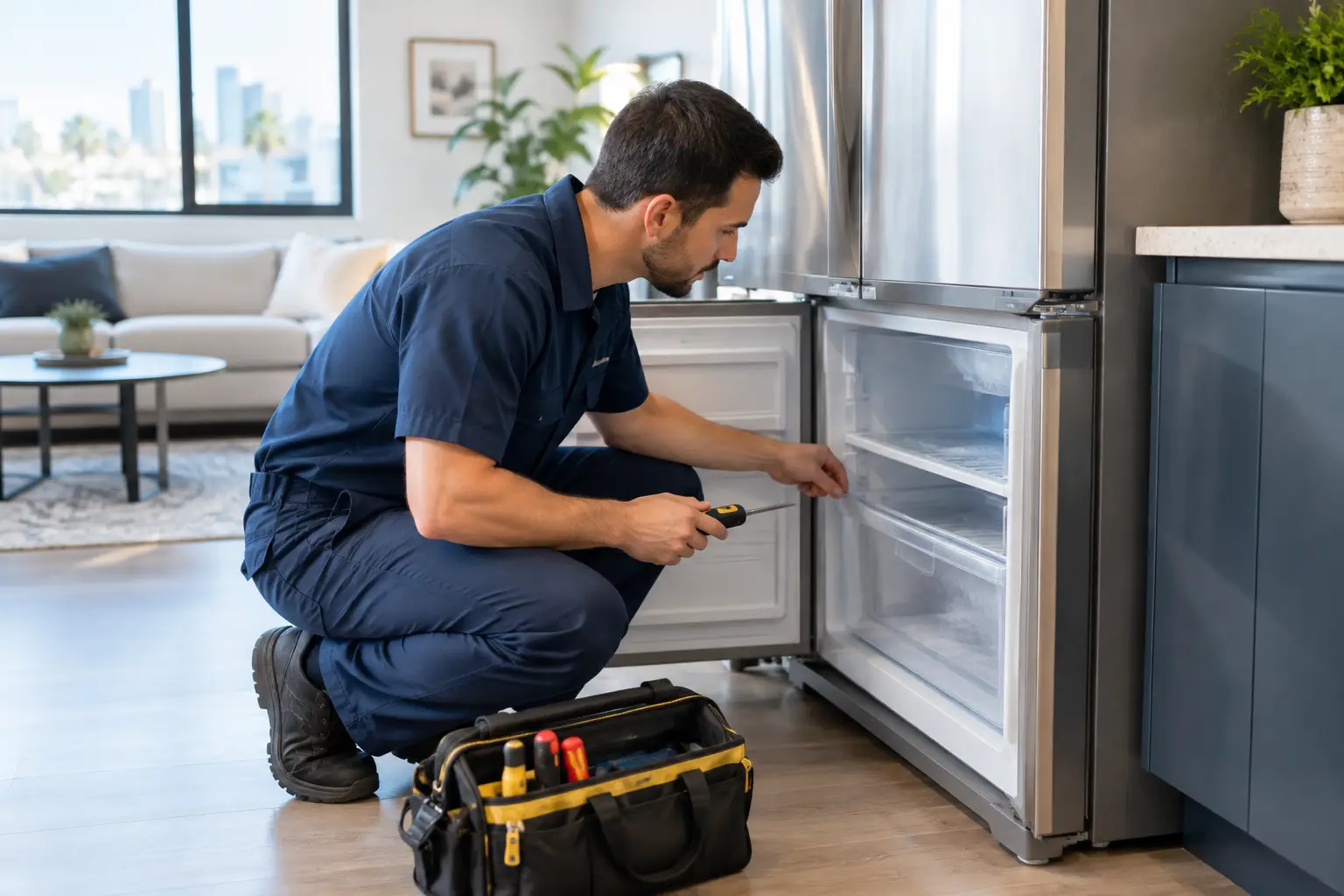
A freezer that runs but will not hold 0°F often has an airflow problem or a failed defrost part. A freezer that is completely dead may have a power supply issue, a start relay problem, or a bad control board. That is why freezer repair reviews matter most when they describe the actual symptom, the diagnosis, and what happened after the repair.
A five-star rating alone does not tell you much. A useful review tells you whether the technician arrived within the scheduled window, explained the problem in plain words, gave a clear price, and fixed the right part the first time. For homeowners, renters, landlords, and property managers in West Hollywood, those details matter when food is thawing and the freezer cannot wait for a vague answer.
What should you look for in freezer repair reviews?
Look for reviews that mention a problem similar to yours. A customer may describe a freezer that is warm while the refrigerator section still feels cool. Another may mention heavy frost on the back panel, a loud clicking sound, water on the floor, or ice cream that stays soft even though the display says 0°F.
Specific symptoms show that the reviewer had a real service visit, not just a general opinion. They also help you see whether the company can diagnose more than one type of freezer failure. An upright freezer, a bottom-freezer refrigerator, and a side-by-side unit can fail in different ways, even when the complaint is simply, “It is not freezing.”
Pay attention to how the review describes communication. A good repair visit should include the cause of the failure, the part needed, the repair price, and whether the part must be ordered. Some repairs can be completed during the visit. Others need a defrost heater, evaporator fan motor, temperature sensor, or control board that is not on the truck.
Reviews should also show how the company handles the diagnostic charge. At Vertex Appliance Repair, the diagnostic fee is $89 and is waived when you approve the repair. That gives you a clear starting point before deciding whether the repair makes sense for the age and condition of the appliance.
Is frost buildup always a bad defrost heater?
What people usually assume is that frost on the back wall means the defrost heater has failed. That assumption is reasonable. The heater is one of the parts that melts frost off the evaporator coils during the defrost cycle.
But it is often incorrect. Frost can also come from a freezer door that does not seal, a torn gasket, a door left slightly open, or food packages blocking the door from closing. Warm room air enters the freezer, turns to moisture, and freezes on the cold surfaces. Replacing a heater will not solve a door seal problem.
What it actually may be is a weak door gasket, a bent hinge, or a cabinet that is not level enough for the door to close on its own. In other cases, the defrost system is the problem, but the failed part could be the defrost thermostat, thermistor, control board, or heater. The evaporator fan may also be blocked by ice, so cold air cannot move through the freezer.
This is where detailed freezer repair reviews are useful. Look for comments that say the technician checked the seal, fan, frost pattern, and defrost circuit instead of guessing from one symptom. A proper diagnosis saves money because it avoids replacing parts that were never bad.
What can you check yourself in five minutes?
Open the freezer door and inspect the gasket all the way around. Close the door on a sheet of paper, then gently pull the paper out. Repeat this at the top, bottom, and both sides. If the paper slides out with almost no resistance in one area, the gasket may not be sealing well.
Also check for a food box, freezer bag, or ice buildup stopping the door from closing. Do not chip ice with a knife or sharp tool. It is easy to puncture an evaporator coil behind the panel, and that turns a simple repair into a larger sealed-system problem.
If the door closes tightly, listen for the evaporator fan. On many models, the fan stops when the door is open. Hold the door switch in with your finger and listen for airflow. No fan sound, or a fan that makes a scraping noise, can point to an iced-up fan blade or a failing fan motor.
Why is my freezer clicking but not starting?
A repeated click every few minutes often points to the compressor start circuit. The start relay gives the compressor a short boost to begin running. If the relay is burned or weak, the compressor may hum briefly, click off, and try again later.
The start relay is not always the answer. A failing compressor can create the same symptom because it draws too much current when it tries to start. A technician may test the compressor windings, check the relay, and measure the current draw before recommending a part.
This difference matters. A relay replacement is usually a straightforward repair. A compressor problem is more involved and may change whether repair is the practical choice. Reviews that mention an honest explanation of repair options are more valuable than reviews that only say, “Fixed fast.”
Why does my freezer feel cold but food is still soft?
A freezer can feel cold near the vents but still be too warm to preserve food safely. The target temperature is 0°F. A simple freezer thermometer gives a better answer than touching the air or checking the outside display.
If the temperature is above 10°F for a long period, the unit may have dirty condenser coils, poor airflow, a weak evaporator fan, a bad temperature sensor, or a sealed-system issue. Condenser coils release heat from the appliance. When they are covered in dust, pet hair, or lint, the compressor has to work harder and the freezer may not reach temperature.
Some newer refrigerators use electronic controls and thermistors instead of a simple mechanical thermostat. A thermistor reads temperature and sends that information to the control board. If it sends the wrong reading, the freezer may stop cooling too soon or run longer than it should.
A good review may not name every part, but it should show that the technician explained why the freezer was warm and what test supported the diagnosis. That is especially helpful for landlords and property managers who need a clear record of the work completed for a tenant.
How do you know if a repair company stands behind the work?
Read for comments about what happened after the repair, not only during the first visit. Some freezer issues are intermittent. A control board may fail after a defrost cycle. A fan motor may work briefly and then stop once it warms up. A company should have a clear warranty policy when installed parts or labor need follow-up.
Vertex Appliance Repair provides a 90-day warranty on labor and installed parts. That does not mean every older freezer is worth repairing. Age, condition, part availability, and the type of failure all matter. But it does give you a clear period of coverage after an approved repair.
If your freezer is warming, move food to another working freezer or a cooler with ice while you arrange service. Then take a photo of any frost pattern, water leak, or error code before it changes. The best review is often written after a technician finds the real fault, explains the repair without pressure, and leaves you with a freezer that holds 0°F again.