




Appliance Repair Beverly Hills: What to Expect
Need appliance repair Beverly Hills? Learn common problems, what to check first, repair costs, and when to call for fast in-home service.
A dead refrigerator at 7 a.m. can ruin your whole day. A washer that will not drain can stop a full weekend of laundry. When people call for appliance repair Beverly Hills, they usually do not want a long explanation. They want to know what is wrong, what it may cost, and how fast the problem can be handled.
That is the right way to look at it. Most appliance problems start small. A strange noise, weak cooling, longer dry times, or water on the floor. If you act early, many repairs stay simpler. If you wait, the same problem can damage other parts.
When appliance repair in Beverly Hills makes sense
Not every broken appliance should be replaced right away. It depends on the age, the part that failed, and how the unit is used. A good repair makes sense when the appliance is otherwise in decent shape and the problem is limited to one main part.
This is common with refrigerators, washers, dryers, dishwashers, ovens, ranges, cooktops, ice makers, and wine coolers. A bad drain pump, faulty heating element, broken door latch, failed igniter, or worn fan motor can often be fixed without replacing the whole unit.
Replacement may make more sense if the machine has multiple problems, severe rust, a sealed system issue on an older refrigerator, or repeated breakdowns. Built-in units are different. In Beverly Hills homes and condos, built-in appliances are common, and replacement can be expensive and slow. In those cases, repair is often worth a closer look.
Common calls for appliance repair Beverly Hills
Refrigerators are one of the most urgent calls. If the fresh food section is warm, the freezer is icing over, or the unit runs all day, there may be a problem with airflow, the defrost system, the fan, or the thermostat control. If you hear clicking and the compressor does not start, the issue may be electrical. If there is water under the fridge, the drain line may be blocked.
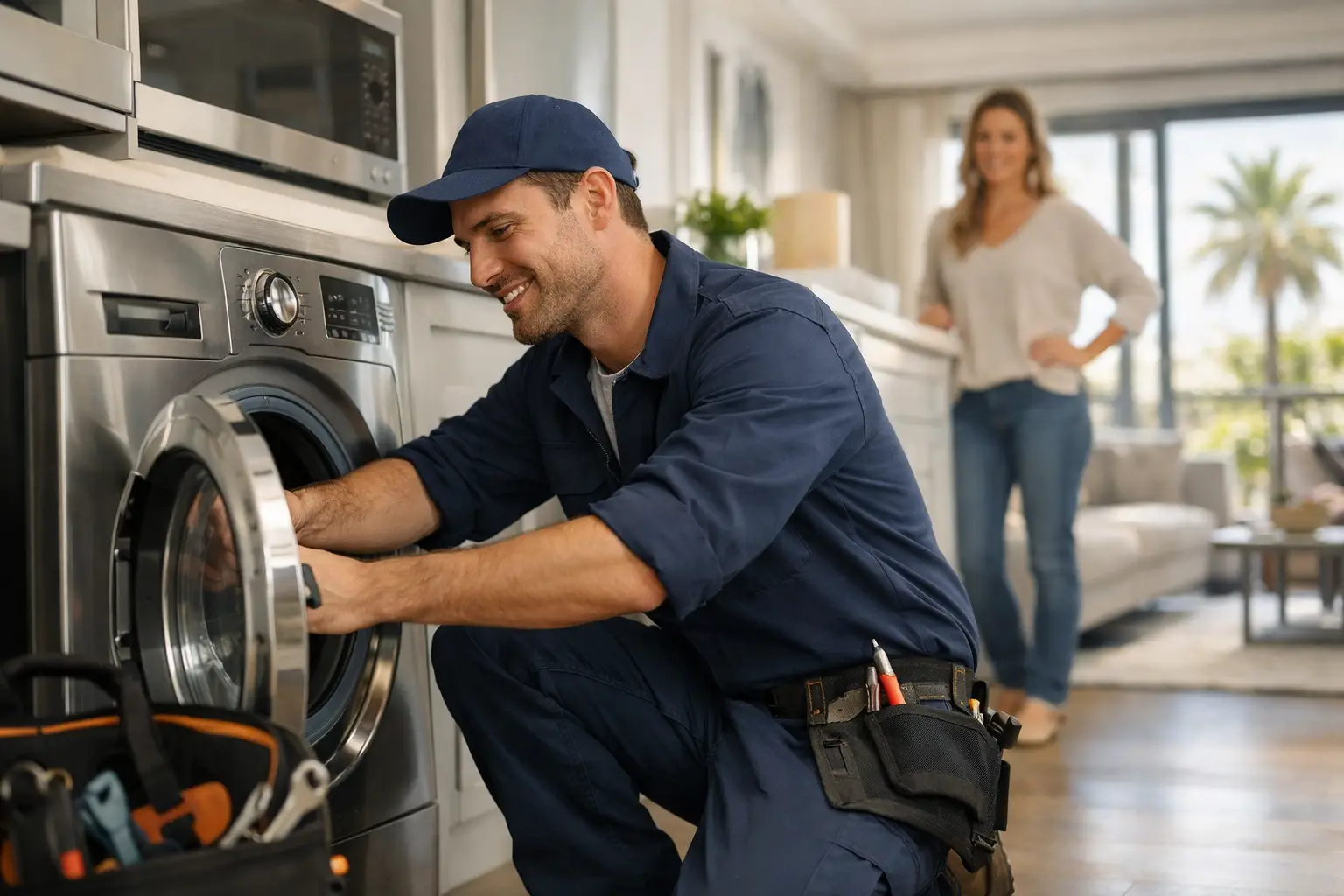
Washers often fail in simple but disruptive ways. They may not spin, not drain, or stop mid-cycle. Sometimes the lid switch fails. Sometimes the drain pump is jammed. Front-load washers can also get door lock problems or drainage issues from debris in the filter.
Dryers usually give warnings before they stop fully. Clothes take too long to dry. The drum turns but there is no heat. Or the machine shuts off early. A failed heating part is common, but airflow problems matter too. A clogged vent can make a dryer run badly and create extra heat stress on parts.
Dishwashers often come in for poor cleaning, standing water, leaks, or no power. Low water fill, a bad drain pump, a worn door seal, or a failed wash motor can all cause similar symptoms. That is why a real diagnosis matters.
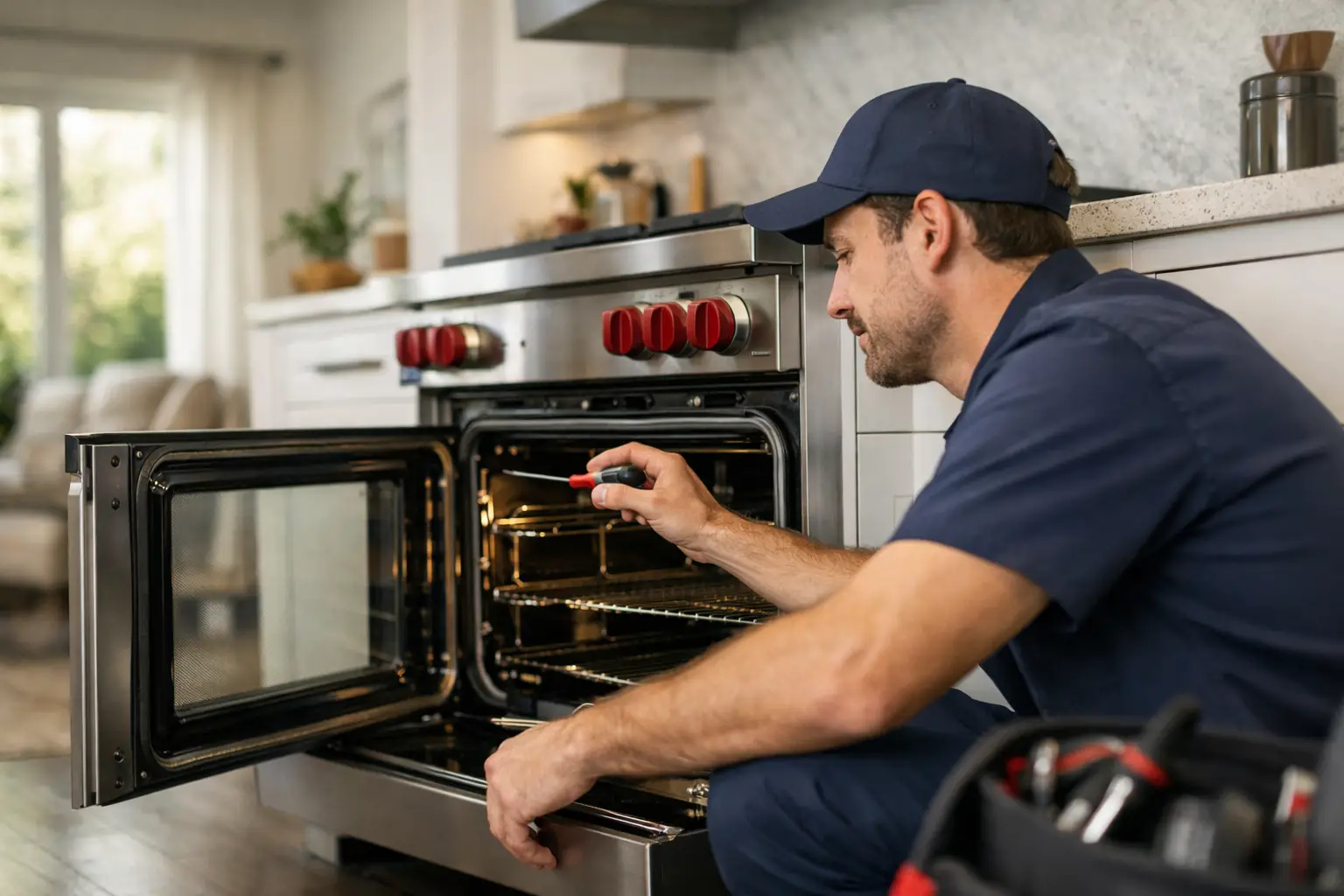
Ovens, ranges, and cooktops also have patterns. Gas burners may click and not light. Electric burners may stop heating evenly. Ovens may run cold, overheat, or take too long to preheat. In many cases, the issue is a failed igniter, sensor, element, or control part.
What you can check before you call
A few basic checks can save time. Make sure the appliance has power. Check the breaker if the unit is completely dead. For refrigerators, look at the temperature settings and make sure the vents inside are not blocked by food. For washers and dishwashers, check that the water supply is on. For dryers, clean the lint screen and make sure the vent is not crushed behind the unit.
Also pay attention to the exact symptom. Does the washer fill but not spin? Does the oven heat a little but not enough? Does the refrigerator cool in the freezer but not the fresh food section? Small details help narrow the problem faster.
Do not take apart gas or high-voltage appliances unless you know what you are doing. A simple check is fine. A full repair is different.
What a service visit should be like
A proper in-home visit should start with listening. The technician should ask what the appliance is doing, when it started, and whether the problem is constant or on and off. Then the unit should be tested, not guessed at.
That matters because many symptoms overlap. A refrigerator that is warm may have a fan problem, a defrost problem, or a control problem. A dryer with no heat may have a failed element, blown fuse, bad thermostat, or poor airflow. Swapping parts without testing wastes time and money.
At Vertex Appliance Repair, the diagnostic fee is $69, and it is waived if you approve the repair. That setup is useful for homeowners, tenants, landlords, and property managers because you get a clear answer first. If the repair moves forward, there is also a 90-day warranty on completed repairs and installed parts.
Cost questions people usually ask
The first question is usually, “How much will it be?” The honest answer is that it depends on the part and the labor. Some repairs are straightforward and quick. Others take more time, disassembly, or special parts.
Built-in refrigerators, wall ovens, stacked laundry units, and high-end cooktops can take longer to access. That affects labor. Part pricing also varies a lot by brand and model. A common drain pump is one thing. A special control board is another.
The main thing a customer should expect is a clear estimate after diagnosis. Not a vague range before the appliance is even tested. Good repair work starts with finding the exact failed part and checking whether anything else caused it.
Repair for rentals, condos, and small multi-unit properties
Beverly Hills service calls are not all the same. A homeowner may need a fast refrigerator repair before food spoils. A renter may need a washer fixed before move-out. A landlord or property manager may be trying to keep a tenant happy and avoid repeat visits.
That changes how the appointment should be handled. Good communication matters. So does showing up prepared to work on common kitchen and laundry units found in condos, apartments, and smaller multi-unit buildings.
Access can also be a factor. Parking, service elevators, building rules, and limited time windows can slow things down if they are not planned for. This is one reason local coverage matters. If a company already works in Beverly Hills, West Hollywood, and nearby neighborhoods, those visits tend to go more smoothly.
Signs you should not wait
Some problems should be handled soon. A refrigerator that is warming up is the obvious one. So is a dishwasher leak under the cabinet, a washer that smells like something is burning, or a dryer that gets hot but does not move air well.
Gas appliance issues also need quick attention. If you smell gas, turn off the appliance if it is safe to do so and stop using it. Electrical burning smells, sparking, repeated breaker trips, and active leaking around powered appliances should also be taken seriously.
Waiting can turn a part failure into water damage, food loss, or damage to boards and motors. Even if the machine still sort of works, that does not mean it is safe to keep using.
Choosing the right local repair company
Most customers are not comparing repair methods. They are comparing trust. Will the company answer the phone, arrive on time, explain the problem clearly, and stand behind the repair?
Those are the basics that matter most. Clear pricing matters. A real diagnosis matters. A warranty matters. So does working on the appliance in your home with as little disruption as possible.
If you are in Beverly Hills or nearby West Hollywood, it helps to work with a local in-home company that handles the main kitchen and laundry appliances people depend on every day. That includes refrigerators, washers, dryers, dishwashers, ovens, ranges, cooktops, ice makers, wine coolers, and built-in units when repair is the practical option.
If your appliance has started acting up, do not wait for a full breakdown to make the decision for you. A quick service visit often gives you the answer you need, and sometimes that is the difference between a repair that is manageable and one that turns into a much bigger headache.
Related articles
Built In Refrigerator Versus Freestanding: Which Fits?
Sub-Zero Error 24 EC — Check the Condenser Before the Defrost Parts