





Built In Refrigerator Repair: What to Check
Built in refrigerator repair starts with the right checks. Learn common problems, what you can inspect, and when to call for service fast.
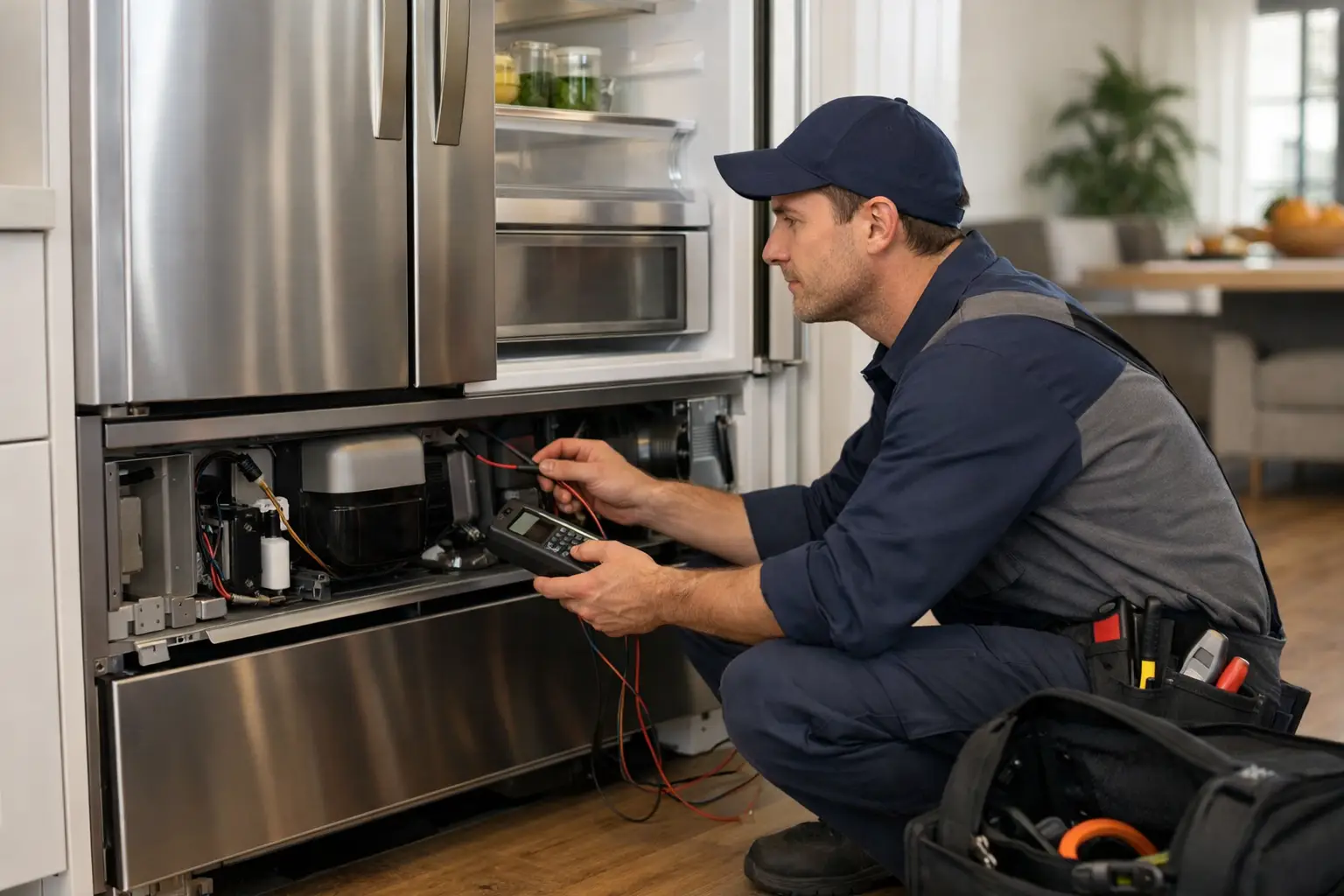
A built-in fridge can fail in a way that looks small at first. Maybe the milk is not cold enough. Maybe the freezer still works, but the fresh food side feels warm. Maybe you hear a fan noise that was not there last week. Built in refrigerator repair is different from a standard fridge repair, because these units run hotter in tight spaces, use custom panels, and can be harder to access.
If you have one in a house, condo, or rental unit, it helps to know what is normal, what is not, and what you can check before you call. Some issues are simple. Others need service right away, especially when food temperature is rising.
Why built-in refrigerator repair is different
A built-in refrigerator is made to fit inside cabinets. It vents in a specific way, often through the front or top. It also has less open space around it than a freestanding model. That matters because airflow is a big part of cooling.
When airflow is blocked, the refrigerator may run too long. It may get warm inside. It may make more noise. It may also wear out parts faster.
Access is another issue. On many built-in units, even a basic part check takes more time because trim, panels, or surrounding cabinet space get in the way. That is one reason repair cost can vary from one model to another.
Common signs something is wrong
The most common complaint is simple. The refrigerator is not cold enough. But that one symptom can come from several different problems.
If the fresh food section is warm, the cause might be a bad evaporator fan. That is the fan that moves cold air. If that fan stops, cold air does not circulate the way it should.
If both sections are warm, the problem may be larger. It could be dirty condenser coils, a bad condenser fan, a compressor issue, a control problem, or a sealed system issue. A sealed system is the part that moves refrigerant through the cooling circuit.
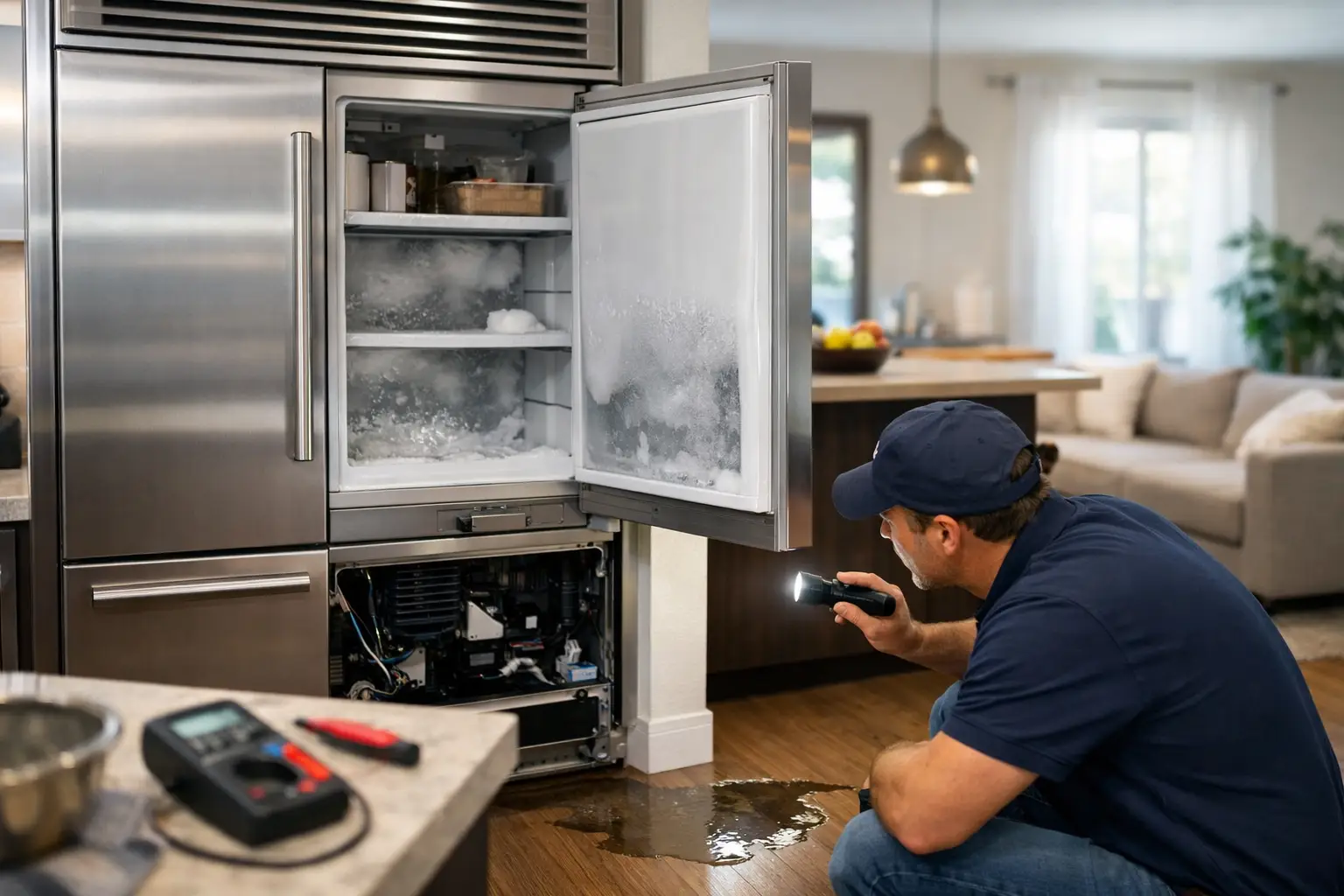
Frost buildup is another sign. If you see heavy frost on the back wall inside the freezer, the unit may have a defrost problem. That can mean a bad heater, a bad sensor, or a control failure. When that happens, air stops moving well and cooling drops.
Water leaking inside or under the unit usually points to a drain problem. A clogged defrost drain can send water into the fridge or onto the floor. On a built-in model, that can also affect nearby cabinets if it is not fixed soon.
Loud noise matters too. A buzzing sound, clicking, fan scraping, or rattling can point to a part that is starting to fail. Some noises are normal. Others are a warning.
What you can check before calling
You do not need to take the fridge apart. But there are a few safe things you can check.
Start with the temperature settings. Make sure they were not changed by accident. If the unit has a display, look for an error code or flashing light.
Then check the doors. A bad door seal lets warm air in. That makes the refrigerator run longer and can cause moisture or frost. If the gasket looks torn, loose, or dirty, that is worth attention.
Look at how full the unit is. An overpacked fridge can block airflow. Food pushed against air vents can cause warm spots. On the other hand, a nearly empty unit can also have trouble holding stable temperature if the door is opened often.
If you can safely reach the grille area, check for dust buildup. Dirty coils are a common cause of poor cooling. Built-in refrigerators need clean airflow paths. Dust and pet hair make the system work harder.
Also pay attention to the room around the appliance. If the kitchen is very hot, or if nearby cabinets trap heat, performance can drop. That does not always mean a broken part, but it can make a weak part fail sooner.
Problems that usually need a technician
If the refrigerator is warm for more than a short time, service is usually the right move. Food safety becomes the bigger issue.
Fan motor problems are common. A technician can tell if a fan has failed, is blocked by ice, or is not getting power. The same goes for defrost parts. On many built-in units, the source of the frost is not obvious until the inside panels are removed.
Control board issues can also cause strange symptoms. The unit may cool one day and not the next. It may stop defrosting. It may show the wrong temperature. These problems are hard to confirm without testing.
Sealed system problems are more serious. If the compressor is weak, if there is a refrigerant leak, or if there is a restriction in the system, the fridge may never reach the right temperature. This kind of repair is not a DIY job.
Ice maker problems can be separate, or they can be part of a bigger cooling issue. If the ice maker stops making ice, fills slowly, or leaks, the cause may be low temperature, a water valve problem, or a blocked line.
Repair or replace depends on the issue
This is where people usually ask the big question. Is it worth fixing?
It depends on the part that failed and the condition of the unit overall. A fan motor, drain issue, door gasket, or defrost part is often worth repairing. These are common service calls.
A sealed system repair is a different conversation. It can be worth doing on a high-end built-in refrigerator, especially when the cabinet opening and panel match are hard to replace. But the cost is usually higher than a basic repair.
Age matters, but not by itself. Some built-in units are worth repairing longer than standard refrigerators because replacement is more involved. You are not just buying a new appliance. You may also be dealing with fit, panel transfer, trim, and installation details.
That is why a proper diagnosis matters first. Guessing is what gets expensive.
What to expect from a service visit
A good service call should be straightforward. The technician should inspect the unit, confirm the symptom, test likely failed parts, and explain what is wrong in plain language.
At Vertex Appliance Repair, the diagnostic fee is $69, and it is waived if you approve the repair. Completed repairs and installed parts are backed by a 90-day warranty. That matters when you are dealing with a built-in refrigerator, because you want the issue fixed once, not looked at three times.
In West Hollywood and nearby neighborhoods like Beverly Hills, Fairfax District, Beverly Grove, and Mid-Wilshire, built-in refrigerators are common in condos, remodeled kitchens, and rental properties. For property managers and landlords, quick diagnosis is often the main concern. The longer a refrigerator stays down, the bigger the disruption for tenants.
How to reduce future problems
You cannot prevent every failure, but you can lower the risk.
Keep the air vents inside the fridge clear. Do not push food tightly against the back wall or side vents. Clean the door gaskets so they seal well. If your model has accessible condenser coils or a front grille, keep that area clean.
Pay attention to small changes. If the motor sounds louder, if frost starts building, or if drinks do not feel as cold, do not wait too long. Built-in refrigerators often give warning signs before a full failure.
This also helps with rental units and multi-unit properties. A tenant may say, “It still sort of works.” That usually means the problem is already moving forward. Early repair is often easier than waiting for a total warm-up.
When you should call right away
If the refrigerator is over 40 degrees, if food is spoiling, if the freezer is softening, or if there is water leaking onto the floor, it is time to schedule service. The same is true if the unit is clicking but not cooling, or if you smell something hot near the compressor area.
Do not keep resetting the power and hoping it clears up. That can hide the pattern and delay the real fix. And do not force panels, pry trim, or try to move a built-in unit out of the cabinet yourself. These appliances are heavy, awkward, and easy to damage.
Built in refrigerator repair is usually about finding the exact failed part, not replacing random parts and hoping one works. If your fridge is acting up, the smartest next step is a clear diagnosis and a repair plan that matches the problem. A small cooling issue today is a much easier fix than a warm refrigerator full of spoiled food tomorrow.
Related articles

Built In Refrigerator Versus Freestanding: Which Fits?
Sub-Zero Error 24 EC — Check the Condenser Before the Defrost Parts