




Dryer Repair Versus Replacement
Dryer repair versus replacement depends on age, cost, safety, and downtime. Learn when to fix a dryer and when replacing it makes more sense.
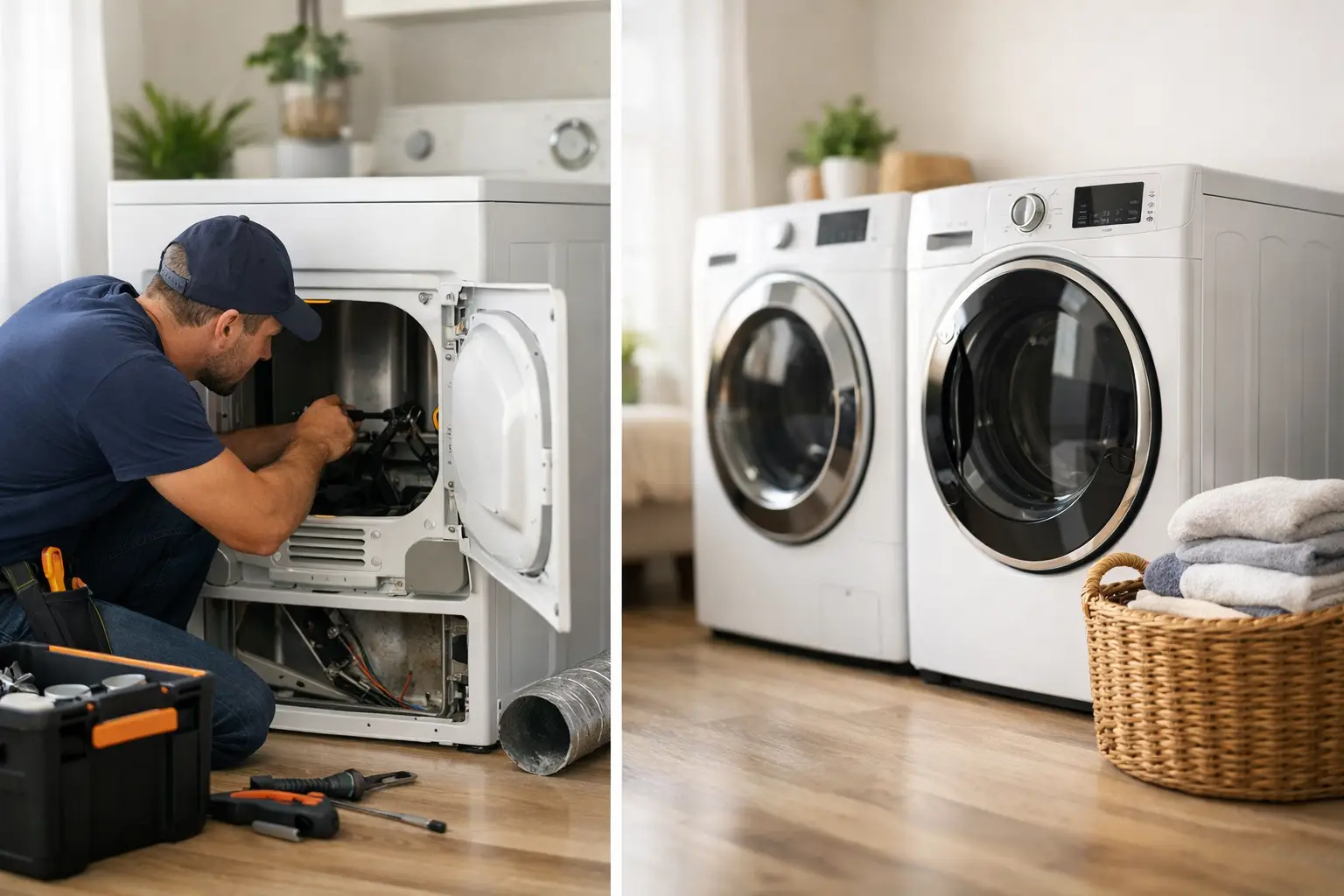
A dryer usually gives you a warning before it quits for good. Clothes take two cycles to dry. The drum turns, but there is no heat. You hear a scraping sound that was not there last week. That is when most people start asking about dryer repair versus replacement.
The right answer depends on the dryer’s age, the problem, the repair cost, and how badly you need it working again. For a homeowner, renter, or property manager, this is not just about the machine. It is about laundry piling up, tenant complaints, and wasted time.
How to think about dryer repair versus replacement
Start with the basics. A dryer is often worth repairing when the problem is small and the rest of the machine is in decent shape. It may not be worth repairing when the unit is older, has multiple issues, or has a safety problem that keeps coming back.
A lot of dryer failures are not major. A bad thermal fuse, worn belt, faulty door switch, or failed heating element can stop the dryer from working right. These are common repairs. In many cases, the machine can be fixed without replacing the whole unit.
But some situations point the other way. If the drum support is badly worn, the motor is failing, the control board is acting up, and the dryer is already near the end of its normal life, replacement may make more sense. Paying for one repair is one thing. Paying for one repair now and another one in three months is different.
Age matters more than people think
Most dryers can last many years if they are used normally and the vent is kept clean. But age still matters. A dryer that is six or seven years old with one clear problem is very different from a dryer that is twelve or fifteen years old and breaking down more often.
Older dryers also bring parts issues. Some parts are easy to get. Some are delayed, discontinued, or expensive. If a part is hard to find, the repair can take longer. That matters if you have a busy household or a tenant waiting on a shared laundry setup.
Age alone does not decide it, but it changes the math. An older dryer can still be worth fixing if it has been reliable and the current repair is simple. A newer dryer can still be a bad repair choice if the damage is severe.
A simple cost rule
Many people use a simple repair rule. If the repair cost is close to half the cost of a new dryer, replacement deserves a serious look. That is not a perfect rule, but it helps.
You also need to think about what you are getting for that repair. If one part fails and the dryer is otherwise solid, repair is often the better value. If you are spending a large amount on a machine that already has rust, noise, weak heat, or electronic problems, replacement may save money over time.
Signs your dryer is a good repair candidate
Some symptoms look worse than they are. A dryer that will not start can have a simple switch or fuse problem. A dryer that tumbles but does not heat may need a heating part, thermostat, or thermal cut-off. A loud dryer may just need rollers, glides, or an idler pulley.
These repairs are common because dryers have wear parts. They work hard. Belts stretch. Rollers wear down. Lint builds up. Electrical parts fail from heat over time.
Repair is often the better choice when the dryer has one main symptom, the cabinet and drum are in good condition, and there is no history of repeated breakdowns. It is also a good choice when the unit matches the washer and the owner wants to keep the set together.
For landlords and property managers, repair also makes sense when it gets the unit back in service fast and the machine still has useful life left. Replacing a dryer may sound simpler, but delivery, haul-away, install fit, and access in tight laundry spaces can all slow things down.
Signs replacement may be the better call
Some dryers tell you they are near the end. The drum feels loose. The motor hums and struggles. There is a burning smell that is not coming from lint buildup alone. The control panel works one day and fails the next. The repair estimate includes several parts, not just one.
Safety is a big reason to stop and think. If a dryer has scorched wires, repeated overheating, or signs of electrical damage, you do not want to keep guessing. The same goes for heavy rust around the base, inside the cabinet, or near areas that support moving parts.
Replacement may also be better if the machine has become unreliable in a way that affects daily life. A dryer that sometimes runs and sometimes does not can be harder to live with than one that fails clearly. Intermittent problems often take more time to track down.
When repeated repairs are the real problem
The biggest red flag is not always the size of one repair. It is the pattern. If you repaired the thermostat last season, then the belt, then the motor switch, and now it still is not drying well, the machine is telling you something.
At that point, replacement is often the practical choice. You stop paying for downtime. You stop wondering what will fail next. That matters in busy homes and rental properties.
What homeowners can check before making the call
You do not need to take the dryer apart. But there are a few simple checks that help.
First, check the venting. Poor airflow is one of the most common dryer problems. If the vent is crushed, packed with lint, or too long with too many turns, the dryer may overheat, dry slowly, or shut down on a safety fuse. A vent issue can make a good dryer look bad.
Second, look at the age and model tag. That helps you know whether the unit is relatively new or near the end of normal use. It also helps when asking about parts.
Third, pay attention to the symptom. Does it run with no heat? Not start at all? Squeal, grind, or thump? Shut off too soon? One clear symptom is easier to diagnose than a vague complaint like not working right.
If you are in West Hollywood and space is tight, also think about access. Stackable units, closet laundry, and built-in layouts can change both repair time and replacement cost. Sometimes the machine itself is not the hard part. Getting it in or out is.
Dryer repair versus replacement for rentals and multi-unit properties
For rental owners and managers, this decision is usually about speed, cost, and repeat calls. A repair that keeps the machine working through the next lease term may be enough. But if the dryer is already causing tenant complaints, replacement can be the cleaner fix.
Shared laundry setups need extra care. One broken dryer can affect multiple units. In that case, reliability matters more than squeezing the last bit of life out of an aging machine.
There is also the question of consistency. If one property has older machines with frequent failures, it may be cheaper to plan replacements instead of waiting for breakdowns one by one. That is easier to budget and easier on tenants.
Why a proper diagnosis matters
The mistake many people make is guessing based on one symptom. No heat does not always mean a dead dryer. Loud noise does not always mean major damage. On the other hand, a dryer that still runs can still have a serious internal issue.
A proper diagnosis tells you what failed, what caused it, and whether anything else looks worn. That is how you decide with confidence. Vertex Appliance Repair charges a $69 diagnostic fee, and it is waived if you approve the repair. Completed repairs and installed parts also carry a 90-day warranty.
That kind of visit is useful because it gives you real numbers. You can compare the repair cost, part availability, and likely life left in the machine. Then the choice becomes clearer.
The better question is not fix or replace
The better question is this: what gives you the least trouble from here forward?
Sometimes that is a repair. A single failed part on a solid dryer is usually worth fixing. Sometimes it is replacement. An older unit with repeat problems can cost more in delays and frustration than the price tag suggests.
If your dryer is acting up, do not wait for a complete breakdown or a safety issue. A clear diagnosis now is usually cheaper and easier than dealing with a dead machine later, especially when laundry cannot wait.
If your dryer is not heating or takes several cycles to dry a load, we can help. See dryer repair in West Hollywood or call 323-747-7098.
Related articles

Built In Refrigerator Versus Freestanding: Which Fits?
Sub-Zero Error 24 EC — Check the Condenser Before the Defrost Parts