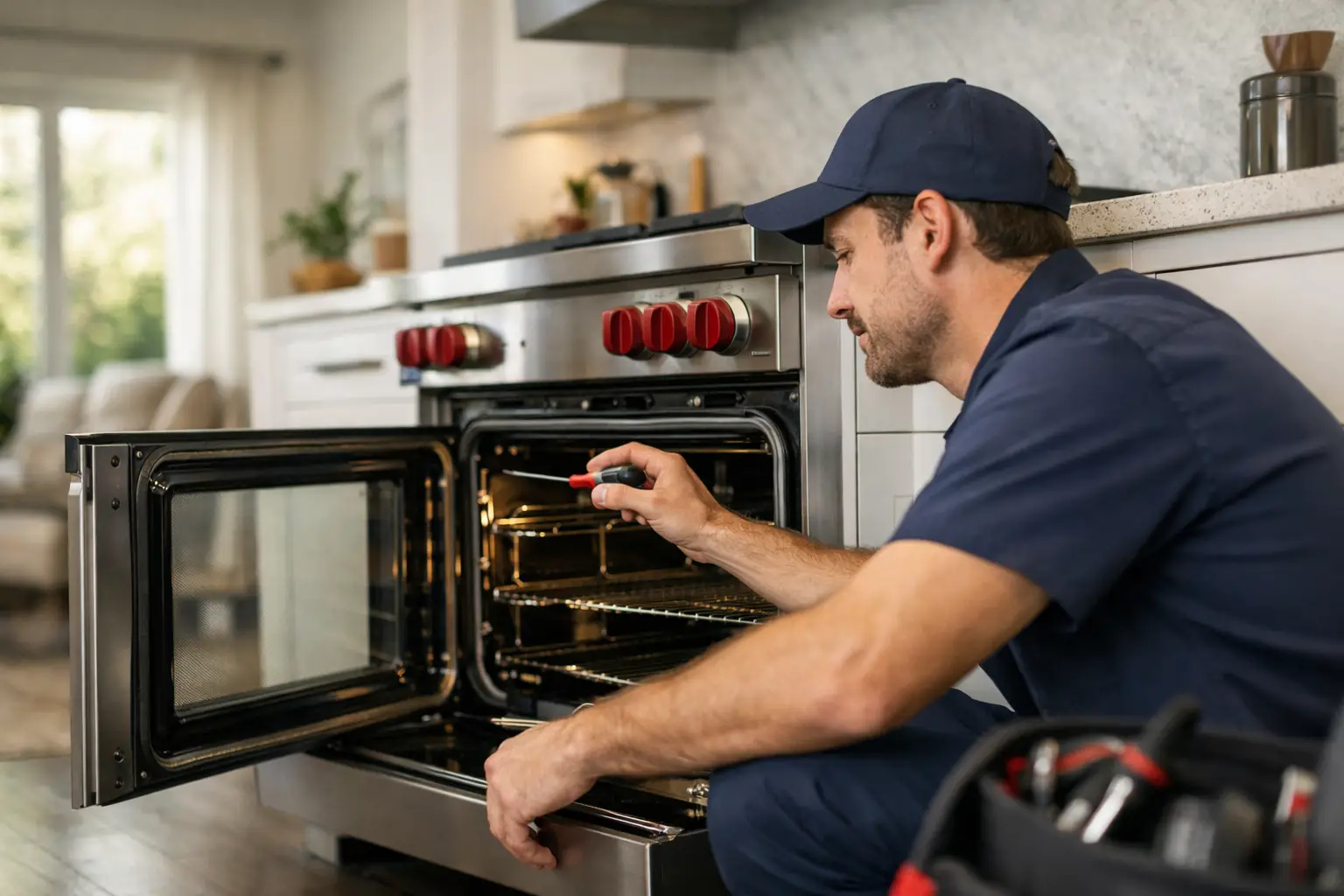





High End Refrigerator Repair Guide
A high end refrigerator repair guide for common problems, safe home checks, repair costs, and when to call for service in West Hollywood.
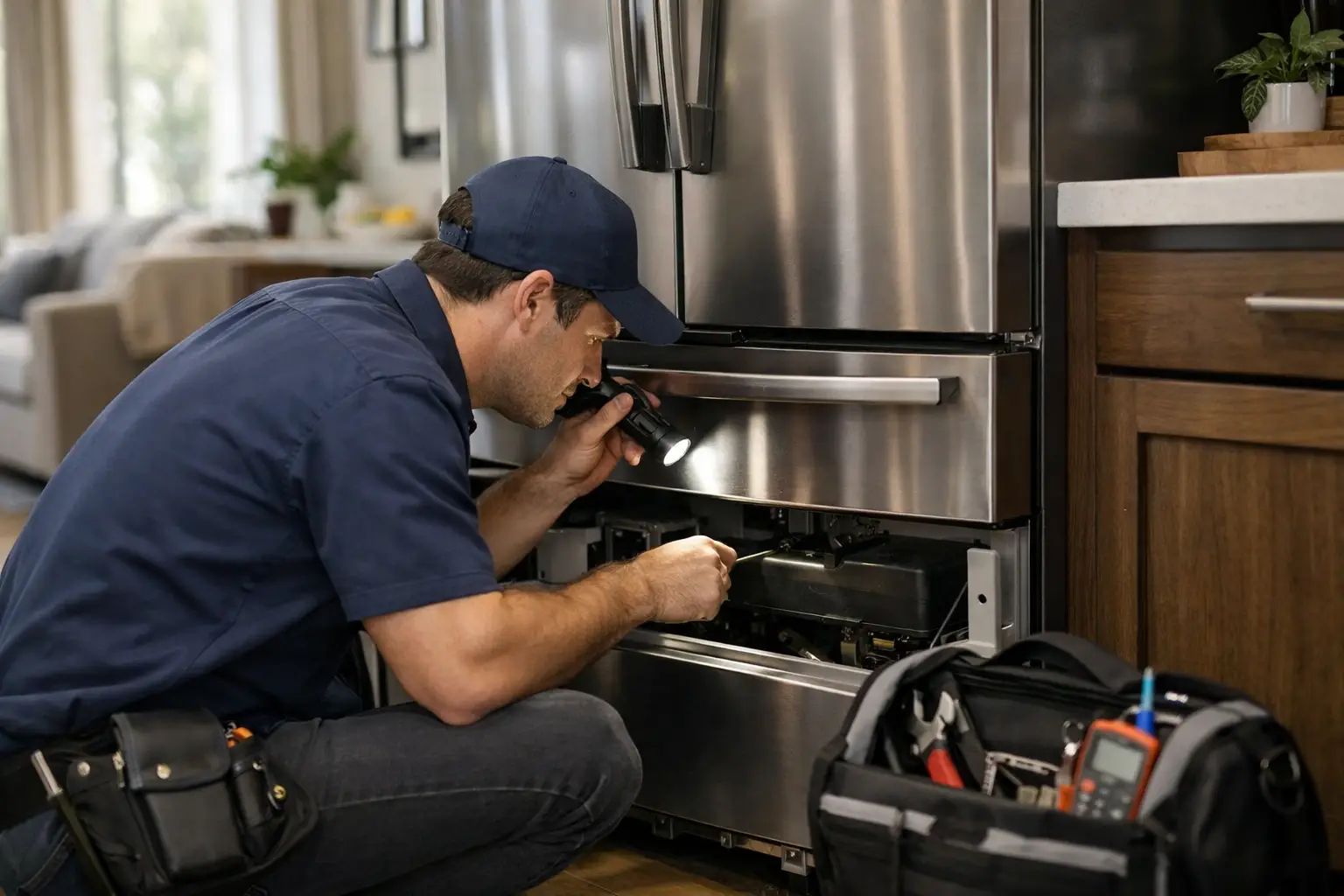
A warm fridge at 7 a.m. is not a small problem. If it is a built-in Sub-Zero, Thermador, Viking, Monogram, or another premium unit, the stakes are higher. Food is at risk. Floors can get damaged. And the repair is usually not a simple do-it-yourself job. This high end refrigerator repair guide will help you spot the problem, avoid common mistakes, and know when it makes sense to call for service.
What makes high-end refrigerator repairs different
A high-end refrigerator is built differently from a basic top-freezer model. Many have dual cooling systems, multiple control boards, custom panels, drawer zones, advanced sensors, and tighter installation spaces. Built-in units also move air differently. They need correct airflow around the cabinet, and they often use parts that are brand-specific.
That matters because the same symptom can have different causes. A warm fresh food section might come from a bad fan motor, a failed thermistor, a control issue, or a sealed system problem. On a standard refrigerator, diagnosis may be simpler. On a premium unit, it takes a careful check.
It also matters because guessing gets expensive fast. Swapping random parts is a common mistake. So is turning a cooling problem into a bigger one by forcing doors, overloading shelves, or unplugging the unit for long periods without a plan.
Start with the symptom, not the part
The best way to use any high end refrigerator repair guide is to look at what the refrigerator is doing, not what you think is broken. Homeowners often say, “It needs Freon” or “The compressor is bad.” Sometimes that is true. Often it is not.
If the refrigerator is warm but the freezer is cold
This usually points to an airflow problem. Cold air may not be moving from one area to another. A failed evaporator fan, a blocked vent, heavy frost behind the back panel, or a bad sensor can all cause this.
First, make sure food boxes are not blocking the inside vents. Then listen for a fan sound when the door closes. Some models stop the fan when the door is open, so you may need to press the door switch. If the fan is silent and the fridge is warming up, that is a strong clue.
If both sections are warm
Now the problem may be more serious. It could still be something simple, like dirty condenser coils or a failed condenser fan. It could also be a control board issue, a compressor relay problem, or a sealed system failure.
Check for power first. Make sure the display is on and the outlet works. Then listen near the compressor area. A clicking sound every few minutes can point to a start problem. A totally silent machine with lights on may point to a control issue.
If there is water on the floor
This is not always a leak from the water line. On many refrigerators, the defrost drain gets blocked. Water then backs up and comes out onto the floor or under the crisper drawers. If the unit has an ice maker or water dispenser, a line issue is still possible, but do not assume that first.
If you see a sheet of ice under the bottom freezer drawer, a clogged drain is very likely. That repair is usually straightforward, but access can be tight on built-in models.
If the unit is making unusual noise
Not every noise means failure. Fans, dampers, ice makers, and compressors all make some sound. What matters is the change. Buzzing, grinding, rattling, or a fan blade hitting ice are all signs worth checking.
A grinding sound from the freezer area often means ice has built up around the evaporator fan. A rattling sound near the bottom rear can be a loose panel or drain pan. A loud repeated click can point to compressor start trouble.
Safe checks a homeowner can do first
You do not need special tools to rule out a few common issues. Keep it simple. If the refrigerator is cooling poorly, check the temperature setting first. It sounds obvious, but settings do get changed by accident.
Next, look at airflow. Do not pack food tightly against the rear wall or internal vents. Premium refrigerators need steady air movement. A full fridge is fine. A blocked fridge is not.
Then check the condenser area if it is accessible. Dust and pet hair on coils can make the unit run hot and long. On some built-ins, access is limited, and cleaning needs care. If you can reach the grille safely, light cleaning helps. If not, do not force panels off.
Also inspect the door gasket. If the seal is torn, dirty, or not closing flat, warm air enters all day long. That causes frost, poor cooling, and extra wear on the system. Wipe the gasket clean and check for gaps.
If the unit has a Sabbath mode, showroom mode, or cooling-off mode, confirm it was not turned on by mistake. This happens more than people think on newer premium models.
What not to do
Do not chip ice with a knife or screwdriver. That can puncture a coil. One small puncture can turn a manageable repair into a major sealed system job.
Do not keep resetting the breaker if it trips again. That can point to an electrical fault.
Do not buy parts based only on an online video. High-end refrigerators often have several versions of the same model family. The wrong part wastes time and money.
And do not ignore early signs. A unit that still cools “a little” can fail fully within hours or days.
When this high end refrigerator repair guide points to a service call
Some problems are worth checking at home. Others need a technician. If the compressor is overheating, if frost is heavy behind interior panels, if the unit is leaking from inside the cabinet, or if temperatures keep rising after basic checks, it is time to schedule service.
Built-in refrigerators also should be handled carefully because access is harder. Pulling one out the wrong way can damage flooring, water lines, trim, or custom panels. The repair itself may be simple, but getting to the failed part is not always simple.
This is also where brand-specific experience matters. A Sub-Zero ice buildup issue may follow a different pattern than a Thermador control fault or a Monogram fan problem. The symptom can look the same from the outside, but the repair path is different.
Repair cost depends on the failure, not just the brand
People often ask for a repair price before diagnosis. That makes sense. Nobody wants surprises. But with premium refrigerators, the cost depends more on the failed part and labor access than on the name on the door.
A drain cleaning or gasket issue is very different from a compressor, evaporator cover, fan motor, or control board replacement. Parts for high-end models also cost more, and some take longer to get. That is one reason diagnosis matters.
At Vertex Appliance Repair, the diagnostic fee is $69, and it is waived if you approve the repair. Completed repairs and installed parts also come with a 90-day warranty. For many homeowners and property managers, that helps reduce the risk of moving forward quickly when the refrigerator is down.
For landlords and property managers, time matters
A broken high-end refrigerator in a rental or condo can turn into a tenant issue fast. Food spoilage, water leaks, and repeated temperature swings are not problems to leave for later. If the appliance is built in, replacement is also not quick. That makes repair the first step in most cases.
It helps to give the technician a clear symptom list. Is the freezer cold but the fridge warm? Is there water under the crisper? Is the display flashing? Did the problem start after a power outage? That kind of detail speeds up diagnosis.
If you are in West Hollywood or nearby areas like Beverly Hills, Hollywood, Beverly Grove, or Hancock Park, local in-home service also matters for access and scheduling. Built-in units are not easy to move, and most people want the problem handled in place with as little disruption as possible.
A few brand patterns technicians see often
There is no single rule for every premium refrigerator, but some patterns come up again and again. Built-in models often suffer from airflow and condenser maintenance issues because the unit runs in a tighter space. Electronic models can act strangely after power fluctuations. Dual-evaporator systems can show uneven cooling that points to sensors or fans, not always the sealed system.
That is why a proper diagnosis is better than guesswork. The brand matters. The installation matters. And the symptom history matters.
Choosing repair over replacement
With a basic refrigerator, replacement sometimes makes more sense. With a high-end built-in unit, replacement can be a much bigger project. Cabinet fit, panel matching, lead times, and installation costs all change the decision.
That does not mean every repair is worth doing. If a sealed system failure is severe and the unit is already aging, the numbers may not work in your favor. But many high-end refrigerators are worth repairing, especially when the problem is caught early.
If your refrigerator is acting up, treat it like an early warning, not a minor inconvenience. A careful check now can save food, flooring, and a much larger repair later.
Related articles
Built In Refrigerator Versus Freestanding: Which Fits?
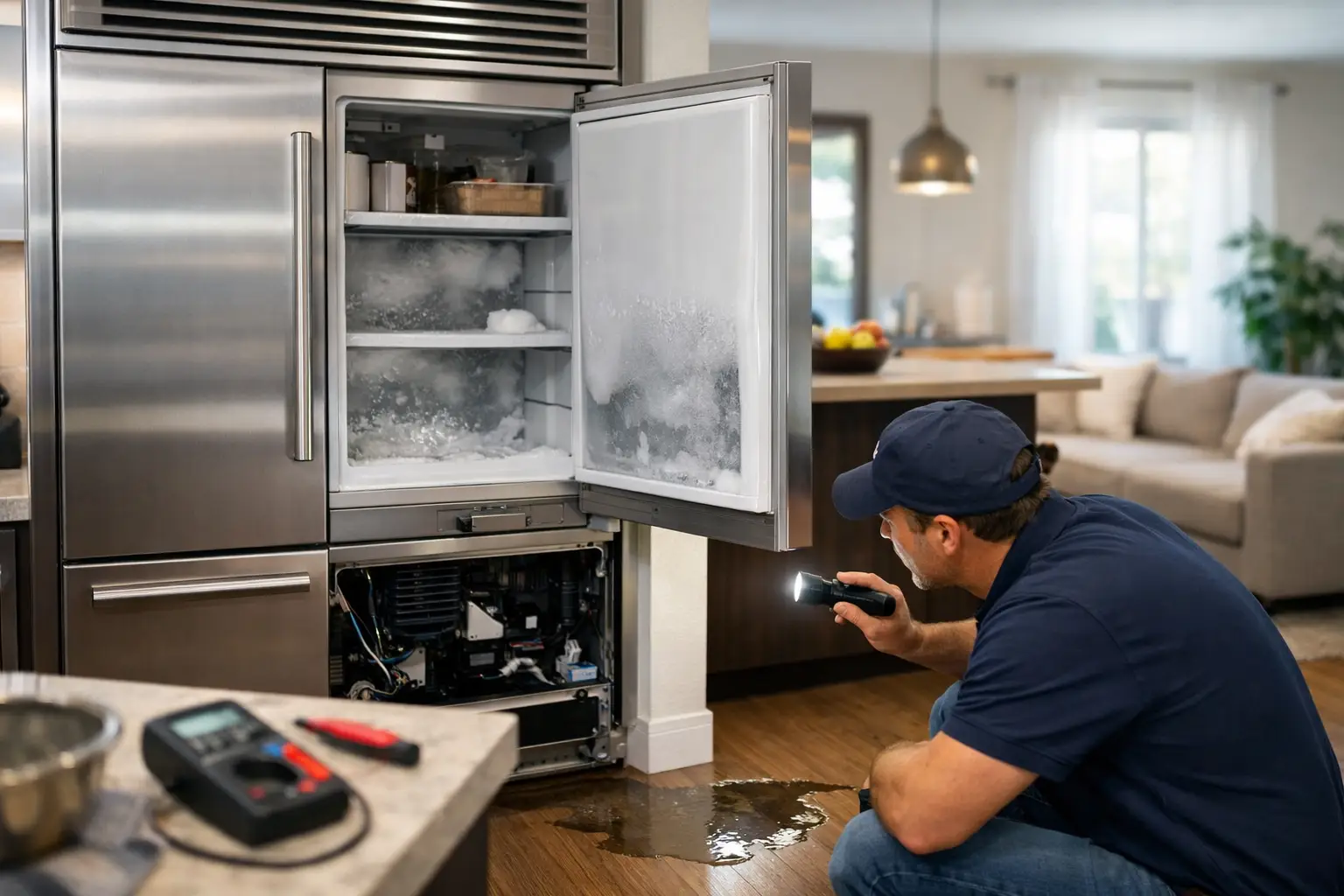
Sub-Zero Error 24 EC — Check the Condenser Before the Defrost Parts