Landlord Refrigerator Repair Checklist for Rentals
Use this landlord refrigerator repair checklist to document faults, protect food, check causes now, and know when to schedule a repair in West Hollywood.
Most rental refrigerator problems come from blocked airflow, dirty condenser coils, or a door that is not sealing. The next common cause is a failed fan, start relay, or defrost part that keeps the unit from holding temperature.
This landlord refrigerator repair checklist helps you respond without guessing. It also gives you clear notes for the tenant, your maintenance file, and the repair visit. A refrigerator can look like it is running normally while food is warming in the fresh-food section, so the temperature and timing matter more than the sound of the compressor.
What should a landlord do first when a refrigerator fails?
Ask the tenant three questions right away: Is the refrigerator cooling at all? Is the freezer still cold? When did they first notice the problem? Have them move milk, meat, leftovers, and other perishable food to another working refrigerator or an ice chest if the refrigerator is above 40°F for more than two hours.
Have the tenant take photos of the display panel, the inside shelves, and any water on the floor. If there is a temperature display, record it. If there is no display, place a refrigerator thermometer in a glass of water near the middle shelf. A normal refrigerator section should usually stay close to 37°F. The freezer should be around 0°F.
Do not tell a tenant to keep opening the doors to check whether it feels cold. Each opening adds warm air and can make a weak cooling problem look worse. Ask them to keep both doors shut except when moving food.
What can the tenant check in five minutes?
Have them check the door gasket. They should close the refrigerator door on a sheet of paper, then pull the paper straight out. Repeat this at several points around the door. If the paper slides out with almost no resistance, the gasket may be dirty, loose, torn, or not making full contact.
They can wipe the gasket and the door frame with warm water and a mild dish soap. A folded gasket can sometimes be warmed gently with a hair dryer on low, but do not ask a tenant to take apart the door. Also check for a large box, shelf, or food container blocking the door from closing.
This is a useful five-minute check because a bad door seal causes frost, long run times, warm food, and high energy use. It can also make tenants think the whole refrigerator has failed when the compressor and controls are still working.
Why is the refrigerator warm but the freezer still cold?
This symptom usually points to an airflow problem. The freezer creates the cold air in many top-freezer and side-by-side models. A fan then pushes that air into the refrigerator section through vents and a damper door.
Look for frost on the freezer back wall. A thick layer of white frost can mean the defrost system is not clearing the evaporator coil. The likely parts are the defrost heater, defrost thermostat, thermistor, or electronic control board. When the coil is packed in frost, air cannot move through it.
If there is no frost but the refrigerator section is warm, the evaporator fan motor may not be running. With the freezer door open, hold down the door switch and listen for the fan. A fan should run on many models after the switch is pressed. Do not put fingers near the fan blade.
A stuck air damper can cause the same complaint. The freezer may be normal, but the fresh-food section gets little or no cold air. This needs inspection because the damper, fan, sensor, or control board can all be involved.
Is a dirty condenser coil really the problem?
What people usually assume: the refrigerator is warm because the condenser coils are dirty.
That assumption is reasonable. Dust, pet hair, and lint can block heat from leaving the system. This makes the compressor run longer and can raise temperatures, especially in a tight kitchen or a warm West Hollywood apartment.
Why it is often incorrect: dirty coils alone do not usually explain a freezer that has stopped freezing, a completely silent compressor, heavy frost on the freezer wall, or a refrigerator that trips the breaker. Cleaning the coils will not repair a failed start relay, bad compressor, failed fan motor, or sealed-system leak.
What it actually is in many service calls: a failed evaporator fan, defrost fault, or start relay. The start relay is the small electrical part that helps the compressor begin running. When it fails, you may hear a click every few minutes, followed by silence. The compressor may feel very hot because it is trying to start but cannot.
Clean coils are still worth addressing. If the coils are accessible, unplug the refrigerator and use a vacuum with a brush attachment around the lower front grille or rear access area. Do not bend the coil fins or pull on wires. If the coils are not accessible, leave the panel in place and schedule service.
What should be documented before a repair visit?
Good notes save time, especially in a multi-unit building. Record the refrigerator brand, model number, serial number, and the tenant’s best estimate of when the issue started. The model tag is often inside the fresh-food section, on a side wall, or behind the lower crisper drawer.
Write down whether the lights work, whether the display shows an error code, and whether the compressor is running. Note sounds such as clicking, humming, grinding, or a fan hitting ice. Include whether the ice maker stopped working, whether the unit is leaking, and whether there is frost inside the freezer.
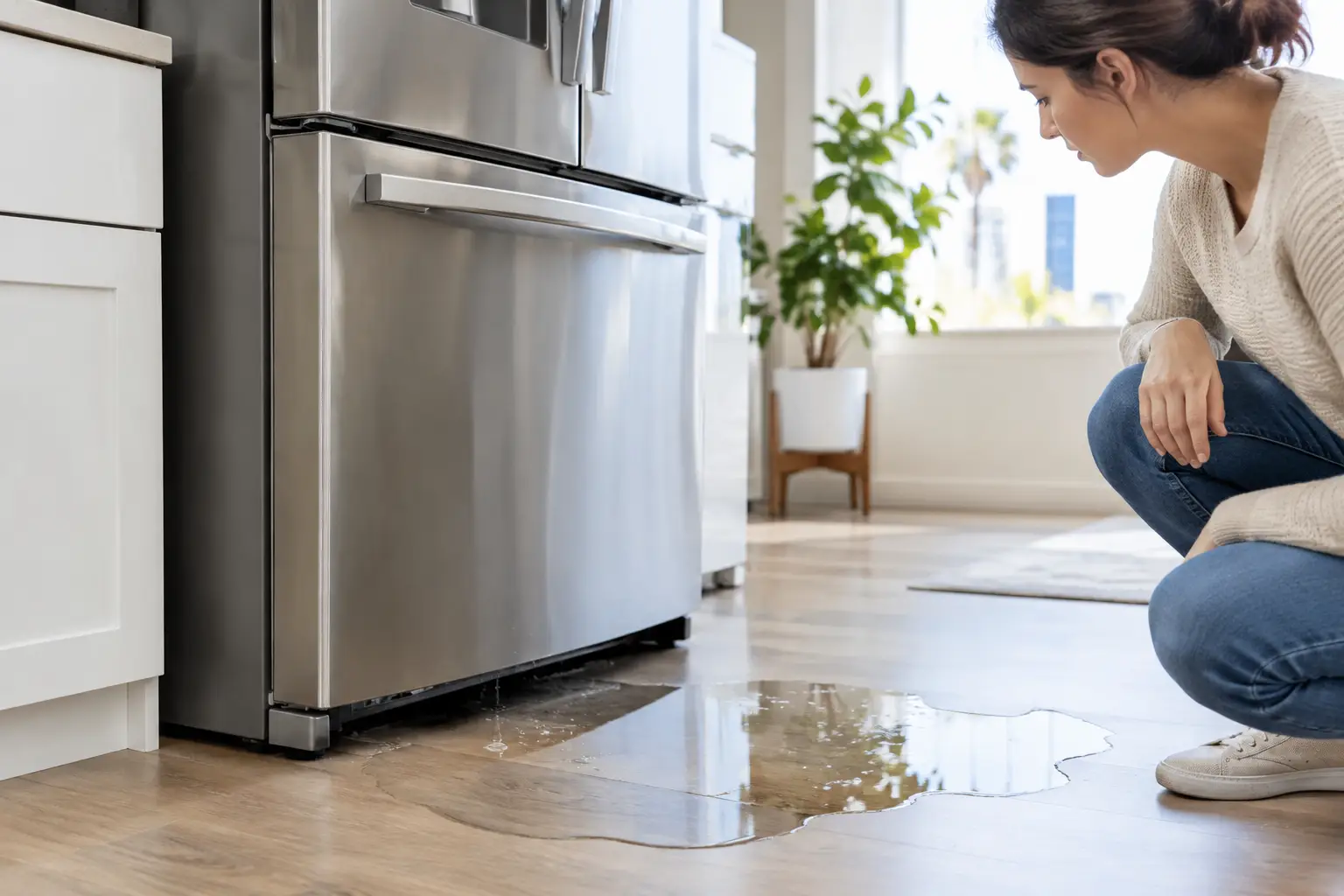
For a leak, identify the location. Water under the front may come from a clogged defrost drain, an overfilled ice maker, or a loose water filter. Water behind the unit can come from the supply line or inlet valve. Turn off the refrigerator water supply if the leak is active, then dry the floor to reduce damage to flooring or cabinets.
Avoid moving the refrigerator yourself unless there is a clear leak behind it. Pulling a loaded refrigerator forward can damage vinyl flooring, kink a water line, or strain the power cord.
When should a landlord schedule refrigerator repair?
Schedule service when the refrigerator cannot stay near 37°F, the freezer is thawing, the compressor clicks without starting, or frost returns after a full defrost. Also schedule service if the refrigerator has a burning smell, repeated breaker trips, a water leak, or a display error code.
A full manual defrost can temporarily restore cooling when the evaporator is frozen over. It does not fix the reason it froze. If the refrigerator cools for a few days and then warms again, the defrost system likely still has a failed part.
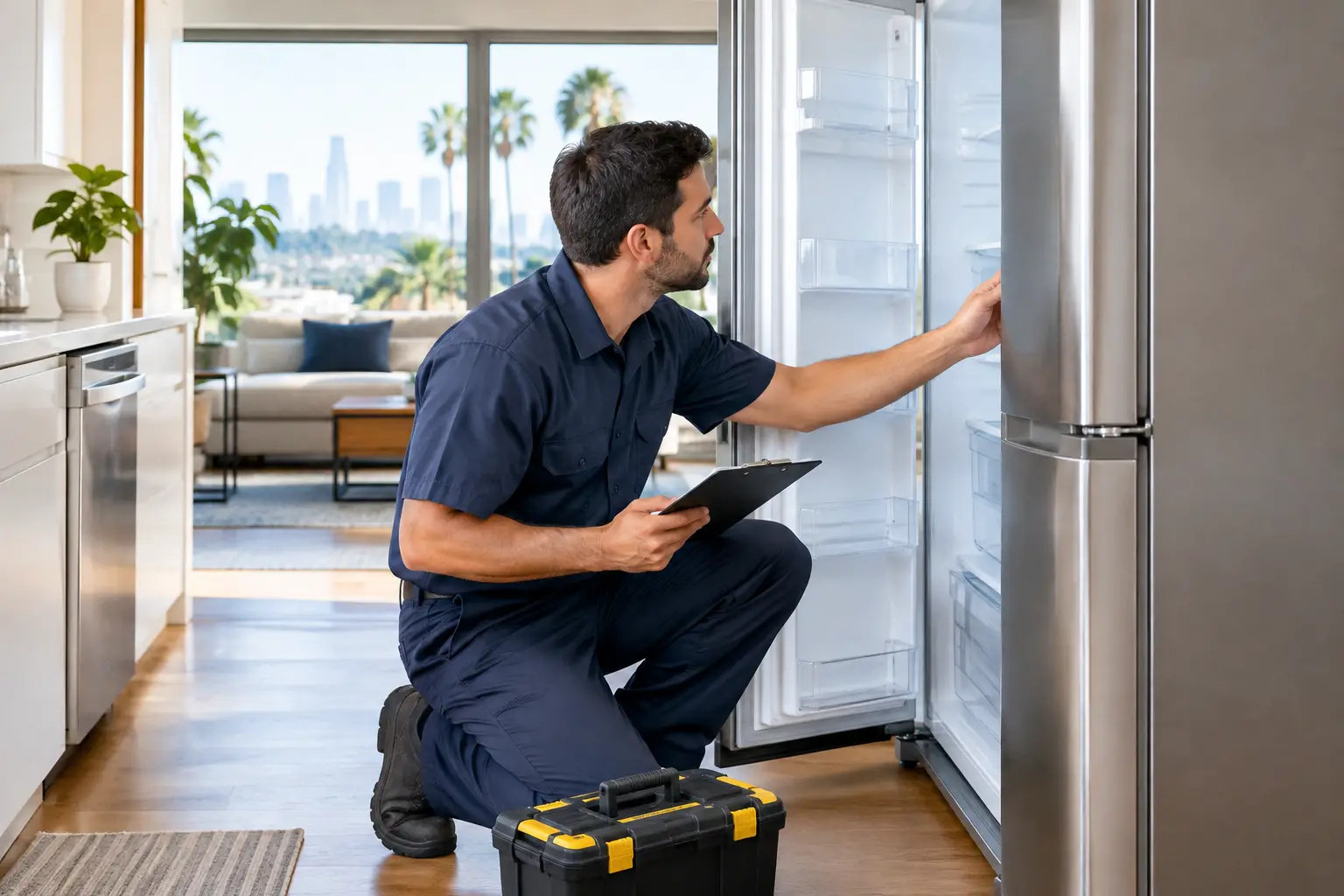
For rentals in West Hollywood, fast documentation helps avoid a dispute over when the problem was reported and what steps were taken. It also helps the technician arrive with the right direction in mind. Vertex Appliance Repair charges an $89 diagnostic fee, and that fee is waived when the repair is approved. Installed parts and labor are covered for 90 days.
Should you repair or replace the refrigerator?
It depends on the age, condition, and diagnosis. A door gasket, fan motor, defrost heater, thermostat, water inlet valve, or start relay repair can make sense when the cabinet is in good condition and the refrigerator has otherwise been reliable.
A sealed-system problem is different. This may involve a refrigerant leak, restriction, or weak compressor. These repairs can be more involved, and the value depends on the model, age, and part availability. A technician should confirm the fault before you decide to replace the unit.
Keep the tenant updated with a simple timeline: food safety steps first, diagnosis next, then a repair decision once the failed part is confirmed. That gives everyone a clear plan and keeps a refrigerator problem from turning into a longer vacancy or tenant complaint.