What Appliance Repair Reviews Really Tell You
Read appliance repair reviews the smart way. Learn which details show clear pricing, sound diagnosis, timely service, and repairs that last in West Hollywood.

Most bad appliance repair reviews begin with a missed diagnosis or unclear pricing. The appliance may have had a simple failed part, but the visit went poorly because nobody explained the problem, the cost, or the next step.
When you read appliance repair reviews, look past the star rating first. A five-star review with no details can be helpful, but a review that explains the symptom, the repair, the timing, and the final cost tells you much more. That is what matters when a refrigerator stops cooling or a tenant’s dryer will not start.
What should appliance repair reviews tell you?
A useful review describes a real problem. It may say the refrigerator was warm, the washer would not drain, or the oven would not heat. Then it should explain what happened during the visit. Did the technician inspect the appliance? Did they identify a failed drain pump, thermal fuse, door lock switch, igniter, or start relay? Did they explain whether a part had to be ordered?
Reviews are also useful when they mention communication. A repair can require a return visit if the needed part is not on the truck. That is normal. The problem is not always a second visit. The problem is a customer being left without an update, a time window, or a clear answer about the part.
For homeowners and property managers in West Hollywood, the most helpful comments often mention arrival timing, the diagnostic process, and whether the resident understood the repair before work started. Those details are more useful than general phrases like “great service.”
Is a five-star rating enough to choose a repair company?
Not by itself. A high rating is a good starting point, but read a mix of recent reviews. Look for patterns in the comments. If several people mention clear explanations, clean work areas, and repairs that held up after the visit, that is meaningful.
Also read the lower ratings. One unhappy review does not always mean poor service. A customer may have been disappointed that a control board was expensive or that an older appliance was not worth repairing. Those are real frustrations, but they do not always mean the diagnosis was wrong.
Pay attention to how the company responds when a review describes a problem. A good response should be specific and respectful. It should not argue with the customer or make vague promises. In appliance repair, details matter. A refrigerator compressor issue, for example, is not the same as dirty condenser coils or a failed evaporator fan motor.
Why do repair reviews mention a diagnostic fee?
The diagnostic visit is where the real work begins. A technician has to test the appliance before giving a repair price. On a dryer, that may include checking voltage at the terminal block, continuity through the thermal fuse, and the door switch. On a gas oven, it may mean checking whether the igniter is drawing enough current to open the gas valve.
A clear review may say what the diagnostic fee was and whether it was applied to the approved repair. At Vertex Appliance Repair, the diagnostic fee is $89 and is waived when the customer approves the repair. That should be explained before the visit, not added as a surprise after testing.
The cheapest service call is not always the lowest total cost. A low initial fee can become expensive if the technician guesses at the problem, replaces parts without testing, or cannot explain what the repair includes. Ask whether labor and installed parts have warranty coverage. Vertex provides a 90-day warranty on labor and installed parts.
What do people usually assume when an appliance fails?
People usually assume the biggest and most expensive part has failed. That assumption is reasonable because the symptom can look serious. A refrigerator that is not cooling may seem to have a bad compressor. A dryer that runs but does not dry may seem to need a heating element.
That is often incorrect. A warm refrigerator may have blocked airflow, dirty condenser coils, a failed condenser fan, or ice buildup around the evaporator. A dryer with no heat may have a blown thermal fuse caused by restricted venting. Replacing the obvious major part without checking these items first can waste money.
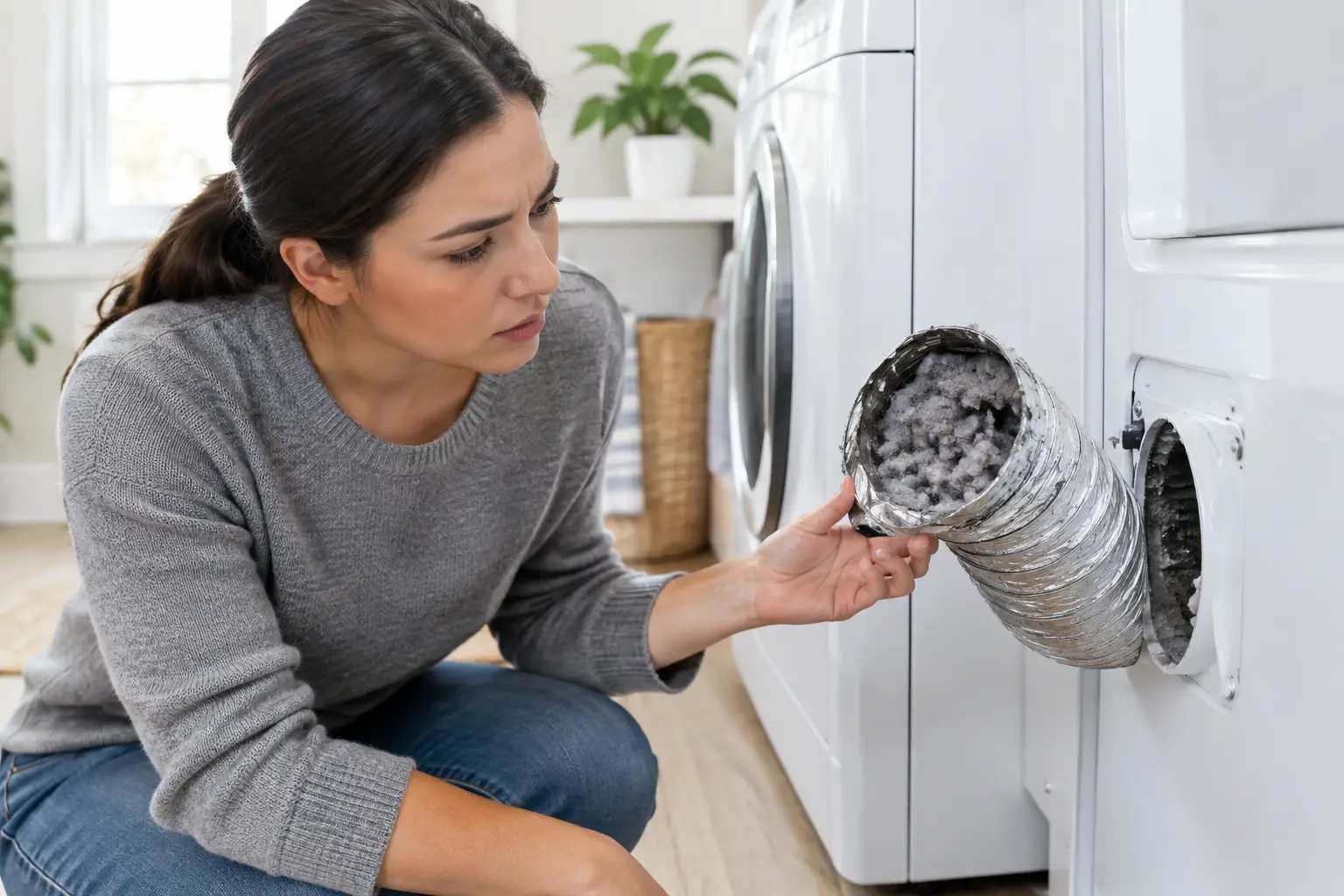
What it actually is depends on the test results. For a refrigerator, a technician may check fan operation, temperature readings, frost pattern, and compressor start components. For a dryer, they may test the heating circuit and inspect the exhaust path. If clothes take two or three cycles to dry, the issue may be lint buildup in the vent rather than the dryer itself. In that case, dryer vent cleaning is the right service, with pricing starting at $149.
This is why the best appliance repair reviews often mention diagnosis, not just speed. Fast matters, especially when food is warming in a refrigerator. But fast without testing can lead to the wrong repair.
What can I check myself in five minutes?
If your refrigerator is warm, pull it out far enough to look at the condenser coil area near the bottom or back. Unplug it first. Use a flashlight and check for heavy dust, pet hair, or paper caught around the coil and fan area. Do not bend the coil fins or reach into the fan blade.
If the area is packed with dust, clean the loose buildup gently with a vacuum brush attachment. Plug the refrigerator back in and listen for the fan. This will not fix every cooling issue, but it can improve airflow and gives useful information for the service visit.
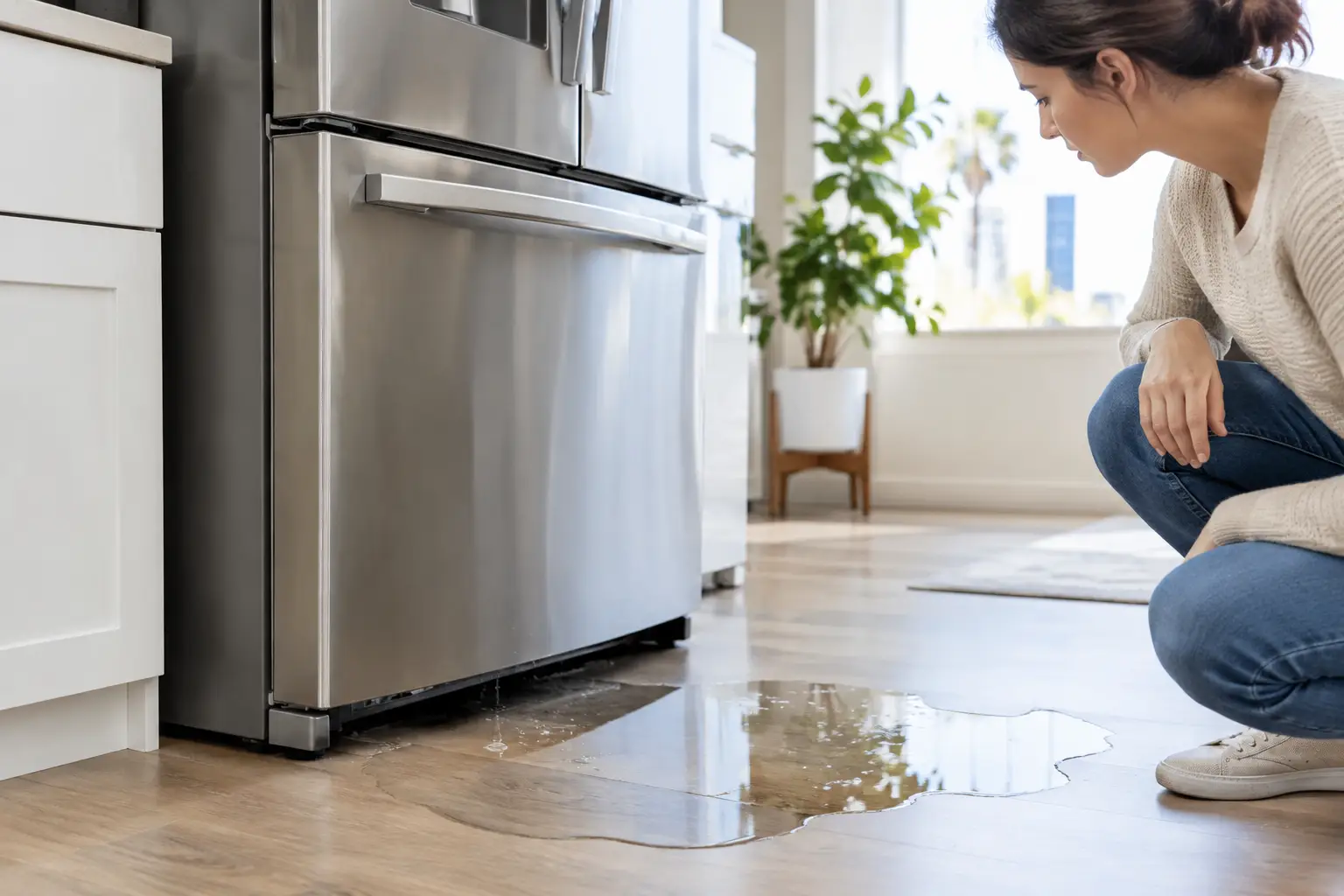
Do not keep opening the refrigerator door to check whether it is cold. Keep the doors closed as much as possible and move perishable food if the temperature is rising. A refrigerator that is still running but getting warmer needs attention sooner than later. For problems like this, a local refrigerator repair visit can identify whether the issue is airflow, a fan motor, defrost failure, or a start relay.
Which review details matter for renters and property managers?
Renters should look for reviews that mention respectful access, clear updates, and an explanation they can share with the owner or manager. A tenant may notice a washer leaking, but the landlord often has to approve the repair. Good communication prevents delays.
Property managers should look for notes about organized scheduling and accurate repair descriptions. “Washer fixed” is not enough for a maintenance record. A better invoice identifies the symptom, the failed part, and the work completed. For example, it may state that the washer would not spin because the door lock switch failed, or that the dishwasher leaked because of a damaged door gasket.
Condo owners should also ask about building access rules before scheduling. In West Hollywood, parking, gate codes, elevator reservations, and resident access can affect the appointment. Giving those details early helps avoid a missed visit.
When is a repair review a warning sign?
Be careful when reviews repeatedly say that the final bill was very different from the quoted price, the technician did not explain the repair, or the same symptom returned immediately with no follow-up. One complaint can happen. A repeated pattern is different.
Another warning sign is a review that promises every repair can be completed right away. Some repairs can be finished on the first visit. Others need a specific control board, fan motor, gasket, or igniter ordered for the model. Honest service means giving you the likely timing instead of promising something that cannot be done.
A repair decision also depends on appliance age, condition, and part cost. If an oven needs an igniter, repair usually makes sense. If a refrigerator has a major sealed-system problem and several other worn parts, replacement may be the better choice. A good technician should explain both options plainly.
Before you book, read a few detailed appliance repair reviews and write down the symptom you see. Note any error code, leak location, unusual noise, or change in performance. That small amount of information helps the visit start with a clearer picture and helps you choose service based on more than a star rating.