




What Causes Dryer Not Heating?
Learn what causes dryer not heating, from power and vent issues to bad parts, plus what you can safely check before booking a repair.
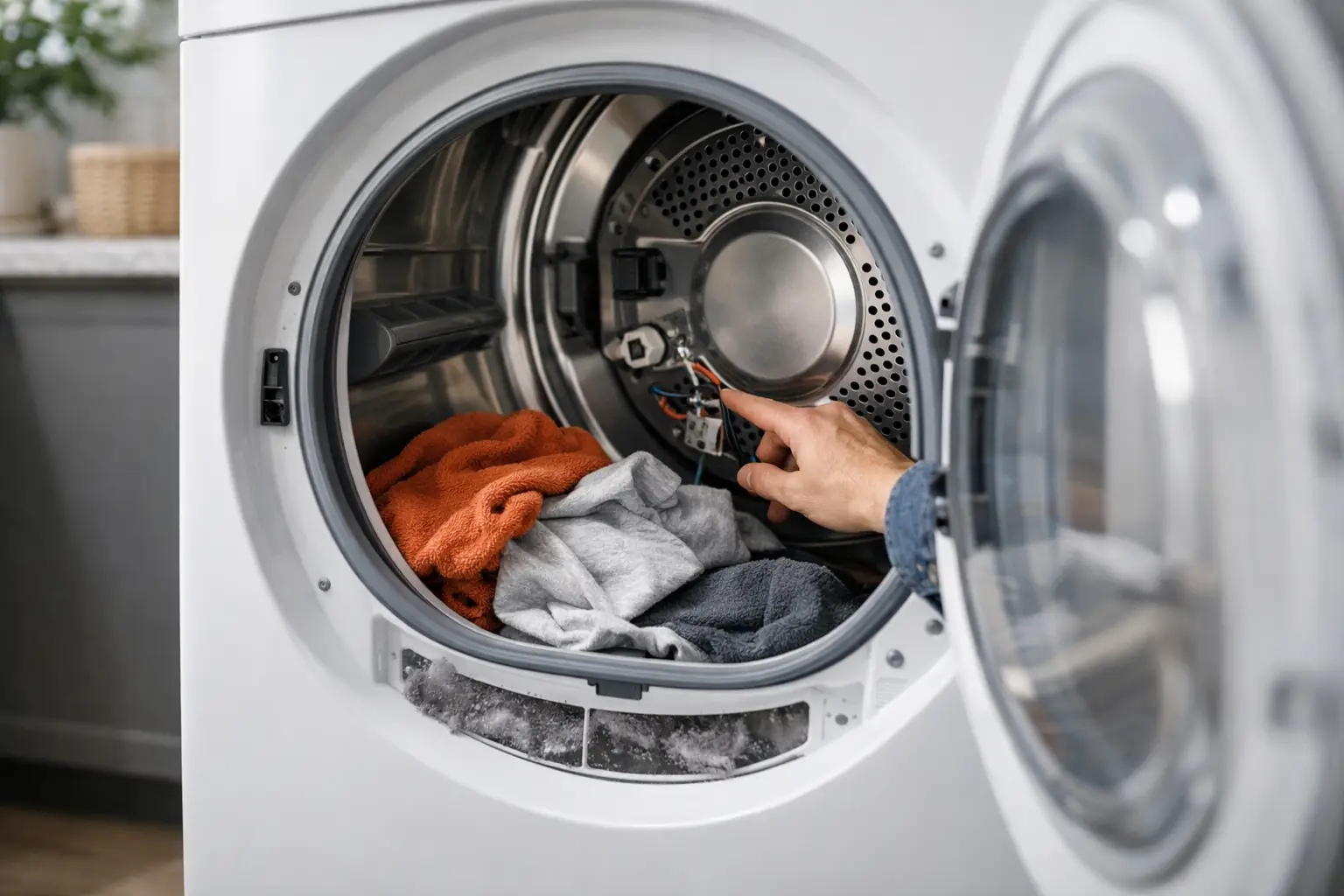
You load the dryer, hear it start, and come back to wet clothes. That usually means one thing: the drum is turning, but there is no heat. If you are asking what causes dryer not heating, the answer can be simple or it can be a failed part inside the machine. A few checks are safe to do at home. After that, it usually makes sense to schedule service before the problem gets worse.
What causes dryer not heating most often
The most common causes are a power problem, a blocked vent, a blown thermal fuse, a bad heating element, a failed igniter on a gas dryer, or a bad thermostat. Some dryers also stop heating because of a broken control board or timer. The dryer may still run, which is why this problem confuses people.
Heat and drum movement are not always controlled by the same parts. A dryer can tumble normally and still have a heating failure. That is why a no-heat dryer does not always look fully broken at first.
Start with the simple checks first
Before you think about parts, check the settings. Make sure the dryer is not on air fluff, air dry, or no heat. This happens more than people think, especially in shared laundry rooms, rental units, and homes with children.
Next, check the lint screen. If it is packed with lint, airflow drops. Poor airflow can make a dryer heat badly or shut the heat off for safety. Clean the screen fully, then run a small load again.
Now check the vent behind the dryer and the outside vent hood. If the vent is crushed, packed with lint, or stuck closed, the dryer can overheat inside and stop heating the way it should. In West Hollywood condos and apartment buildings, this is a common issue because vent runs are sometimes long and collect lint faster.
Electric dryer problems
An electric dryer needs the right power supply to heat. It uses one part of the power to turn the drum and another part to make heat. So the dryer can run and still not heat if one side of the power is missing.
Tripped breaker or power issue
Check your electrical panel first. Electric dryers often use a double breaker. Sometimes one side trips and the other side stays on. The dryer will light up or tumble, but there will be no heat.
If the breaker looks tripped, reset it once. If it trips again, stop there. Repeated tripping can point to a wiring issue, a bad outlet, or a problem inside the dryer.
Also look at the power cord if you can see it safely. Burn marks, melting, or a loose plug are warning signs. Do not keep using the dryer if you see that.
Bad heating element
The heating element is the part that makes heat in an electric dryer. Over time, it can break or burn out. When that happens, the dryer runs but stays cold.
Sometimes a bad element fails all at once. Other times, heat becomes weak before it stops completely. If clothes take longer and longer to dry, the element may be starting to fail. A technician usually confirms this with a meter test.
Thermal fuse or high-limit thermostat
Dryers have safety parts that cut heat if the machine gets too hot. A thermal fuse is one of them. A high-limit thermostat is another. These parts often fail because airflow was blocked first.
That is the important part. Replacing the failed safety part without fixing the airflow problem means the same thing can happen again. If your dryer stopped heating after long dry times or a burning smell, vent restriction should be checked too.
Gas dryer problems
A gas dryer has different heating parts. The drum motor may run fine, but the burner may never light.
No gas supply
First, make sure the gas valve is on if your dryer has an accessible shutoff. If there was recent work in the laundry area, someone may have turned it off. If other gas appliances are having trouble too, that may point to a supply issue rather than the dryer itself.
Failed igniter
The igniter is the part that glows and lights the gas burner. If it fails, the dryer will tumble with no heat. This is one of the more common gas dryer repairs.
Sometimes the igniter glows but the flame still does not start. In that case, the problem may be the gas valve coils.
Bad gas valve coils
These small coils help open the gas valve. When they get weak, the dryer may heat at the start of the cycle and then stop heating later. That pattern matters.
If your dryer heats for a few minutes and then blows cool air, bad coils are a strong possibility. This problem is common on older gas dryers.
Airflow problems can look like part failure
A blocked vent does not always mean no heat. Sometimes it means poor heat, short heating cycles, or clothes that stay damp no matter how long the dryer runs. The dryer may get hot inside, then the safety system shuts the burner or element off too soon.
That is why airflow has to be checked before replacing parts. A dryer with a new element but a clogged vent can still dry badly. In some cases, it can also become a fire risk.
If the top of the dryer feels very hot, the laundry room gets humid, or the outside vent has weak airflow, the vent system needs attention. This is especially worth checking in multi-unit properties where vents may be shared, long, or hard to access.
Other parts that can cause no heat
Cycling thermostat
This thermostat helps regulate drum temperature. If it stops working right, the dryer may not heat the way it should. This is less obvious than a blown fuse because symptoms can come and go.
Timer or electronic control board
Some dryers use a timer. Newer ones may use an electronic control board. If that control fails, the dryer may not send power to the heating system.
This is not the first thing to suspect, because controls are usually less common than vent problems or failed heating parts. But it does happen, especially if the dryer has odd behavior like stopping early, showing error codes, or changing cycle times for no reason.
Moisture sensor or cycle setting issues
On auto dry cycles, a dirty moisture sensor can confuse the dryer. It may think clothes are dry and cut the heat too soon. This usually causes short cycles more than full no-heat, but it is still worth checking.
Wipe the sensor bars inside the drum with a soft cloth. Dryer sheet residue can build up and affect readings.
What you can safely check yourself
You can safely do a few things before calling for dryer repair. Clean the lint screen. Check the cycle setting. Look at the breaker if you have an electric dryer. Make sure the outside vent opens when the dryer runs. If it is easy to reach, check that the vent hose behind the dryer is not crushed.
After that, stop. Most no-heat problems need live voltage testing, gas system testing, or internal part testing with a meter. Those are not good DIY jobs for most people.
When to stop using the dryer
Stop using it if you smell burning, see scorch marks, notice a melting power cord, hear buzzing near the burner area, or find that the dryer gets very hot but clothes stay wet. Those are signs that the problem may be more than a simple setting issue.
It is also smart to stop using the dryer if it keeps tripping the breaker. That can damage the appliance or create a safety problem.
When it makes sense to book service
If the basic checks do not solve it, a service visit usually saves time. A technician can tell the difference between a vent issue, a failed element, a blown fuse, a bad igniter, or a control problem without guessing. That matters because dryers often have more than one issue at the same time.
For example, a clogged vent may blow the thermal fuse. If you replace only the fuse, the dryer may fail again. Good diagnosis means finding the part that failed and the reason it failed.
For homeowners, renters, landlords, and property managers, that means less downtime and fewer repeat problems. If you are in West Hollywood or nearby neighborhoods, it also helps to use a local in-home repair company that knows how common vent restrictions and tight laundry spaces can affect dryer performance.
Vertex Appliance Repair handles in-home dryer repair with a $69 diagnostic fee, and that fee is waived if you approve the repair. Completed repairs and installed parts also include a 90-day warranty.
A dryer that runs without heat is often repairable. The hard part is knowing whether the cause is power, airflow, gas ignition, or a failed internal part. If the easy checks do not fix it, the next best step is a proper diagnosis so you can get back to dry clothes without wasting time on guesswork.
If your dryer is not heating or takes several cycles to dry a load, we can help. See dryer repair in West Hollywood or call 323-747-7098.
Related articles

Built In Refrigerator Versus Freestanding: Which Fits?
Sub-Zero Error 24 EC — Check the Condenser Before the Defrost Parts