





Why Is Dishwasher Not Draining?
Why is dishwasher not draining? Learn the usual causes, what you can safely check, and when it makes sense to call for dishwasher repair.
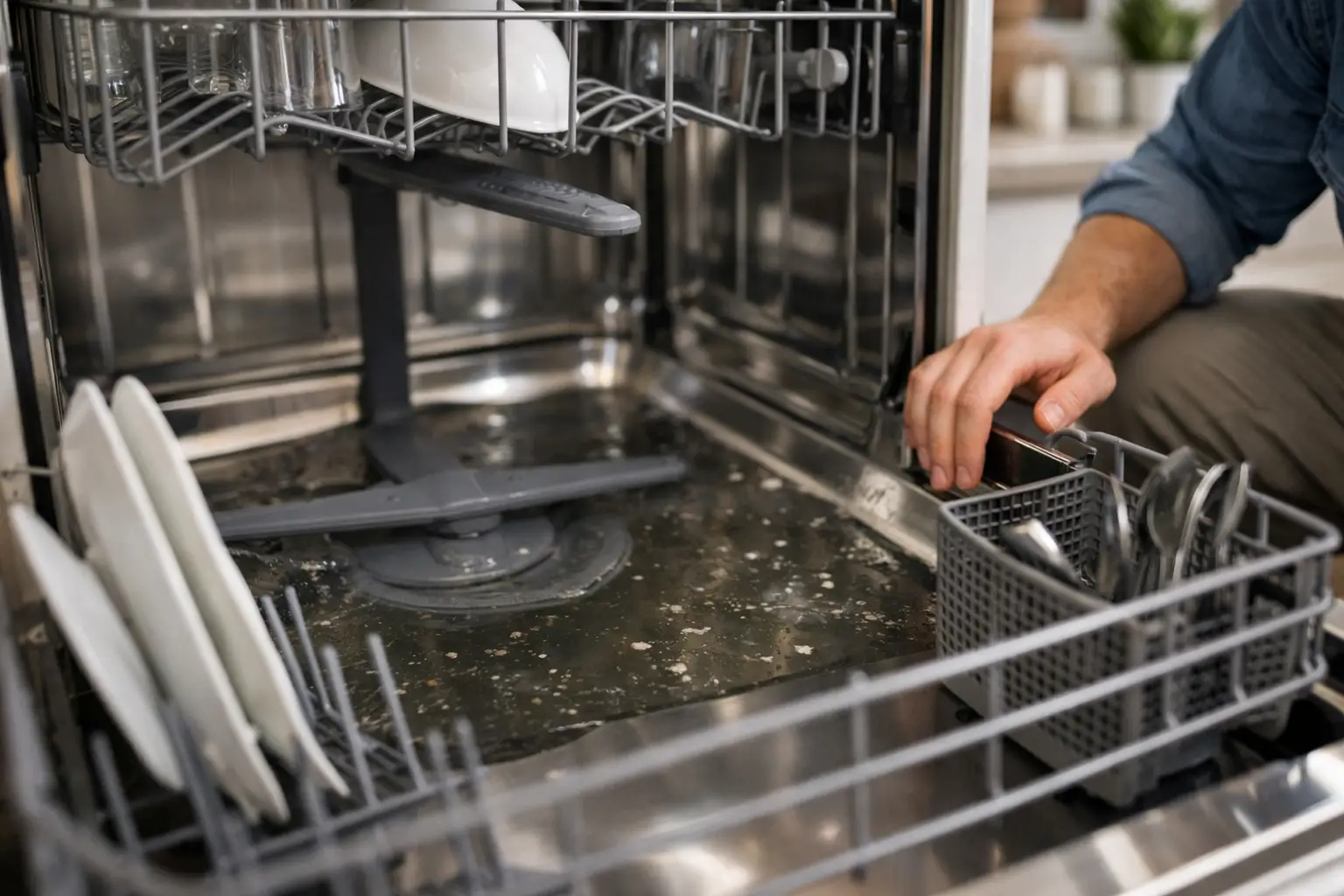
You open the dishwasher after a cycle, and there is still dirty water sitting at the bottom. That is usually when people ask, why is dishwasher not draining? In most homes, the problem comes from a clog, a bad drain pump, a kinked hose, or a blockage where the dishwasher connects to the sink drain.
This is a common service call. The good news is that some causes are simple. The bad news is that standing water can get worse fast. It can smell bad, leak onto the floor, or leave dishes dirty after every wash.
Why is dishwasher not draining after a cycle?
A dishwasher drains by pushing water through a hose and out into the sink drain or garbage disposal. If something blocks that path, the water stays inside. If the pump cannot move the water, the same thing happens.
Sometimes the issue is inside the tub. Food scraps, broken glass, grease, labels, and even small bones can block the filter area. Sometimes the issue is farther down the line. A clogged disposal, a blocked air gap, or a bent drain hose can stop drainage even when the dishwasher itself is fine.
A few models also stop draining because of an electrical or control problem. That is less common, but it does happen. If the machine hums, clicks, or stops mid-cycle, the problem may not be a simple clog.
The most common causes
Clogged filter or sump area
Many dishwashers have a filter at the bottom of the tub. It catches food and debris before they reach the pump. If that filter gets packed with grease or scraps, water drains slowly or not at all.
Under the filter is the sump area. That is the low point where water collects before the pump moves it out. Small objects can get stuck there. We often find glass pieces, fruit pits, twist ties, and labels.
If your dishwasher started draining slower over time, this is one of the first places to check.
Blocked or kinked drain hose
The drain hose carries water from the dishwasher to the sink drain. If it gets bent, crushed, or clogged, the water cannot pass through.
This happens more than people think. Sometimes the dishwasher was pushed back too hard after cleaning or flooring work. Sometimes grease builds up inside the hose. In rental units and older kitchens, we also see bad hose routing that causes repeat drainage problems.
Garbage disposal blockage or knockout plug
If your dishwasher drains through a garbage disposal, the disposal can block the flow. A heavy food clog in the disposal can back up into the dishwasher line.
There is also a part called a knockout plug. On a new disposal, that plug must be removed before the dishwasher can drain into it. If a new disposal was installed and the dishwasher never drained right after that, this is a strong possibility.
Clogged air gap
Some kitchens have a small air gap mounted near the sink faucet. It helps prevent dirty sink water from flowing back into the dishwasher. If it clogs, the dishwasher may not drain well.
A clogged air gap can also make water spill onto the sink or counter area during the drain cycle. If you see that symptom, the air gap should be checked.
Bad drain pump
The drain pump is the part that pushes water out. If the pump motor fails or something jams the impeller, the dishwasher may leave water at the bottom.
A bad pump often gives clues. You may hear a humming sound but no water movement. You may hear grinding. Or the machine may finish the cycle and leave the tub full every time.
Drain solenoid or control issue
Some dishwashers use a drain solenoid to open the drain path. Others rely on the control board to switch from wash to drain. If that system fails, the machine may wash but not drain.
This is not the first thing to suspect, but it matters when the simple checks do not explain the problem.
What you can safely check at home
Start with the easy things. Turn off power to the dishwasher first if you will put your hands near the filter or lower area.
Check the filter at the bottom of the tub. If it twists out, remove it and wash off grease and food. Look into the sump area for visible debris. Be careful. Broken glass is common there.
Run the garbage disposal if your dishwasher connects to it. Then try a drain cycle again. If the sink is also draining slowly, the problem may be in the sink drain, not just the dishwasher.
Look under the sink at the drain hose. If it is sharply bent or pinched, that can stop water flow. Also check for obvious leaks.
If your sink has an air gap, remove the cap and see if it is blocked with food or sludge. A clog there is often visible.
If you recently had a new garbage disposal installed and the dishwasher stopped draining right after that, mention that when you call for service. It can save time.
What not to do
Do not keep running full cycles with standing water inside. That can strain the pump and make the problem worse.
Do not pour chemical drain cleaner into the dishwasher. Those products can damage hoses, seals, and pump parts. They can also create a safety problem for anyone who works on the machine later.
Do not force parts apart if the filter or cover does not come out easily. Some models are simple. Others have screws, tabs, or delicate plastic pieces that break if pulled the wrong way.
Signs the problem is more serious
If the dishwasher leaves water once, it may be a one-time clog. If it keeps happening, there is usually a real repair issue behind it.
Watch for these signs. The dishwasher hums but does not drain. Water comes back after you scoop it out. The sink gurgles when the dishwasher drains. The cycle stops in the middle. There is a burning smell, or the unit trips the breaker.
Those signs point more toward a pump problem, wiring issue, motor issue, or a larger drain blockage. At that point, a repair visit usually makes more sense than more trial and error.
Why the dishwasher may drain sometimes but not always
This part confuses a lot of people. If the dishwasher drains only once in a while, the issue may still be real.
Partial clogs are common. Grease in the hose can let a little water pass, but not enough every cycle. A weak pump can drain small loads but fail on heavier cycles. A sink drain problem can also affect the dishwasher more after cooking, when more food and grease have gone down the sink.
So if the problem seems random, do not assume it fixed itself. Intermittent drainage issues often become complete failures later.
Why prompt repair matters
Standing water is not just annoying. It can leave odors inside the tub. It can redeposit food onto dishes. In some cases, it can leak under the unit and damage flooring or cabinets.
For landlords and property managers, a slow-draining dishwasher can also turn into a bigger tenant complaint if it is left too long. For renters and homeowners, it usually means hand washing dishes until the issue is fixed.
That is why many people in West Hollywood call once they notice the second or third failed drain. It is usually cheaper and easier to deal with the cause before another part gets damaged.
When to call for dishwasher repair
If you cleaned the filter, checked the disposal, looked at the hose, and the water still stays in the tub, it is time to have the dishwasher checked. The same is true if you hear unusual sounds, smell something hot, or see leaking.
A service visit can tell you if the problem is a clogged drain path, failed pump, bad control, or something else. That matters because the repair can vary a lot by brand and model. Some dishwashers are easy to open and clear. Others need parts removed to reach the pump safely.
Vertex Appliance Repair handles in-home dishwasher repair in West Hollywood and nearby neighborhoods. The diagnostic fee is $69, and that fee is waived if you approve the repair. Completed repairs and installed parts come with a 90-day warranty. If you need service, you can call 323-747-7098.
If your dishwasher is full of water right now, keep it simple. Stop running it, check the easy items, and do not force anything. A drainage problem is usually fixable, but the faster you catch the cause, the less mess it tends to make.
Related articles

Built In Refrigerator Versus Freestanding: Which Fits?
Sub-Zero Error 24 EC — Check the Condenser Before the Defrost Parts