Wine Cooler Issues: Why It Won’t Stay Cold
Wine cooler issues often come from airflow, dirty coils, bad fans, or a failed thermostat. Learn safe checks and when a repair is needed in West Hollywood.
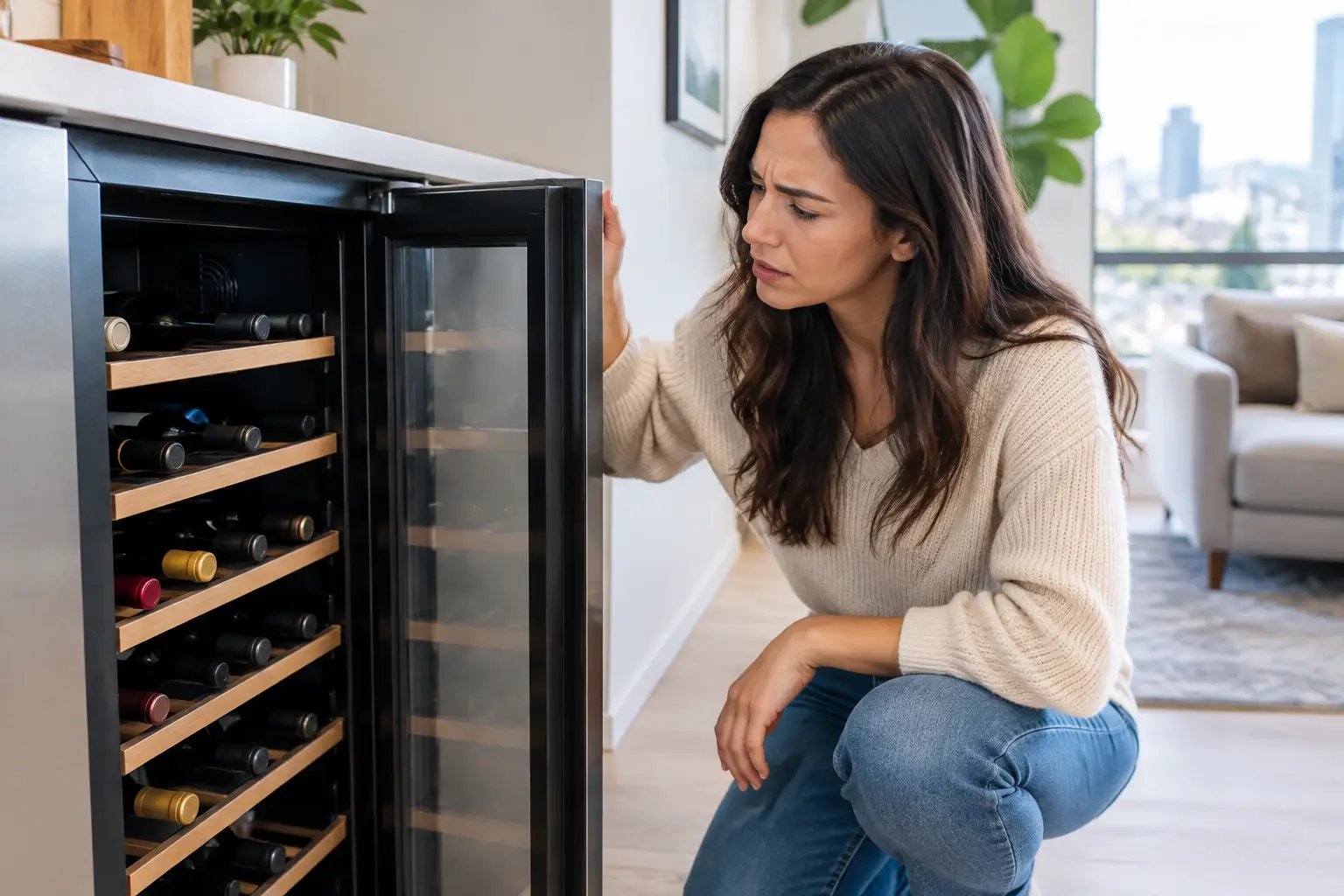
Most wine cooler issues that cause warm bottles come from blocked airflow, dirty condenser coils, or a failed cooling fan. If the unit runs but cannot hold its set temperature, the thermostat sensor, compressor start relay, or sealed cooling system may also be involved.
A wine cooler does not have to stop completely to have a real problem. A small temperature change can affect wine over time, especially if the cabinet stays above 60°F or swings up and down through the day. For homes, rentals, and managed units in West Hollywood, it is best to address a temperature problem before the cooler runs nonstop and puts more strain on the compressor.
Why is my wine cooler running but not getting cold?
Start with airflow. Most wine coolers remove heat through condenser coils at the back or underneath the cabinet. When dust, pet hair, or tight cabinet spacing traps that heat, the cooler may run for hours without reaching the temperature on the display.
A bad condenser fan can cause the same symptom. This fan pulls room air across the coils. If it is stuck, noisy, or not turning while the compressor is on, heat cannot leave the system. Some built-in units also have an evaporator fan inside the cabinet. That fan moves cold air across the shelves. If it fails, one section may feel cold while the rest stays warm.
The compressor start relay is another common part to check. It gives the compressor the push it needs to start. A failing relay may click every few minutes. The compressor may get hot, then shut off without cooling well. This is not a part to guess at, since a clicking sound can also point to a compressor problem.
What can I check myself in five minutes?
Pull the cooler forward only if it is safe to do so, then look at the rear or lower vent. Turn the unit off and unplug it. Use a vacuum brush to remove loose dust from the vent and visible condenser area. Do not bend the thin coil fins or spray water into the cabinet.
Plug it back in and leave at least 2 to 3 inches of open space around a freestanding model. If it is built into cabinetry, check that its front grille is not blocked by a rug, trim, or stored items. Then place a separate thermometer inside and check it after four to six hours. The display can be wrong, so the thermometer gives you a better reading.
If the cabinet is still warm after cleaning and allowing proper airflow, stop changing settings. Setting the control to its coldest number does not fix a failed part. It can make the cooler run longer and make diagnosis harder.
Why is my wine cooler too cold or freezing bottles?
Freezing inside a wine cooler usually points to a temperature control problem. The thermostat, temperature sensor, or control board may not be reading cabinet temperature correctly. The unit keeps cooling because it does not get the signal to stop.
A sensor is often called a thermistor. It changes its electrical reading as temperature changes. If the thermistor is out of range, the control board may think the cabinet is warmer than it really is. A technician can test the sensor resistance and compare it with the maker’s temperature chart.
Poor air movement can also freeze one area. When an evaporator fan is weak or the air channel is blocked by bottles packed too tightly, cold air can collect near the back wall. Move bottles away from the rear interior panel and do not cover air vents. If the temperature still drops below the set point, the control system needs testing.
Is the compressor bad if I hear clicking?
What people usually assume
Most people assume a clicking wine cooler has a bad compressor. That is a reasonable thought because the click often happens when the compressor tries to start, fails, and shuts off on its overload protector.
Why that is often incorrect
The start relay or overload protector can make the same sound. These smaller parts fail more often than the compressor itself and cost far less to replace. A loose wire connection or a control board that is not sending steady power can also create repeated clicks.
What it may actually be
The actual issue may be a failed start relay, a weak overload protector, or a compressor drawing too much current. A technician checks voltage to the compressor, relay condition, and compressor current draw before recommending a repair. If the compressor has an internal failure or the sealed system has lost refrigerant, repair options depend on the model, age, and part availability.
Why does my wine cooler have water inside?
A small amount of moisture can be normal when the door is opened often, especially during warm weather. Water pooling at the bottom is not normal. The drain hole or drain tube may be blocked, causing defrost water to back up into the cabinet.
Check the door gasket first. Close the door on a sheet of paper at several points around the frame. You should feel some resistance when pulling it out. If the paper slides freely, warm room air may be entering through a worn or warped gasket. That adds moisture and makes the unit work harder.
Do not chip ice with a knife or sharp tool. You can puncture an evaporator panel and turn a simple airflow issue into a sealed-system repair.
When should I schedule wine cooler repair?
Schedule service if the cooler will not stay within a few degrees of its setting, clicks repeatedly, freezes bottles, leaks water, or shows an error code. These symptoms can come from a fan motor, thermistor, door switch, control board, start relay, or compressor circuit. The part needs to be identified before it is ordered.
Vertex Appliance Repair handles wine cooler repair for homeowners, tenants, landlords, and property managers in West Hollywood and nearby neighborhoods. The diagnostic fee is $89 and is waived when you approve the repair. Installed parts and labor carry a 90-day warranty.
Keep the door closed as much as possible while waiting for service, and use a separate thermometer to watch the actual cabinet temperature. That simple reading gives the technician a useful starting point and helps protect the bottles you plan to keep.