




Wolf Oven Repair Los Angeles: What to Check
Need wolf oven repair los angeles? Learn common oven problems, what you can safely check at home, and when to book in-home service in West Hollywood.
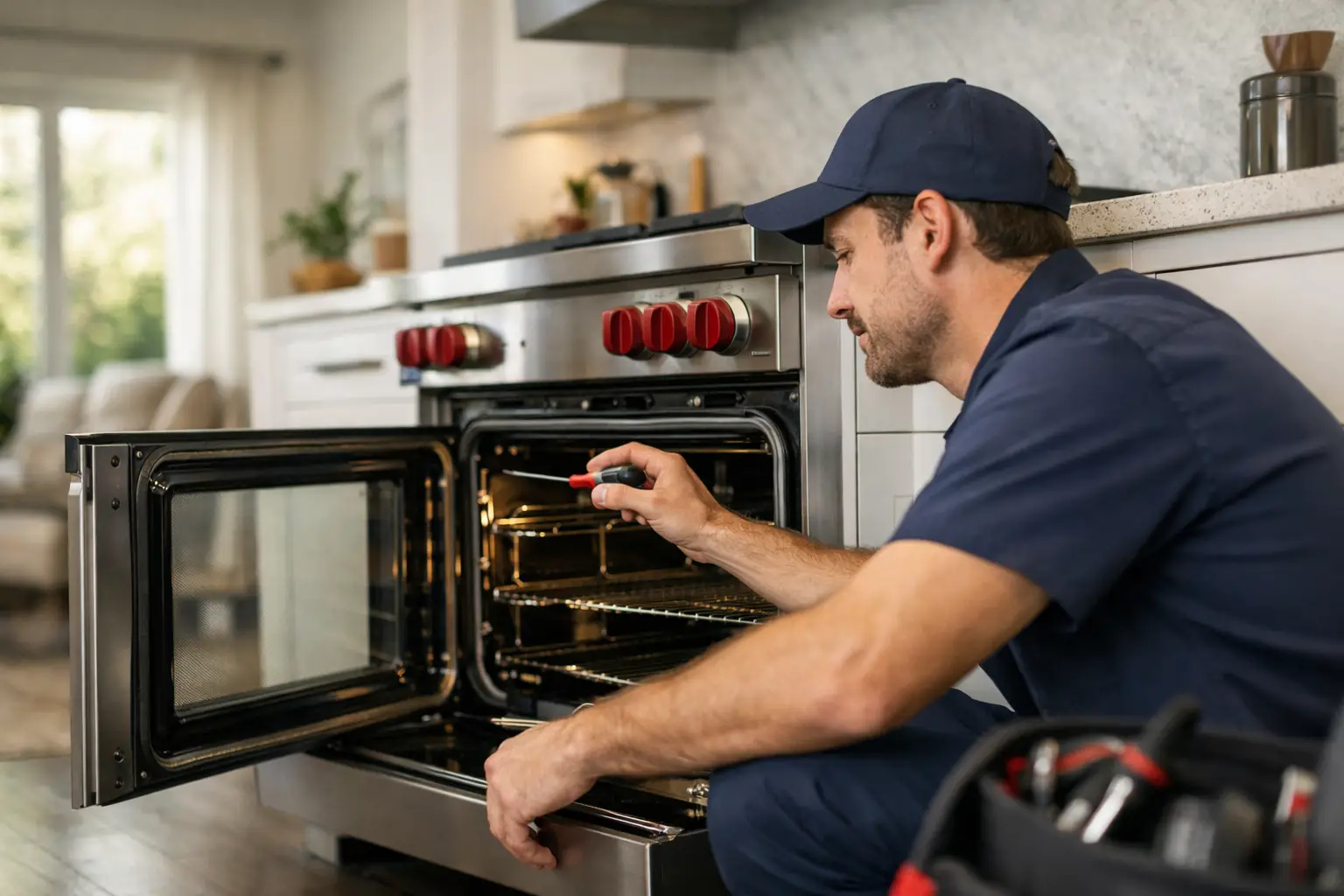
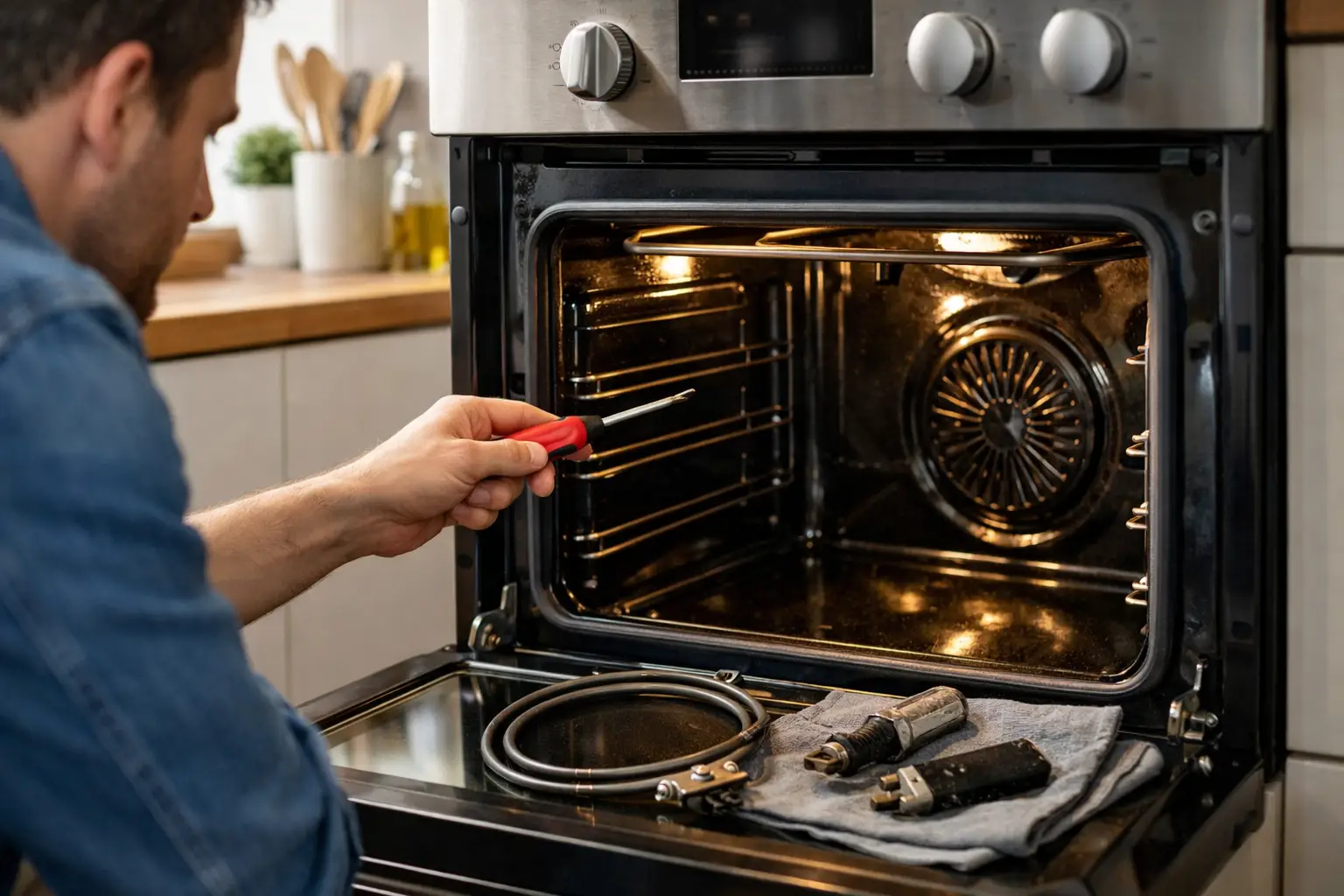
Dinner gets delayed fast when a Wolf oven will not heat, runs too hot, or shuts off in the middle of cooking. If you are searching for wolf oven repair los angeles, you are probably not looking for theory. You want to know what may be wrong, what you can safely check at home, and when it makes sense to book an in-home repair visit in West Hollywood.
Wolf ovens are solid units, but they are still home appliances. Parts wear out. Heat sensors drift out of range. Igniters get weak. Control boards can act up after years of heat exposure. The brand name matters less than the symptoms in front of you. A good service call starts with those symptoms.
Common Wolf oven problems in Los Angeles homes
The most common complaint is simple. The oven turns on, but it does not heat the way it should. Sometimes the bake cycle starts and never reaches the set temperature. Sometimes the broil works but bake does not. On gas models, you may hear clicking or smell gas for too long before ignition. On electric models, one heating element may fail while the rest of the oven still powers on.
Another common problem is uneven cooking. One tray burns while another stays pale. Cookies brown too much on one side. Roasts take much longer than usual. In many cases, the oven is heating, but not reading temperature correctly. That can happen when the sensor is off, when airflow is blocked, or when a heating part is weak and cycling the wrong way.
Some customers call because the oven display is on but the unit will not start. That can point to a door switch issue, a control problem, or a failed relay. Other times the oven trips power during preheat. That can mean a shorted part, damaged wiring, or a heating component drawing the wrong load.
What you can check before calling for Wolf oven repair Los Angeles
There are a few safe things a homeowner or renter can check first. Keep it basic. If you ever smell strong gas, see sparks, or notice burning plastic smell, stop and do not keep testing the oven.
Start with power. If it is an electric Wolf oven, make sure the breaker did not trip. Some ovens can look partly alive because the display has power, while the heating side does not get full voltage. A half-powered oven can confuse people because the clock works, but the oven will not heat right.
Next, check the settings. It sounds obvious, but delayed start, Sabbath mode, lock mode, or timer settings can stop normal operation. If the control panel looks normal but the oven does not respond the usual way, the problem may be a setting and not a broken part.
Then look inside the oven cavity. Heavy foil use, a misplaced pan, or blocked vents can affect airflow and heat balance. If the racks are installed wrong, they can also change how heat moves around the food. This will not cause every issue, but it can explain uneven cooking.
On a gas oven, pay attention to ignition. If the igniter glows but the burner takes a long time to light, the igniter may be weak. That is a common failure. It can still glow and still be bad. Many people think glow means good. That is not always true.
On an electric oven, notice whether broil works better than bake, or the other way around. That detail helps narrow down the problem. It can save time during diagnosis.
Why Wolf ovens fail even when they look well cared for
Heat is hard on parts. That is the short answer. Ovens live in a hot box, and every cooking cycle expands and contracts metal, wiring, and connections. Over time, even a well-kept unit can develop faults.
The igniter is a good example on gas models. It does not usually fail all at once. It often gets weaker slowly. The oven starts taking longer to preheat. Then it heats unevenly. Then one day it stops lighting the burner at all.
Temperature sensors can also drift. That means the oven may think it is at 350 when it is really at 300 or 400. Home cooks notice this as longer bake times, burnt bottoms, or food that comes out wrong even when the recipe has not changed.
Control boards are another issue. They manage timing and heat cycles. When a board starts failing, symptoms can seem random. The oven may stop mid-cycle, flash an error, or work one day and fail the next. That kind of problem usually needs in-home testing.
When a repair makes sense and when it depends
Most Wolf oven problems are repairable. Replacing an igniter, sensor, switch, or heating part is common work. Minor part installation and standard replacement parts usually make sense when the oven is otherwise in good condition.
But it depends on the failure. If the issue is limited to one failed part, repair is usually the practical move. If the oven has multiple electrical problems, heavy wear, or repeated control issues, the next step depends on part cost and unit condition. A proper diagnosis matters here. Guessing gets expensive.
That is why in-home service is useful. The technician can test the actual unit in the kitchen, see how it behaves under load, and check the wiring, controls, and heat system together. That gives a much clearer answer than trying to diagnose from a photo or model number alone.
What to expect from an in-home oven service visit
For Wolf oven repair in the Los Angeles area, local coverage matters more than a wide service map. If you are in West Hollywood, a nearby company can usually schedule faster and with less back and forth. That matters when the oven is part of your daily routine.
During the visit, the technician inspects the oven, checks the complaint, and tests the likely failure points. On a gas model, that may include the igniter, valve response, and temperature behavior. On an electric model, it may include elements, sensor readings, power supply, and control output.
If a repair is approved, the diagnostic fee is waived. For Vertex Appliance Repair, the in-home diagnostic is $69, and that fee is waived if you move forward with the repair. Installed parts and labor are backed by a 90-day warranty. That gives some peace of mind, especially when the problem has already disrupted meals and schedules.
Choosing local Wolf oven repair in West Hollywood
If you live in West Hollywood, you do not need a company that claims to cover every part of Los Angeles. You need one that actually works in your area and understands the homes here. That includes condos, older buildings, remodeled kitchens, and tight built-in spaces where access is not always easy.
Local service also helps with practical things. Arrival windows are easier to manage. Follow-up visits are simpler if a part needs to be ordered. And if you are a landlord or property manager, shorter travel distances can make scheduling less painful for tenants.
This is also where clear communication matters. You should know the diagnostic charge before the visit. You should know whether parts are needed. You should know what is covered after the repair. Fancy promises do not matter much when the oven is down. Clear answers do.
Signs you should stop using the oven now
Some oven problems can wait a day or two. Others should not. Stop using the unit if you smell gas that does not clear quickly, if the oven trips power more than once, if the door will not close properly during operation, or if you see sparks, smoke, or melted wiring. Those are not watch-and-wait issues.
You should also stop if preheat takes much longer than normal on a gas unit and you notice delayed ignition. That can stress other parts and create a safety concern. Better to have it checked than keep trying to force one more meal out of it.
Wolf oven repair Los Angeles for nearby neighborhoods
A lot of people search for wolf oven repair los angeles even when they really want someone close to home. If you are near West Hollywood, Beverly Hills, Hollywood, Fairfax, Melrose, Miracle Mile, Beverly Grove, La Brea, or Hancock Park, local in-home service is usually the better fit than calling a company that works all over the county.
The main thing is simple. Describe the symptom clearly. Say whether it is gas or electric. Mention any error code, delayed ignition, weak heating, or power issue. That gives the technician a better starting point and helps move the repair along.
If your Wolf oven is not heating right, not holding temperature, or not starting at all, a basic home check is fine. After that, the smartest move is usually an in-home diagnosis. A good repair starts with seeing the oven where it lives, in the kitchen where you need it to work.