




Washing Machine Repair Near Me in West Hollywood
Need washing machine repair near me in West Hollywood? Learn common washer problems, what to check first, and when to call for in-home service.
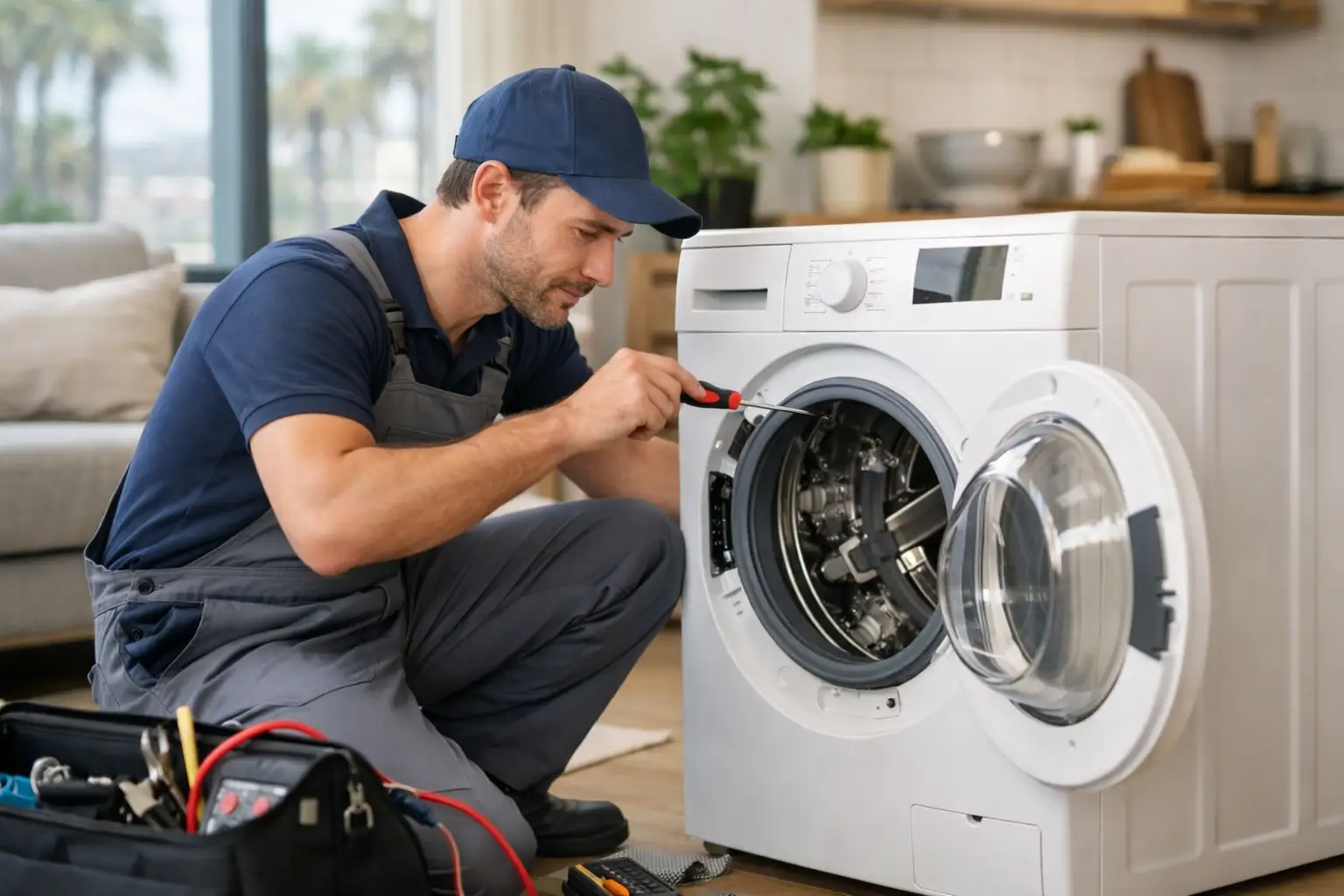
A washer usually picks the worst time to stop. You have work clothes to wash, towels piling up, or a tenant waiting for an update. When people search for washing machine repair near me, they usually do not want a long lesson. They want to know two things fast – what they can check right now, and when it is time to call someone.
That is the practical way to look at washer problems. Some issues are small. Some are not. A simple drain clog can look serious. A bad motor or control board can look minor at first, then stop the machine completely.
When washing machine repair near me is the right search
If the washer will not start, will not drain, leaks on the floor, shakes hard, or stops mid-cycle, repair is often the next step. The same is true if it keeps tripping the breaker, smells like something is burning, or leaves clothes very wet after the spin cycle.
A lot of people wait too long because the machine still kind of works. It may finish one load, then fail on the next one. That usually means the problem is getting worse. Waiting can also cause extra damage, especially with leaks. A small drip under a washer can damage flooring, baseboards, or the unit below in a condo or apartment.
For landlords and property managers, delay can turn one service call into two problems. First the washer stops. Then the tenant gets backed up on laundry or water reaches another area. Fast repair matters because downtime spreads.
What you can check before calling
There are a few simple things worth checking. These do not fix every washer, but they can rule out the easy stuff.
Make sure the outlet has power. A washer can look dead when the real issue is a tripped breaker or loose plug. If the machine is plugged into a GFCI outlet, check if that outlet has tripped.
Check the water supply valves behind the washer. Both hot and cold should be open unless your model says otherwise. If one valve is closed or barely open, fill problems can happen.
Look at the door or lid. Front-load washers will not run if the door is not locking right. Top-load washers often stop if the lid switch fails or does not line up.
If the machine will not drain, inspect the drain hose for a hard kink. If the hose is crushed behind the unit, water may stay in the tub. Do not pull too hard if the washer is tightly installed. You do not want to crack a valve or loosen the drain standpipe.
If the washer is shaking, look at the load. One heavy rug, a single blanket, or too few items can throw the basket off balance. That kind of vibration is not always a broken part. But if the machine bangs even with normal loads, that points more to worn suspension parts, bad shocks, or an issue with the tub support.
Common washer problems and what they usually mean
Washer will not start
This can come from a bad lid switch, a broken door lock, a failed control board, or a power issue. Sometimes the user interface lights up but the cycle will not begin. In that case, the machine may be getting power but not completing the safety checks it needs to start.
Washer fills but does not wash
If water comes in but the basket does not move, the problem may be the motor, belt, actuator, capacitor, or transmission-related parts, depending on the design. On some models, this starts as a weak wash action before full failure.
Washer will not drain
This is one of the most common calls. The drain pump may be blocked by coins, hair pins, socks, or lint buildup. Sometimes the pump itself has failed. If you hear a humming sound with no draining, the pump may be jammed or worn out.
Washer spins poorly or leaves clothes soaked
This can happen from an unbalanced load, but repeated wet loads usually point to a real issue. Common causes include a worn belt, bad clutch, drain problem, failed pump, lid switch problem, or control issue. Front-load units can also have door lock problems that stop the high-speed spin.
Washer leaks water
Leaks do not all come from the same place. The door boot on a front-load washer may tear. A fill hose may be loose. The drain pump housing may crack. The tub seal can also leak, and that repair is more serious. Where the water shows up matters. Front leak, back leak, or leak only during drain all mean different things.
Washer is loud or shakes hard
A loud bang during spin can come from suspension rods, shocks, bearings, or a worn tub support system. A grinding sound may point to bearings or drive parts. A scraping noise can mean something is stuck between the tubs. If the washer walks across the floor, stop using it until it is checked.
Repair or replace? It depends on the problem
People ask this a lot, and there is no honest one-answer rule. A simple pump, switch, hose, or latch repair is often worth doing if the rest of the machine is in decent shape. On the other hand, major tub bearing problems, transmission failure, or multiple failing parts at once can change the math.
Age matters, but not by itself. Brand matters too. So does part availability. A newer washer with a bad drain pump is very different from an older unit with bearing noise, leaking seals, and control issues at the same time.
That is why an in-home diagnosis helps. You want to know the actual failed part, the repair cost, and whether there are signs of deeper wear. Guessing from a video online usually wastes time.
What to expect from an in-home washer service call
A good service visit should be simple. The technician checks the symptom, tests the washer, and confirms the failed part or parts. If the repair is approved, the diagnostic fee should be applied toward the job. At Vertex Appliance Repair, the diagnostic fee is $69 and it is waived if you approve the repair.
You should also know the warranty terms before the work starts. For completed repairs and installed parts, Vertex offers a 90-day warranty. That matters because washers work under load, with water, vibration, and heat. If a part is replaced, you want clear coverage.
For homeowners and renters, the main value is convenience. The washer gets checked in the home, where the problem is happening. For landlords, condo owners, and apartment managers, in-home service means less disruption and less time trying to coordinate moving appliances around.
Local service matters more than people think
If you are in West Hollywood or nearby areas like Beverly Hills, Hollywood, Fairfax District, Melrose Area, Beverly Grove, Miracle Mile, Hancock Park, Mid-Wilshire, or Hollywood Hills West, local coverage helps with response time and scheduling. It also helps when a job needs a return visit with parts.
That does not mean every repair is same-day. Some parts are common and some are not. But working with a local in-home company usually means less waiting than trying to book with a provider coming from far outside the area.
It also helps when access is tight. A lot of washers in this area are in closets, kitchens, stacked laundry spaces, condos, and shared laundry rooms. Those setups are not always easy. A technician who works these neighborhoods understands the parking, building access, and narrow install spaces that can slow a job down.
How to make your service visit easier
If you can, clear the area around the washer before the appointment. Move laundry, cleaning bottles, or storage bins out of the way. If the machine is in a closet, make sure the doors can open fully.
If water is leaking, stop using the washer until it is checked. Put a towel down if needed, but do not keep testing it over and over. That can make water damage worse.
If you manage a rental unit, send the exact symptom when booking. Saying the washer is broken is less helpful than saying it fills but will not spin, or it leaks only during drain. Small details can save time.
A practical next step if your washer is acting up
If your washer has stopped working, is leaking, or is making new noise, start with the easy checks. Power, water supply, drain hose, and load balance are the basics. If those look normal, the next step is a proper diagnosis.
A washing machine is one of those appliances people depend on every week. When it fails, the goal is not fancy advice. The goal is to get a clear answer, a fair repair option, and your laundry routine back without dragging the problem out. If that is where you are, call 323-747-7098 and get the machine checked before a small issue turns into a bigger one.
Related articles
Built In Refrigerator Versus Freestanding: Which Fits?
Sub-Zero Error 24 EC — Check the Condenser Before the Defrost Parts