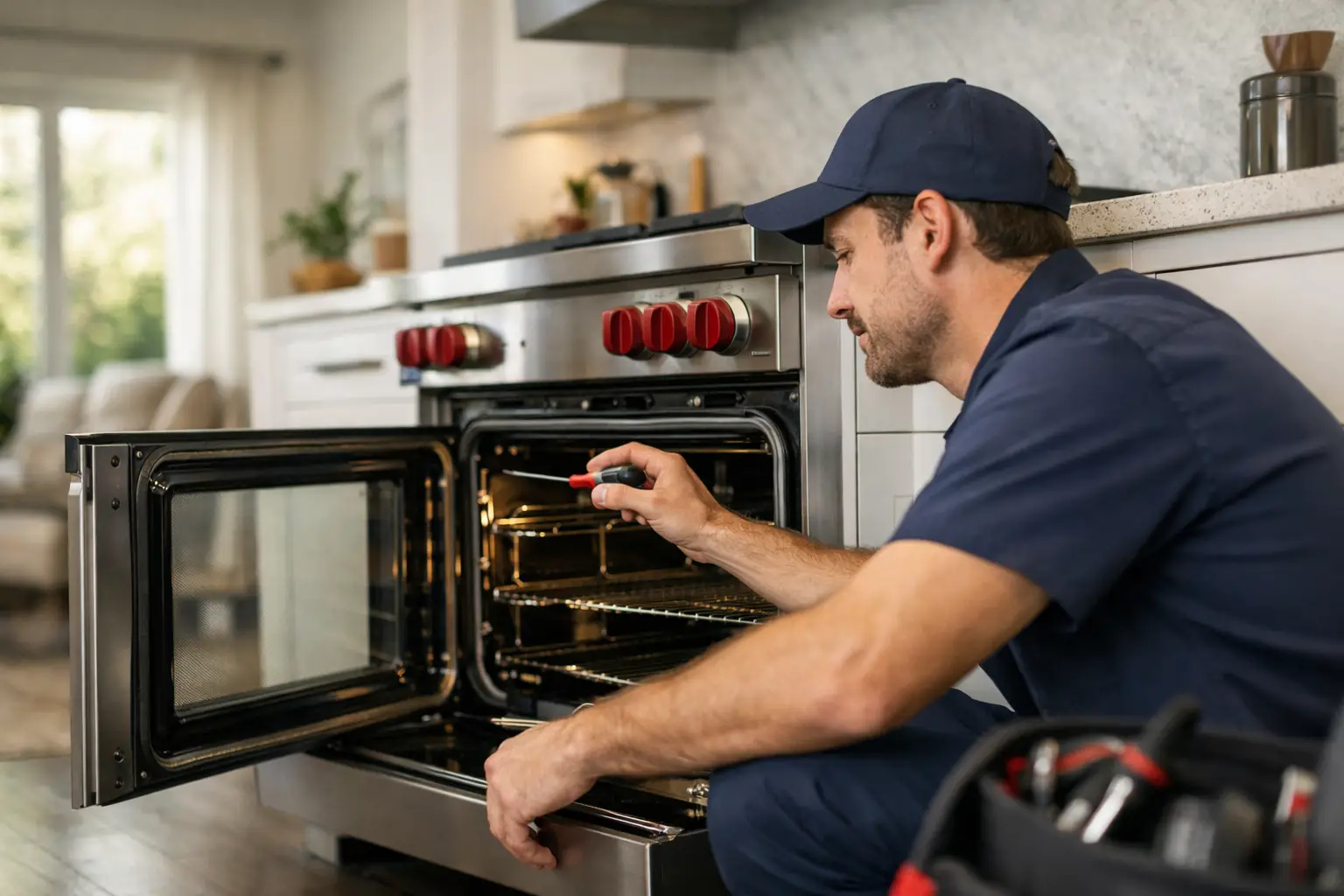





When the Appliance Diagnostic Fee Is Waived
Learn when an appliance diagnostic fee waived offer makes sense, what it covers, and what to ask before booking repair in West Hollywood.

A refrigerator stops cooling on a Sunday night, or the washer fills with water and just sits there. In that moment, most people ask the same thing first. How much is it going to cost just to find the problem? That is why the phrase appliance diagnostic fee waived gets attention.
It sounds simple, but homeowners and property managers should know what it really means. A waived diagnostic fee is not the same as a free repair visit. It usually means you pay for the technician to inspect and test the appliance, but that fee is removed from the total if you approve the repair. If you do not move forward, the diagnostic charge still applies.
What a diagnostic fee actually covers
A diagnostic fee covers the visit and the time spent finding the problem. That includes checking symptoms, testing parts, and narrowing down the cause. On some jobs, the issue is obvious in a few minutes. On others, it takes more work.
A refrigerator that is warm can have several causes. It may be a bad compressor relay, a failed fan motor, a control board problem, or a sealed system issue. A washer that will not drain might have a blocked pump, a failed lid switch, a damaged drain pump, or a wiring issue. The machine may show one symptom, but the real cause is not always the first thing you see.
That is why a diagnostic visit matters. You are not just paying for someone to show up. You are paying for a proper check so the repair recommendation is based on testing, not guessing.
When an appliance diagnostic fee waived offer helps
If the company applies the fee toward the repair, that can be fair for both sides. You get a clear answer on what is wrong and what it will cost to fix. If you approve the work, the diagnostic charge is waived and folded into the repair decision.
For many customers, this reduces risk. You are not paying one amount to learn the problem and then another separate amount for no reason. It keeps pricing more straightforward. At Vertex Appliance Repair, the diagnostic fee is $69, and it is waived if the client approves the repair.
This setup is especially helpful when the appliance is worth fixing and you want it handled quickly. A landlord with a tenant waiting on a working dryer does not want long back-and-forth. A homeowner with a warm refrigerator usually wants an answer fast. A property manager dealing with several units wants clear numbers and less delay.
What waived does not mean
This part matters. Waived does not mean every visit costs nothing.
If the technician diagnoses the problem and you choose not to do the repair, the fee is still charged. That is normal. Time was spent to inspect the appliance and find the issue. Even if no part is installed, the diagnostic work still has value.
It also does not mean every appliance should be repaired. Sometimes the estimate is higher than expected because the unit has multiple failed parts, heavy wear, or an expensive major component. In that case, a good technician should explain the situation clearly so you can decide whether repair still makes sense.
Why this matters on older appliances
Older appliances are where people get confused about pricing. They may think, if the diagnostic fee is waived, then the whole visit is risk-free. Not exactly.
On an older oven, dishwasher, or wine cooler, the problem you see may be only part of the story. One failed part can hide wear in another area. A technician may diagnose the main failure correctly, but once the machine is running again, other age-related problems may still exist. That does not mean the diagnosis was wrong. It means older machines can have more than one issue.
This is also why honest repair advice matters more than a catchy offer. Sometimes the best answer is repair. Sometimes the best answer is replacement. A reasonable diagnostic process helps you make that call with real information.
Questions to ask before you book
Before you schedule service, ask how the diagnostic fee works. Keep it simple. Ask if the fee is applied to the repair when approved. Ask what happens if you decide not to continue. Ask whether labor and parts are quoted after diagnosis or if there are any extra charges for common repairs.
You should also ask about warranty coverage. A completed repair should come with clear terms. For example, Vertex offers a 90-day warranty on completed repairs and installed parts. That gives the customer some protection after the work is done.
It also helps to ask whether the company works on your type of appliance. Not every service company handles built-in units, ice makers, wine coolers, or some commercial appliances. If you manage apartments or small multi-unit properties, this matters even more because scheduling mistakes cost time.
Why homeowners like this pricing model
Most people do not want surprises. They want to know the cost to inspect the appliance, the cost to fix it, and what happens if they say yes or no. A waived diagnostic fee can make that easier to understand.
It also helps with decision-making under pressure. If your dryer is not heating or your dishwasher is leaking into the kitchen floor, you want a fast answer. You do not want to argue about small print while dealing with a real problem at home.
That said, low pricing should not be the only reason to book. A cheap visit means very little if the problem is misdiagnosed, the part is guessed at, or the company does not stand behind the repair. The goal is not just to get the fee waived. The goal is to get the appliance fixed correctly.
Common appliances where diagnosis matters most
Refrigerators are a big one. Cooling problems can come from airflow issues, defrost failures, fan problems, sensors, or sealed system trouble. Two fridges can feel equally warm and have very different repairs.
Washers and dryers are another area where symptoms can mislead people. A washer that will not spin may have a door lock issue, a motor problem, or a control fault. A dryer that runs but does not heat can have a blown thermal fuse, a heater problem, or poor venting.
Dishwashers often fool people too. A unit that does not clean well may have a wash motor problem, low fill issue, spray arm blockage, or a heating issue. Ovens and ranges can fail in similar ways. No heat, uneven heat, or a burner not working may come from different parts depending on the model.
This is why diagnosis should be treated as real work, not just a quick look.
In West Hollywood, speed and clarity matter
In West Hollywood and nearby neighborhoods, people often need service that fits a busy schedule and a shared living setup. Condo owners, renters, landlords, and apartment managers are usually dealing with limited time, limited access windows, and unhappy tenants or family members waiting for the appliance to work again.
That makes clear pricing more useful than vague promises. If the company says the diagnostic fee is waived with approved repair, that should be explained in plain English. No confusing wording. No pressure. Just a straight answer on what the visit costs and what changes if the repair is approved.
The better way to think about it
Do not focus only on whether the diagnostic fee is waived. Focus on whether the company is clear, reasonable, and able to explain the repair. A good service call gives you three things. It tells you what failed, what it will take to fix it, and whether the repair is worth doing.
If you get that, the fee has done its job.
And if the repair is approved and that appliance diagnostic fee waived offer applies, even better. You are not paying extra for guesswork. You are paying for an answer, and then moving forward with a repair that makes sense.
Related articles

Built In Refrigerator Versus Freestanding: Which Fits?
Sub-Zero Error 24 EC — Check the Condenser Before the Defrost Parts