




Guide to Ice Maker Repair at Home
A practical guide to ice maker repair with simple checks, common causes, and signs it’s time to call for service in West Hollywood homes.
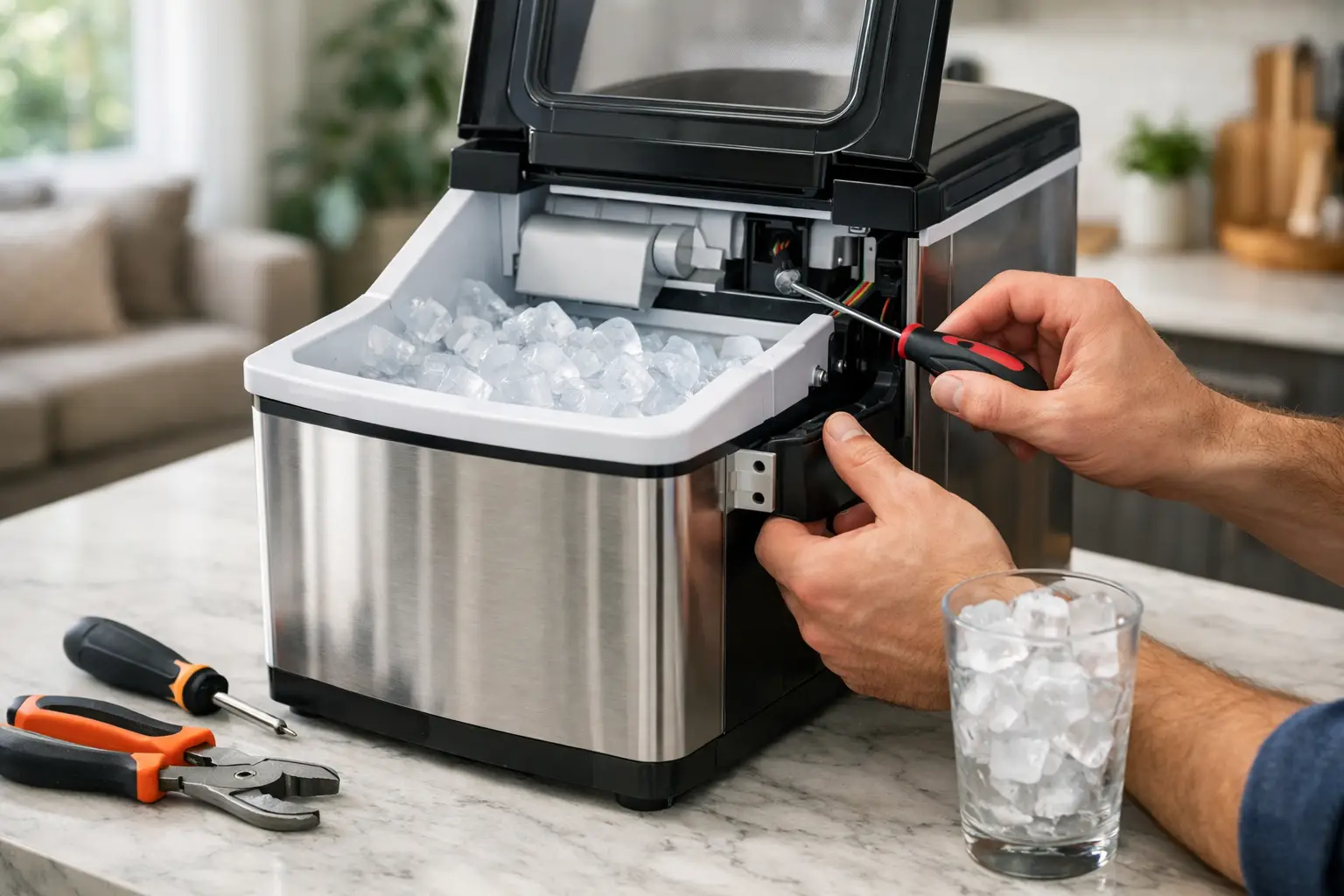
Ice makers usually fail at the worst time. You open the freezer, reach for ice, and find a full bin of half-melted cubes, tiny hollow cubes, or nothing at all. This guide to ice maker repair is for that moment. It explains what you can safely check at home, what the common causes are, and when it makes more sense to stop guessing and schedule service.
Most ice maker problems are not random. They usually come from one of a few issues. The freezer may not be cold enough. The water line may be blocked or frozen. The inlet valve may not be opening. The shutoff arm or sensor may be stuck. In some cases, the ice maker itself has failed and needs a part or full replacement.
Guide to ice maker repair: start with the symptom
The fastest way to narrow down the problem is to look at what the machine is actually doing. An ice maker that makes no ice at all is different from one that makes small cubes. A unit that leaks water points to a different issue than one that dumps a solid sheet of ice into the bin.
If your ice maker is not making any ice, first check whether the freezer is cold enough. Most units need a steady freezer temperature around 0 to 5 degrees Fahrenheit to work right. If the freezer is too warm, the ice maker may stop cycling. You may also notice soft food, frost buildup, or longer cooling times in the refrigerator section.
If the machine makes very small cubes, slow ice, or hollow cubes, water supply is a likely cause. This can happen when the water filter is clogged, the home water pressure is low, or the valve is weak and not letting enough water in. If the cubes taste bad or look cloudy, an old filter or poor water flow may also be part of it.
If the ice maker is leaking, the fill tube may be cracked or frozen, or the unit may be overfilling. Overfilling often points to a bad water inlet valve. It opens too long or does not close fully. That extra water has to go somewhere.
Safe checks a homeowner can do first
You do not need to take the whole freezer apart to do the first round of checks. Start with the simple things. They rule out the easy problems fast.
Check that the ice maker is turned on. Some models use a metal shutoff arm. If that arm is stuck in the up position, the machine will not make ice. Other models use a switch or an optical sensor. If a bin is out of place or the sensor is blocked by frost, the unit may think the bin is full.
Next, check the freezer temperature. If you do not have a thermometer inside, use one. Do not trust the control setting alone. A freezer can be set cold but still run warm because of dirty condenser coils, a weak fan motor, a bad door gasket, or a defrost problem.
Then look at the water filter. If it is overdue, replace it. A restricted filter can slow water flow enough to affect ice production. This is common in refrigerators that still dispense water, but the flow is weaker than normal.
Also inspect the water supply line behind the refrigerator, if you can reach it safely. Make sure it is not kinked. A pinched line can cut down water flow or stop it completely. If the fridge was pushed back too hard after cleaning, this happens more often than people think.
Finally, check for obvious frost around the ice maker or fill tube. A frozen fill tube is one of the most common causes of no ice. The tube freezes when a valve drips slowly between cycles or when the freezer has airflow issues.
Common parts that fail
Ice makers are simple in one way. They rely on a small number of parts working in the right order. When one part fails, the whole process stops.
Water inlet valve
This valve opens to let water into the ice mold. If it is clogged, weak, or electrically failed, the ice maker gets little or no water. Sometimes it leaks by slightly, which can freeze the fill tube and create a second problem.
Ice maker assembly
The assembly includes the mold, motor, and internal controls on many models. If the motor stops turning or the control inside fails, the ice will not harvest. You may see cubes sitting in the tray that never dump into the bin.
Fill tube
This small tube sends water into the ice maker mold. If it freezes, cracks, or shifts out of place, the water will not enter correctly. That can cause no ice, odd cube shapes, or leaks.
Thermostat or sensor
The ice maker needs to know when the cubes are frozen before it starts the harvest cycle. If the thermostat or sensor fails, the cycle may never start.
Door switch
On some refrigerators, the ice system depends on the door switch working right. A bad switch can affect the dispenser and, in some models, the ice maker operation too.
Why the freezer matters more than people expect
A lot of people focus only on the ice maker itself. That makes sense. It is the part that stopped working. But many ice problems begin elsewhere in the refrigerator.
If the evaporator fan is weak, cold air does not move well through the freezer. If the defrost system has a problem, frost can build up and block airflow. If the condenser coils are packed with dust, the whole system runs hotter. The ice maker then becomes the first thing you notice, even though the cooling system is the real cause.
This is why repair can be tricky without testing. Replacing the ice maker alone may not fix the problem if the freezer temperature is unstable. It depends on what the refrigerator is doing as a whole.
When DIY stops making sense
Some checks are fine for a homeowner. Beyond that, guessing gets expensive. Ice maker problems can look similar even when the failed part is different.
For example, no ice could mean a bad valve, a frozen fill tube, a failed ice maker motor, a warm freezer, a control board issue, or a broken wire in the door on certain designs. If you replace parts one by one without testing, you can spend more than the repair should have cost.
Water and electrical parts also sit close together in these systems. That is another reason to be careful. If you see signs of leaking, heavy frost, burnt wires, or repeated tripping of a breaker, stop there and have the unit inspected.
What to expect from an ice maker service visit
A proper service call should start with diagnosis, not part swapping. The tech should check freezer temperature, inspect the fill tube and water line, test the valve, and look at how the ice maker cycles. On some models, the dispenser side also needs to be checked because it shares parts or signals with the ice maker.
Once the cause is clear, the next step is to decide whether repair is worth it. If the refrigerator is otherwise cooling well and the failed part is straightforward, repair often makes sense. If the unit has several issues at once, or if parts are no longer practical to source, replacement may be the better choice.
For many households in West Hollywood, speed matters as much as price. A broken ice maker may sound minor, but it often points to a bigger refrigerator issue. Renters want the problem handled without long delays. Landlords and property managers want a clear answer and a repair that holds up.
A practical guide to ice maker repair costs and value
Cost depends on the failed part and the refrigerator design. A clogged filter is simple. A bad valve or frozen fill tube is usually moderate. A full ice maker assembly or control problem can cost more.
The key is not just the repair bill. It is whether the repair solves the actual cause. Paying for the wrong part is the expensive route. That is why a diagnostic matters. At Vertex Appliance Repair, the diagnostic fee is $69, and it is waived if you approve the repair. Completed repairs and installed parts include a 90-day warranty.
Signs you should call now instead of waiting
If the freezer is warming up, if water is leaking onto the floor, or if the ice maker keeps jamming and freezing up, do not wait too long. These problems can spread. A small valve issue can become water damage. A cooling issue can affect food storage. A frozen line can come back again and again until the real cause is fixed.
The best repair is usually the one done before a small problem turns into a second one. If your refrigerator is making less ice, no ice, or leaking around the ice maker, a clear diagnosis saves time.
If you are in West Hollywood or nearby areas like Beverly Hills, Hollywood, Fairfax District, Melrose Area, Beverly Grove, Miracle Mile, Hancock Park, Mid-Wilshire, or Hollywood Hills West, getting the unit checked early is often the simplest way to get your kitchen back to normal. If you need help, call 323-747-7098 and describe the symptom first. That one detail usually tells us where to start.
Related articles
Built In Refrigerator Versus Freestanding: Which Fits?
Sub-Zero Error 24 EC — Check the Condenser Before the Defrost Parts