





Guide to Refrigerator Compressor Problems
A guide to refrigerator compressor problems, with simple signs, common causes, safe checks, and when to call for repair in West Hollywood.
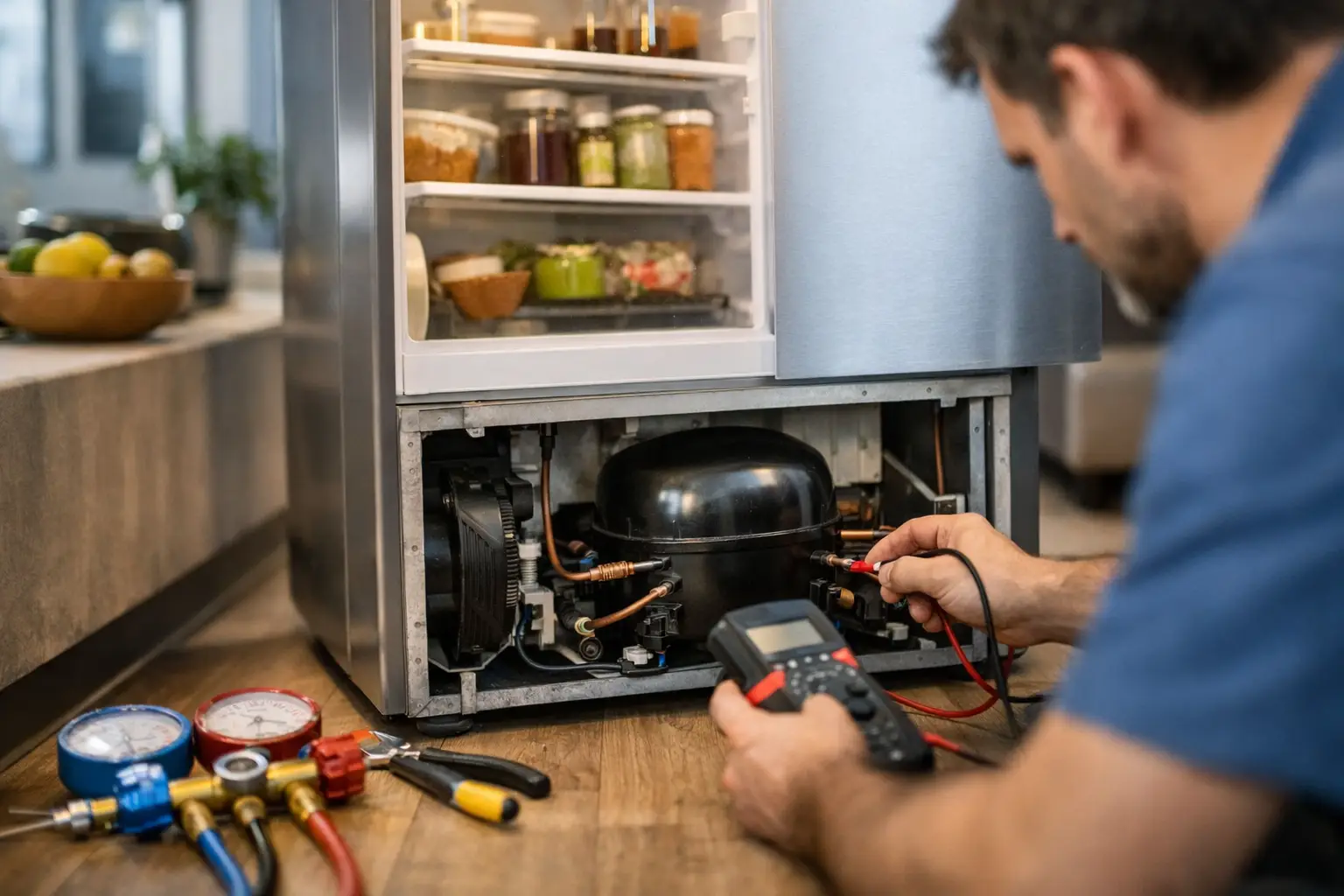
A refrigerator that runs all day but does not stay cold usually gets your attention fast. If you found this guide to refrigerator compressor problems, you are probably hearing odd sounds, feeling weak cooling, or seeing food warm up before you know what failed.
The compressor is the part that pumps refrigerant through the sealed system. In simple terms, it helps move heat out of the fridge so the inside stays cold. When people say, “the compressor is bad,” they are sometimes right, but not always. A compressor problem can also look like a fan problem, a relay problem, a dirty condenser, or a control issue.
That matters because a compressor repair is not a quick guess job. It affects cost, repair time, and whether the refrigerator is worth fixing.
What the compressor does and why it matters
Think of the compressor as the motor that keeps the cooling cycle moving. It compresses refrigerant gas and sends it through the system. That process helps remove heat from inside the refrigerator and freezer.
If the compressor cannot start, cannot run properly, or is overheating, cooling drops fast. Sometimes the freezer gets weak first. Sometimes the fresh food section warms up while the freezer still looks partly normal. In other cases, the whole unit stops cooling.
A true compressor failure is one of the more serious refrigerator problems. But before assuming the worst, it helps to look at the symptoms carefully.
Guide to refrigerator compressor problems: common signs
One common sign is a clicking sound every few minutes. The refrigerator tries to start, clicks, hums briefly, then stops. That can mean the start relay is bad. It can also mean the compressor is locked up and cannot start.
Another sign is poor cooling with the compressor running almost nonstop. If the unit never seems to shut off, the compressor may be struggling. But dirty condenser coils, bad door seals, low refrigerant, or a fan issue can cause the same behavior.
A very hot compressor is another warning sign. Warm is normal. Too hot to touch for more than a second or two is not. Overheating can happen because of poor airflow, dust buildup, failing fans, voltage issues, or internal compressor trouble.
Loud buzzing or knocking can also point to compressor trouble. Some refrigerators are naturally louder than others, especially older models. But a sudden change in sound matters more than normal background noise.
If lights are on but both sections are warm, and you do not hear the normal cooling sounds, the compressor start system is worth checking. That includes the relay and overload device, which help the compressor start safely.
Problems that look like a bad compressor
This is where many homeowners get misled. A refrigerator compressor is often blamed first because it sounds serious. But several smaller problems can act the same way.
A bad start relay is a common one. The relay helps the compressor turn on. If it fails, the compressor may click and never start. Replacing a relay is very different from replacing a compressor.
A condenser fan problem can also cause weak cooling and overheating. The condenser fan moves air across the coils and compressor area. If that fan stops, heat gets trapped. The refrigerator may run poorly and the compressor may get very hot.
Dirty condenser coils do the same thing. Dust, pet hair, and grease make it harder for the system to release heat. The compressor then works longer and hotter than it should.
An evaporator fan issue can confuse the picture too. If the freezer is cold but the fridge section is warm, the problem may be air movement inside the cabinet, not the compressor itself.
Defrost problems are another example. A blocked evaporator coil can stop airflow and make the refrigerator seem like it has lost cooling power.
Safe checks you can do at home
Before calling for service, there are a few basic things you can check safely. Do not open sealed system parts. Do not try to cut wires or replace electrical parts unless you know what you are doing.
First, listen. Is the refrigerator silent, clicking, buzzing, or running constantly? Sound gives useful clues.
Next, check the temperature. Is the freezer still somewhat cold, or is everything warm? A partly cold freezer tells a different story than a unit that is fully warm.
Look behind or underneath the refrigerator if you can do it safely. If the condenser coils are packed with dust, that can cause poor performance. Cleaning accessible coils carefully can help. Unplug the refrigerator first.
Check the condenser fan if your model has one near the compressor. If the compressor area is hot and the fan is not spinning, that is important.
Also check the door seals and make sure the doors are closing well. Warm air leaking in makes the refrigerator run longer and can make normal operation look like compressor trouble.
If the unit was recently moved, let it sit upright for the recommended time before judging its cooling. Refrigerators can act strangely right after transport.
When the compressor is actually the problem
A real compressor problem usually falls into a few groups. One is a compressor that will not start. Another is a compressor that runs but does not pump refrigerant well. A third is an overheating compressor that keeps shutting off on overload.
Internal electrical failure can keep the compressor from starting. Mechanical failure inside the compressor can cause a locked rotor, which means it cannot turn properly. In other cases, internal wear reduces pumping strength, so the refrigerator cools poorly even though the compressor still runs.
There is also the sealed system side of the issue. Low refrigerant, a restriction in the system, or contamination can make the compressor seem bad when the bigger problem is elsewhere in the sealed system.
That is why good diagnosis matters. You do not want to replace a compressor when the real failure is a relay, and you do not want to replace a relay when the compressor is already locked up.
Is it worth repairing?
It depends on the refrigerator, the exact failure, and the cost of parts and labor. Compressor and sealed system repairs are usually more expensive than common refrigerator repairs. On some newer or higher-end units, repair makes sense. On some older basic models, replacement may be the better choice.
Age matters, but not by itself. A built-in refrigerator or a premium model may be worth repairing even if it is older. A lower-cost top-freezer model with multiple issues may not be.
Availability of parts matters too. Some compressors and control parts are easier to source than others. If a property manager or landlord needs a quick turnaround for a tenant, timing can matter as much as the repair bill.
When to call a technician
If the refrigerator is clicking and not cooling, call sooner rather than later. If the compressor is extremely hot, if food is warming fast, or if the unit has stopped cooling after basic checks, it is time for service.
A technician can test the start device, check amp draw, inspect fan operation, and look for signs of sealed system trouble. That is how you separate a simple electrical part failure from a major compressor issue.
For homeowners, renters, and property managers in West Hollywood, quick diagnosis matters because refrigerators do not give you much time. Vertex Appliance Repair handles in-home refrigerator issues with a $69 diagnostic fee, and that fee is waived if you approve the repair. Completed repairs and installed parts also carry a 90-day warranty.
How to reduce future compressor stress
You cannot prevent every compressor failure, but you can lower the strain on the system. Keep condenser coils reasonably clean. Make sure airflow around the refrigerator is not blocked. Replace damaged door seals. Do not overload the cabinet so badly that air cannot move.
Also pay attention to early signs. A new clicking sound, longer run times, or weak cooling are easier to deal with before the refrigerator fully stops. Waiting too long can turn a small issue into food loss and a bigger repair.
If your refrigerator is acting up, do not assume the compressor is dead just because the cooling is weak. Sometimes the fix is smaller than it looks. And if it is the compressor, a proper diagnosis gives you a clear next step instead of a costly guess.
Related articles

Built In Refrigerator Versus Freestanding: Which Fits?
Sub-Zero Error 24 EC — Check the Condenser Before the Defrost Parts