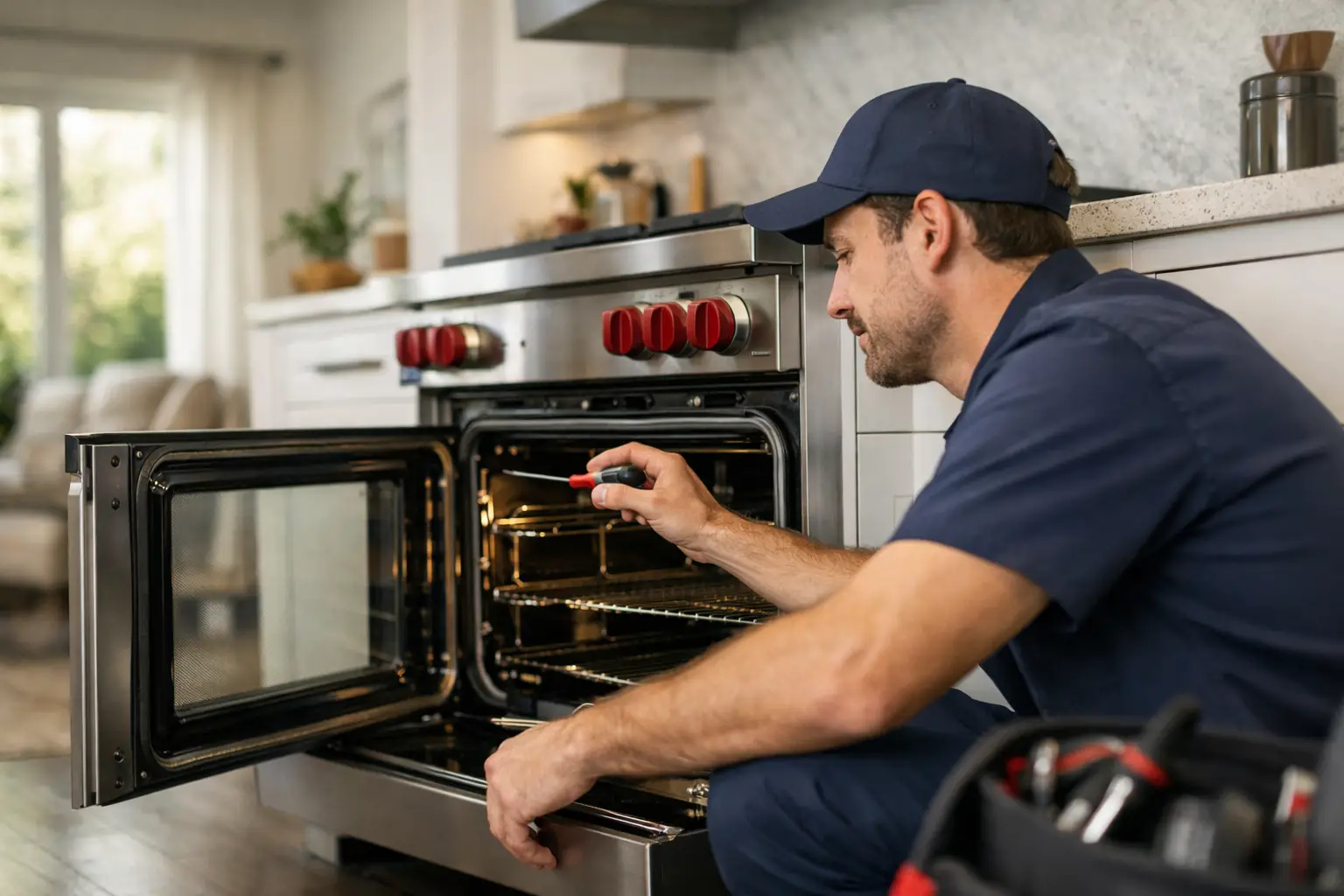





How to Handle a Broken Refrigerator
Learn how to handle broken refrigerator problems, protect food, check basic issues, and know when to call for fast in-home repair service.
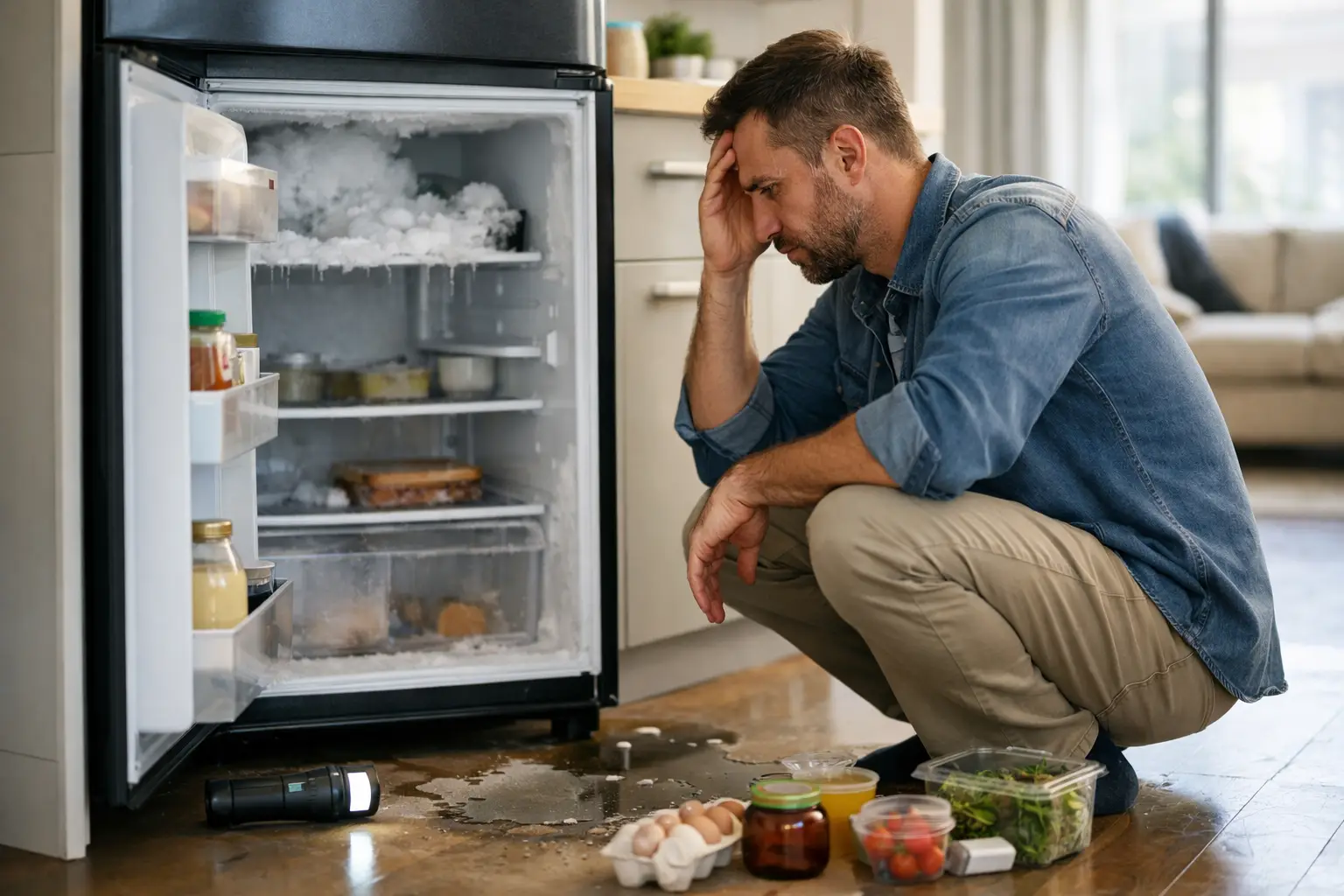
You usually notice it at the worst time. The milk is warm. The freezer is soft. Or you hear a strange clicking sound every few minutes. If you are wondering how to handle broken refrigerator problems, start with food safety first, then check a few basic things before you call for repair.
A refrigerator can fail in different ways. Some stop cooling completely. Some cool the freezer but not the fresh food section. Some leak water on the floor. Some run all day and never get cold enough. The right next step depends on the symptom.
How to handle broken refrigerator problems first
If the fridge is not keeping food cold, do not keep opening the doors to check it. Every time the door opens, the inside temperature goes up. Keep both doors closed as much as possible.
Move high-risk food first if you have another working refrigerator nearby. That includes milk, meat, cooked food, leftovers, eggs, and anything that feels warmer than it should. If you do not have backup cold storage, use a cooler with ice for the most important items.
If the freezer still feels cold, leave frozen food inside with the door shut. A closed freezer holds temperature much better than an open one. If items are soft, leaking, or warm, do not refreeze them unless they still have ice crystals and feel very cold.
Also check the floor around the unit. If you see water, wipe it up right away. A leaking refrigerator can make a tile floor slippery and can damage wood flooring or nearby cabinets.
Start with the simple checks
Before assuming the refrigerator has a major failure, look at the easy things. A lot of service calls start with a simple issue that blocks cooling.
Make sure it has power
Check whether the inside light turns on when the door opens. If the light is off, test the outlet with another device if you can do it safely. Sometimes the plug gets loose when the fridge is pushed back. Sometimes a kitchen breaker trips.
If the outlet works but the refrigerator still looks dead, stop there and schedule service. Do not start taking panels apart.
Check the temperature settings
It sounds basic, but settings do get changed. A child may press the control panel. A tenant may turn the dial by accident while loading groceries. Make sure the refrigerator and freezer are both set to normal cooling levels.
If the panel shows an error code, write it down. That helps when you call for service.
Look at airflow inside
A refrigerator needs room for cold air to move. If shelves are packed tight from front to back, air may not circulate well. That can make one section warm even when the machine is still running.
Move a few large items away from the back vents. Do not overfill the freezer either. Full is fine. Packed solid is not.
Check the door seal
Close the door and look for gaps. If the gasket, which is the soft rubber seal, is torn, dirty, or loose, warm air gets in all day. That causes weak cooling, frost, and long run times.
You can wipe the seal with warm water and mild soap. If it is damaged, it may need replacement.
Common signs and what they usually mean
Different symptoms point to different parts. You do not need to diagnose the exact part yourself, but it helps to know what may be going on.
The fridge is warm but the freezer is cold
This is very common. In many units, the freezer makes the cold air and a fan moves some of it into the refrigerator section. If that airflow is blocked, the freezer may stay cold while the fresh food side gets warm.
Possible causes include a bad evaporator fan, frost buildup behind the panel, a stuck air damper, or dirty condenser coils. Those are not all DIY jobs. If you hear a fan noise change when the door opens and closes, mention that when you book repair.
The refrigerator clicks but does not cool
A repeated click can point to a compressor start problem. The compressor is the part that pumps refrigerant through the system. If it tries to start and fails, you may hear clicking every few minutes.
This is usually not something a homeowner should try to repair. The issue could be a start relay, capacitor, compressor, or control board.
There is water under the refrigerator
A water leak does not always mean a broken water line. Sometimes the defrost drain is clogged. During normal operation, frost melts and water should flow through a drain tube into a pan. If that path gets blocked, water can back up into the fridge or onto the floor.
If your model has an ice maker or water dispenser, the supply line can also leak. Look for signs of dripping near the back of the unit.
The freezer has heavy frost
A little frost can happen. Heavy frost is a problem. It may mean the door is not sealing, the defrost system is not working, or humid air keeps getting inside.
When frost builds up on the back inside wall of the freezer, airflow often drops. Then the refrigerator side gets warm next.
The refrigerator runs all the time
On hot days, or after a big grocery load, longer run times are normal. But if it never seems to stop, the refrigerator may be struggling. Dirty condenser coils, bad door seals, low airflow, or a failing part can all cause this.
A constantly running unit also uses more power and may wear out parts faster.
What you can safely do at home
Some steps are reasonable for a homeowner or tenant. The key word is safely.
You can clean visible dust from the front grille or accessible condenser area if your model allows it and the unit is unplugged first. You can also remove food that blocks vents, reset a tripped breaker, and clean door gaskets.
You can listen and observe. Is the compressor humming? Is there a fan running? Is there frost on the back wall? Is water pooling under the crisper drawers? Those details matter.
What you should not do is force panels open, chip away ice with a knife, or keep unplugging and plugging the refrigerator back in hoping it fixes itself. That can make damage worse.
When to call for refrigerator repair
Call for service when the refrigerator is warm for more than a short time, when food is at risk, or when you notice clicking, burning smells, leaks, or repeated frosting. If the unit has power but is not cooling right, that usually means a real mechanical or electrical problem.
For landlords and property managers, speed matters even more. A refrigerator issue can turn into a food loss complaint, a water damage issue, or a tenant coordination problem very quickly. It is better to schedule service early than wait for a full failure.
In West Hollywood, many homes and apartments have tight kitchens, built-in units, or older electrical setups. That can affect access and diagnosis. It helps to tell the repair company the brand, model if you have it, and whether the unit is built-in, top freezer, bottom freezer, side-by-side, or French door.
What to expect from a service visit
A good repair visit should start with diagnosis, not guessing. The technician should check temperatures, airflow, fans, controls, and the sealed system signs before recommending a fix.
Some repairs are simple and some are not. A bad fan motor or door gasket is different from a compressor problem. Parts availability also matters. Some brands and built-in models take longer because parts are less common.
If you call Vertex Appliance Repair, the diagnostic fee is $69, and it is waived if you approve the repair. Completed repairs and installed parts include a 90-day warranty. That matters when you are trying to fix the problem once and get back to normal.
How to prevent the next refrigerator breakdown
No refrigerator lasts forever, but a little care helps. Keep the doors closed as much as possible. Do not block inside vents. Clean accessible dust around the unit from time to time. Pay attention if cooling changes slowly. A fridge that is a little too warm today may stop cooling next week.
If you manage rental property, ask tenants to report early signs right away. Strange sounds, water leaks, frost, and soft freezer food are early warnings. Small problems are usually easier to handle than a full breakdown with spoiled food.
A broken refrigerator always feels urgent because it is. The best move is usually the simple one – protect the food, check the basics, and get the unit looked at before a small cooling issue turns into a bigger repair.
Related articles
Built In Refrigerator Versus Freestanding: Which Fits?
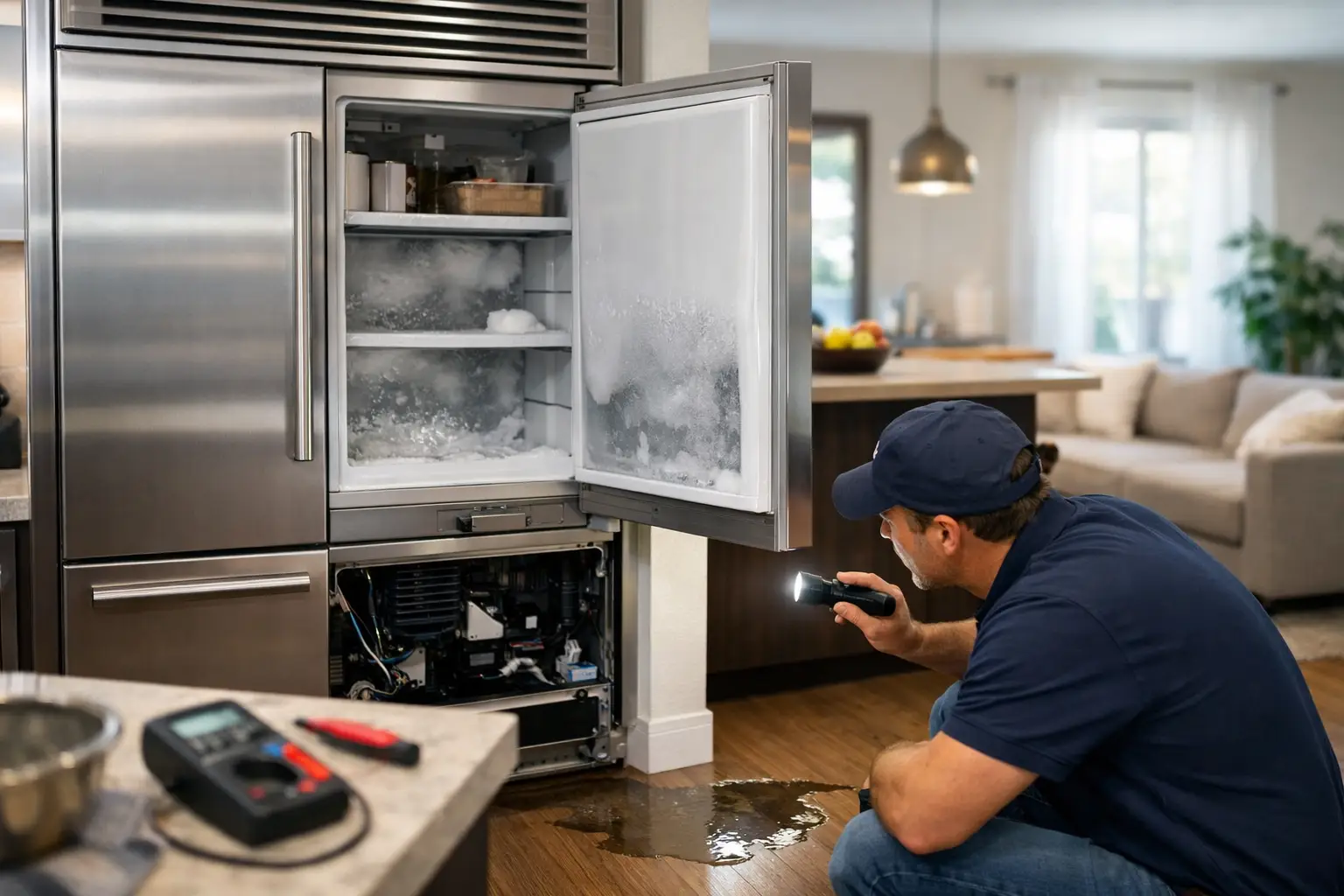
Sub-Zero Error 24 EC — Check the Condenser Before the Defrost Parts